Why Your Training Environment Matters in Dog Training
Why Your Training Environment Matters in Dog Training is important because the surroundings in which a dog learns can affect attention, behaviour, movement and the handler’s ability to communicate clearly. A noisy room, excessive movement, unfamiliar people, competing smells or too much available space can make an exercise more difficult than expected. A handler may believe the dog has forgotten its training when the actual difficulty is the environment surrounding the exercise. This can create frustration, inconsistent responses and unrealistic expectations, particularly when the dog is moved from a controlled area into a much more distracting environment without appropriate progression.
RECOMMENDED PRODUCTS
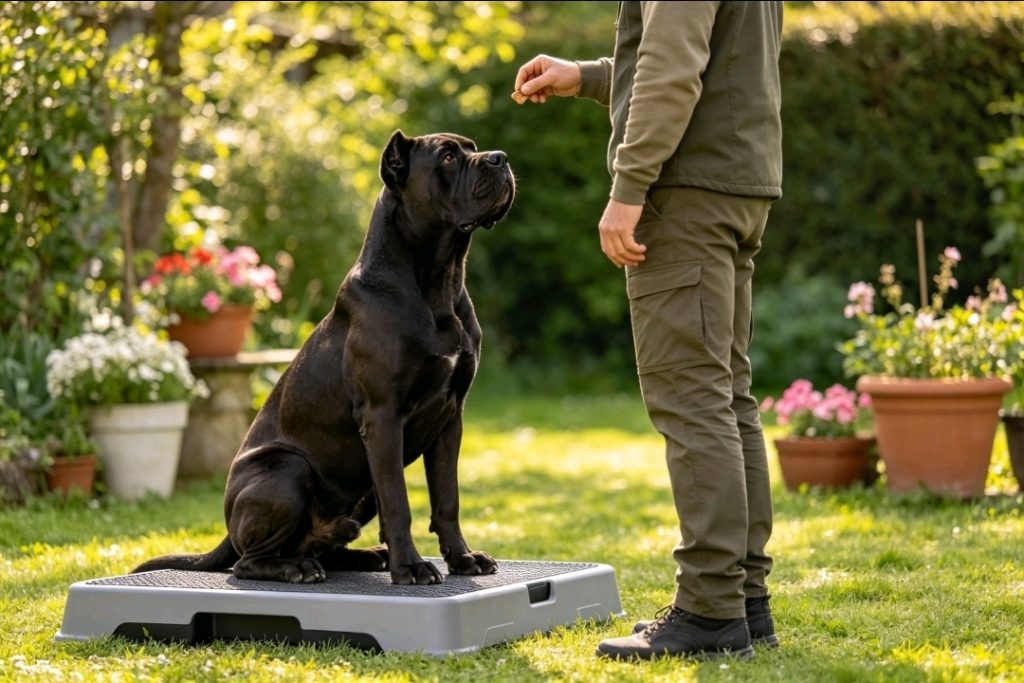
Training Mat — A suitable training mat can provide a consistent area for structured exercises and help create a recognisable training space within the home.
Common Problems With the Training Environment
One of the most common problems is trying to train in an environment containing too many distractions.
Other people moving around, household activity, noises, toys, food, other animals or unfamiliar objects can all compete for the dog’s attention.
The handler may repeatedly give instructions without recognising that the environment itself is making the exercise difficult.
This can create the impression that the dog is being disobedient when the real issue may be that the training environment is not appropriate for the current stage of learning.
Common Issues With Noise and Movement
Noise can have a significant effect on concentration.
Doors opening, people talking, appliances operating, traffic outside or other dogs moving nearby can all change the dog’s level of attention.
Movement can create a similar problem.
If people are constantly walking through the training area, the dog may repeatedly look away from the handler. The handler may then attempt to regain attention without understanding why the dog is struggling.
These distractions can become particularly noticeable when training requires controlled movement or sustained attention.
Common Mistakes With Training Locations
A common mistake is changing training locations too frequently.
If every session takes place somewhere completely different, the dog may have fewer consistent environmental cues associated with the training routine.
Another mistake is beginning with a highly distracting environment before the dog has developed sufficient understanding of the exercise.
Handlers can also choose an area that is too large.
A large open space may provide the dog with many opportunities to move away from the handler, investigate the environment or become distracted.
The physical size and layout of the training area can therefore influence the difficulty of the exercise.
RECOMMENDED PRODUCTS
Crate — A suitable dog crate can provide a structured area for safety, reset and routine when the dog needs a controlled space within the home.
Frustration When Training in the Wrong Environment
Frustration can affect both dog and handler when the environment is not appropriate.
The dog may repeatedly lose concentration, move towards distractions or fail to complete familiar exercises.
The handler may respond by repeating commands, increasing movement or using more food to regain attention.
When this continues, the handler can become frustrated because the dog appears to perform correctly in one location but not another.
The dog may also become increasingly distracted because each failed repetition exposes it to more environmental stimulation.
Timing and Environmental Difficulty
The difficulty of an exercise is not determined only by the exercise itself.
Timing and environmental conditions can change the difficulty considerably.
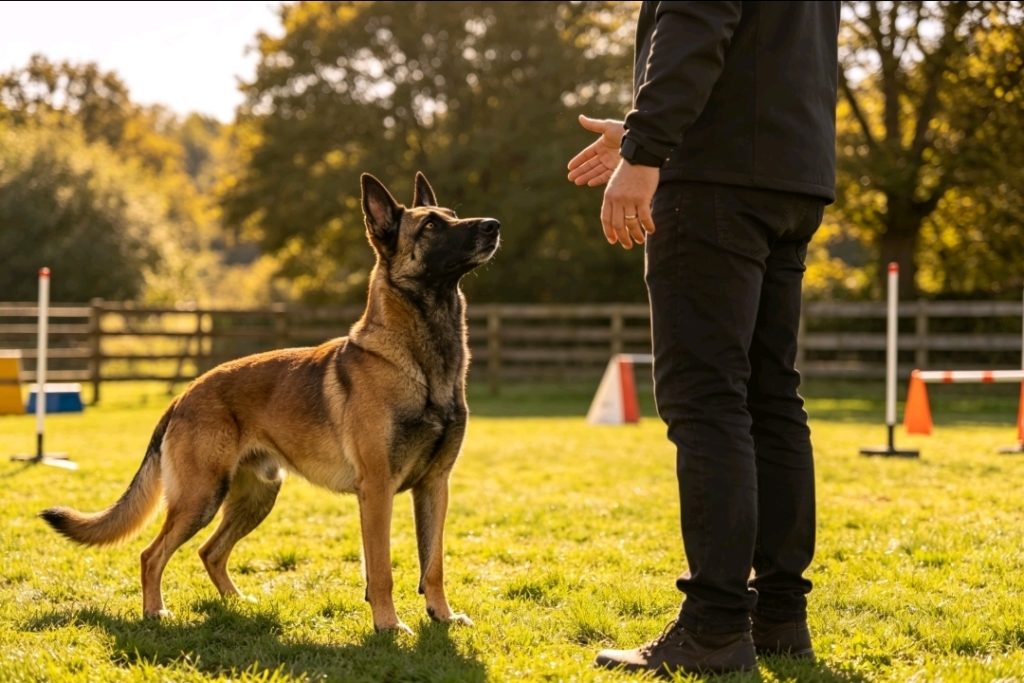
A simple obedience exercise in a quiet room may become much harder when performed near other dogs, children, traffic or unfamiliar surroundings.
If the handler expects the same response regardless of environmental pressure, the dog may repeatedly struggle.
The timing of progression therefore matters. Moving into a more distracting environment before the dog is ready can create unnecessary difficulty.
Misunderstanding and Miscommunication
One of the biggest misunderstandings in dog training is assuming that a behaviour learned in one environment will automatically appear in every other environment.
Dogs can respond differently depending on their surroundings.
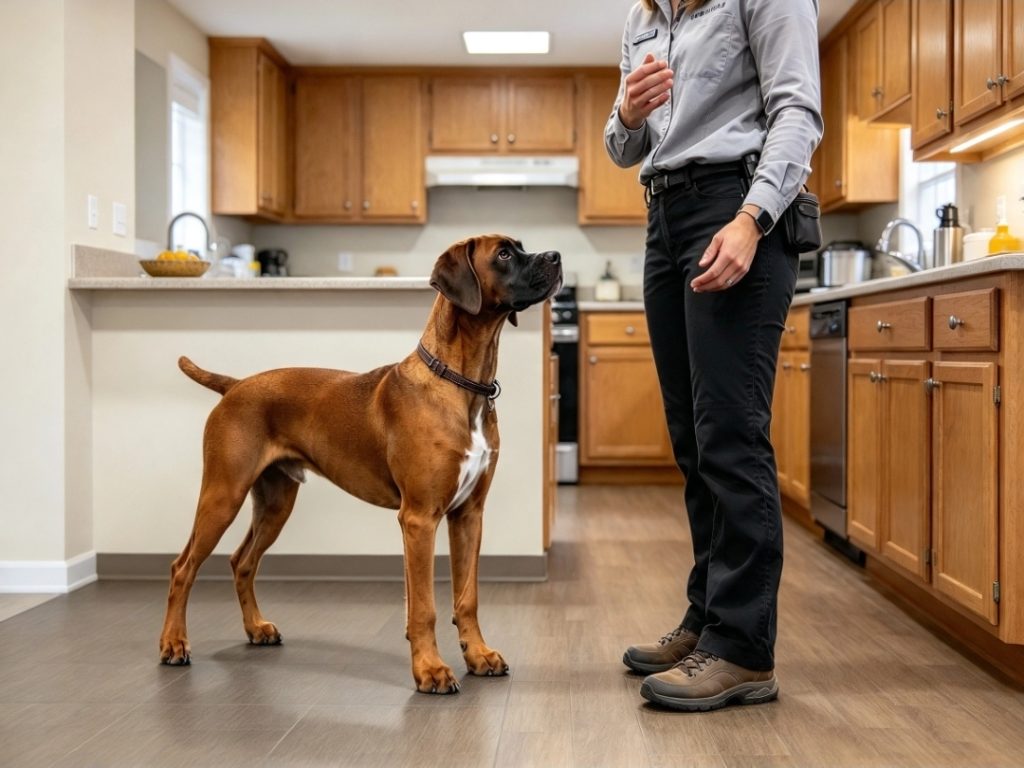
A behaviour may appear reliable in a quiet room but become inconsistent in a garden, public space or busy training facility.
This does not necessarily mean the dog has completely forgotten the behaviour.
The environment has changed, and the dog is processing additional information.
The handler therefore needs to recognise the difference between a lack of understanding and an environment that is currently too difficult for the dog.
GPK9’S FIVE GOLDEN RULES
The GPK9 Five Golden Rules provide a connected system for understanding how structure and environment influence dog training.
The training environment does not operate separately from the dog’s home routine, obedience, play, toilet habits or social walking.
Each area can affect how the dog responds to the handler and how successfully training can progress.
Golden Rule One — Home and Social
Why Your Training Environment Matters in Dog Training connects directly with Golden Rule One because the home is one of the dog’s primary learning environments.
The GPK9 progression of crate → placemat → playpen provides different levels of freedom and structure.
The crate provides safety, reset and toilet support.
The placemat introduces calm home freedom and creates a defined location where the dog can settle.
The playpen provides monitored freedom while limiting access to the wider environment.
This structure helps the handler manage the level of environmental freedom available to the dog rather than allowing the dog to experience the entire environment without appropriate progression.
Golden Rule Two — Obedience
Golden Rule Two connects directly with the effect of the training environment on obedience.
Food and luring can help guide movement, while praise, shaping and movement form part of the wider training process.
However, even a well-understood exercise can become less reliable when the surrounding environment becomes significantly more distracting.
Working in the same area and around the same time can help establish consistency.
The handler can then observe how the dog responds before gradually introducing changes in the environment.
This creates a clearer connection between the dog’s behaviour, the handler’s actions and the difficulty of the surroundings.
Golden Rule Three — Prey Drive / Play
The environment is particularly important during play.
Golden Rule Three provides a quiet, separate area for tug and toy-based activity rather than combining high-energy play with every other training exercise.
If the environment contains too many distractions, the dog may struggle to remain engaged with the intended activity.
Excessive environmental stimulation can also contribute to increased arousal.
A suitable play environment therefore allows the handler to observe the dog’s engagement and behaviour without unnecessary competing activity.
Golden Rule Four — Toilet
Golden Rule Four demonstrates another reason environment and routine matter.
Toilet training relies on consistent location, timing and communication.
Changing the environment or routine without understanding its effect can make the behaviour less predictable.
This is particularly relevant when a dog is learning to recognise a particular location and respond to a consistent toilet command.
The environment is therefore part of the structure surrounding the behaviour.
Golden Rule Five — Social Walking / Ignore the World
Golden Rule Five takes the dog into a much wider environment.
The aim is a calm, relaxed and manageable walk without constantly placing the dog under command.
This creates a clear distinction between a controlled training environment and the real-world environment in which the dog must eventually remain manageable.
The handler needs to recognise environmental pressure rather than assuming that every distraction requires a command or food reward.
If the dog becomes overwhelmed by the surroundings, stopping and allowing the dog to return to a calmer state may be more appropriate than continuing through the environment.
Solution Connection
The problems associated with training environments often involve excessive distractions, unsuitable locations, noise, movement, inconsistent surroundings, poor progression and misunderstanding the dog’s behaviour.
The GPK9 Five Golden Rules provide a structure for placing environmental management within the wider training process.
Problem → Issue → Mistake / Timing / Frustration / Misunderstanding → GPK9 Five Golden Rules → Structured Solution
Golden Rule One provides home and social structure through crate → placemat → playpen.
Golden Rule Two connects environmental control with structured obedience, food, luring, shaping, praise and movement.
Golden Rule Three provides an appropriate environment for play, engagement and controlled arousal.
Golden Rule Four reinforces the importance of consistent location and routine.
Golden Rule Five addresses the transition into wider environments through calm, manageable social walking.
Together, these rules help the handler recognise that the environment is not simply the background to training. It can directly influence how difficult an exercise becomes.
Final Connection
Why Your Training Environment Matters in Dog Training is ultimately about understanding that the environment forms part of the training experience.
Noise, movement, space, smells, people, animals and unfamiliar surroundings can all influence how a dog responds. A behaviour that appears reliable in one environment may become less consistent when the surroundings change.
The GPK9 Five Golden Rules provide a structured way to consider these changes.
From crate → placemat → playpen, through structured obedience, play, toilet routines and calm social walking, the system helps the handler understand how structure and environment work together.
Effective training is not simply about what exercise is being taught. It also involves considering where the exercise takes place, what distractions are present, how difficult the environment is and whether the dog is ready for that level of environmental pressure.
Understanding the training environment allows the handler to create clearer progression, better structure and more consistent communication throughout the GPK9 training system.