How to Use a Dog Crate When the Postman Arrives
How to Use a Dog Crate When the Postman Arrives is about understanding what can happen when a normal delivery suddenly changes the atmosphere inside the home.
A letter arriving through the door, a knock, footsteps outside or the sound of the letterbox can be enough to trigger excitement or alert behaviour in some dogs.
The owner may then have to deal with the dog, the front door and the delivery at the same time.
When this happens repeatedly, the arrival of the postman can become a predictable trigger for barking, rushing towards the door, jumping, pacing or excessive excitement.
The way the owner manages these moments can therefore make a significant difference to how manageable the situation becomes.
Why Can the Postman Arriving Be Difficult for a Dog?
The front door can be an exciting area for a dog.
There may be sounds outside, movement behind the door and unfamiliar people approaching the property.
The dog may hear the postman before the owner even reaches the door.
A common mistake is allowing the dog to rush towards the entrance every time these sounds occur.
Over time, the dog can become increasingly focused on what is happening outside.
The owner may then find that even a quiet delivery creates an immediate reaction.
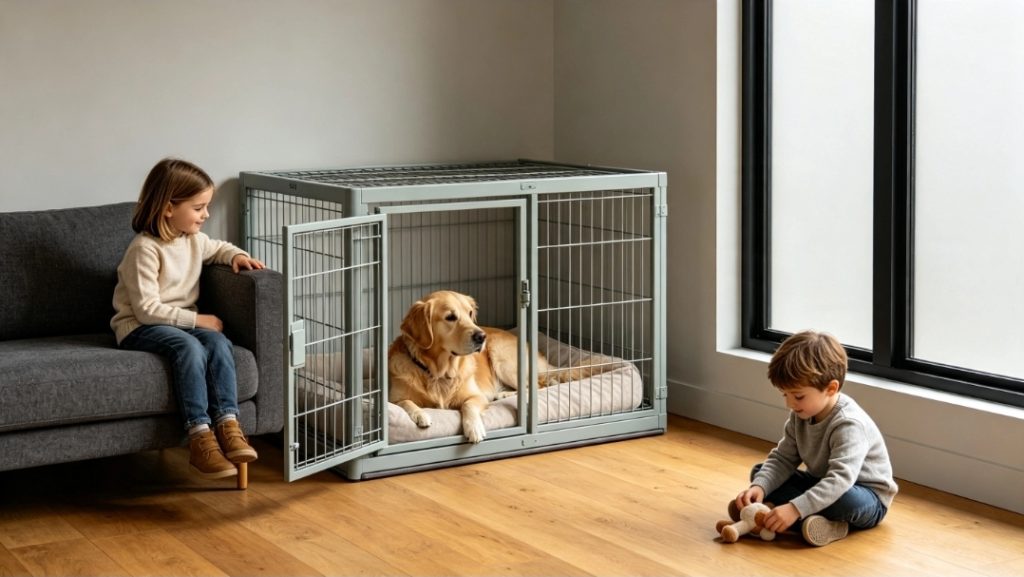
The crate can form part of the home’s structure by providing an appropriate area away from the immediate doorway.
What Can Owners Get Wrong Before Opening the Door?
One of the biggest difficulties is waiting until the dog is already highly excited before attempting to manage the situation.
The letterbox moves.
The dog hears footsteps.
There is a knock.
The dog runs towards the door.
The owner then attempts to move the dog while also trying to answer the door.
This can create unnecessary pressure for everyone involved.
The issue is not simply what happens when the door opens.
The dog’s response can begin several seconds or even minutes earlier.
Understanding the early signs of excitement allows the owner to recognise when the household environment is beginning to change.
RECOMMENDED PRODUCTS
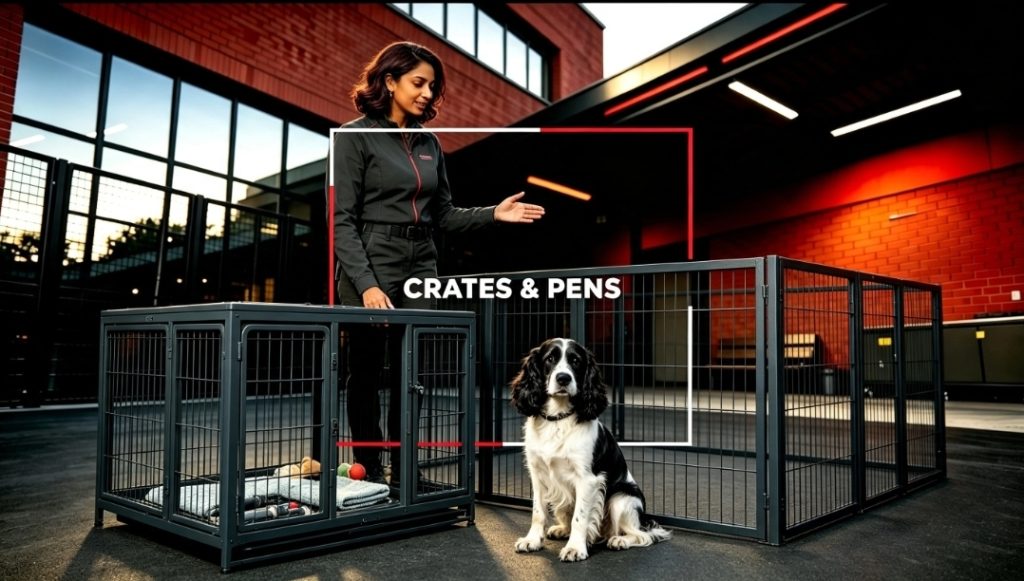
A suitable crate can provide a defined area within the home when visitors, deliveries and other household activity occur.
Why Is the Location of the Crate Important?
Another mistake is placing the crate directly beside the front door.
Although this may appear convenient, it can put the dog directly beside the area where the most activity occurs.
The dog may be able to see every person approaching, hear every movement outside and become increasingly focused on the entrance.
A crate positioned away from the main doorway can provide more separation from the immediate activity while still allowing the dog to remain part of the home.
The correct position will depend on the individual dog and the layout of the property.
RECOMMENDED PRODUCTS
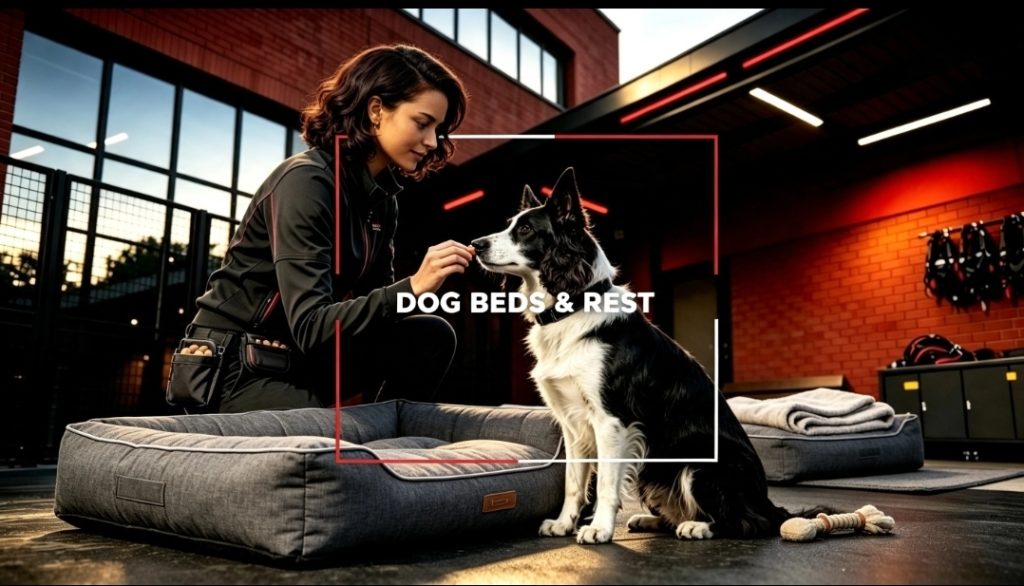
A suitable resting area can help make the crate more comfortable and clearly distinguish it from the busy entrance area.
What Happens When the Owner Becomes Excited Too?
Dogs can respond to changes in the behaviour of the people around them.
If the owner suddenly rushes towards the door, speaks loudly, becomes frustrated or repeatedly gives commands, the overall environment can become more stimulating.
The owner may be trying to solve the situation quickly, but their own actions can unintentionally increase the level of activity.
This is particularly noticeable when a delivery arrives unexpectedly.
A calm and organised household response can make the situation easier to manage.
The objective is not to create a dramatic event every time someone approaches the front door.
Should the Crate Be Used as Punishment?
The crate should not become somewhere the dog is sent because the owner is angry.
If the dog barks when the postman arrives and the owner immediately reacts negatively, the crate can become associated with an unpleasant event.
This can undermine the positive relationship the dog has with the crate.
The crate should instead form part of an appropriate home environment.
If the dog is showing significant distress, anxiety or aggressive behaviour around people approaching the home, additional professional assessment may be appropriate.
RECOMMENDED PRODUCTS

Suitable rewards can be used as part of positive reinforcement training when developing appropriate associations with the crate and household routines.
What If the Dog Barks at the Letterbox?
Some dogs react before the postman reaches the door.
The sound of letters entering the letterbox can produce barking, rushing or sudden movement.
The owner may repeatedly tell the dog to stop.
If this becomes the normal response every time the letterbox moves, the entire event can become a repeated cycle of noise and excitement.
The owner should pay attention to what happens immediately before the barking begins.
Is the dog already watching the hallway?
Has the dog heard footsteps?
Has the dog started pacing?
Recognising these changes can provide useful information about what is triggering the behaviour.
What If the Dog Rushes Towards the Door?
A dog rushing towards the front door can create a difficult situation.
The owner may need to prevent the dog from escaping while also dealing with the delivery.
This becomes even more important when the front door opens directly onto a road, driveway or other area where the dog could be at risk.
A suitable management system can reduce the opportunity for the dog to become directly involved with every delivery.
RECOMMENDED PRODUCTS

Appropriate equipment can support household management and training when used correctly.
Why Should Owners Avoid Creating a Routine of Excitement?
Another mistake is unintentionally making every delivery exciting.
The postman arrives.
The dog runs to the door.
The owner talks to the dog.
The dog barks.
The owner opens the door.
The postman leaves.
The dog continues watching the entrance.
If this happens repeatedly, the arrival of the postman can become a highly stimulating event.
The owner may not realise that the same pattern is being repeated every day.
A calmer household routine can help prevent the delivery from becoming the main event of the dog’s day.
What If the Dog Jumps at the Door?
Some dogs may jump against the door or attempt to reach the person outside.
This can be particularly difficult with larger dogs.
The owner may then have to physically manage the dog while dealing with the delivery.
The situation can become even more complicated if the postman needs to speak to the owner or leave a parcel inside a secure location.
Creating appropriate household structure can help the owner manage these moments without turning the arrival into a prolonged confrontation.
RECOMMENDED PRODUCTS

A training pouch can provide convenient access to suitable rewards during controlled training sessions.
What If the Dog Remains Excited After the Postman Leaves?
Another mistake is assuming the situation has finished as soon as the delivery has been made.
The postman may leave, but the dog may continue barking, pacing or watching the front door.
The dog may remain focused on sounds outside for several minutes.
This can be a sign that the dog has not yet returned to a calm state.
Owners should therefore consider the entire event rather than only the moment when the front door opens.
The period before, during and after the delivery can all affect the dog’s overall response.
How Do the GPK9 Golden Rules Relate to the Situation?
The GPK9 Golden Rules are taught as separate areas of dog training education. Each course has its own specific purpose.
GPK9 Golden Rule One: Home and Social
GPK9 Golden Rule One: Home and Social relates directly to household structure and how the dog interacts with the home environment.
The arrival of the postman is a practical example of how sudden household activity can affect a dog’s behaviour.
GPK9 Golden Rule Two: Obedience
GPK9 Golden Rule Two: Obedience focuses on positive reinforcement, food motivation, luring and developing communication during training.
These principles form part of the dog’s wider education rather than being limited to one specific situation.
GPK9 Golden Rule Three: Prey Drive and Play
GPK9 Golden Rule Three: Prey Drive and Play focuses on engagement through play and recognising changes in arousal during interaction.
Understanding arousal can be useful when considering why some dogs become highly stimulated by movement and activity around the home.
GPK9 Golden Rule Four: Toilet Training
GPK9 Golden Rule Four: Toilet Training focuses on structure, routine, timing and appropriate toilet habits.
A predictable household routine can be particularly important for puppies who are still developing their understanding of the home environment.
GPK9 Golden Rule Five: Social Walking
GPK9 Golden Rule Five: Social Walking focuses on calm and manageable walking and helping dogs cope with different environments outside the home.
The skills developed through structured training can contribute to a dog’s wider ability to remain manageable in changing environments.
What Are the Most Common Mistakes Around Post Deliveries?
When learning how to use a dog crate when the postman arrives, owners can unintentionally make several mistakes.
They may allow the dog to rush towards the front door.
They may place the crate directly beside the entrance.
They may wait until the dog is already highly excited.
They may use the crate as punishment.
They may repeatedly shout at the dog.
They may allow visitors or delivery workers to interact with an excited dog.
They may forget that the dog can remain stimulated after the delivery has finished.
They may also expect the crate to solve the entire behaviour without considering the wider training and household environment.
Recognising these patterns is an important part of improving the situation.
RECOMMENDED PRODUCTS

Appropriate puppy equipment can help owners create safer and more manageable routines while a young dog learns how to behave within the home.
How to Use a Dog Crate When the Postman Arrives
How to Use a Dog Crate When the Postman Arrives is ultimately about understanding how ordinary household events can become significant moments for a dog.
The postman may only be at the property for a few seconds, but the sounds and activity surrounding the delivery can create a much longer reaction.
The owner plays an important role in how the environment is managed.
The crate can provide part of that structure when it is appropriately introduced and used positively.
The aim is not simply to put the dog away whenever someone approaches the door.
It is about understanding the dog’s behaviour, recognising what causes increased excitement and creating an environment where the dog can learn to remain calm and manageable.
GPK9 education focuses on helping owners understand the How, Why and When behind dog training.
RECOMMENDED COURSE

Related Articles
What Is a Dog Crate? How Crate Training Works
Why Use a Dog Crate? Understanding Crate Training
When Should You Use a Dog Crate? Practical Crate Training
How to Introduce Your Dog to a Crate Step by Step
How to Use a Dog Crate to Create Structure at Home
How to Use a Dog Crate When Visitors Arrive
How to Use a Dog Crate When Someone Comes to the Door
How to Use a Dog Crate During Busy Household Activity
How to Use a Dog Crate Safely Around Children
How to Use a Dog Crate Around Other Animals
Common Dog Crate Training Mistakes and How to Avoid Them
What to Do When Your Dog Leaves the Training Mat
Dog Crate vs Training Mat vs Playpen: What Is the Difference?
How to Use a Dog Crate, Training Mat and Playpen Together
How Much Freedom Should You Give a Puppy at Home?