Dog Training Harnesses: Types, Uses & How to Choose
A dog training harness can be a valuable piece of equipment for walking, training and controlled outdoor work. However, harnesses are not all designed in the same way, and choosing one simply because it looks comfortable or professional does not necessarily mean it will be suitable for the dog or the exercise.
A harness should be considered alongside the dog’s size, body shape, behaviour, training level, environment and the purpose for which it will be used.
Dog Training Harnesses: Types, Uses & How to Choose explains what harnesses do, how they compare with collars, the main harness designs available, how to achieve an appropriate fit and how harnesses can be incorporated into everyday training.
The objective is not to identify one universal harness for every dog. It is to understand how different designs work and select equipment that supports the specific training task.
RECOMMEND PRODUCTS

- RELATED ARTICLES
- Dog Training Leads & Long Lines: What to Choose & Why
- Dog Training Collars: Types, Uses & Choosing the Right Collar
- Dog Walking Essentials: Equipment for Safe Outdoor Adventures
Understanding Harnesses
What a harness does
A harness distributes the connection between dog and handler across areas of the dog’s body rather than concentrating the connection at the neck.
The exact distribution depends on the harness design.
Harnesses can provide useful management during walking and training, particularly when the handler wants an alternative to attaching the lead directly to a collar.
However, a harness does not automatically teach a dog to walk nicely. The equipment provides a physical connection; training teaches the behaviour.
A dog wearing a harness can still pull, lunge or become distracted. The handler therefore needs to understand how the equipment works alongside appropriate training techniques.
Harness versus collar
A collar and harness perform different functions and should not necessarily be viewed as competing pieces of equipment.
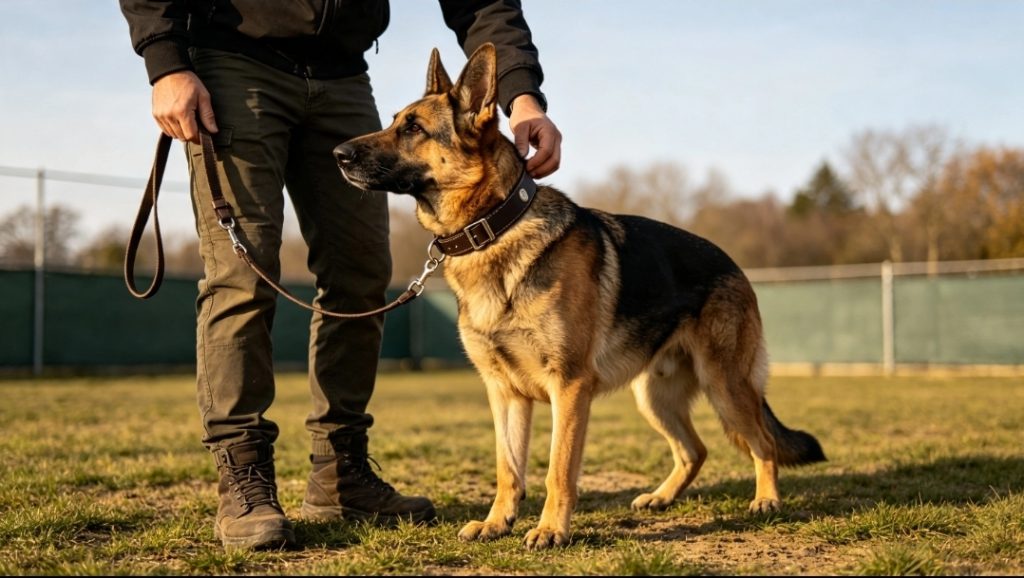
A collar provides a connection around the neck, while a harness provides connection points around the body.
The choice depends on the individual dog and the activity.
For a deeper examination of collar types and their applications, Dog Training Collars: Types, Uses & Choosing the Right Collar provides useful complementary information. Understanding both options allows the handler to select equipment according to the exercise rather than relying on one piece of equipment for everything.
Advantages and limitations
Harnesses can provide useful control while avoiding the need to attach the lead directly to the neck.
They can also offer different attachment positions, allowing handlers to select equipment suited to particular training requirements.
However, harnesses have limitations.
A poorly fitted harness can rub, shift position or restrict movement. Some dogs can also learn to pull effectively while wearing certain harness designs.
The harness therefore needs to be correctly selected, correctly fitted and used alongside appropriate training.
RECOMMEND PRODUCTS
- RELATED ARTICLES
- Dog Training Leads & Long Lines: What to Choose & Why
- Dog Training Collars: Types, Uses & Choosing the Right Collar
- Dog Walking Essentials: Equipment for Safe Outdoor Adventures
Understanding collars alongside harnesses helps the handler choose the appropriate connection for different exercises and situations.
Harness Designs
Back-clip
A back-clip harness has its primary lead attachment point positioned on the dog’s back.
This design can be useful for everyday walking and general management.
Because the attachment point sits behind the dog, however, it should not be assumed that it will prevent pulling. Training remains necessary to teach appropriate lead behaviour.
Front-clip
A front-clip harness places the lead attachment point towards the front of the dog’s chest.
This can alter the direction of the connection when the dog moves forward and may provide additional management for some dogs during walking.
The handler should still understand the individual design and ensure it fits correctly.
Multi-attachment
Multi-attachment harnesses provide more than one connection option.
This can offer greater versatility when moving between different training exercises.
A handler might use one attachment for everyday walking and another for a particular controlled training setup, depending on the manufacturer’s design and the dog’s needs.
No-pull designs
No-pull harnesses are designed with features intended to help manage pulling.
However, the term should not be interpreted as meaning the harness itself teaches loose-lead walking.
A dog can learn to walk appropriately through training, reinforcement and consistency. Equipment can assist management while that behaviour is being established.
Working harnesses
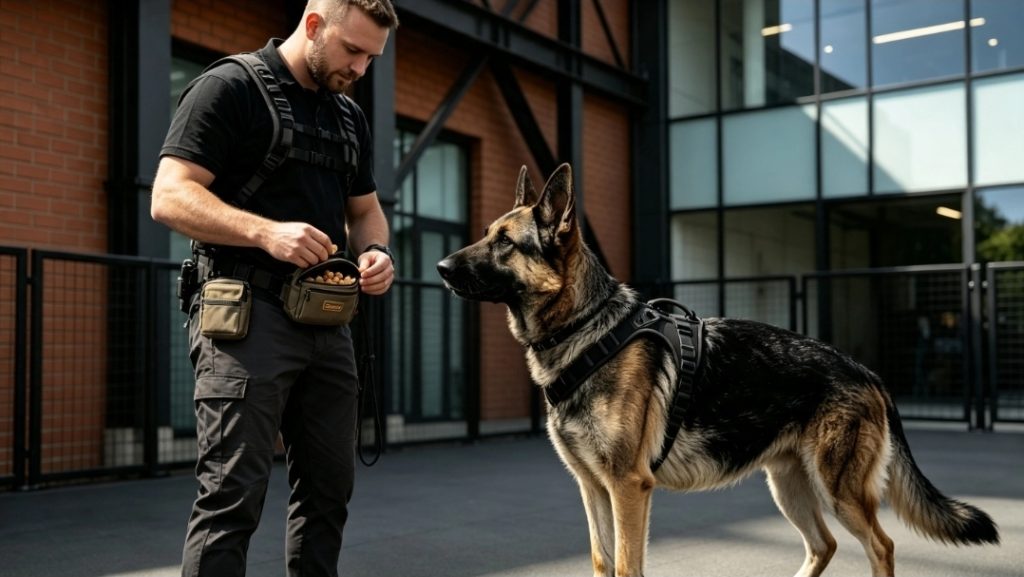
Working harnesses are designed for specific applications and may have additional features for particular working roles.
The harness should be selected according to the intended task rather than appearance alone.
Working equipment may have different construction, attachment points or load requirements from an everyday walking harness.
RECOMMEND PRODUCTS
- RELATED ARTICLES
- Dog Training Leads & Long Lines: What to Choose & Why
- Dog Training Collars: Types, Uses & Choosing the Right Collar
- Dog Walking Essentials: Equipment for Safe Outdoor Adventures
Dog Training Leads & Long Lines: What to Choose & Why
The harness and lead should be considered as one connected training system. Lead length, construction and handling can significantly affect how the harness is used during walking, recall and distance work.
Harness Fit
Correct fit is one of the most important considerations when choosing a harness.
A harness that is too loose may shift position or allow the dog to escape. A harness that is too tight may rub or interfere with comfortable movement.
Measuring the dog
Manufacturers may use different measurement systems, so the handler should follow the specific manufacturer’s guidance.
Measurements commonly involve areas such as the dog’s chest and body circumference.
Do not choose a harness based solely on the dog’s weight or breed name. Individual dogs can have substantially different body shapes.
Correct positioning
Once fitted, the harness should sit in the position intended by its design.
The straps should remain correctly positioned rather than rotating around the dog’s body when the dog moves.
The handler should observe the harness while the dog walks, turns, sits and moves naturally.
Adjusting straps
Most adjustable harnesses have several straps that need to be correctly positioned.
Adjustments should be made gradually and checked from multiple angles.
The harness should be secure without being unnecessarily tight.
Checking movement
Movement is one of the most useful ways to assess fit.
Watch the dog walk, turn, sit, stand and move naturally.
Look for signs that the harness is shifting excessively or interfering with the dog’s movement.
The harness should allow the dog to move naturally while remaining securely fitted.
Preventing rubbing
Particular attention should be paid to areas where straps contact the dog’s body.
After use, inspect the skin and coat for signs of rubbing or irritation.
If the harness repeatedly causes rubbing, the fit or design may not be appropriate for that individual dog.
RECOMMEND COURSE
Fundamentals 1
Fundamentals 1 connects naturally with the early stages of training where handlers are developing basic communication, equipment familiarity and foundational behaviours.
Training Applications
Loose-lead walking
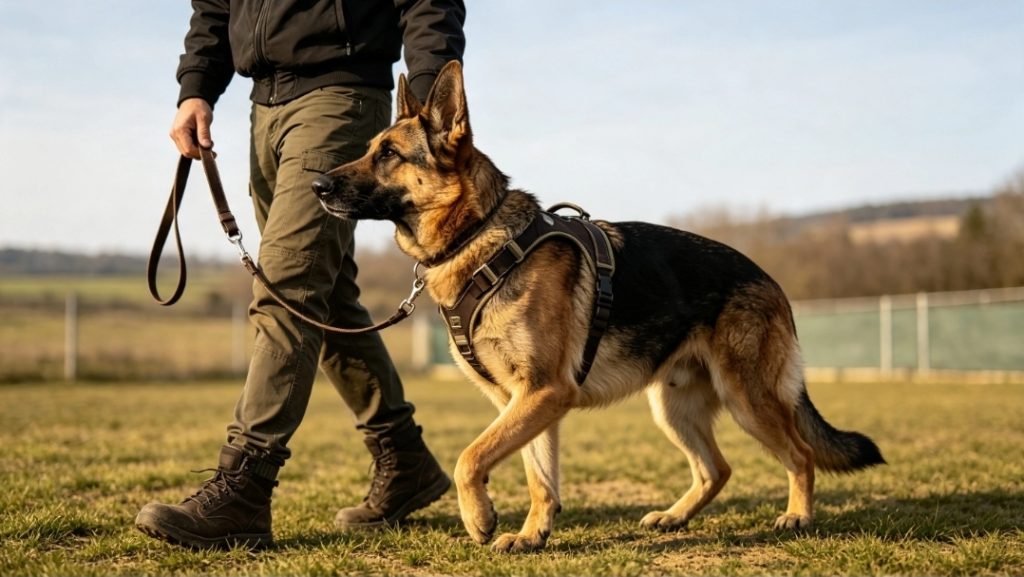
One of the most common uses for a harness is everyday loose-lead walking.
The harness provides the connection between dog and handler, while training teaches the dog to move without continually pulling against the lead.
The handler can reinforce desirable positions and engagement while gradually introducing different environments.
For the wider principles of obedience and communication, Obedience Dog Training: Equipment, Commands & Techniques provides a natural next step.
Recall
A harness can also be incorporated into recall training where appropriate.
When combined with a long line, a suitable harness may provide a practical connection during controlled recall exercises.
The handler can gradually increase distance while maintaining an additional level of physical management.
The harness itself does not create recall reliability. The recall behaviour must still be trained and reinforced.
Long-line work
Long-line work gives a dog greater freedom while remaining connected to the handler.
The harness and long line should be compatible, securely attached and appropriate for the dog’s size and training environment.
The handler must also understand how to manage the additional line safely.
For detailed information on long-line handling, Dog Training Leads & Long Lines: What to Choose & Why provides further guidance.
Everyday walking
A harness can be useful for routine walks where the handler wants a body connection rather than a lead attached directly to the collar.
The choice should still consider the dog’s behaviour, body shape, walking style and the environment.
Dogs requiring additional control
Some dogs require more careful management because of their size, strength, excitement or behaviour.
In these situations, equipment selection becomes particularly important.
A harness should not be used as a replacement for professional behavioural or training support where significant control difficulties exist. Instead, it can form part of a broader management and training strategy.
RECOMMEND PRODUCTS
- RELATED ARTICLES
- Dog Training Leads & Long Lines: What to Choose & Why
- Dog Training Collars: Types, Uses & Choosing the Right Collar
- Dog Walking Essentials: Equipment for Safe Outdoor Adventures
Dog Walking Essentials: Equipment for Safe Outdoor Adventures
A harness is only one part of an outdoor walking setup. Considering the lead, identification, handling equipment and overall walking environment together can create a more practical system.
RECOMMEND COURSE
Fundamentals 2
Fundamentals 2 is relevant to progressing from basic equipment familiarity into more developed obedience and controlled outdoor work, where harnesses and leads become part of a wider training system.
Harnesses and Training Progression
Equipment should change as the dog’s training develops.
A puppy or inexperienced dog may initially require simple, controlled training in a quiet environment.
As the dog progresses, the handler can introduce longer walks, more distractions, recall exercises and different environments.
This creates a progression similar to:
Home → Garden → Quiet outdoor environment → Public environment → Distractions → Greater distance
The harness can remain part of the equipment system throughout this progression, provided it continues to be appropriate.
The important point is that equipment should support the dog’s current level of training rather than encouraging the handler to progress too quickly.
RECOMMEND PRODUCT
- RELATED ARTICLES
- Dog Training Leads & Long Lines: What to Choose & Why
- Dog Training Collars: Types, Uses & Choosing the Right Collar
- Dog Walking Essentials: Equipment for Safe Outdoor Adventures
Dog Training Treats: Choosing the Right Rewards for Training
Harness training can be paired with reward-based learning. Treats can reinforce calm behaviour, engagement, loose-lead walking and appropriate responses during equipment introduction.
Safety
Escape prevention
One of the most important safety considerations is whether the dog can escape from the harness.
A harness should be checked for correct adjustment before every use, particularly if it has not been worn recently or if the dog’s body shape has changed.
Handlers should pay particular attention to situations where a dog may reverse suddenly.
An insecure harness can become a serious management problem if the dog backs out of it.
Equipment inspection
Inspect the harness regularly.
Check stitching, buckles, adjustment points, clips, straps and attachment areas for signs of wear.
Look for fraying, damaged buckles, weakened stitching or distorted hardware.
Equipment should be checked particularly carefully when used with larger or stronger dogs.
Correct attachment
The lead should be attached to the correct connection point for the harness design and exercise.
If a harness has multiple attachment points, the handler should understand what each point is intended for rather than attaching equipment without considering its purpose.
The connection should be secure before training begins.
Choosing a Harness for Different Dogs
There is no single harness that is automatically correct for every dog.
A small dog, large dog, deep-chested dog, broad-chested dog and narrow-bodied dog may all require different considerations.
The handler should assess:
- The dog’s body shape.
- The dog’s size and strength.
- The intended activity.
- The required attachment point.
- The dog’s walking behaviour.
- The training environment.
- The security of the fit.
- The dog’s comfort and movement.
The harness should then be tested in controlled conditions before being relied upon in more demanding environments.
RECOMMEND COURSE
Fundamentals 3
Fundamentals 3 can provide a natural progression for handlers developing greater consistency and control as their dog’s training moves beyond basic foundations.
Harnesses Within the Wider GPK9 Training System
A harness should never be considered in isolation.
The wider GPK9 training equipment cluster connects harnesses with collars, leads, long lines, rewards and obedience training.
For example, a handler may use a harness and standard lead during everyday walking, transition to a long line for recall training and use appropriate rewards to reinforce engagement.
That creates a complete training system rather than relying on one piece of equipment to solve every problem.
Dog Training Collars: Types, Uses & Choosing the Right Collar can help when comparing collar options.
Dog Training Leads & Long Lines: What to Choose & Why can help when selecting the connection used with the harness.
Dog Training Treats: Choosing the Right Rewards for Training supports the reinforcement side of the training process.
Together, these resources create a connected pathway through the GPK9 topic cluster.
What the Reader Learns
By understanding Dog Training Harnesses: Types, Uses & How to Choose, the handler can make better-informed decisions about harness selection and use.
The key principles are:
- Understand what the harness is designed to do.
- Consider harnesses and collars according to the individual exercise.
- Understand the differences between back-clip, front-clip and multi-attachment designs.
- Do not assume a no-pull harness replaces training.
- Select working harnesses according to their intended application.
- Measure the dog correctly.
- Adjust every strap appropriately.
- Check movement rather than relying solely on appearance.
- Monitor for rubbing or irritation.
- Check escape resistance.
- Inspect equipment regularly.
- Use the correct attachment point.
- Match harness selection to the training objective.
- Introduce equipment progressively.
- Combine harness use with appropriate training techniques.
RECOMMENDED ARTICLES
Dog Training Leads & Long Lines: What to Choose & Why
Essential for understanding how the lead or long line connects with harness training, particularly during recall and distance work.
Dog Training Collars: Types, Uses & Choosing the Right Collar
Provides a complementary understanding of collars and when a collar may be selected instead of, or alongside, a harness.
Obedience Dog Training: Equipment, Commands & Techniques
Connects harness use with the wider process of teaching commands, engagement, focus and reliable obedience.
Dog Training Treats: Choosing the Right Rewards for Training
Explains the reward side of training and how appropriate reinforcement can support desirable behaviours.
Dog Walking Essentials: Equipment for Safe Outdoor Adventures
Extends harness selection into the wider subject of safe and practical outdoor walking equipment.
Puppy Training: Essential Skills, Equipment & Techniques
Provides additional information for handlers introducing training and equipment during early development.
Final Thoughts
A harness is a training tool, not a substitute for training.
The correct design can provide a useful connection between dog and handler, but its effectiveness depends on appropriate selection, correct fitting, suitable handling and consistent training.
Back-clip, front-clip, multi-attachment, no-pull and working harnesses all have different characteristics. The right choice depends on the dog, the handler, the environment and the exercise.
Fit is equally important. The harness should be secure, comfortable and positioned correctly, while allowing the dog to move naturally.
When combined with an appropriate lead, clear communication and reward-based training, a harness can become an effective part of a wider training system.
The goal is not simply to find a harness that looks suitable.
The goal is to choose equipment that allows the handler and dog to work together safely, comfortably and effectively as training progresses.