Dog Toys & Rewards: Choosing Toys for Training & Play
Dog toys can be much more than something to keep a dog occupied. Used correctly, toys can become valuable rewards, motivation tools and training equipment.
Some dogs are highly motivated by food, while others become particularly enthusiastic when offered an opportunity to chase, retrieve or engage with a tug toy. Understanding these differences can help owners develop more effective training sessions.
Dog Toys & Rewards: Choosing Toys for Training & Play explores how toys can be selected and used according to the individual dog, the training objective and the type of play that creates genuine engagement.
The aim is not simply to own a large collection of toys. It is to identify which toys have value to your dog and understand how that value can be incorporated into structured training and everyday play.
For owners interested in the wider role of rewards, Dog Training Treats: Choosing the Right Rewards for Training provides a useful comparison because food can also be used as reinforcement during training.
RECOMMEND PRODUCTS

- RELATED ARTICLES
- Dog Enrichment: Toys, Activities & Ideas for Mental Stimulation
- Dog Training Treats: Choosing the Right Rewards for Training
- Puppy Training: Essential Skills, Equipment & Techniques
Understanding Toys as Rewards
A reward is valuable because the dog wants access to it.
That means the best training toy is not necessarily the most expensive, most sophisticated or most visually impressive product. It is the toy that your particular dog finds motivating.
Play motivation
Play can be extremely useful during training when the dog naturally enjoys the activity.
A tug toy, ball or retrieve item can become something the dog works to earn. The trainer can then use short periods of play to reinforce a behaviour before returning to training.
The reward does not have to last for several minutes. In many situations, a brief, enthusiastic interaction can be enough.
The important point is that play should remain meaningful to the dog.
Food versus toy rewards
Food and toys both have potential uses within training.
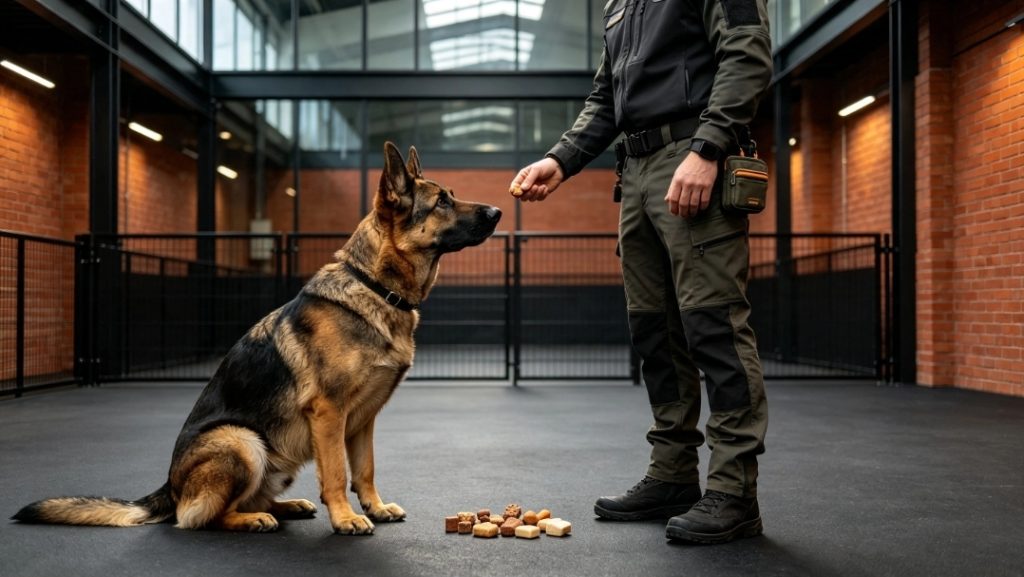
Food can be convenient for teaching new behaviours because it can be delivered quickly and precisely. Toys can provide a different type of motivation, particularly for dogs that naturally enjoy chasing, retrieving or tugging.
There is no requirement to choose one reward system exclusively.
A dog may work well for food during one exercise and become more motivated by a toy during another. The most useful approach is to understand what motivates the individual dog and use the appropriate reward for the task.
Individual preferences
Dogs have individual personalities and preferences.
One dog may immediately chase a ball, while another may show little interest in retrieving but become highly engaged with a tug toy.
Another dog may prefer food rewards altogether.
Observing what naturally captures your dog’s attention is therefore an important part of selecting training rewards.
RECOMMEND PRODUCTS
- RELATED ARTICLES
- Dog Enrichment: Toys, Activities & Ideas for Mental Stimulation
- Dog Training Treats: Choosing the Right Rewards for Training
- Puppy Training: Essential Skills, Equipment & Techniques
Food rewards remain an important alternative to toy rewards. Understanding how treats can be selected and used helps owners build a flexible reward system rather than relying on a single type of reinforcement.
Types of Dog Toys
Different toy categories create different opportunities for play and training.
Understanding the purpose of each type makes it easier to decide which toys are genuinely useful.
Tug toys
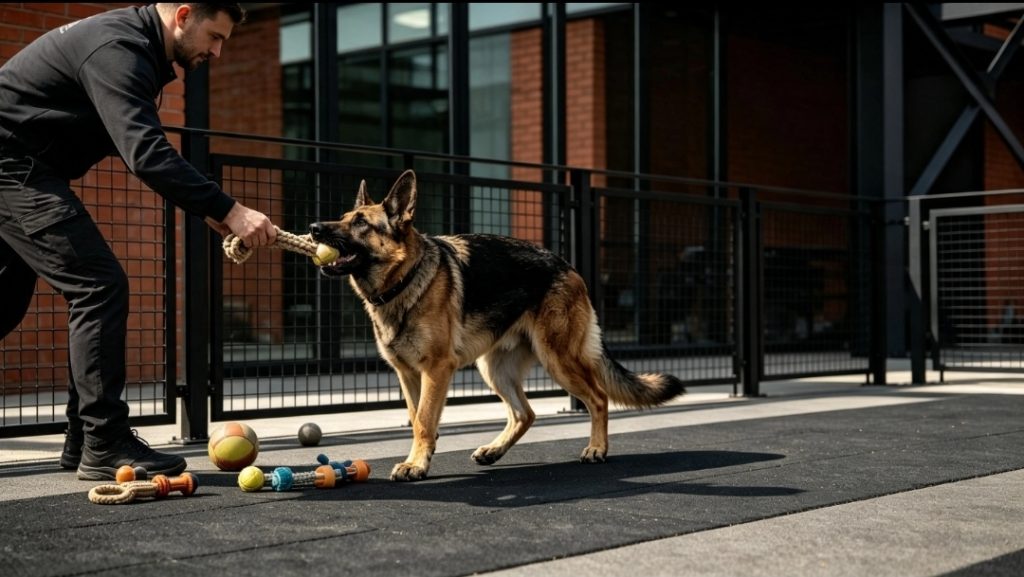
Tug toys can be particularly useful for interactive play.
A suitable tug toy allows the handler and dog to participate together rather than the dog simply playing independently.
Tug can also be incorporated into structured training by using access to the toy as a reward for a completed behaviour.
The toy should be appropriately sized and constructed for the dog. Owners should also monitor the equipment for wear and replace it when necessary.
Balls
Balls are popular rewards for dogs that naturally enjoy chasing and retrieving.
A ball can be used for short reward sequences, recall games, engagement exercises and structured fetch.
Different sizes and materials are available, so the toy should be appropriate for the individual dog.
Fetch toys
Fetch toys are designed around retrieving and returning an object.
Fetch can provide physical activity while also creating opportunities to practise engagement and returning attention to the handler.
However, fetch does not automatically become obedience training simply because a command is added. The behaviour needs to be taught clearly and reinforced consistently.
Interactive toys
Interactive toys can encourage the dog to engage with an object or participate in an activity.
Some are designed for owner-and-dog interaction, while others provide independent activity.
Their usefulness depends on the purpose. A toy designed for independent enrichment may not be the best choice as a fast training reward.
Chew toys
Chew toys have a different role from interactive training toys.
They can provide an appropriate outlet for chewing and may form part of a dog’s relaxation or enrichment routine.
Owners should select suitable products and supervise their use where appropriate, particularly with dogs that are strong chewers.
For a wider look at mental stimulation, Dog Enrichment: Toys, Activities & Ideas for Mental Stimulation connects naturally with the use of toys outside formal training sessions.
Puzzle toys
Puzzle toys can require dogs to interact with an object to access food or another reward.
They can provide mental engagement and may be useful as part of an enrichment programme.
However, puzzle toys and training rewards serve different purposes. A puzzle activity may last considerably longer, whereas a training reward often needs to be delivered quickly so the trainer can immediately continue with the next repetition.
RECOMMEND PRODUCTS
- RELATED ARTICLES
- Dog Enrichment: Toys, Activities & Ideas for Mental Stimulation
- Dog Training Treats: Choosing the Right Rewards for Training
- Puppy Training: Essential Skills, Equipment & Techniques
Dog Enrichment: Toys, Activities & Ideas for Mental Stimulation
This related article is particularly useful when choosing toys for activities outside formal obedience work, helping owners distinguish between training rewards and broader enrichment.
Using Toys During Training
One of the biggest advantages of toys is that they can make training interactive.
Instead of simply delivering a reward after a behaviour, the trainer can use the reward to create an active interaction between dog and handler.
Tug as reinforcement
Tug can be used as reinforcement when the dog genuinely enjoys it.
For example, the dog may perform a requested behaviour, receive the appropriate marker or verbal acknowledgement and then gain access to the tug toy for a short period.
After the play interaction, the toy can be removed and the next training repetition can begin.
The exact sequence will depend on the exercise and the dog’s level of training.
The objective is controlled engagement rather than uncontrolled excitement.
Fetch
Fetch can also be incorporated into training.
A dog may learn that returning to the handler results in another opportunity to chase the toy.
This can make retrieving behaviour useful in engagement exercises and recall training.
The trainer should avoid allowing the dog to learn that running away with the toy is more rewarding than returning.
RECOMMEND COURSE
Fundamentals 2 can complement this stage of training by helping owners develop greater reliability and engagement. Toys can then become practical rewards within a broader training structure.

Toys for Recall
Recall is one area where a suitable toy can become particularly valuable.
If a dog enjoys chasing or retrieving a ball, the toy can help create positive associations with returning to the handler.
The trainer can begin in an appropriate environment with manageable distractions and build the behaviour progressively.
The reward should happen after the desired response, helping the dog understand that returning to the handler leads to something worthwhile.
The toy should not be used as a bribe that is constantly waved in front of the dog before the recall.
Instead, the training process should develop a reliable response to the recall cue.
Owners should also consider the environment and the dog’s current reliability before allowing freedom in areas where running away could create a safety risk.
For owners developing foundational obedience, Obedience Dog Training: Equipment, Commands & Techniques provides a natural connection because recall is part of the wider process of teaching reliable responses and appropriate behaviour.
RECOMMEND PRODUCTS
- RELATED ARTICLES
- Dog Enrichment: Toys, Activities & Ideas for Mental Stimulation
- Dog Training Treats: Choosing the Right Rewards for Training
- Puppy Training: Essential Skills, Equipment & Techniques
A suitable long line can provide controlled freedom during recall training while allowing the owner to practise responses in environments where unrestricted off-lead access would not yet be appropriate.
Building Engagement and Focus
A toy can also help develop engagement with the handler.
The trainer can create short periods where the dog learns that paying attention, responding and participating in the exercise leads to access to something it values.
The key is to maintain clarity.
Training should not simply become a frantic game of throwing toys around. The dog needs to understand when it is working, when it is being rewarded and when the activity has finished.
Short reward periods
Short play sessions can be highly practical.
A few seconds of energetic tug or a brief retrieve can be enough before returning to the exercise.
This allows the trainer to maintain momentum without allowing the reward to dominate the entire session.
Focus
Toy rewards can be particularly useful for dogs that become highly engaged during play.
The trainer can use this motivation to encourage the dog to orientate towards them, respond to cues and remain connected during training.
However, the level of excitement should remain appropriate for the exercise.
A dog that becomes so stimulated by a toy that it can no longer listen or respond may need a different reward strategy or a lower level of arousal.
RECOMMEND COURSE
A structured programme can help owners build consistency across training sessions. Toy rewards can be incorporated into this wider process to reinforce engagement, focus and reliable responses.
Impulse Control and Toy Rewards
One of the most useful aspects of structured toy training is learning that access to the toy can be controlled.
The dog does not necessarily need to receive the toy immediately whenever it sees it.
Instead, training can establish appropriate behaviours around the reward.
For example, the dog may learn to wait briefly, maintain attention or respond to a cue before play begins.
This does not mean deliberately frustrating the dog. The objective is to teach clear communication and controlled access to something valuable.
Impulse control should develop progressively and should be appropriate to the dog’s age, experience and training level.
The toy remains rewarding because the dog understands that calm, appropriate behaviour can lead to access to play.
Choosing the Right Toy
When considering Dog Toys & Rewards: Choosing Toys for Training & Play, selection should begin with the dog rather than the product.
Size
The toy should be appropriate for the dog’s size and mouth.
Avoid toys that are too small for the individual dog and could create a swallowing or choking risk.
At the same time, an excessively large toy may be difficult for the dog to carry or interact with comfortably.
Durability
Durability should match the dog’s behaviour.
A toy suitable for a gentle player may not survive long with a powerful chewer.
Inspect toys regularly and remove damaged equipment where it presents a safety concern.
Dog preference
The dog’s preference should influence the decision.
If a dog repeatedly chooses a ball over a tug toy, that information is useful.
If another dog becomes highly motivated by tugging but ignores a particular ball, there may be little reason to force the ball into the training system.
Training objective
Consider what the toy is supposed to achieve.
A tug toy may be useful for interactive engagement.
A ball may work well for chasing and retrieving.
A chew toy may be more appropriate for independent occupation.
A puzzle toy may be better suited to enrichment.
Selecting according to purpose makes the equipment more useful.
RECOMMEND PRODUCTS
- RELATED ARTICLES
- Dog Enrichment: Toys, Activities & Ideas for Mental Stimulation
- Dog Training Treats: Choosing the Right Rewards for Training
- Puppy Training: Essential Skills, Equipment & Techniques
The toy itself should be considered training equipment when it is being used as a reward. Select equipment according to size, durability, safety, dog preference and the behaviour being trained.

Toy Safety
Toy rewards should always be used responsibly.
Check toys regularly for damage, particularly after energetic tugging or chewing.
Loose pieces, damaged stitching, broken components or significant wear can create hazards.
Supervision requirements also vary according to the toy and the dog.
A dog that calmly carries a ball may interact very differently with a soft toy than a dog that immediately attempts to destroy it.
Owners should understand their own dog’s behaviour and use equipment accordingly.
Toys should also be used in an appropriate environment. A training area should provide enough room for the activity without creating unnecessary collision or entanglement risks.
For broader everyday equipment and care considerations, Dog Care & Health: Essential Everyday Care for Your Dog provides another useful part of the GPK9 content pathway.
Making Play Part of a Training Routine
Play does not need to be separate from training.
A simple training session might include a period of engagement, several repetitions of a behaviour, a short toy reward, another training exercise and then a calm finish.
The structure will vary according to the dog and the objective.
The important principle is that the toy has a purpose.
Instead of throwing a ball repeatedly without structure, the trainer can use the ball to reinforce a particular response.
Instead of allowing unrestricted tugging throughout the session, the tug toy can become a controlled reward for engagement.
This approach gives play a clearer role within the training system.
RECOMMEND COURSE
Advanced Luring is relevant where owners are developing more precise training mechanics and using motivation strategically. While luring and toy rewards are not identical techniques, understanding how motivation can influence training helps owners become more deliberate about how rewards are delivered.
Keeping Toys Valuable
If a dog has unlimited access to its favourite training toy at all times, the toy may not retain the same value during structured sessions.
For some dogs, keeping particular toys specifically for training can help maintain their significance.
This does not mean toys must always be hidden away. Instead, owners can have different categories of equipment for different purposes.
For example, a dog may have everyday chew toys, enrichment toys and one or two particularly valuable training toys.
This allows the owner to select the appropriate reward for the situation.
The most important consideration remains the dog’s individual response.
Food and Toy Rewards Can Work Together
There is no reason for training to become an argument between food and toys.
Both can have a place.
Food can provide precise, quick reinforcement when teaching certain behaviours. Toys can provide energetic interactive reinforcement when the dog is particularly motivated by play.
Some training sessions may use both.
The trainer can select the reward according to the exercise, environment and dog’s current level of engagement.
Understanding reward choice gives owners more flexibility and avoids becoming dependent on one reward in every situation.
RECOMMEND PRODUCTS
- RELATED ARTICLES
- Dog Enrichment: Toys, Activities & Ideas for Mental Stimulation
- Dog Training Treats: Choosing the Right Rewards for Training
- Puppy Training: Essential Skills, Equipment & Techniques
Dog Training Treat Pouches: How to Choose the Right One
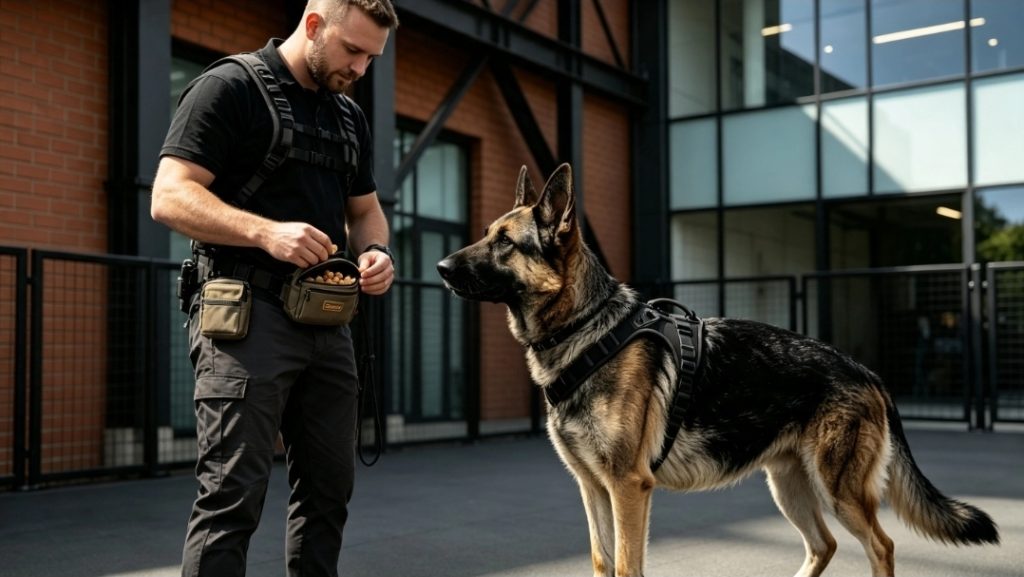
When food and toy rewards are both part of training, practical organisation becomes useful. A suitable treat pouch can keep food rewards accessible while a training toy can be introduced when the exercise calls for a different form of reinforcement.
Creating a Balanced Training and Play System
A successful reward system should support the dog’s overall development.
Training should include appropriate obedience, engagement, recall, impulse control and calm behaviour.
Play can then become one of the tools used to reinforce those behaviours.
At the same time, dogs still need opportunities for free play, enrichment, exercise and rest.
A training toy should not become the only form of interaction.
For puppies, appropriate play can be particularly valuable, but sessions should remain suitable for their age and physical development. Puppy Training: Essential Skills, Equipment & Techniques provides a useful next step for owners building these early foundations.
RECOMMEND COURSE
Fundamentals 1 is particularly relevant to early training because owners can begin establishing engagement, basic responses and appropriate reward habits from the start.
What the Reader Learns
Understanding Dog Toys & Rewards: Choosing Toys for Training & Play means recognising that toys can have several different roles.
They can provide enrichment, encourage play, create interaction between dog and handler and, when used appropriately, become powerful training rewards.
The most useful toy is not necessarily the most expensive one. It is the one that matches the dog’s preferences, the training objective and the safety requirements of the situation.
Tug toys can support interactive play. Balls can provide chase and retrieve opportunities. Fetch toys can reinforce returning to the handler. Chew toys can support appropriate chewing, while puzzle and interactive toys can contribute to enrichment.
The way the toy is used matters just as much as the toy itself.
A reward should reinforce the behaviour the trainer wants to develop. Play should remain structured when it is being used within training, while dogs should still have opportunities for enjoyable, appropriate play outside formal sessions.
RECOMMEND PRODUCTS
- RELATED ARTICLES
- Dog Enrichment: Toys, Activities & Ideas for Mental Stimulation
- Dog Training Treats: Choosing the Right Rewards for Training
- Puppy Training: Essential Skills, Equipment & Techniques
Dog Training Treats: Choosing the Right Rewards for Training
This provides the food-reward side of the topic and helps owners understand how treats can be incorporated alongside toy-based reinforcement.
Dog Enrichment: Toys, Activities & Ideas for Mental Stimulation
This expands the discussion beyond training rewards and explains how toys and activities can contribute to mental stimulation.
Obedience Dog Training: Equipment, Commands & Techniques
This connects toy rewards with the wider development of obedience, focus and reliable responses.
Dog Training Leads & Long Lines: What to Choose & Why
This is particularly relevant when toys are being used for recall and outdoor training where controlled freedom is important.
Dog Training Treat Pouches: How to Choose the Right One
This complements toy-based rewards by covering practical equipment for carrying and delivering food during training.
Puppy Training: Essential Skills, Equipment & Techniques
This provides a natural pathway for owners introducing reward-based play and foundational training to puppies.
Dog Care & Health: Essential Everyday Care for Your Dog
This connects training equipment and play with the broader responsibilities of everyday dog care.
Ultimately, Dog Toys & Rewards: Choosing Toys for Training & Play is about using play with purpose.
Identify what your dog genuinely enjoys. Select equipment that is appropriate, durable and safe. Match the reward to the training objective, keep sessions structured and allow play to remain enjoyable.
When toys are used thoughtfully, they can become much more than objects for a dog to chase or carry. They can become part of a clear communication system between dog and handler, helping turn motivation and play into productive training opportunities.