Why Consistency Matters in Dog Training
Why Consistency Matters in Dog Training is an important consideration for anyone teaching a dog new behaviours, establishing household routines or developing reliable communication. Dogs can struggle when the same situation produces different responses from the handler, particularly when expectations change from one session to another. A dog may receive a reward for one behaviour on one occasion but receive no clear response for the same behaviour later, or a household rule may be enforced by one person but ignored by another. These inconsistencies can make training less predictable, create frustration and make it more difficult for the dog to understand what is expected.
RECOMMENDED PRODUCTS
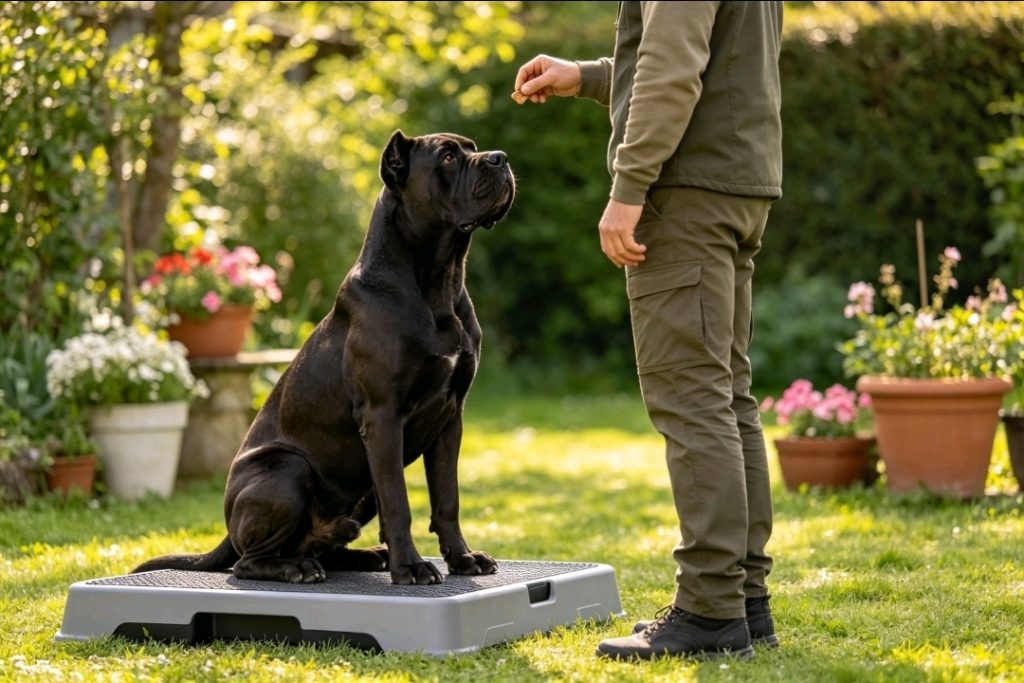
Training Mat — a suitable training mat can provide a consistent physical location for structured exercises and calm behaviour.
Common Problems With Inconsistent Dog Training
One of the most common problems with inconsistent dog training is that the dog does not receive a clear pattern from the handler. Training depends on communication, and communication becomes more difficult when expectations continually change.
A behaviour that is encouraged one day and discouraged the next can become difficult for the dog to interpret. The dog may continue offering different behaviours because there is no consistent pattern showing which response is expected.
This can become particularly noticeable with puppies and young dogs, but consistency remains important throughout training. Older dogs can also become confused when established expectations suddenly change without a clear reason or transition.
Common Issues With Different Rules
Another issue occurs when different people use different rules.
One family member may allow a dog onto furniture while another person discourages it. One person may reward jumping up while another expects the dog to remain calm. A handler may ask for a behaviour using one method while another person uses completely different communication.
The problem is not simply that different people interact with the dog differently. The difficulty comes from the dog receiving conflicting information about what behaviour produces a particular outcome.
Without a predictable structure, training can become inconsistent across different people, rooms and situations.
Common Mistakes With Repetition
Repetition is an important part of learning, but simply repeating an exercise without consistency does not necessarily create clear understanding.
A common mistake is changing the location, timing, reward delivery, body position or expectations too frequently. Another is progressing to a more difficult situation before the dog has developed enough understanding in the simpler environment.
This can make the dog appear unreliable when the underlying problem may be that the training process has not provided a sufficiently consistent pattern.
Frustration Caused by Inconsistent Training
Inconsistent training can create frustration for both the dog and the handler.
The handler may believe the dog already understands a behaviour because it has been performed successfully before. When the dog does not respond in another situation, the handler may become frustrated and change the approach again.
The dog can then experience further changes in communication, rewards and expectations.
This can create a cycle in which the handler becomes less consistent because the dog appears less reliable, while the dog receives even less predictable information from the handler.
Timing and Consistency
Timing is closely connected to consistency.
If the handler responds immediately on one occasion but delays the response on another, the dog may have greater difficulty understanding which behaviour produced the outcome.
The same applies to food rewards, praise, movement and changes in the training exercise. Timing that continually changes can make otherwise simple training information harder to interpret.
Consistency does not mean that every training session must be identical. It means that the handler provides a sufficiently clear and predictable structure for the dog to understand what is happening.
Misunderstanding and Miscommunication
Miscommunication can develop when handlers assume that a dog understands an expectation simply because it has performed the behaviour previously.
A dog may understand an exercise in one environment but struggle when the surroundings, distractions, distance or handler position change. If the handler immediately treats this as disobedience rather than recognising the change in circumstances, communication can deteriorate.
The dog may be receiving different information from the environment while the handler is expecting exactly the same response.
This is why consistency needs to include the environment, communication, timing, expectations and progression of training.
RECOMMENDED PRODUCTS
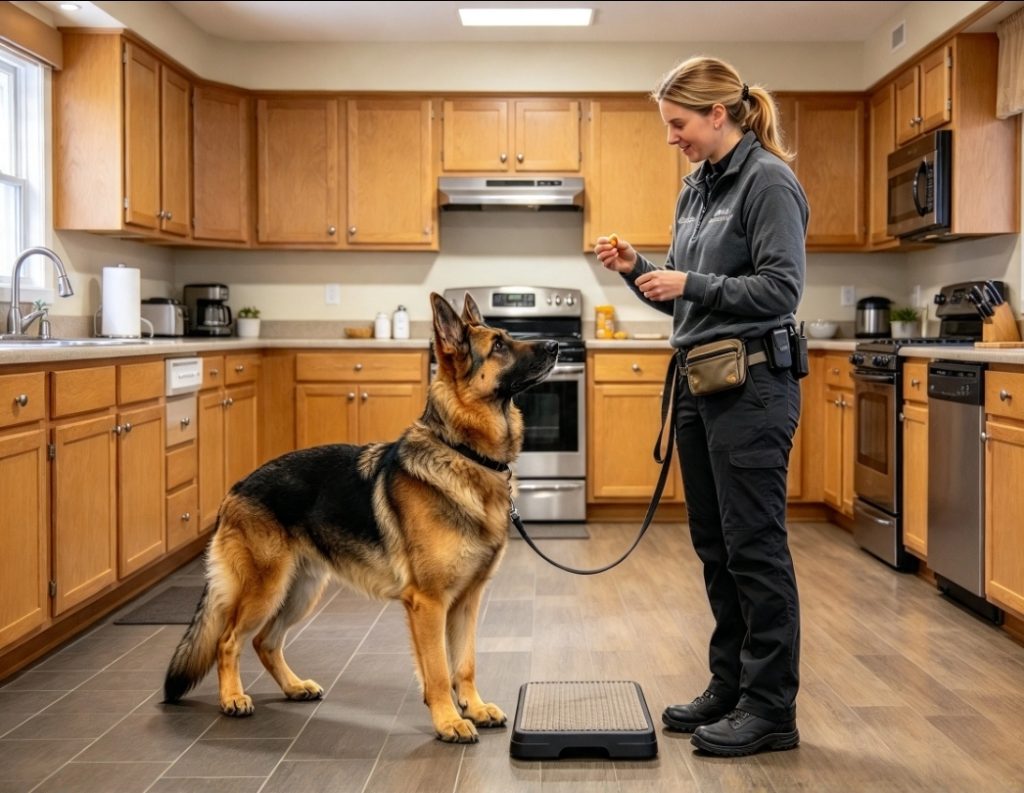
Training Treats — appropriate training treats can help maintain consistent reward delivery when food is being used as part of structured training.
GPK9’S FIVE GOLDEN RULES
The GPK9 Five Golden Rules bring consistency into a connected training system rather than treating individual behaviours as isolated exercises. The system provides a structured framework that can be applied from a new puppy and family pet through to more experienced dog owners, professional trainers and handlers.
Consistency is not about forcing every training session to look exactly the same. It is about creating clearer patterns in the way the handler manages the dog, communicates expectations, controls progression and responds to changes in behaviour.
The Five Golden Rules provide different areas of structure that work together to help reduce confusion and improve the relationship between the dog and handler.
Golden Rule One — Home and Social
Why Consistency Matters in Dog Training becomes particularly clear within the home.
Without consistent household structure, a dog can receive different levels of freedom depending on the time of day or the person managing it. This can make expectations difficult to understand.
Golden Rule One establishes a progression of:
Crate → Placemat → Playpen
The crate provides safety, reset and toilet support. The placemat introduces calm home freedom, while the playpen provides monitored freedom.
This structure creates consistent stages rather than giving the dog unrestricted access before it is ready.
The traffic-light approach also helps the handler monitor progression:
- Green — progress and monitor.
- Amber — observe and review.
- Red — return to the appropriate controlled stage or stop.
This directly addresses the inconsistency created when freedom is increased without considering the dog’s behaviour and current level of understanding.
Golden Rule Two — Obedience
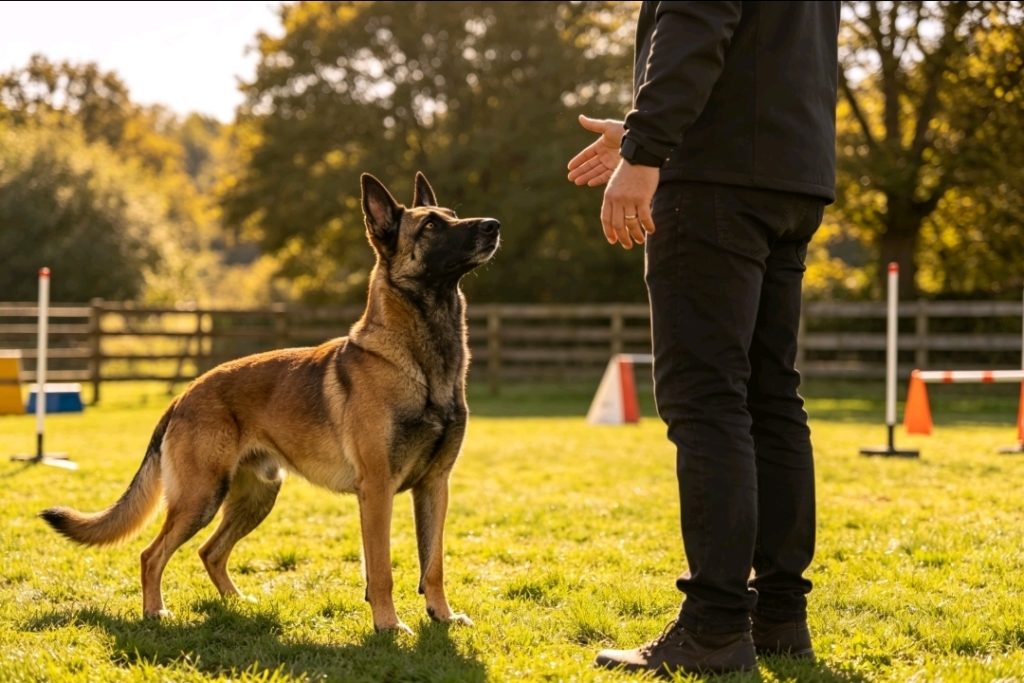
Consistency is central to obedience training because the dog needs clear information about what the handler is asking and how the exercise progresses.
Golden Rule Two uses food and luring alongside structured communication, including praise, shaping and movement. Training can be carried out in the same area and around the same time to establish a predictable routine, while food can be delivered by hand as part of the training process.
The objective is not simply to repeat commands. The handler needs to maintain consistent expectations, timing and communication throughout the exercise.
This directly responds to the problem of changing methods or expectations when the dog does not immediately respond.
Golden Rule Three — Prey Drive / Play
Consistency also matters when developing play and motivation.
Golden Rule Three separates prey-drive and play activities from obedience work. Play can take place in a quieter, appropriate area using a suitable toy or tug activity.
Without clear separation, the dog may receive mixed information about when it should concentrate, when it should engage with the handler and when it is appropriate to increase or reduce arousal.
The traffic-light structure helps the handler monitor the dog’s state:
- Green — observe and play.
- Amber — observe and reduce arousal.
- Red — stop and return to calm.
This provides a consistent framework for managing play rather than allowing every session to develop differently.
Golden Rule Four — Toilet
Toilet training also depends heavily on consistency.
Using the same place, maintaining a predictable routine and introducing a toilet command can help create a clearer pattern for the dog.
Inconsistent timing or changing locations unnecessarily can make toilet training more difficult because the dog receives less predictable information about where and when the behaviour is expected.
Golden Rule Four therefore provides a structured approach that directly connects routine with communication.
Golden Rule Five — Social Walking / Ignore the World
Consistency continues outside the home.
Golden Rule Five focuses on developing a calm, relaxed and manageable walk without turning every environmental situation into a series of commands.
The handler needs to observe the dog and the surrounding environment rather than continually changing the approach because something has appeared.
The traffic-light system provides a consistent way of responding:
- Green — monitor and continue.
- Amber — stop and allow the dog to become calm in a quieter area until Green.
- Red — stop the walk immediately.
This directly addresses the inconsistency that can occur when handlers react differently to distractions, environmental pressure or changes in the dog’s behaviour.
Solution Connection
The problems identified throughout Why Consistency Matters in Dog Training are connected by one central issue: the dog needs clearer and more predictable information from the handler.
Problem → Issue → Mistake → Timing → Frustration → Misunderstanding → GPK9 Five Golden Rules → Structured Solution
If expectations continually change, Golden Rule One provides home structure.
If communication becomes unclear, Golden Rule Two provides structured obedience.
If play and arousal become difficult to manage, Golden Rule Three provides a separate framework for play.
If toilet routines lack consistency, Golden Rule Four provides structure around location, timing and communication.
If outside distractions create inconsistent responses, Golden Rule Five provides a structured approach to social walking and environmental management.
The rules therefore work together rather than functioning as five unrelated training subjects.
RECOMMENDED PRODUCTS
Treat Pouch — a suitable treat pouch can help the handler keep training rewards accessible and maintain more consistent reward delivery during structured exercises.
Final Connection
Why Consistency Matters in Dog Training is ultimately about creating clearer communication between the dog and handler.
Consistency involves more than repeating the same exercise. It includes household structure, training routines, expectations, timing, reward delivery, progression, environmental difficulty and the way the handler responds to changes in the dog’s behaviour.
The GPK9 Five Golden Rules provide a connected framework for these areas. Home and social structure creates a foundation, obedience develops communication, play provides a controlled area for motivation and engagement, toilet training establishes routine, and social walking develops calm and manageable behaviour outside the home.
When these areas are considered together, the handler has a clearer structure for recognising problems, monitoring progress and adjusting training appropriately.
The purpose of consistency is not to make every situation identical. It is to provide the dog with understandable patterns, predictable communication and structured progression.
That is why Why Consistency Matters in Dog Training is not simply about repeating an exercise. It is about creating a clear training system in which the dog and handler can build understanding through structure, timing, communication and consistent practice.