Food vs Luring in Dog Training: What Is the Difference?
Food vs Luring in Dog Training: What Is the Difference? is an important distinction because food and luring are closely connected but do not describe exactly the same thing. Food can be used as a reward for a behaviour, while a food lure can be used to guide a dog’s attention and movement during an exercise. Problems can occur when the handler treats every use of food as luring or assumes that a dog following food automatically understands the behaviour. The dog may become focused on the reward, chase the handler’s hand, move into an incorrect position or become confused when the food is removed. Understanding the difference is therefore important for maintaining clearer communication and more consistent training.
RECOMMENDED PRODUCTS
Training Treats — Small, suitable training treats can be used as rewards and, where appropriate, as a food lure during structured exercises.
What Is Food in Dog Training?
Food is a reward that can be delivered when the dog performs an appropriate behaviour.
For example, the dog may complete a movement, remain in an expected position or respond appropriately during an exercise, and the handler can then deliver a small food reward.
In this situation, the food is not necessarily guiding the dog into position. It is being delivered as part of the reinforcement process.
The important consideration is what the dog was doing at the moment the food was delivered.
What Is Luring in Dog Training?
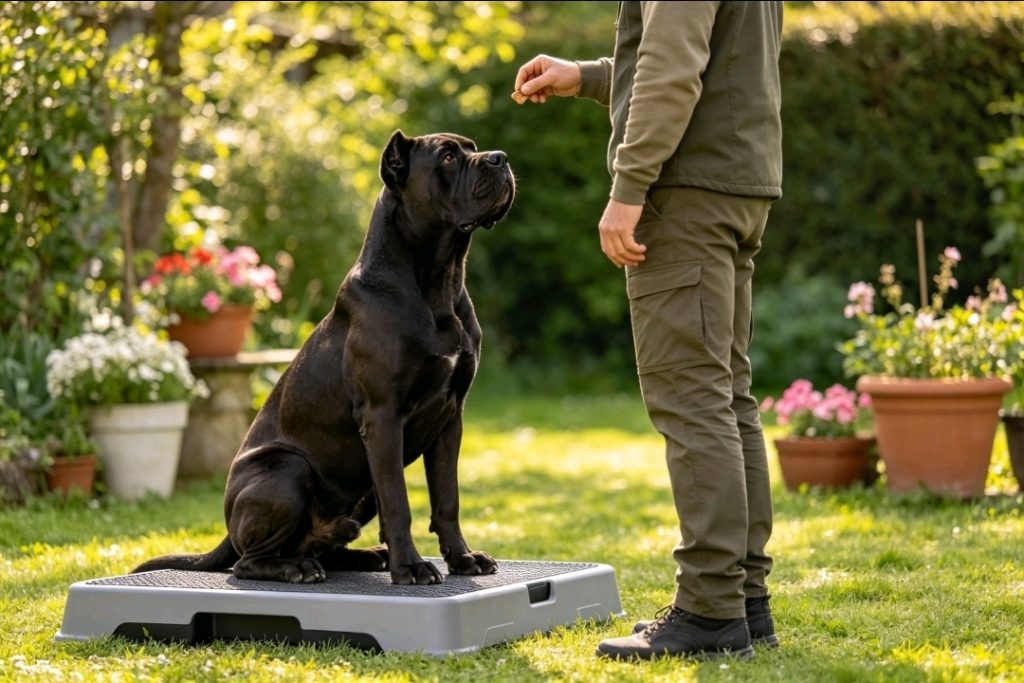
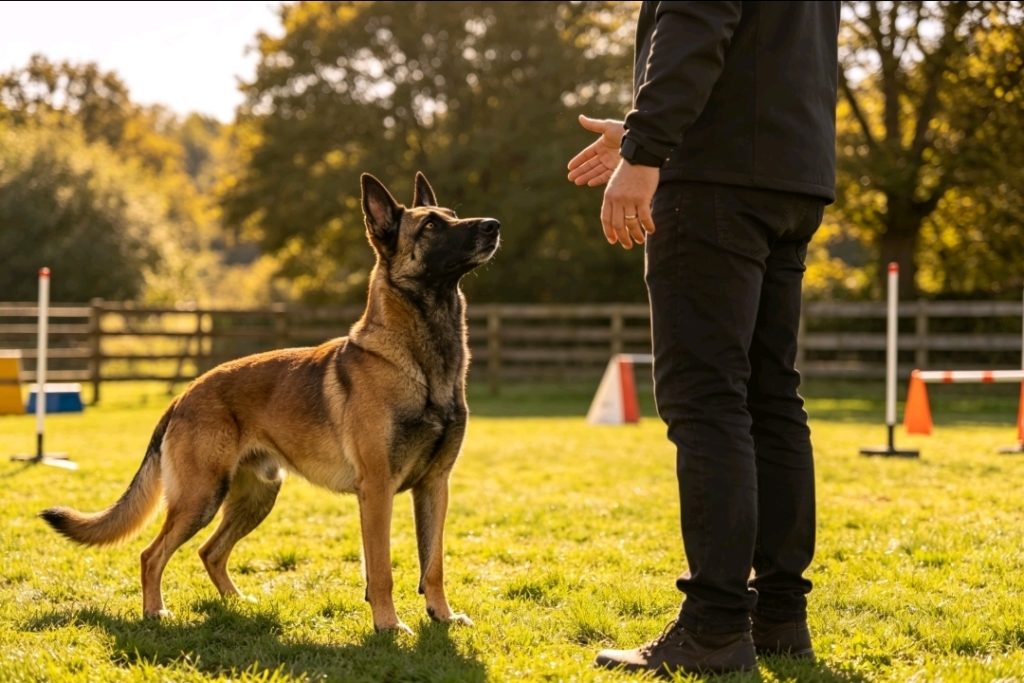
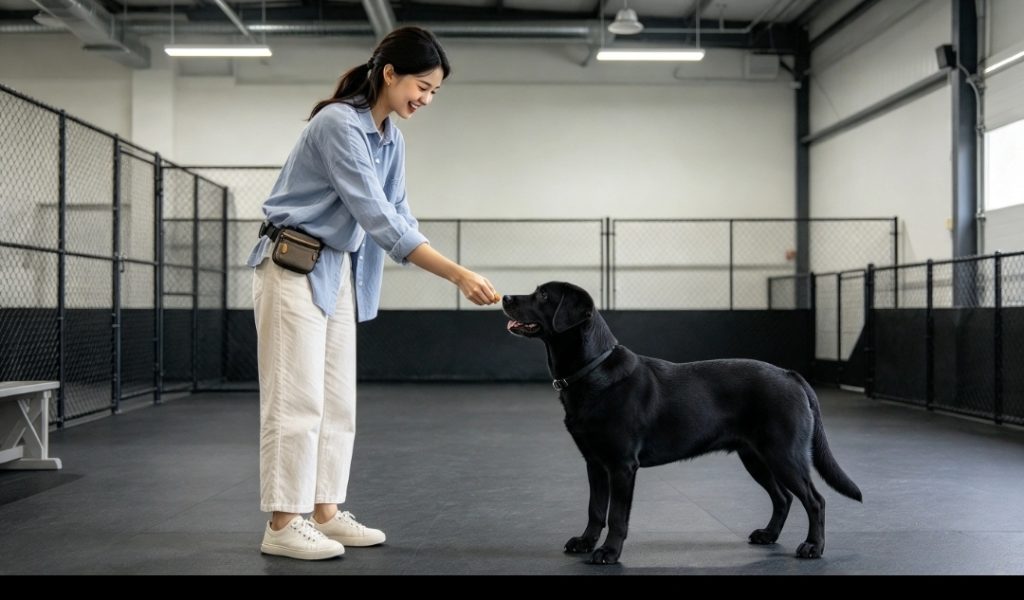
Luring is different because the food is used to influence the dog’s movement or attention.
The handler may hold a small food reward near the dog’s nose and move it in a particular direction. The dog follows the movement of the food, allowing the handler to guide the dog’s body into a particular position or movement.
The food therefore has a guiding function during the exercise.
However, following a lure does not automatically mean the dog understands the behaviour. The handler needs to recognise the difference between the dog simply following food and the dog developing an understanding of the intended movement.
Common Problems When Food and Luring Are Confused
One common problem is using food as though it must always be visible.
If the dog only responds when it can see food, the handler may become dependent on showing the reward before every behaviour.
Another problem is assuming that a dog understands an exercise simply because it follows a lure successfully.
The dog may be following the movement of the food without understanding the underlying behaviour.
When the lure is removed, the behaviour may therefore become inconsistent.
This can make the handler believe the dog has forgotten the exercise when the actual issue may be that the food was doing too much of the communication.
Common Issues With Food Rewards
Food rewards can create problems when timing and delivery are inconsistent.
If the handler rewards too early, the dog may receive food before completing the intended behaviour.
If the reward is delivered too late, the dog may have already changed position.
The position of the reward can also influence behaviour. Delivering food too high can encourage jumping, while delivering it from an inconsistent position can cause unnecessary movement.
Food therefore needs to be considered in relation to the behaviour being reinforced.
Common Mistakes With Luring
One of the most common lure-related mistakes is moving the food too quickly.
The dog may rush, jump or attempt to grab the reward rather than following a controlled movement.
Another mistake is continuously moving the lure.
If the food never becomes still, the dog may learn to chase the hand rather than understand the movement being developed.
Handlers can also make the mistake of using the lure for too long without recognising when the dog is beginning to rely on the visible food.
RECOMMENDED PRODUCTS
Treat Pouch — A suitable treat pouch keeps rewards accessible while allowing the handler to control when food becomes part of the exercise rather than constantly holding food in view.
Frustration and Food-Based Training
Frustration can occur when the dog can see food but cannot understand how to obtain it.
The handler may respond by moving the lure faster or changing its position repeatedly.
The dog may then become more excited, jump towards the hand or attempt to take the reward.
At the same time, the handler may become frustrated because the dog is no longer following the intended movement.
The distinction between food and luring becomes important here because the problem may not be the food itself. It may be how the food is being used.
Timing: Food Reward vs Lure
Timing helps show the difference between food and luring.
During luring, the food can be used to guide the dog’s movement.
During reward delivery, the food is provided in response to an appropriate behaviour.
These functions can occur within the same exercise, but the handler needs to understand what is happening at each stage.
For example, food may initially guide the dog towards a particular movement. Once the dog performs the intended response, the food can then be delivered as the reward.
If the handler does not recognise this distinction, the dog may continue following the hand without developing a clearer understanding of the behaviour.
Misunderstanding and Miscommunication
A major misunderstanding is believing that food and luring are interchangeable terms.
They are related, but they describe different functions.
Food can be used as a reward.
Luring describes the use of something, such as food, to guide attention or movement.
This distinction becomes particularly important when the handler starts reducing reliance on a visible lure.
If the dog has learned to follow the food rather than understand the exercise, removing the lure can expose gaps in the training.
GPK9’S FIVE GOLDEN RULES
The GPK9 Five Golden Rules provide a connected framework for understanding where food and luring fit into the wider training process.
The distinction is particularly important within obedience, but effective training also depends on home structure, play, routine and the dog’s ability to remain manageable around different environments.
The Five Golden Rules help the handler understand that individual techniques form part of a larger system.
Golden Rule One — Home and Social
Food vs Luring in Dog Training: What Is the Difference? begins with understanding the importance of structure around the training exercise.
A dog that is unsettled, constantly distracted or given more freedom than it can manage may struggle to focus on either food rewards or luring.
The progression of crate → placemat → playpen provides different levels of freedom and structure.
The crate provides safety, reset and toilet support. The placemat introduces calm home freedom, while the playpen provides monitored freedom.
This gives the handler a framework for considering whether the dog is ready for focused training before relying on food to obtain attention.
Golden Rule Two — Obedience
Golden Rule Two provides the clearest connection between food and luring.
Food can be used during obedience as a reward, while food used as a lure can guide movement and help shape an exercise.
The handler needs to recognise which function is being used.
A lure can guide the dog towards the desired movement. Once the appropriate behaviour occurs, food can be hand-delivered as the reward.
The GPK9 approach also incorporates praise, shaping and movement, helping prevent the exercise from becoming completely dependent on a visible piece of food.
Working in the same area and around the same time can also help establish greater consistency.
Golden Rule Three — Prey Drive / Play
Food and luring should not replace the separate role of play.
Golden Rule Three provides a structured opportunity for tug, toys, movement and engagement.
This helps the handler distinguish between food-based obedience work and play-based activity.
Where play increases arousal, the handler needs to recognise the change and manage the activity appropriately rather than continuing to increase movement simply because the dog remains engaged.
Golden Rule Four — Toilet
Golden Rule Four focuses on consistency, timing, location and communication.
Food and luring are not the central focus of toilet training.
Instead, the handler needs to establish predictable routines and recognise the dog’s behaviour within those routines.
This demonstrates why different training objectives require different methods rather than automatically applying food or luring to every situation.
Golden Rule Five — Social Walking / Ignore the World
Food and luring also need to remain appropriate when the dog is outside a controlled training environment.
Golden Rule Five focuses on a calm, relaxed and manageable walk without constantly placing the dog under command.
The handler should not need to keep a food lure in front of the dog continuously to manage every distraction.
Understanding the difference between structured food-based training and normal calm walking helps maintain clearer expectations.
Solution Connection
The problems surrounding food and luring often begin when the two functions are confused.
The dog may become dependent on visible food, the lure may be moved too quickly, rewards may be delivered at the wrong moment, or the handler may misunderstand what the dog has actually learned.
The GPK9 Five Golden Rules provide a wider structure for addressing these issues.
Problem → Issue → Mistake / Timing / Frustration / Misunderstanding → GPK9 Five Golden Rules → Structured Solution
Golden Rule One provides home and social structure.
Golden Rule Two connects food rewards and luring with structured obedience, shaping, praise and movement.
Golden Rule Three provides an appropriate place for play, engagement and arousal management.
Golden Rule Four reinforces predictable routines, timing and communication.
Golden Rule Five considers how food-based training fits within calm and manageable social walking.
Together, these rules help the handler understand where food and luring belong within the wider training system.
Final Connection
Food vs Luring in Dog Training: What Is the Difference? comes down to understanding function.
Food can be used as a reward for an appropriate behaviour. Luring uses something, such as food, to guide the dog’s attention or movement during an exercise.
The two can work together, but they should not be confused.
When the distinction is unclear, the dog may chase the reward, rely heavily on visible food, become frustrated or fail to understand what behaviour is actually being developed.
The GPK9 Five Golden Rules provide the wider structure for putting food and luring into context. From crate → placemat → playpen, through structured obedience, play, toilet routines and calm social walking, each area contributes to clearer communication and consistency.
The objective is not simply to use food whenever a dog needs to learn something. The objective is to understand when food is being used as a reward, when food is being used as a lure, and how both functions can be incorporated appropriately into a structured GPK9 training system.