What Food Should You Use for Dog Training?
What Food Should You Use for Dog Training? is an important question because the food used during training can affect how practical, consistent and manageable an exercise becomes. Not every food is equally suitable for every training situation. Pieces that are too large can interrupt the exercise, food that is difficult for the dog to eat quickly can slow training, and highly exciting rewards can sometimes increase the dog’s arousal beyond the level needed for the exercise. Handlers can also become inconsistent when they use whatever food happens to be available without considering the dog’s size, the exercise being performed or how frequently rewards will be delivered.
RECOMMENDED PRODUCTS
Training Treats — Small, appropriately sized training treats can make reward delivery easier to manage during structured exercises and allow the handler to maintain better training flow.
Common Problems With Choosing Training Food
One of the first problems is choosing food based only on whether the dog likes eating it.
A dog may find a particular food extremely exciting, but that does not automatically make it practical for training.
If the food takes too long to chew, training can become interrupted. If the pieces are too large, the dog may spend more time eating than learning. If the food crumbles easily, the handler may also struggle to deliver consistent rewards.
The food needs to work within the exercise rather than becoming an interruption to it.
Common Issues With Food Size
The size of the food reward can make a significant difference.
Large pieces may be appropriate in some circumstances, but they can be inconvenient when the handler needs to deliver several rewards during a short training session.
Small pieces can often allow the handler to reward more frequently while maintaining the flow of the exercise.
However, extremely small pieces can also become difficult to handle, particularly when the handler needs to work quickly.
The appropriate size therefore depends on the individual dog, the exercise and how the reward is being delivered.
Common Mistakes When Selecting Food
A common mistake is changing food constantly without understanding why.
If one training session uses dry food, another uses large soft treats and another uses high-value food from the kitchen, it can become difficult for the handler to understand how the dog’s motivation and behaviour are being affected.
Another mistake is using food that creates unnecessary mess.
Greasy, crumbly or difficult-to-handle rewards can make the training process less practical.
Handlers may also overlook the dog’s normal daily food intake when adding frequent training rewards. The amount of food used during training needs to be considered alongside the dog’s overall diet.
RECOMMENDED PRODUCTS
Treat Pouch — A suitable treat pouch makes it easier to separate training rewards from other food and keep small rewards accessible during structured exercises.
Frustration When Choosing Training Food
Frustration can develop when the food is either not sufficiently engaging for the individual dog or is so exciting that the dog becomes difficult to manage.
If the dog shows little interest in the reward, the handler may repeatedly offer different foods or increase movement to attract attention.
At the opposite end, highly exciting food may cause the dog to jump, grab, vocalise or become overly focused on the handler’s hands.
The handler can then become caught between trying to increase the dog’s interest and trying to reduce excessive excitement.
This can make it difficult to maintain a calm and consistent training session.
Timing and Food Choice
Food choice is closely connected with timing.
During structured training, the handler may need to deliver several rewards within a short period. Food that can be eaten quickly can make this easier because the dog can return to the exercise without a long interruption.
If the dog spends a significant amount of time chewing, the next repetition may be delayed.
This becomes particularly relevant during exercises involving luring, shaping and movement.
The handler needs to consider whether the food allows the reward to be delivered at the appropriate moment or whether the food itself is interrupting the training sequence.
Misunderstanding and Miscommunication
A common misunderstanding is assuming that the most exciting food is always the most effective training food.
Food preference varies between individual dogs, and the most suitable reward depends on the training context.
A dog may work enthusiastically for one type of food but become excessively excited by another. The handler therefore needs to observe the dog’s behaviour rather than assuming that a particular food will produce the same response in every situation.
The purpose of the reward is to support the training exercise, not to become the main focus of the exercise.
GPK9’S FIVE GOLDEN RULES
The GPK9 Five Golden Rules provide a connected training system that places food rewards within the wider relationship between dog, handler, environment and training structure.
Choosing suitable food is particularly relevant to obedience, but the dog’s ability to work for food can also be influenced by home structure, play, routines and environmental distractions.
The Five Golden Rules help the handler consider the complete training situation rather than looking at food in isolation.
Golden Rule One — Home and Social
What Food Should You Use for Dog Training? begins with understanding that food is only one part of a structured training environment.
A dog that has too much freedom, struggles to settle or is constantly distracted may not respond consistently to food during training.
The progression of crate → placemat → playpen provides different levels of structure and freedom.
The crate provides safety, reset and toilet support. The placemat introduces calm home freedom, while the playpen provides monitored freedom.
This allows the handler to establish appropriate structure before expecting the dog to concentrate on food-based training.
Golden Rule Two — Obedience
Golden Rule Two has the strongest connection to food selection.
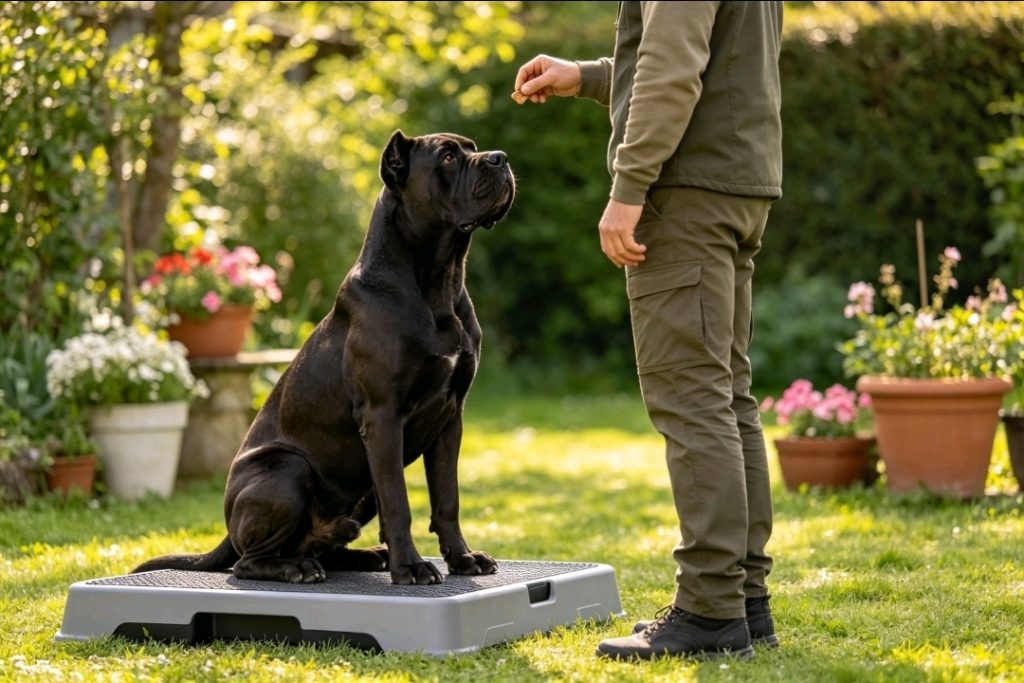
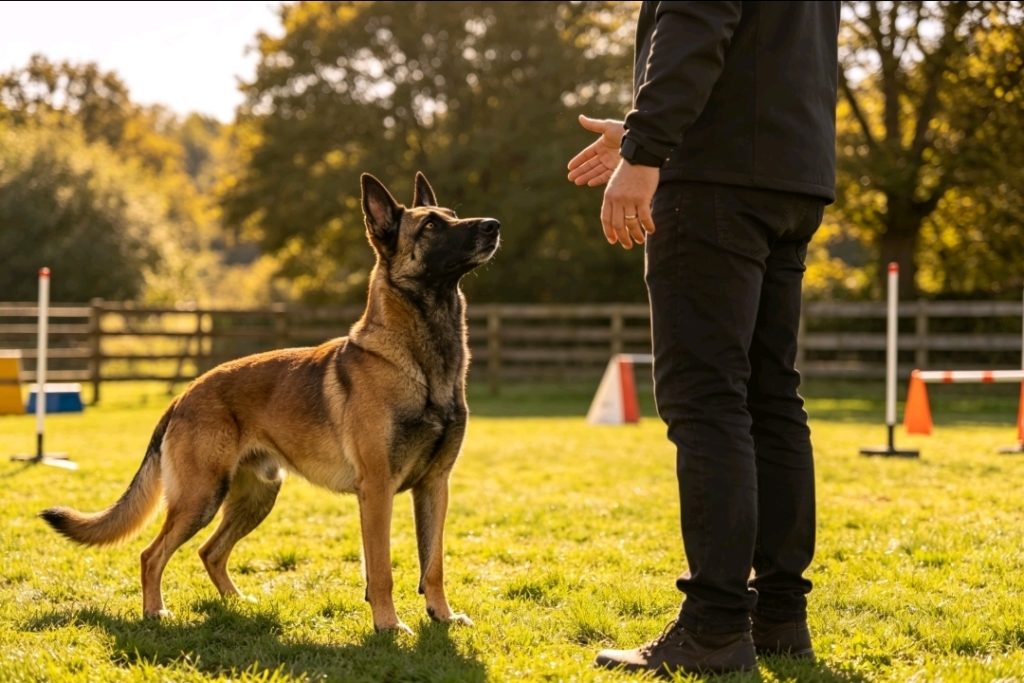
Food can be used during structured obedience and alongside luring, shaping, praise and movement.
The food needs to be practical for the exercise. Small rewards can allow frequent reinforcement without creating unnecessary interruptions, while the dog’s individual response to the food needs to be observed.
The GPK9 approach also focuses on hand-delivered food rather than casually feeding while moving around, except where feeding forms part of a specific exercise.
This helps the handler remain aware of what behaviour is being reinforced and when the reward is being delivered.
Golden Rule Three — Prey Drive / Play
Food and play provide different forms of engagement within the GPK9 system.
Golden Rule Three provides a separate area for tug, toys and play rather than treating every interaction with the dog as food-based obedience.
This distinction helps the handler understand whether the dog is working for food, engaging through play or becoming increasingly aroused.
The choice of food should therefore not replace appropriate play-based activity where play is the intended focus.
Golden Rule Four — Toilet
Golden Rule Four focuses on consistent location, timing and communication.
Food selection is not the central focus of toilet training, but the same principle of routine remains important.
The handler needs to understand the dog’s normal routine and provide consistent opportunities rather than relying on food rewards to manage a behaviour that primarily requires predictable timing and location.
This keeps food rewards within their appropriate role in the wider training system.
Golden Rule Five — Social Walking / Ignore the World
Food can also be used within certain training situations outside the home, but Golden Rule Five focuses on calm, relaxed and manageable walking without constantly placing the dog under command.
The handler should not need to rely on food continuously to manage every environmental distraction.
Understanding when food is appropriate and when calm movement and environmental management should take priority helps prevent rewards from becoming a constant distraction.
The dog’s ability to remain manageable without continuous food delivery is an important part of the wider training process.
Solution Connection
The problems associated with choosing training food can involve inappropriate size, poor handling, excessive excitement, low engagement, long chewing times, inconsistent choices and misunderstanding the purpose of the reward.
The GPK9 Five Golden Rules provide a structure for placing these considerations into the wider training system.
Problem → Issue → Mistake / Timing / Frustration / Misunderstanding → GPK9 Five Golden Rules → Structured Solution
Golden Rule One provides home and social structure.
Golden Rule Two connects food selection with structured obedience, luring, shaping, praise and movement.
Golden Rule Three provides an appropriate place for play, engagement and arousal management.
Golden Rule Four reinforces predictable routines and timing.
Golden Rule Five considers how food-based training fits into calm and manageable social walking.
Together, these rules help the handler understand that selecting training food is not simply about finding the food the dog likes most. It is about choosing something that supports the specific training exercise and can be delivered consistently.
Final Connection
What Food Should You Use for Dog Training? depends on the individual dog, the exercise, the training environment and how the reward needs to be delivered.
Useful training food is generally practical to handle, appropriately sized for the dog, suitable for the frequency of rewards and engaging enough to support the exercise without unnecessarily disrupting the dog’s behaviour.
The GPK9 Five Golden Rules place food selection within a wider training structure. From crate → placemat → playpen, through structured obedience, play, toilet routines and calm social walking, food remains one part of the overall training process.
The objective is not simply to find the most exciting food possible. The objective is to understand what food is appropriate for the exercise, how the dog responds to it and how the reward can support clear, consistent communication between dog and handler.