How Do I Train an Aggressive Dog?
How do I train an aggressive dog? The safest approach is to identify what triggers the aggression, prevent unsafe situations, create enough distance for your dog to remain calm, and gradually teach an appropriate response using positive reinforcement. Do not punish, intimidate or deliberately expose your dog to situations that cause an aggressive reaction.
What Should I Do Before Training an Aggressive Dog?
Before starting training, identify what your dog is reacting to.
The trigger could be:
- People
- Other dogs
- Children
- Food
- Toys
- Handling
- Being approached
- Particular environments
- Noise
- Being restrained
- Feeling trapped
- Territorial situations
Also consider what happens immediately before the aggression. Look for earlier signs such as tension, staring, freezing, avoidance, growling or increased arousal.
Understanding the trigger allows you to control the difficulty of the training situation.
Should My Dog See a Vet Before Training?
If the aggression is sudden, unusual or has significantly changed, a veterinary assessment is important.
Pain or illness can contribute to changes in behaviour. Treating an underlying physical problem may be an important part of addressing the behaviour.
A veterinary assessment is particularly appropriate when aggression occurs alongside changes in movement, appetite, sleep, handling tolerance or general behaviour.
How Do I Train an Aggressive Dog Safely?
Step 1: Prevent Repeated Aggressive Incidents
Start by managing the situations that cause your dog to react.
Do not repeatedly expose your dog to the trigger to see whether they will cope. Every aggressive reaction can reinforce the pattern and can also create a serious safety risk.
Use distance, physical barriers and appropriate management to prevent unnecessary exposure.
Step 2: Identify Your Dog’s Threshold
Your dog’s threshold is the point at which they can still notice the trigger without becoming unable to respond appropriately.
For example, if your dog can see another dog from a distance but begins barking and lunging when it gets closer, start training at the distance where your dog can remain calm.
The exact distance will vary between dogs and situations.
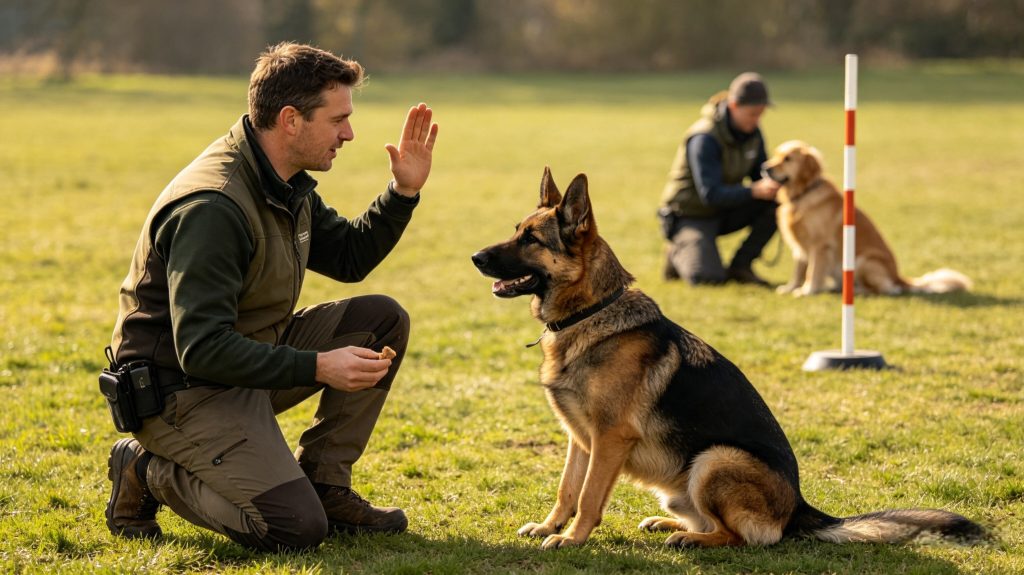
Step 3: Reward Calm Behaviour
When your dog notices the trigger but remains calm, reward the behaviour you want.
Food can be useful when your dog is comfortable enough to eat. Toys or play may also be appropriate for dogs that find them rewarding.
The timing matters. Reward calm, appropriate behaviour before the dog reaches the point of reacting whenever possible.
Step 4: Increase Difficulty Gradually
Once your dog can consistently cope at the current level, make one small change.
You might gradually:
- Reduce the distance
- Increase the duration
- Introduce mild movement
- Add a small amount of distraction
- Change the environment
Do not increase several difficulties at once.
If your dog starts reacting, the situation has probably become too difficult. Increase distance or reduce the stimulation and allow your dog to recover.
Step 5: Teach an Alternative Behaviour
Your dog needs to learn what to do instead of reacting aggressively.
Depending on the situation, this could include:
- Looking towards you
- Moving away from the trigger
- Walking calmly
- Sitting
- Returning to a safe place
- Responding to a familiar cue
Teach these behaviours separately when your dog is calm before expecting them to use them around a difficult trigger.
What If My Dog Starts Barking, Lunging or Growling?
Do not continue pushing the training exercise.
Create distance from the trigger and reduce the pressure.
Avoid repeatedly giving commands when your dog is highly aroused. Once your dog has recovered enough to respond normally, reassess the situation.
If your dog cannot calm down, end the session and allow proper recovery.
The objective is not to force the dog to remain near the trigger. The objective is to gradually increase the dog’s ability to cope.
Should I Use Treats to Train an Aggressive Dog?
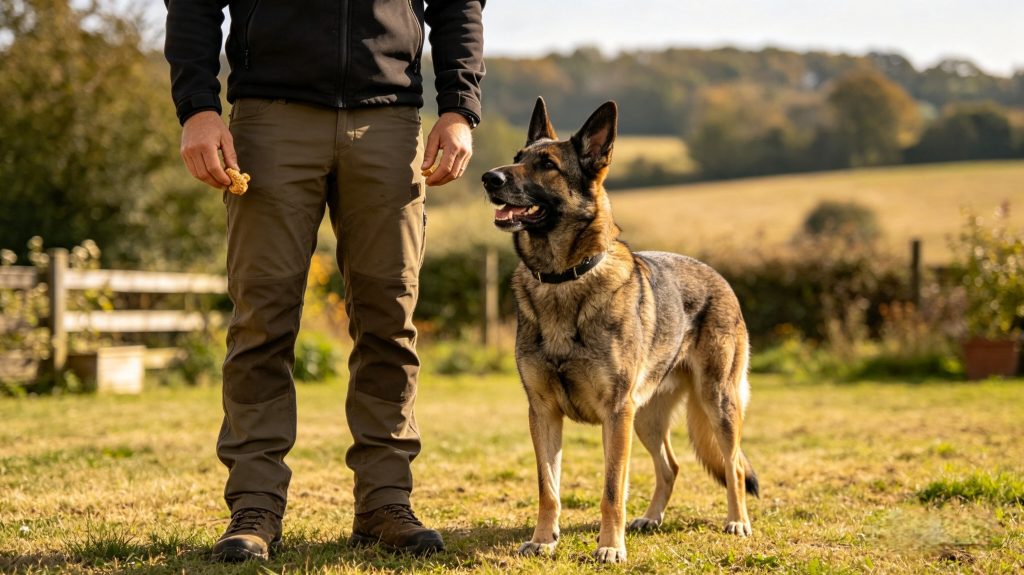
Food can be an effective positive reinforcement tool when your dog is calm enough to eat and learn.
Use food to reinforce appropriate behaviour rather than attempting to lure a highly distressed dog towards something they fear.
If your dog refuses food that they normally enjoy, consider this useful information. The situation may be too difficult and you may need to increase distance or reduce the level of stimulation.
Can I Train an Aggressive Dog Around Other Dogs?
Yes, but do not begin by forcing close interaction.
Start at a distance where your dog can notice another dog without reacting. Reward calm behaviour and gradually build tolerance.
The other dog should be managed safely, and the environment should allow you to increase distance if your dog becomes uncomfortable.
Your dog does not need to greet every dog. The goal may simply be to walk calmly and remain able to focus on you while another dog is nearby.
Can I Train an Aggressive Dog Around People?
Start with the level of interaction your dog can safely manage.
If your dog reacts when someone approaches, increase distance and prevent the person from moving closer. Reward calm behaviour when your dog is comfortable enough to learn.
Do not allow strangers to approach, touch or crowd your dog simply to provide more exposure.
Children should never be used as part of behaviour training with a dog that has shown aggression towards people.
What Equipment Should I Use?
Equipment should provide safe management while training, not replace training.
Harness and Lead
A secure harness and lead can help you control distance from triggers without relying on physical confrontation.
Short Line
A short line can provide closer control when your dog needs to remain near you, particularly in environments where a trigger could appear unexpectedly.
Long Line
A long line can be useful for controlled training in an appropriate open area where your dog cannot reach people, animals or hazards.
It should not be used where your dog could run into an unsafe situation.
Muzzle
A muzzle may be appropriate when there is a genuine risk of biting.
A muzzle must be introduced gradually and positively so the dog learns to wear it comfortably. It should be used as part of a wider safety and training plan, not as permission to expose the dog to situations it cannot cope with.
Should I Use a Crate With an Aggressive Dog?
A crate can provide a secure recovery area when your dog has already been properly introduced to it.
It should be a place where the dog can settle and recover, not a punishment for aggressive behaviour.
Do not force an aggressive dog into a crate during a confrontation. First make the environment safe and reduce the immediate trigger.
Should I Punish Aggressive Behaviour?
No.
Shouting, hitting, intimidating or physically confronting an aggressive dog can increase fear, stress or frustration. It can also suppress warning signals without addressing the reason for the behaviour.
Positive reinforcement focuses on teaching the dog what behaviour is appropriate and rewarding that behaviour.
How Do I Know If Training Is Working?
Look for gradual changes rather than expecting aggression to disappear immediately.
Useful signs of progress include:
- Your dog notices the trigger without immediately reacting
- Your dog can remain calm at a closer distance
- Recovery after a reaction becomes quicker
- Your dog responds to familiar cues around distractions
- Your dog can disengage from the trigger
- Your dog can return to normal behaviour more easily
Progress should be measured by improved ability to cope, not simply by whether the dog has stopped making noise.
What If My Dog Keeps Reacting During Training?
If your dog repeatedly reacts, make the exercise easier.
Increase distance, reduce the duration or remove additional distractions.
Review what happened immediately before the reaction. You may have progressed too quickly, started too close to the trigger or trained when your dog was already stressed or tired.
Do not keep repeating the same failed exercise.
What If My Dog Has Bitten Someone?
A dog that has bitten or attempted to bite requires serious safety management.
Do not deliberately test the dog’s response or expose them to the same situation to see whether they have improved.
Prevent further opportunities for a bite and seek appropriate professional behaviour support. If someone has been injured, they should receive appropriate medical attention.
When Should I Get Professional Help?
Professional help is strongly recommended when aggression involves:
- Biting
- Attempts to bite
- Children
- Family members
- Unpredictable behaviour
- Serious lunging or snapping
- Other animals at close range
- Situations you cannot safely control
- Rapidly worsening behaviour
An appropriately qualified professional can assess the behaviour, identify triggers and help establish a safe training and management plan.
How Long Does It Take to Train an Aggressive Dog?
There is no fixed timeframe.
The speed of progress depends on the cause of the aggression, how long the behaviour has been present, the intensity of the reactions, the dog’s environment and how consistently the behaviour can be managed.
Focus on steady improvement rather than rushing the process. Increasing difficulty before your dog is ready can cause setbacks.
Conclusion
Training an aggressive dog starts with safety, understanding the trigger and preventing unnecessary reactions.
Create enough distance for your dog to remain capable of learning, reward appropriate behaviour and gradually increase difficulty as your dog becomes more comfortable. If your dog reacts, reduce the difficulty rather than forcing the exercise.
Aggression involving biting, serious lunging, unpredictable behaviour or vulnerable people should be professionally assessed. The priority is always to keep people and animals safe while helping the dog develop better ways of coping.