How Do I Stop My Dog Being Aggressive?
How do I stop my dog being aggressive? The safest way to reduce aggressive behaviour is to identify what triggers your dog, prevent unsafe situations, create enough distance for your dog to remain calm, and teach appropriate alternative behaviour using positive reinforcement. Do not punish, intimidate or deliberately force your dog into situations that cause aggression.
Why Is My Dog Being Aggressive?
Aggression can have different causes, so the first step is understanding what is happening.
Common triggers include:
- Fear or uncertainty
- Stress or becoming overwhelmed
- Frustration
- Pain or illness
- Resource guarding
- Territorial behaviour
- Previous negative experiences
- Lack of appropriate experience
- Overexcitement
- Feeling trapped or unable to escape
The same outward behaviour can have completely different causes. A dog that lunges at another dog because it is frightened needs a different approach from a dog that becomes frustrated because it cannot reach the other dog.
How Do I Identify What Triggers My Dog?
Look at what happens immediately before the aggressive behaviour.
Ask yourself:
- Who or what was my dog reacting to?
- How close was the trigger?
- What happened immediately beforehand?
- What body language did my dog show first?
- Was my dog already stressed or excited?
- Could my dog have moved away?
- How long did it take to recover?
Early signs may include staring, becoming tense, freezing, avoiding interaction, growling or increased arousal.
Recognising these signs gives you an opportunity to intervene before the behaviour escalates.
What Should I Do When My Dog Becomes Aggressive?
The immediate priority is safety.
Create Distance
Move your dog away from the person, dog, object or situation causing the reaction.
Do not try to force your dog to remain close to the trigger.
Reduce Pressure
Once you have created distance, reduce stimulation and give your dog an opportunity to calm down.
Avoid shouting, repeatedly giving commands or physically confronting your dog.
Allow Recovery
Do not immediately return to the same situation because your dog has stopped barking or lunging.
Wait until your dog has genuinely recovered and is able to respond normally again.
Reassess
Consider what caused the reaction and whether the situation was too difficult.
The next training session should be easier if necessary.
How Do I Train My Dog Not to React Aggressively?
Training should take place at a level your dog can manage.
Start far enough away from the trigger that your dog can notice it without immediately reacting.
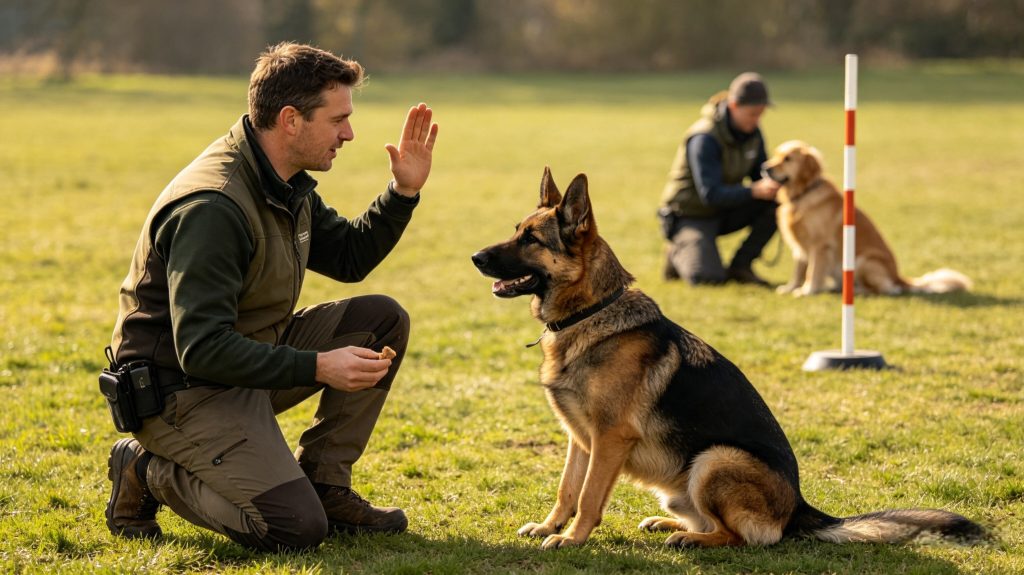
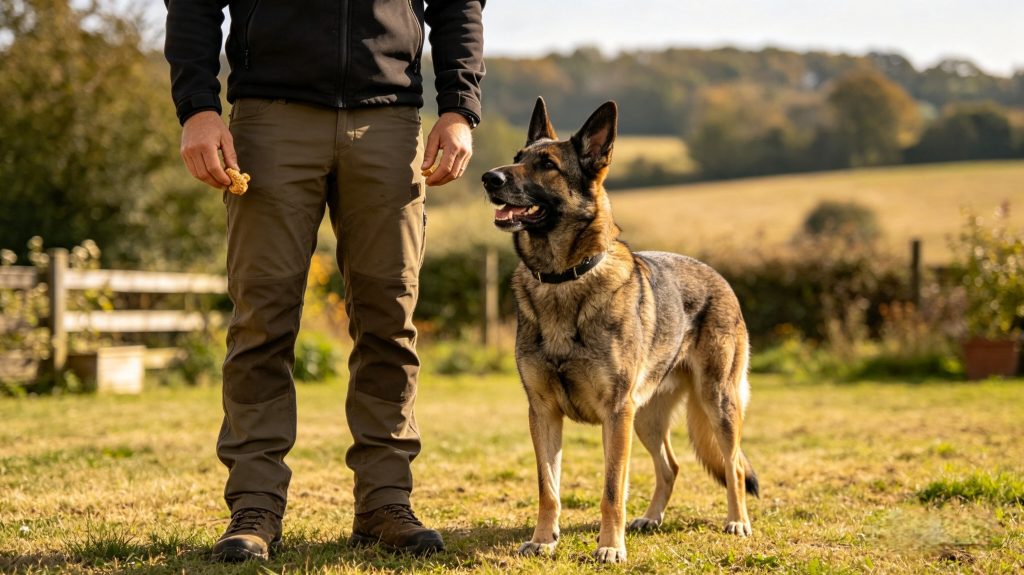
When your dog remains calm or responds appropriately, reinforce that behaviour with an appropriate reward.
Gradually increase the difficulty as your dog becomes more reliable.
The aim is to teach your dog that calm behaviour produces positive outcomes, while preventing repeated opportunities to practise aggression.
How Do I Stop My Dog Reacting to Other Dogs?
Do not force your dog to greet other dogs.
Start at a distance where your dog can see another dog without becoming overwhelmed. Reward calm behaviour and gradually work towards greater difficulty.
If your dog begins staring intensely, stiffening, barking or lunging, increase the distance.
Your dog does not need to interact with every dog. A useful goal may simply be being able to see another dog and continue walking calmly.
How Do I Stop My Dog Being Aggressive Towards People?
Identify what part of the interaction causes the reaction.
Your dog may be uncomfortable when people approach, reach towards them, touch them, enter the home or come too close.
Give your dog enough space and prevent unwanted interactions while training.
Reward calm behaviour around people at a level your dog can manage. Do not allow strangers to approach or touch your dog simply to provide more exposure.
If your dog has shown aggression towards children, children should not be used as part of the training exercise.
How Do I Stop Lead Aggression?
Lead aggression can occur when a dog feels restricted, frustrated or unable to move away from a trigger.
Use a secure harness and lead and create distance before your dog reaches the point of reacting.
Reward calm behaviour and gradually teach your dog to remain relaxed around manageable distractions.
A short line can provide closer control where necessary. A long line may be useful for controlled training in an appropriate safe environment.
If there is a genuine risk of biting, a properly introduced muzzle may form part of a professional safety plan.
Should I Use Treats to Stop Aggression?
Food can be useful for reinforcing calm and appropriate behaviour.
However, food should not be used to lure a frightened or highly aroused dog closer to something they cannot cope with.
If your dog normally accepts food but refuses it around a particular trigger, the situation may be too difficult.
Increase distance or reduce the level of stimulation before continuing.
Should I Punish My Dog For Being Aggressive?
No.
Shouting, hitting, intimidating or physically confronting your dog can increase fear, stress or frustration.
Punishment may also suppress warning signals such as growling without addressing the underlying reason for the behaviour.
Instead, identify the trigger, manage the situation and reinforce the behaviour you want to see.
Can Aggression Be Completely Stopped?
There is no guarantee that every dog can become completely non-reactive in every situation.
A more realistic goal is to reduce the frequency and intensity of aggressive behaviour and improve your dog’s ability to cope safely.
Some dogs may always require careful management around particular triggers.
Progress can include:
- Reacting less intensely
- Recovering more quickly
- Remaining calm at a closer distance
- Responding to familiar cues around distractions
- Disengaging from a trigger
- Choosing an appropriate behaviour instead of reacting
What Equipment Can Help?
Equipment should provide safe management while training rather than replace training.
A secure harness and lead can help you maintain control and create distance.
A short line can provide closer management when necessary.
A long line can be useful for controlled training in a suitable open area, provided your dog cannot reach people, animals or hazards.
A muzzle may be appropriate where there is a genuine risk of biting. It should be introduced gradually and positively and should never be used to force your dog into situations they cannot cope with.
A crate can provide a safe recovery area when your dog has been properly introduced to it. It should never be used as punishment for aggressive behaviour.
What If My Dog Becomes Aggressive at Home?
Identify what is causing the reaction and manage the environment.
Visitors, children, other animals, food, toys, handling, noises or activity around the home can all become triggers.
Use appropriate physical separation when necessary and give your dog a safe place to recover.
Do not allow your dog to repeatedly practise aggressive behaviour around visitors or family members while you are trying to resolve the problem.
What If My Dog Has Suddenly Become Aggressive?
A sudden change in behaviour should be taken seriously.
Pain or illness can sometimes contribute to sudden aggression. If your dog has unexpectedly become aggressive or there has been a significant change in their normal behaviour, arrange a veterinary assessment.
Do not assume that a sudden behavioural change is simply a training problem.
What If My Dog Keeps Becoming Aggressive?
If your dog repeatedly reacts, the training situation may be too difficult or the trigger may not have been properly identified.
Reduce the difficulty and review what happens before each reaction.
Avoid repeatedly exposing your dog to situations that cause aggression. Rehearsing the same behaviour can make the pattern harder to change and can create unnecessary safety risks.
What If My Dog Has Bitten Someone?
A bite requires serious safety management.
Prevent further opportunities for your dog to bite and do not deliberately test whether your dog will bite again.
Keep people who may be at risk away from situations that could trigger another incident and seek professional behaviour support.
If someone has been injured, they should receive appropriate medical attention.
When Should I Get Professional Help?
Professional help is particularly important if your dog:
- Has bitten or attempted to bite
- Is aggressive towards people
- Is aggressive towards children
- Is aggressive towards other animals
- Lunges or snaps regularly
- Is difficult to control safely
- Behaves unpredictably
- Is becoming increasingly aggressive
- Cannot recover after reacting
The more serious the aggression, the more important it is to have the behaviour properly assessed rather than relying on trial and error.
How Long Does It Take to Stop Aggressive Behaviour?
There is no fixed timeframe.
Progress depends on the cause of the aggression, how long the behaviour has been present, the intensity of the reactions, the dog’s environment and how consistently triggers can be managed.
Avoid rushing the process. Increasing difficulty before your dog is ready can cause setbacks.
Focus on steady improvement and safer responses, rather than expecting an immediate change.
Conclusion
Stopping aggressive behaviour is not simply about stopping the outward reaction. You need to understand why your dog is reacting, manage the trigger safely and teach your dog more appropriate ways to respond.
Create distance, reduce pressure, reward calm behaviour and progress gradually. Avoid punishment and never deliberately force your dog into a situation that causes aggression.
If your dog has bitten, attempted to bite, behaves unpredictably or presents a serious safety risk, seek veterinary and professional behaviour assessment.