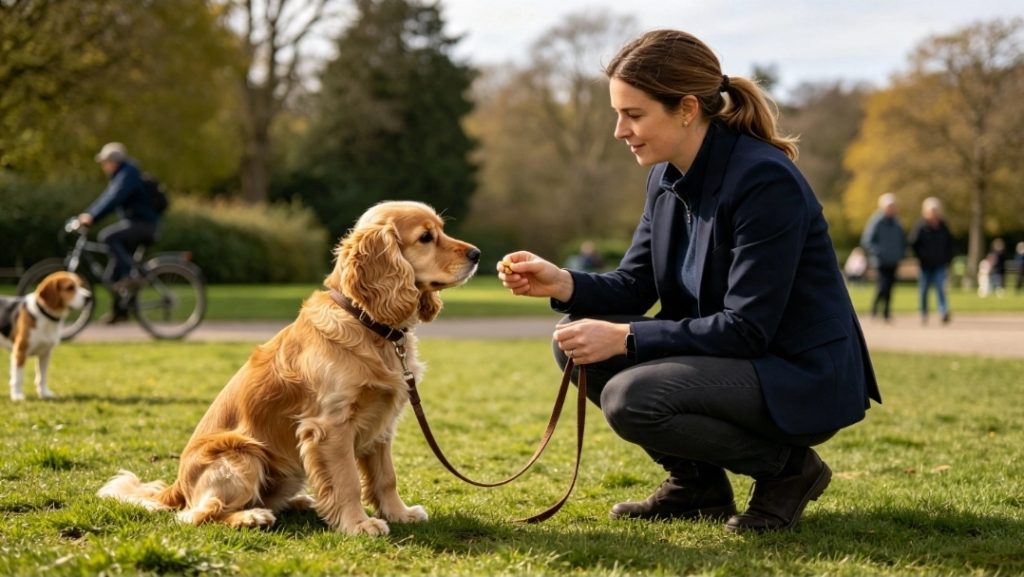
How to Calm an Overexcited Dog
An overexcited dog can be difficult to manage.
They may jump up at people, pull on the lead, bark, run around the house, grab clothing, ignore commands or struggle to settle.
You may find yourself saying:
“How do I calm my dog down?”
The answer isn’t simply to tell your dog to calm down.
Your dog needs to learn how to regulate their excitement and what behaviour you expect from them instead.
Learning how to calm an overexcited dog is about teaching your dog to switch from excitement into a calmer state while maintaining focus and communication with you.
Why Does My Dog Get So Excited?
Dogs can become excited for many different reasons.
Common triggers include:
- Seeing other dogs
- Meeting people
- Going for a walk
- Getting into the car
- Playing
- Food
- Toys
- Visitors arriving
- Hearing the doorbell
- Coming home
- Being let off the lead
- New environments
- Exciting smells
- Anticipating something they enjoy
Some dogs become excited very quickly and struggle to bring themselves back down.
The important thing is understanding that excitement isn’t automatically bad behaviour.
The problem occurs when your dog becomes so aroused that they can no longer listen, think clearly or respond appropriately.
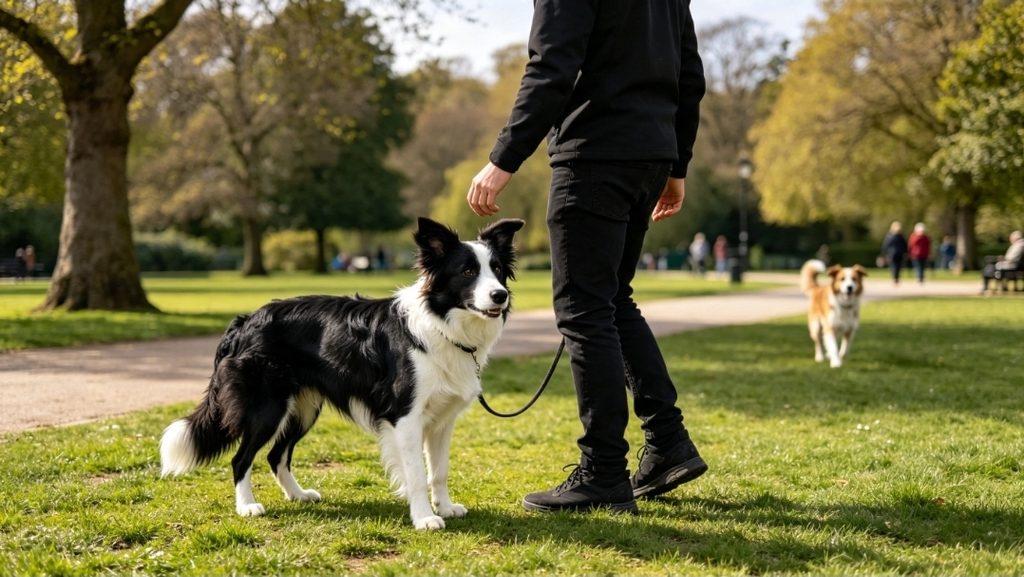
Recognise the Signs Before Your Dog Loses Control
One of the most useful skills when learning how to calm an overexcited dog is recognising the early warning signs.
You may notice your dog:
- Moving faster
- Pulling harder
- Becoming fixated on something
- Whining
- Barking
- Jumping
- Pacing
- Ignoring their name
- Struggling to maintain attention
- Becoming unable to respond to familiar commands
Don’t wait until your dog is completely out of control.
The earlier you recognise the change, the easier it can be to redirect them.
Don’t Add More Excitement
When a dog is already highly excited, increasing your own energy can make things worse.
Shouting.
Running around.
Repeatedly giving commands.
Waving toys.
Moving quickly.
All of these things can add more stimulation.
Instead, become calmer.
Use a controlled voice.
Slow your movements.
Give your dog space.
Create an environment where they can begin to settle.
Stay Calm Yourself
Your dog pays attention to your body language, movement and tone.
If your dog is jumping around and you become frustrated and start shouting, the interaction can become even more stimulating.
Instead, focus on calm communication.
Clear.
Consistent.
Controlled.
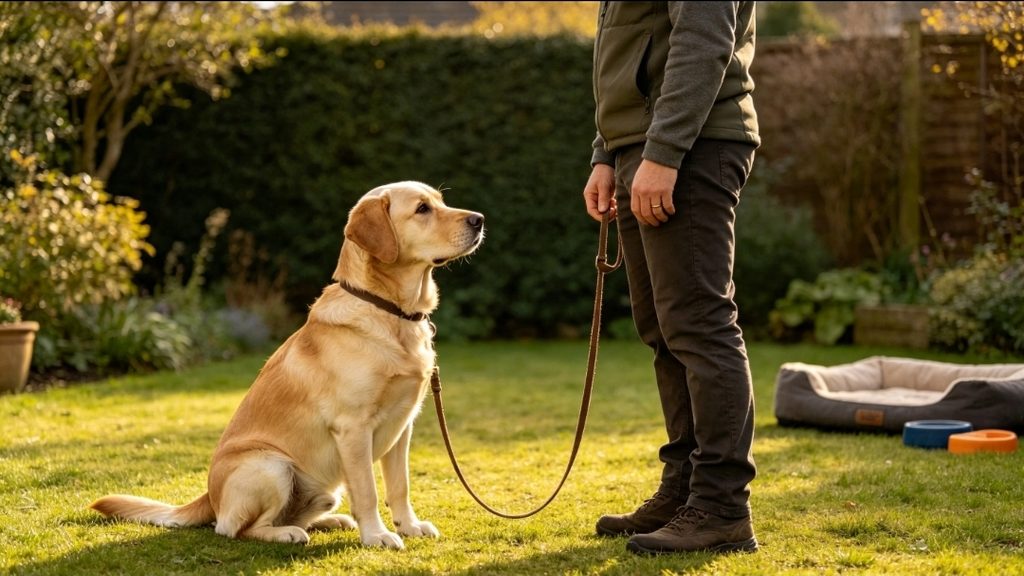
Teach Your Dog to Settle
A dog needs to learn that doing nothing is also a behaviour.
Many owners spend lots of time teaching their dog what to do but very little time teaching them how to settle.
Create opportunities for calm behaviour.
Your dog can learn to:
- Lie on a bed
- Remain beside you
- Relax after exercise
- Wait calmly
- Watch activity without joining in
- Settle while visitors are present
Start in a quiet environment.
Reward calm behaviour.
Gradually increase the level of distraction.
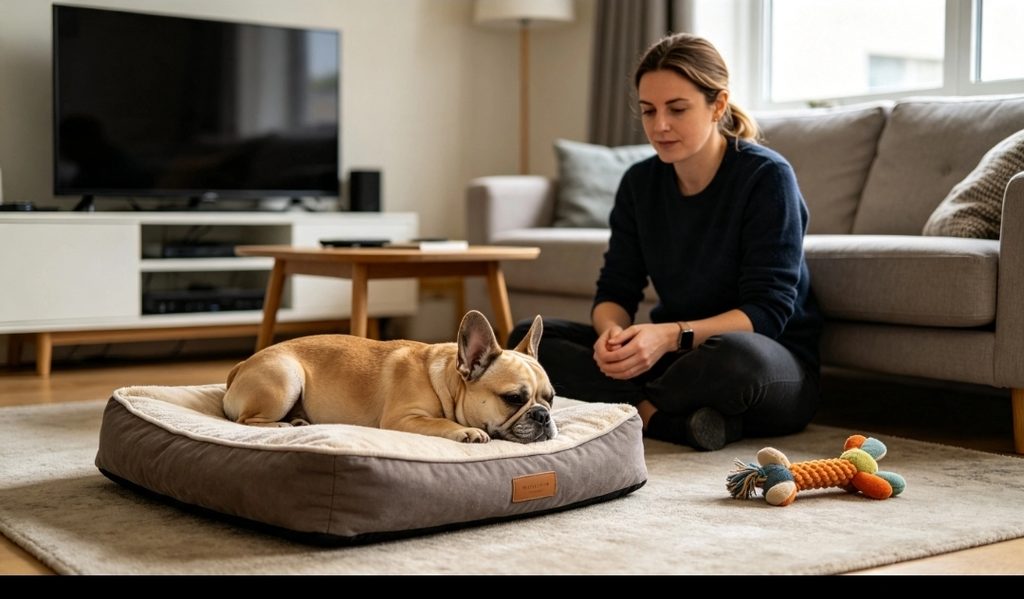
Use a Place or Bed
Teaching your dog to go to a designated bed or place can be particularly useful.
Ask your dog to go to the bed.
Reward them for remaining there.
Start with a short period.
Gradually increase the duration.
Eventually, the bed becomes a predictable place where your dog can relax.
Don’t Reward Jumping With Attention
Some dogs become extremely excited when greeting people.
They jump.
The person pushes them away.
The dog jumps again.
The person talks to them.
The dog receives attention.
From the dog’s perspective, jumping may still be producing an interaction.
Instead, teach an alternative behaviour.
For example:
Four paws on the floor → attention.
Sit → greeting.
The dog learns that calm behaviour produces what they want.
Teach an Alternative Behaviour
Simply telling a dog what not to do isn’t enough.
If you don’t want your dog jumping, teach them what you want instead.
If you don’t want them rushing towards the door, teach them to wait.
If you don’t want them pulling towards another dog, teach engagement and controlled walking.
If you don’t want them charging around when visitors arrive, teach them to settle.
Clear alternatives make training much easier.
Exercise Can Help — But It Isn’t the Whole Solution
Physical exercise is important for dogs.
But simply trying to exhaust an overexcited dog isn’t always the answer.
If you constantly respond to excitement by providing more intense exercise, you may create a dog that expects increasingly high levels of activity.
A balanced routine should include:
- Physical exercise
- Training
- Mental stimulation
- Rest
- Calm activities
- Appropriate social interaction
- Sleep
Your dog needs to learn both how to be active and how to switch off.
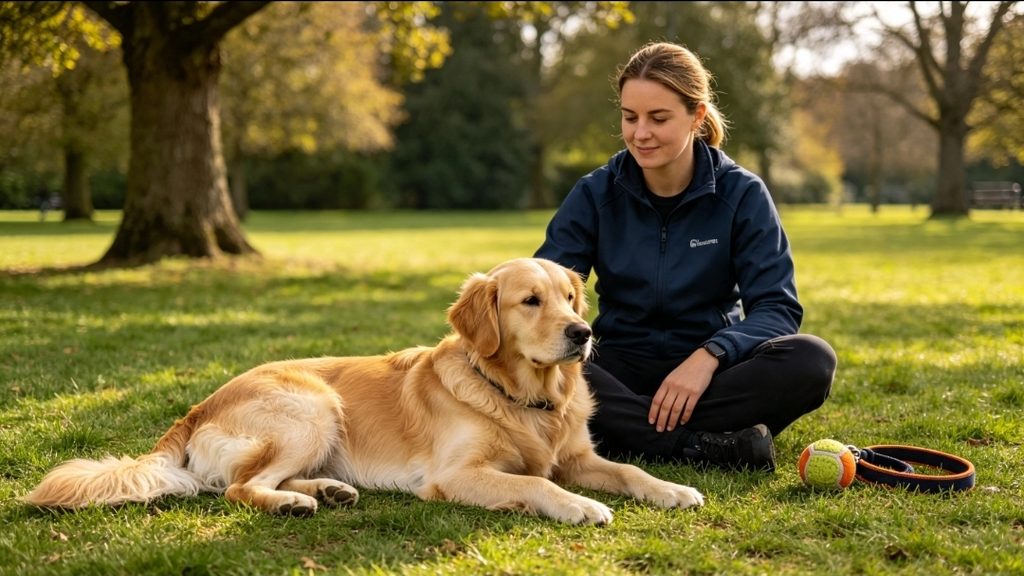
Mental Stimulation Can Help
Some dogs become overexcited because they don’t have enough appropriate outlets for their energy and curiosity.
Training provides mental stimulation.
So can controlled scent work, problem-solving exercises and appropriate enrichment.
Mental stimulation doesn’t need to involve constantly making your dog more excited.
Calm activities can be particularly useful.
For example:
- Scent games
- Searching for food
- Puzzle activities
- Controlled training exercises
- Calm chewing
- Structured exploration
Choose activities appropriate for your individual dog.
Teach Impulse Control
Impulse control is an important part of how to calm an overexcited dog.
Your dog needs to learn:
I want something → I don’t immediately rush towards it.
This can be taught through everyday training.
Ask your dog to wait before:
- Going through a door
- Eating food
- Getting out of the car
- Receiving a toy
- Greeting someone
- Starting a walk
You’re teaching your dog that excitement doesn’t automatically mean immediate action.
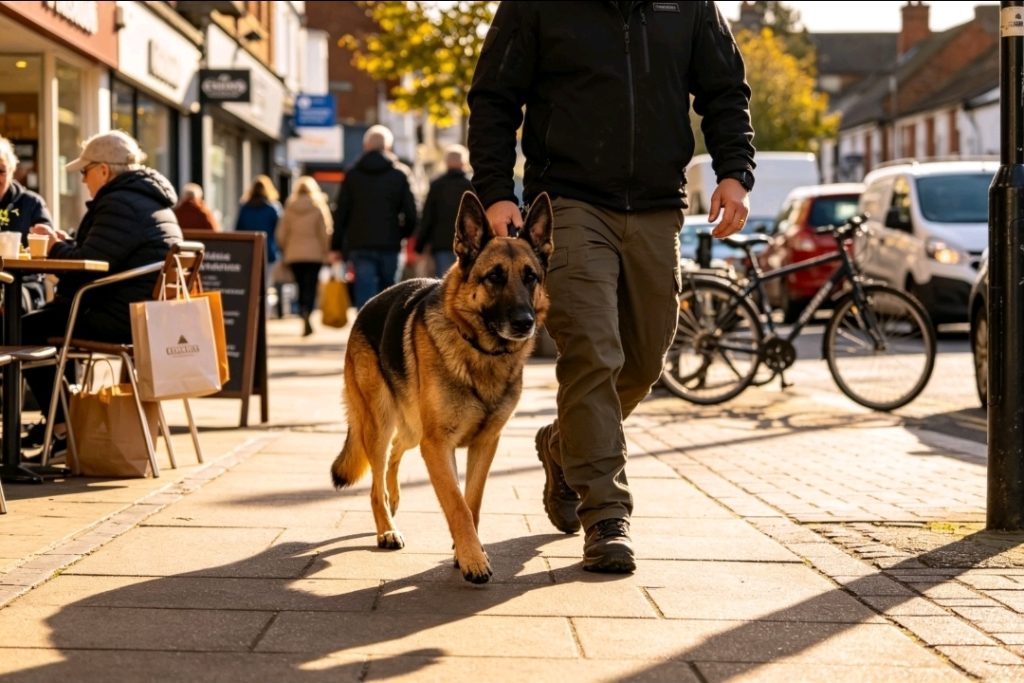
Don’t Expect Calm Behaviour Around Every Distraction Immediately
Your dog may be perfectly calm in the house but become extremely excited when they see another dog.
That doesn’t mean the training hasn’t worked.
The environment has changed.
The distraction is stronger.
The difficulty has increased.
Reduce the challenge.
Create more distance.
Reward calm behaviour.
Then gradually work closer as your dog becomes more reliable.
How to Calm an Overexcited Dog Around Other Dogs
If another dog is a major trigger, don’t immediately walk directly towards it.
Start at a distance where your dog can still think.
Your dog sees the other dog.
You maintain enough distance.
Your dog looks at you.
Reward.
Continue walking.
Repeat.
Over time, your dog can learn that seeing another dog doesn’t automatically mean pulling, barking or rushing towards them.
How to Calm an Overexcited Dog on the Lead
Lead excitement is particularly common.
Your dog sees something exciting.
The lead prevents them from immediately reaching it.
They pull.
You hold them back.
They pull harder.
The situation escalates.
Instead, work below your dog’s threshold.
Use appropriate distance.
Reward engagement.
Change direction when necessary.
Keep sessions manageable.
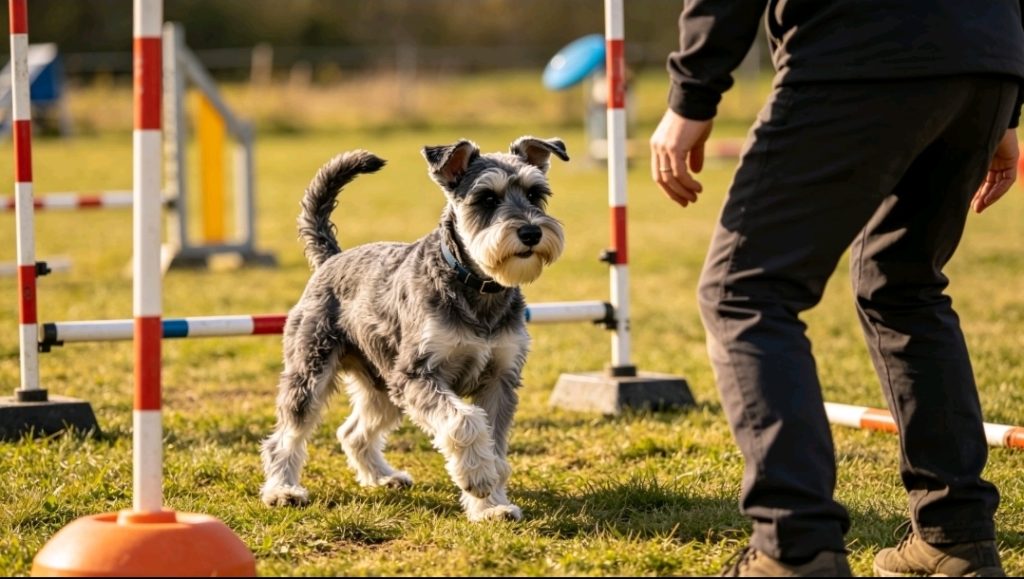
Give Your Dog Time to Decompress
Dogs can become overstimulated when they’re exposed to too much activity.
A busy day can include:
Walk.
Visitors.
Car journey.
Other dogs.
Training.
Children.
Noise.
More activity.
Then the dog struggles to settle.
Rest matters.
Give your dog opportunities to switch off in a quiet environment.
Sleep Is Important
Dogs need appropriate amounts of sleep and rest.
Puppies in particular can become extremely excitable when they’re overtired.
An overtired puppy can look as though they have endless energy.
They may bite.
Run around.
Jump.
Bark.
Refuse to settle.
Sometimes the answer isn’t more activity.
It may be time for a calm environment and appropriate rest.
Avoid Constantly Stimulating Your Dog
You don’t need to entertain your dog every minute of the day.
Dogs need to learn that there are periods of activity and periods of rest.
A healthy routine might involve:
Exercise → training → enrichment → rest.
Not:
Exercise → more exercise → more excitement → more stimulation.
Teach your dog that relaxing is normal.
What If My Dog Gets Overexcited When Visitors Arrive?
Visitors can create a huge amount of excitement.
The doorbell rings.
Someone enters.
Your dog rushes over.
They jump.
They bark.
They become difficult to control.
Prepare before the visitor arrives.
Give your dog a calm activity.
Ask them to settle in an appropriate place.
Reward calm behaviour.
Then introduce the visitor gradually.
Don’t wait until your dog is already jumping all over the person before starting the training.
What If My Dog Gets Overexcited When We Go for a Walk?
Some dogs become excited as soon as they see the lead.
They may bark.
Run around.
Jump.
Grab the lead.
This can become a routine.
Instead, don’t rush out of the door while your dog is completely overexcited.
Take your time.
Reward calm behaviour.
Ask for controlled behaviour before opening the door.
The walk should begin calmly rather than with maximum excitement.
Don’t Punish Your Dog for Being Excited
Excitement itself isn’t something your dog necessarily understands as wrong.
Your job is to teach them what to do with that excitement.
Instead of:
“Stop!”
teach:
“Look at me.”
“Sit.”
“Wait.”
“Settle.”
“Walk with me.”
Give your dog behaviours they can succeed with.
How Long Does It Take to Calm an Overexcited Dog?
There isn’t one timeframe that applies to every dog.
Some dogs improve quickly when their owners change how they manage excitement.
Others require weeks or months of consistent training.
The important thing is progression.
Look for small improvements.
Your dog settles faster.
They recover from excitement more quickly.
They listen for longer.
They can remain calm around slightly bigger distractions.
These are all signs of progress.
GPK9 and Building Calm, Reliable Behaviour
Learning how to calm an overexcited dog isn’t about trying to suppress your dog’s personality.
It’s about teaching them control.
Your dog can still be energetic, playful and enthusiastic while learning when it’s appropriate to switch off.
Developing obedience, engagement, impulse control and calm behaviour requires consistent training rather than a quick fix.
GPK9 90 Day Transformation
The GPK9 90 Day Transformation is the most relevant GPK9 course for this topic because creating reliable behavioural change requires consistency and progressive training.
A structured training programme gives you the opportunity to work on obedience, engagement, impulse control and everyday control while gradually increasing distractions.
The aim is to help your dog become more responsive and better able to regulate their behaviour in everyday situations.
A Simple Plan for Calming an Overexcited Dog
Step 1 — Identify the Triggers
Work out what causes your dog’s excitement.
Step 2 — Recognise the Early Signs
Intervene before your dog becomes completely overstimulated.
Step 3 — Reduce the Difficulty
Create distance from particularly exciting triggers.
Step 4 — Teach Focus
Reward your dog for paying attention to you.
Step 5 — Teach Impulse Control
Practise wait, stay and controlled behaviours.
Step 6 — Teach a Settle
Create a reliable behaviour for switching off.
Step 7 — Reward Calmness
Reinforce the behaviour you want to see.
Step 8 — Balance Exercise and Rest
Give your dog appropriate physical activity, mental stimulation and downtime.
Step 9 — Introduce Distractions Gradually
Don’t expect your dog to remain calm around the biggest trigger immediately.
Step 10 — Stay Consistent
Everyone interacting with your dog should follow the same rules.
Final Thoughts: How to Calm an Overexcited Dog
Learning how to calm an overexcited dog isn’t about stopping your dog from being energetic.
It’s about teaching them when excitement is appropriate and when they need to settle.
Recognise the early signs.
Reduce overwhelming situations.
Teach focus.
Build impulse control.
Reward calm behaviour.
Provide appropriate exercise and mental stimulation.
Give your dog enough rest.
And gradually introduce distractions.
A calm dog isn’t necessarily a tired dog.
A well-trained dog learns that they can become excited, experience something stimulating and then switch back into a calm state when required.
That ability to switch off is one of the most valuable behaviours you can teach your dog.