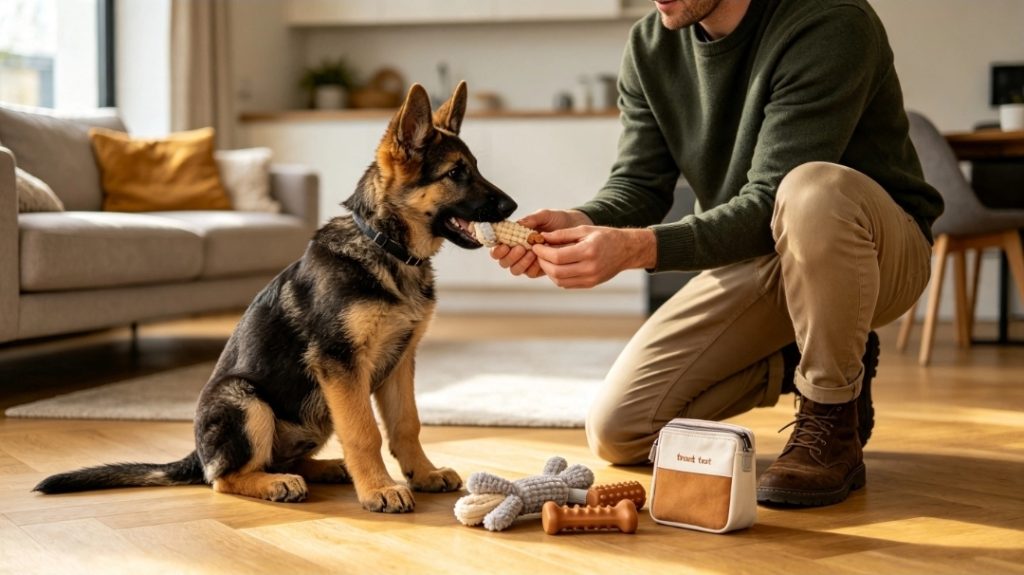
The First 8 Weeks With Your Puppy: What Every New Owner Needs to Know
Bringing a puppy home is exciting, but the first few weeks can also feel overwhelming.
Everything is new.
A new home.
New smells.
New people.
New routines.
New sounds.
For your puppy, leaving their mother and littermates and entering a completely different environment is a huge change.
For a new owner, the first few weeks are a chance to establish the foundations that can influence your puppy’s behaviour for years to come.
Understanding the first 8 weeks with your puppy can help you prepare for the challenges ahead and avoid many common mistakes.
The goal isn’t to create a perfectly trained puppy overnight.
The goal is to establish good habits, build trust, introduce appropriate boundaries and begin teaching your puppy how to live successfully in your world.
Before Your Puppy Arrives
The first 8 weeks with your puppy should ideally begin with preparation before your puppy even walks through the front door.
Having everything ready can make the transition much easier.
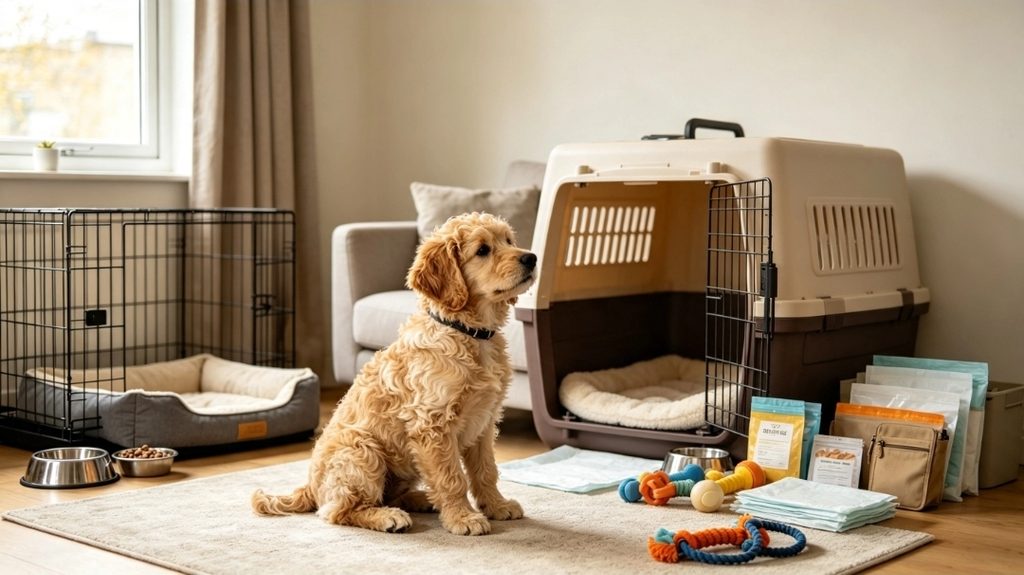
Prepare:
- A comfortable sleeping area
- A suitable crate if you intend to crate train
- Food and water bowls
- Appropriate puppy food
- A collar or harness
- Lead
- Suitable puppy toys
- Safe chew items
- Cleaning supplies
- Puppy bedding
- Training rewards
- Safe areas for your puppy to explore
Decide where your puppy will sleep.
Decide which areas of the house are accessible.
Decide what behaviour you will allow.
Consistency from the beginning can prevent confusion later.
Week 1: Settling Into Your Home
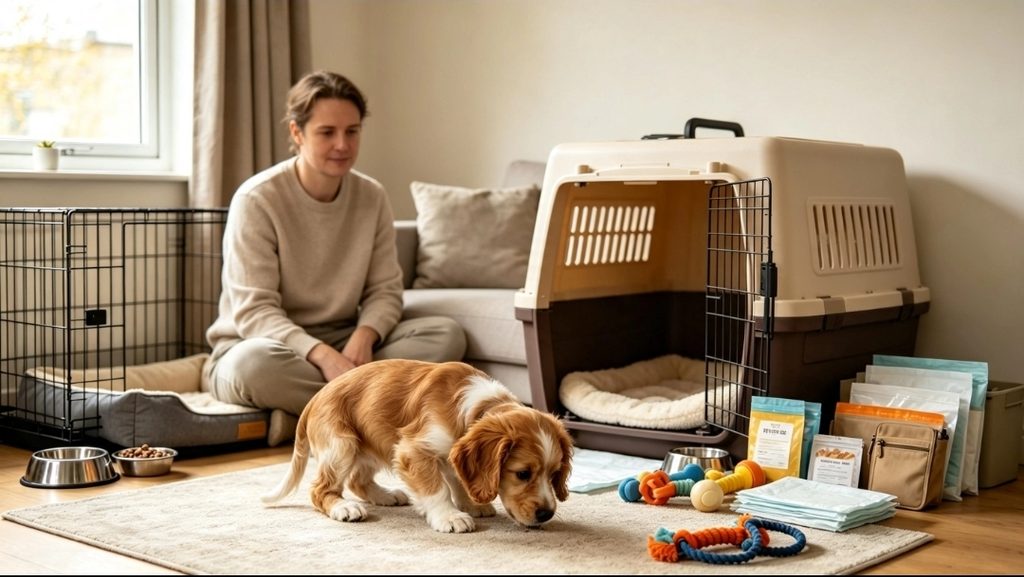
The first week should be about settling in.
Your puppy has experienced a major change.
Don’t overwhelm them with constant visitors, long journeys and lots of new experiences immediately.
Give them time.
Let them explore their new environment gradually.
Show them where their bed is.
Show them where they can toilet.
Introduce household sounds carefully.
Create a predictable routine.
Establish a Routine
Puppies benefit from predictable routines.
Try to establish consistent times for:
- Waking up
- Feeding
- Toilet opportunities
- Training
- Play
- Rest
- Bedtime
The routine doesn’t have to be perfect.
The purpose is to help your puppy understand what happens throughout the day.
Don’t Expect Your Puppy to Be Perfect
One of the biggest mistakes new owners make during the first 8 weeks with your puppy is expecting too much too soon.
Your puppy is learning everything.
They don’t automatically know:
- Where to toilet
- Where to sleep
- What they can chew
- What they can’t chew
- How to walk on a lead
- How to greet people
- How to settle
- How to respond to their name
Training takes time.
Be consistent.
Be patient.
And reinforce the behaviour you want.
Week 2: Start Building Communication
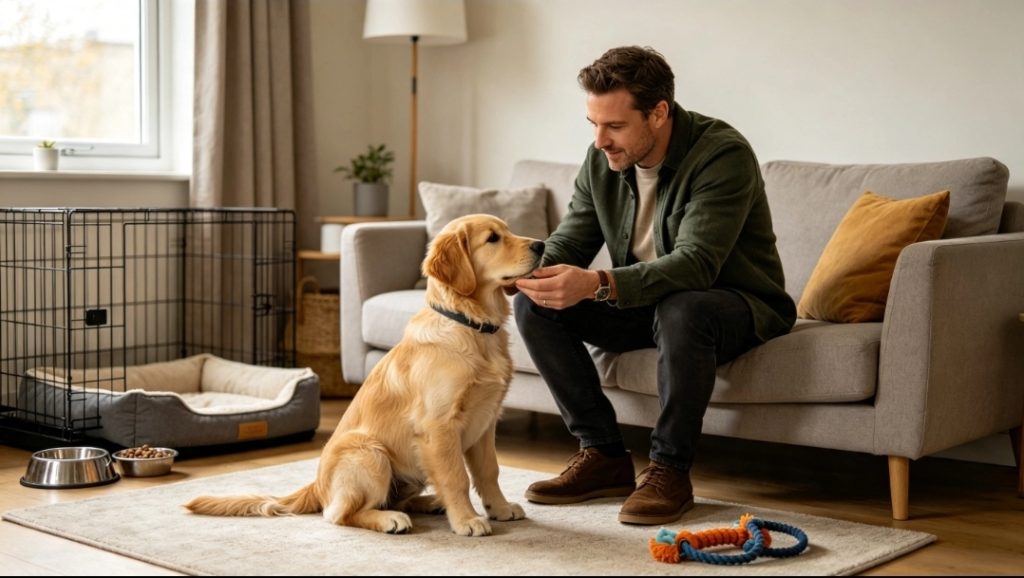
Once your puppy begins settling into the home, start introducing basic communication.
Their name is one of the first things they can learn.
Say their name.
When they look towards you, reward them.
Repeat.
You’re teaching your puppy:
My name means pay attention to my handler.
This becomes extremely useful later when teaching other behaviours.
Begin Basic Training
Keep training sessions short.
Puppies have limited attention spans.
You can begin introducing:
- Name recognition
- Sit
- Come
- Leave it
- Calm behaviour
- Following you
- Appropriate play
- Handling
Don’t worry about achieving perfect obedience.
You’re building foundations.
Toilet Training Starts Immediately
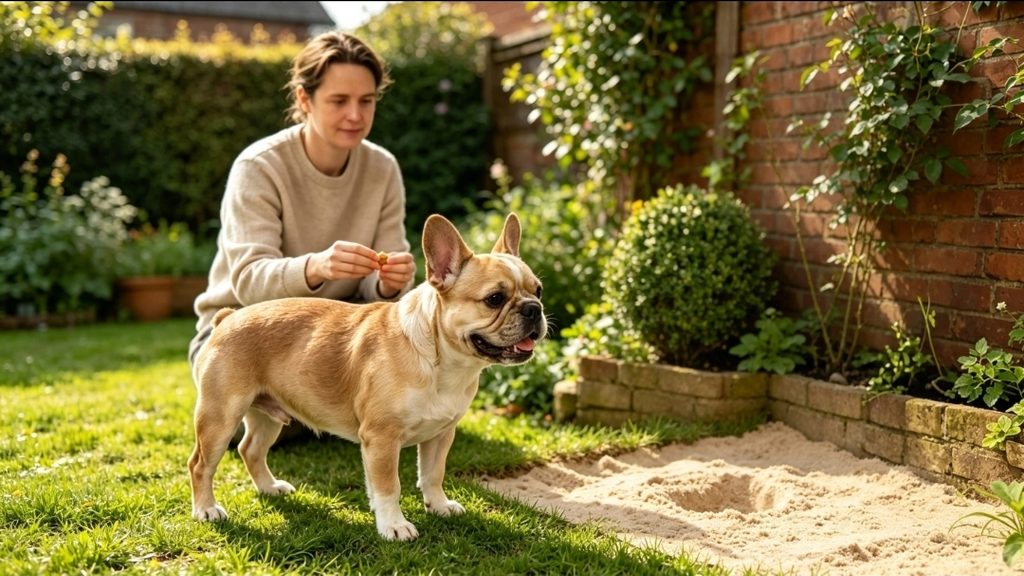
Toilet training should begin from the moment your puppy arrives.
Take your puppy to their designated toilet area regularly.
Especially:
- After waking
- After eating
- After playing
- Before bedtime
- After periods of excitement
When your puppy toilets in the correct place, reward them.
Accidents will happen.
Don’t punish your puppy for something they don’t yet understand.
Instead, increase supervision and provide more frequent toilet opportunities.
Week 3: Introduce Appropriate Socialisation
Socialisation is about much more than meeting as many dogs and people as possible.
Your puppy should gradually experience different sights, sounds, surfaces, environments and people in a way that is appropriate for their age and circumstances.
Introduce experiences carefully.
Your puppy might encounter:
- Household appliances
- Cars
- Different floor surfaces
- People wearing different clothing
- Garden sounds
- Traffic
- Doorbells
- Everyday household activity
- Different safe environments
The objective is to help your puppy develop confidence.
Don’t overwhelm them.
Week 4: Start Teaching Boundaries
Your puppy needs to learn what behaviour is acceptable.
Boundaries should be clear and consistent.
For example:
If you don’t want your adult dog jumping on people, don’t encourage your puppy to jump on people.
If you don’t want your dog biting hands, don’t turn hands into toys.
If you don’t want your dog running through open doors, teach them to wait.
The habits established during puppyhood can become habits that continue into adulthood.
Teach Your Puppy What to Do Instead
Don’t simply tell your puppy what not to do.
Give them an alternative.
Instead of jumping:
Four paws on the floor.
Instead of biting hands:
Appropriate toy.
Instead of rushing through the door:
Wait.
Instead of constantly demanding attention:
Settle.
Clear communication makes training easier.
Week 5: Begin Lead Training
Your puppy may initially find a collar, harness and lead strange.
Introduce them gradually.
Allow your puppy to become comfortable wearing the equipment.
Start indoors.
Reward your puppy for following you.
Then progress to the garden or another suitable environment.
Don’t expect a young puppy to immediately walk perfectly on a lead.
Lead walking is a learned skill.
Don’t Let Pulling Become the Normal Way to Walk
If your puppy pulls and immediately gets access to what they want, pulling can become rewarding.
Instead, begin teaching engagement.
Reward your puppy for being near you.
Reward them for following.
Reward a loose lead.
Keep early sessions short.
Week 6: Develop Focus and Recall
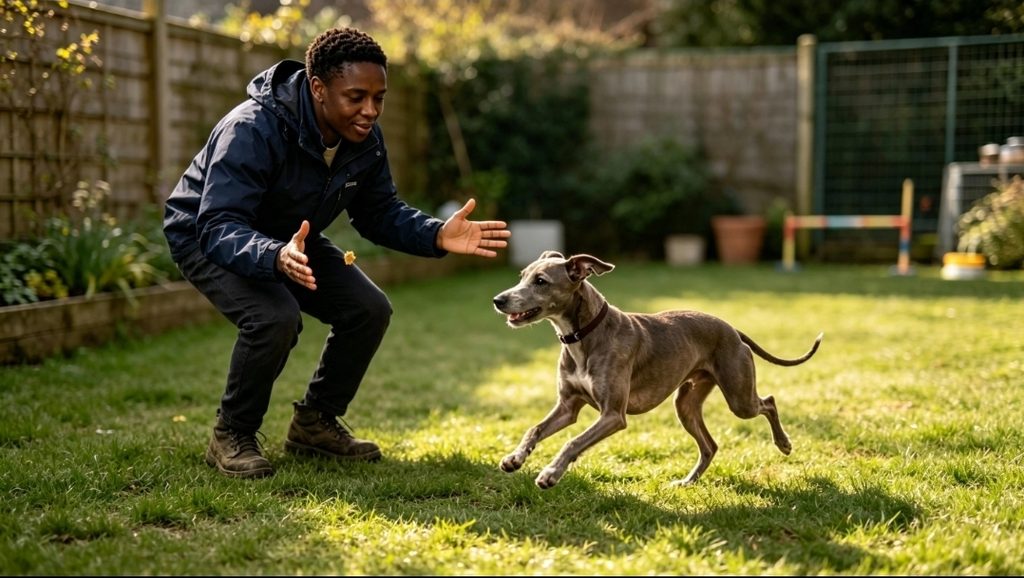
As your puppy becomes more confident, begin developing recall.
Start in safe, controlled environments.
Move a short distance away.
Call your puppy.
Encourage them towards you.
Reward them when they arrive.
Make returning to you enjoyable.
Don’t Expect Perfect Recall Yet
Your puppy may come immediately when called inside the house but ignore you outside.
That’s normal.
The environment is more distracting.
Build gradually.
House → garden → secure area → increasingly distracting environments.
Don’t rush the progression.
Week 7: Teach Your Puppy to Settle
An important part of the first 8 weeks with your puppy is teaching them that they don’t need constant entertainment.
Puppies need plenty of rest.
An overtired puppy can become extremely excitable.
They may:
- Bite
- Jump
- Bark
- Run around
- Grab clothing
- Struggle to settle
Sometimes what looks like endless energy is actually an overtired puppy who needs rest.
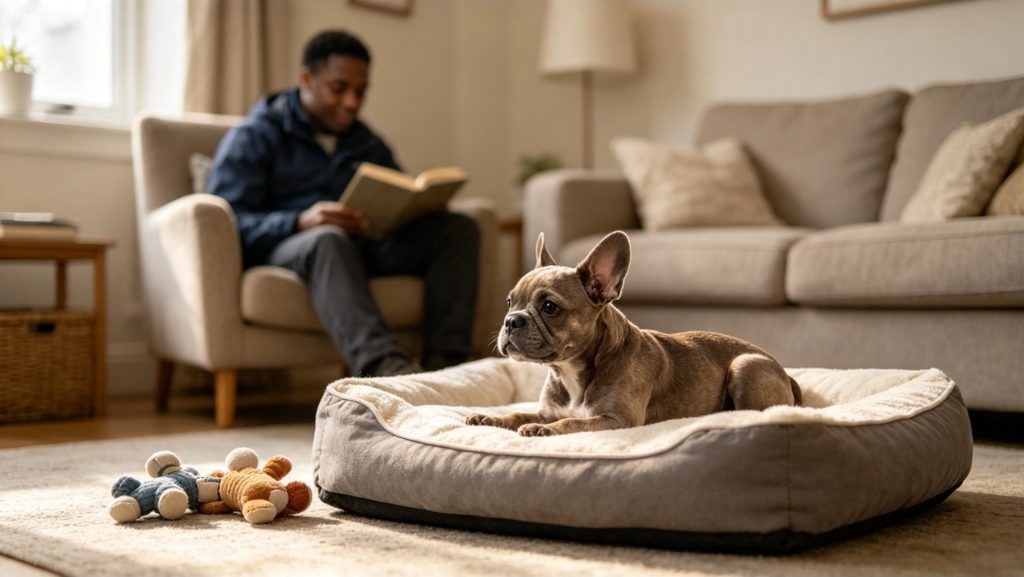
Create a Calm Place
Teach your puppy that their bed or crate is a safe place to relax.
Reward calm behaviour.
Give your puppy opportunities to settle without constantly interacting with them.
This teaches an important life skill:
How to switch off.
Week 8: Start Putting Everything Together
By the eighth week, your puppy should have started experiencing a range of basic training and household routines.
You can begin combining behaviours.
For example:
Name → focus → sit → reward.
Or:
Recall → return → reward → release.
Or:
Door → wait → release.
You’re beginning to create communication between you and your puppy.
Don’t expect perfection.
The first eight weeks are about foundations.
Puppy Biting
Puppy biting is normal behaviour.
Puppies investigate the world with their mouths.
They also chew because of normal development and teething.
However, puppies need to learn appropriate boundaries.
Don’t encourage your puppy to bite hands or clothing during play.
Redirect them towards an appropriate toy.
Reward calm interaction.
If your puppy becomes excessively excited, end the interaction calmly and give them an opportunity to settle.
Handling Your Puppy
Your puppy should gradually become comfortable with appropriate handling.
Gently introduce handling of:
- Paws
- Ears
- Mouth
- Collar
- Body
- Tail
Keep experiences calm and positive.
This can help make everyday care easier as your puppy grows.
Grooming, veterinary examinations, nail care and general handling all become easier when a dog has learned that being handled is normal.
Introduce Your Puppy to the Car
Car travel should be introduced gradually.
Start with short journeys.
Use appropriate restraint.
Keep the experience calm.
Don’t make your puppy’s first car journey a long trip if you can avoid it.
Build positive associations.
Meeting New People
Your puppy will encounter different people throughout their life.
Don’t allow everyone to rush over and overwhelm them.
Give your puppy space.
Allow them to approach when appropriate.
Reward calm behaviour.
Your puppy doesn’t need to greet every person they see.
Learning to calmly observe people is just as valuable as learning to interact with them.
Meeting Other Dogs
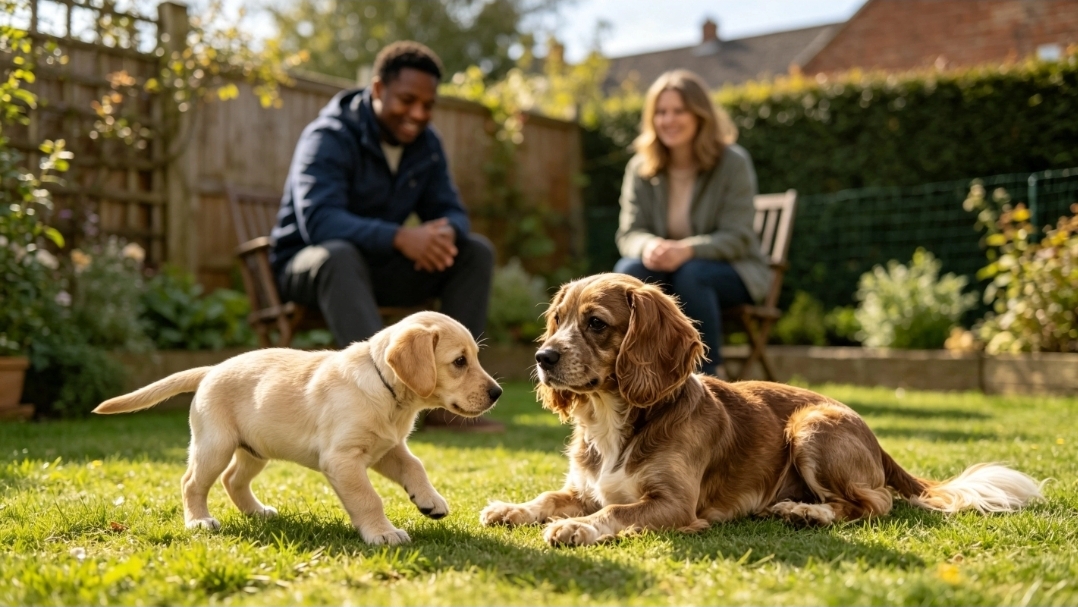
Good experiences with other dogs can be valuable, but socialisation doesn’t mean allowing your puppy to run up to every dog they see.
Choose appropriate interactions.
Consider the temperament and behaviour of the other dog.
Keep experiences controlled.
Your puppy should learn that other dogs are part of the environment, rather than automatically becoming an invitation to run over and play.
Don’t Overdo Socialisation
More isn’t always better.
A puppy doesn’t need ten new experiences in one day.
Too much stimulation can create an overwhelmed puppy.
Introduce new experiences gradually.
Allow recovery time.
Give your puppy plenty of sleep.
The aim is positive exposure, not simply exposure.
Common Mistakes During the First 8 Weeks With Your Puppy
New owners can accidentally create problems without realising it.
Common mistakes include:
Giving Too Much Freedom
A puppy with access to the entire house can quickly develop unwanted habits.
Use appropriate boundaries.
Inconsistent Rules
If jumping is allowed one day and punished the next, your puppy receives mixed information.
Be consistent.
Too Much Exercise
Young puppies need appropriate activity and plenty of rest.
Don’t assume more exercise is always better.
Too Little Training
Training should begin from the start.
Keep it short and enjoyable.
Repeating Commands
Don’t constantly repeat the same cue.
Teach your puppy what the cue means.
Punishing Accidents
Toilet accidents are part of learning.
Improve supervision and routine rather than frightening your puppy.
Ignoring Calm Behaviour
Don’t only interact with your puppy when they’re demanding attention.
Reward calmness too.
The Importance of Consistency
Your puppy doesn’t know that different family members have different rules.
If one person allows jumping and another doesn’t, the puppy receives conflicting information.
Everyone should understand:
- What commands mean
- Where the puppy is allowed
- Where they sleep
- How jumping is handled
- How biting is redirected
- How toilet training is managed
- What rewards are used
- What behaviour is expected
Consistency makes learning easier.
What Should Your Puppy Know After Eight Weeks?
Don’t judge your puppy purely by how many commands they know.
A successful first eight weeks may mean your puppy:
- Responds to their name
- Understands basic boundaries
- Has started toilet training
- Can settle
- Has begun recall training
- Has experienced appropriate socialisation
- Is becoming comfortable with handling
- Has started lead training
- Understands appropriate play
- Can focus on their handler
- Is beginning to understand basic obedience
These are foundations.
Your puppy still has a huge amount to learn.
GPK9 Fundamentals 1 — 6 Weeks to 6 Months
The first 8 weeks with your puppy are an important period for establishing the foundations of future behaviour.
For puppies aged 6 weeks to 6 months, the GPK9 Fundamentals 1 course is the most relevant GPK9 programme for this stage.
The course focuses on establishing the foundations of obedience, communication, engagement and good behaviour during your puppy’s early development.
This is the stage where building the right habits can make a significant difference as your puppy grows.
GPK9 Fundamentals 1 — 6 Weeks to 6 Months
A Simple Daily Puppy Routine
A young puppy’s day should include a balance of:
Toilet → food → short training → play → rest.
Then repeat as appropriate throughout the day.
Training doesn’t need to be complicated.
Use everyday situations as opportunities to teach.
Ask for calm behaviour before opening a door.
Reward your puppy for following you.
Practise their name.
Reward appropriate chewing.
Practise short recalls.
Teach them to settle.
The small things add up.
Final Thoughts: The First 8 Weeks With Your Puppy
The first 8 weeks with your puppy can lay the foundations for years of behaviour.
Don’t try to do everything at once.
Give your puppy time to settle.
Establish a routine.
Begin toilet training.
Teach their name.
Introduce basic obedience.
Build recall.
Teach appropriate play.
Introduce socialisation carefully.
Teach boundaries.
Encourage calm behaviour.
Provide plenty of rest.
Most importantly, remember that your puppy is learning.
Mistakes are inevitable.
Accidents will happen.
Some days will feel easy.
Other days will feel difficult.
The objective isn’t to have a perfect puppy after eight weeks.
It’s to have a puppy that is beginning to understand the world, trust their handler and learn how to behave within it.
Build the foundations early, stay consistent and give your puppy time to grow into the dog you want them to become.