Introduction
Puppy lead training for complete beginners is one of the most important foundations of puppy ownership. Many owners unknowingly create pulling, frustration, and poor lead manners by introducing lead training incorrectly. The good news is that puppy lead training for complete beginners can be simple when the correct foundations are established from the start.
The goal of puppy lead training for complete beginners is not simply teaching a puppy to wear a lead. The objective is to create confidence, engagement, and clear communication between dog and handler. By introducing lead training correctly, owners can avoid many of the common problems that develop later in life.
Why Puppy Lead Training Should Start Slowly
Many people rush puppy lead training for complete beginners and immediately start walking long distances. This often creates confusion because the puppy has not yet learned what is expected.
A puppy first needs to become comfortable wearing a collar, harness, or lead before any structured walking begins. Confidence should always come before distance.
Puppy lead training for complete beginners should focus on creating positive experiences rather than demanding obedience during the early stages.

Building Loose Lead Walking Foundations
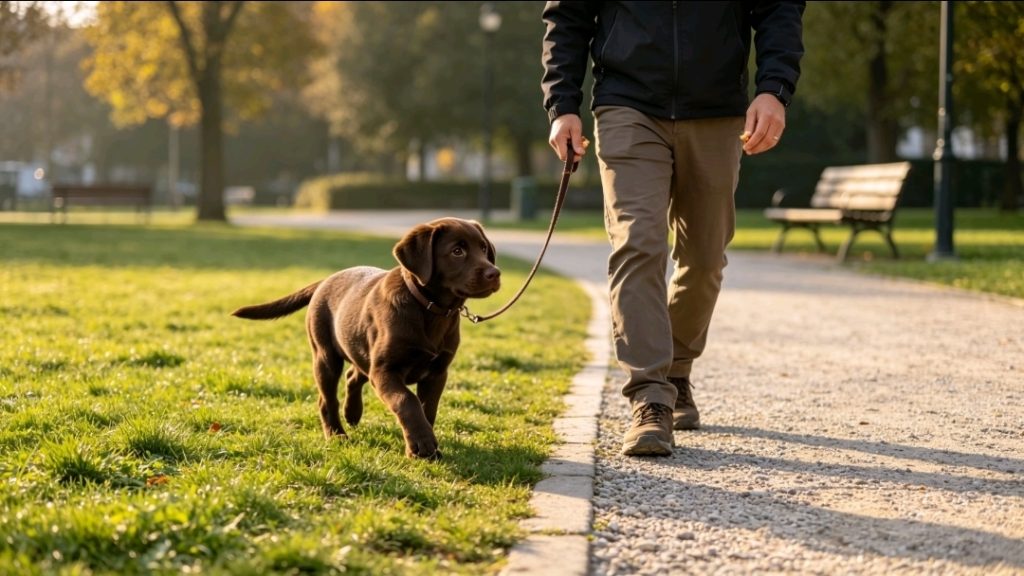
The foundation of puppy lead training for complete beginners is teaching the puppy that staying close to the handler creates rewards.
Movement should be simple:
- Walk a few steps.
- Reward.
- Walk a few steps.
- Reward.
The puppy quickly learns that remaining near the handler produces positive outcomes. This reward-based approach creates engagement while reducing pulling behaviour.
Puppy lead training for complete beginners should always prioritise quality over distance. Five successful minutes is often more valuable than thirty minutes of frustration.
Using Food Rewards During Lead Training
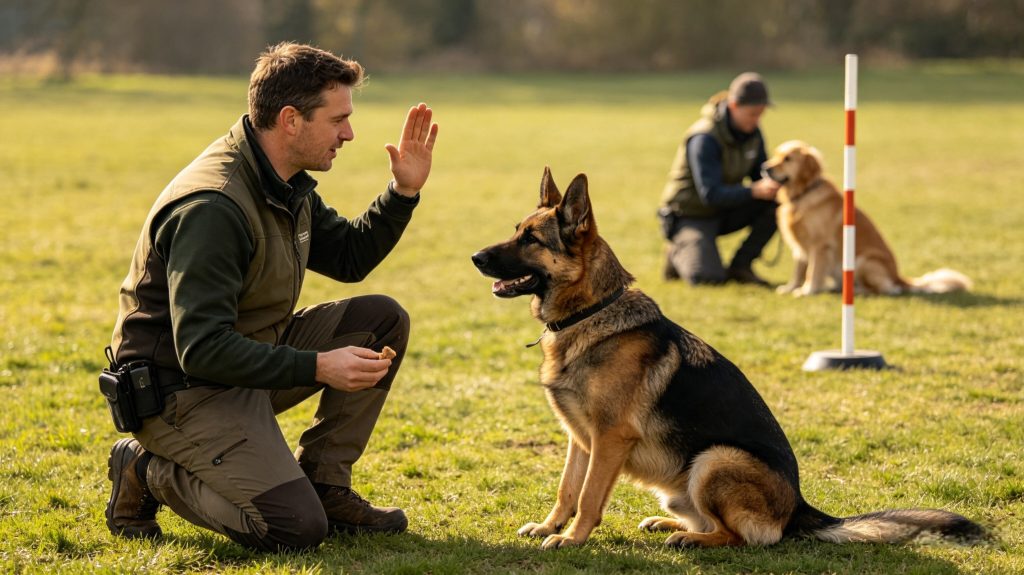
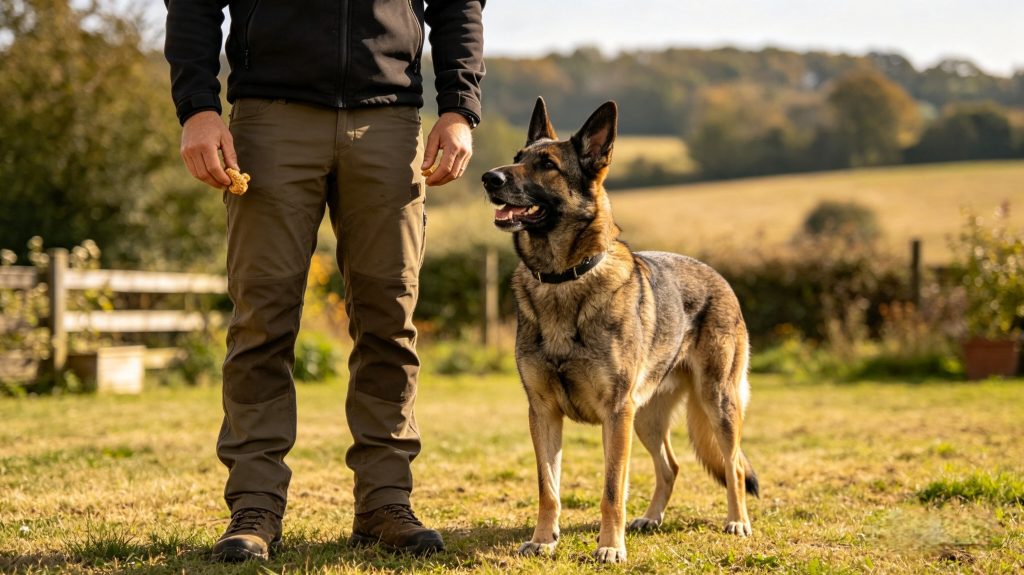
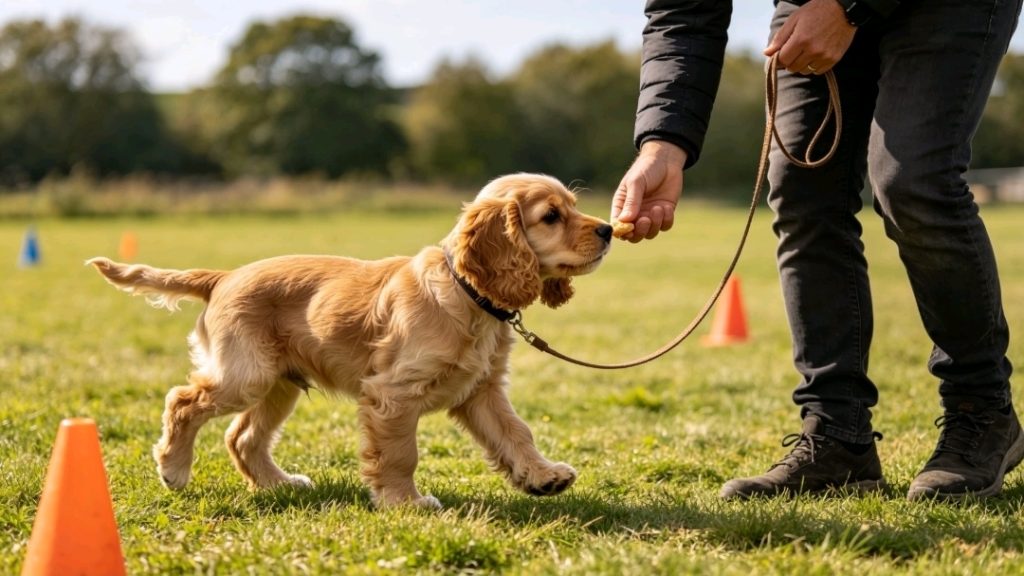
Food rewards play an important role in puppy lead training for complete beginners because they help guide the puppy into the correct position.
The timing of rewards is critical. Rewards should be delivered when the puppy is walking calmly beside the handler rather than after pulling.
This teaches the puppy exactly which behaviour earns reinforcement.
As the puppy becomes more confident, food rewards can gradually become less frequent while maintaining the same expectations.
Confidence Building Through Movement Exercises
Puppy lead training for complete beginners should include simple movement exercises that encourage the puppy to follow naturally.
Examples include:
- Walking in different directions.
- Gentle turns.
- Short engagement exercises.
- Rewarding voluntary check-ins.
- Encouraging attention to the handler.
These exercises help build confidence while teaching the puppy that following the handler is rewarding and enjoyable.
Many lead training problems disappear naturally when confidence and engagement improve.
Progressing Into Public Environments
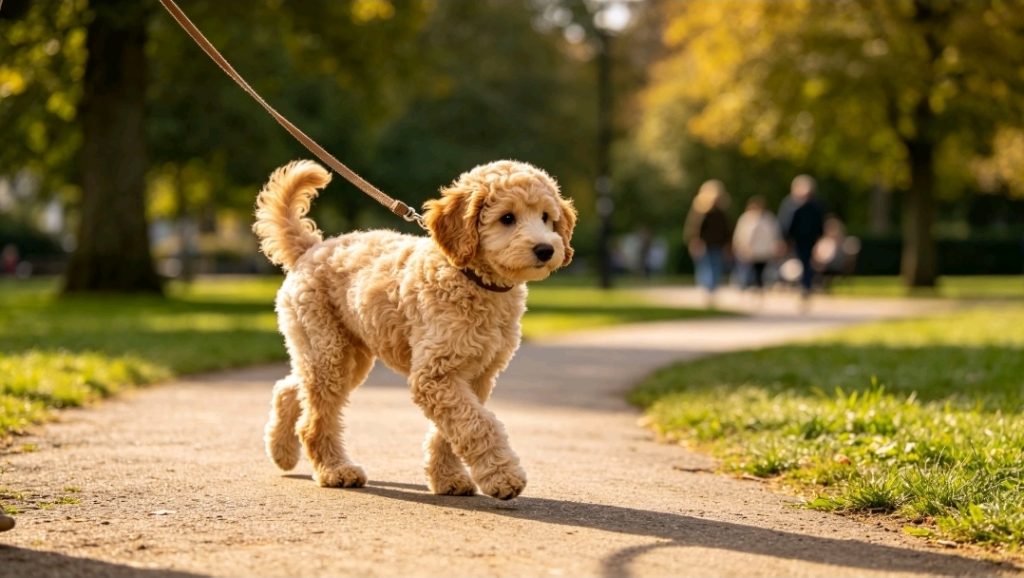
Once the puppy is successful in quiet locations, puppy lead training for complete beginners can gradually move into more challenging environments.
This progression should happen slowly.
Examples include:
- Quiet gardens.
- Quiet fields.
- Quiet parks.
- Areas with mild distractions.
- Busier public environments.
The puppy should remain successful at each stage before progressing further. Rushing progression often creates unnecessary setbacks.
Common Mistakes Beginners Should Avoid
One of the biggest mistakes in puppy lead training for complete beginners is allowing pulling to become a habit.
Other common mistakes include:
- Walking too far too soon.
- Training in busy areas too early.
- Inconsistent reward timing.
- Repeating commands excessively.
- Becoming frustrated during training.
Puppy lead training for complete beginners should remain enjoyable for both the puppy and the handler. Consistency and patience always produce better long-term results than force or correction.
Conclusion
Puppy lead training for complete beginners is about creating confidence, engagement, and understanding. By starting in quiet areas, rewarding correct behaviour, and gradually increasing difficulty, owners can build reliable lead manners without creating stress or frustration.
Strong foundations developed during puppy lead training for complete beginners will make future obedience, recall, engagement, and public access training significantly easier throughout the dog’s life.
Course Recommendation
Fundamentals 1 covers puppy engagement, lead training, socialisation, confidence building, food motivation, play development, and foundation obedience from 6 weeks to 6 months of age.
Continue Your Training Journey With Our Online Courses
Now that you have started building strong foundations with your puppy, the next stage of development is continuing that training through our structured online courses.
Fundamentals 2 is designed for adolescent dogs between 6 and 18 months of age and focuses on real-world obedience, lead walking around distractions, engagement, confidence building, recall development, and managing common teenage dog behaviours. This online course helps owners navigate one of the most challenging stages of dog ownership while continuing to build reliability and control.
Fundamentals 3 is designed for adult dogs and takes training to an advanced level. This online course covers advanced obedience, off-lead control, engagement, handler communication, calmness, environmental neutrality, distraction proofing, and real-world dog training. Fundamentals 3 helps owners create reliable, confident, and well-balanced dogs capable of performing successfully in everyday situations.
Explore Fundamentals 2 and Fundamentals 3 to continue your dog’s training progression and build the skills needed for long-term success.