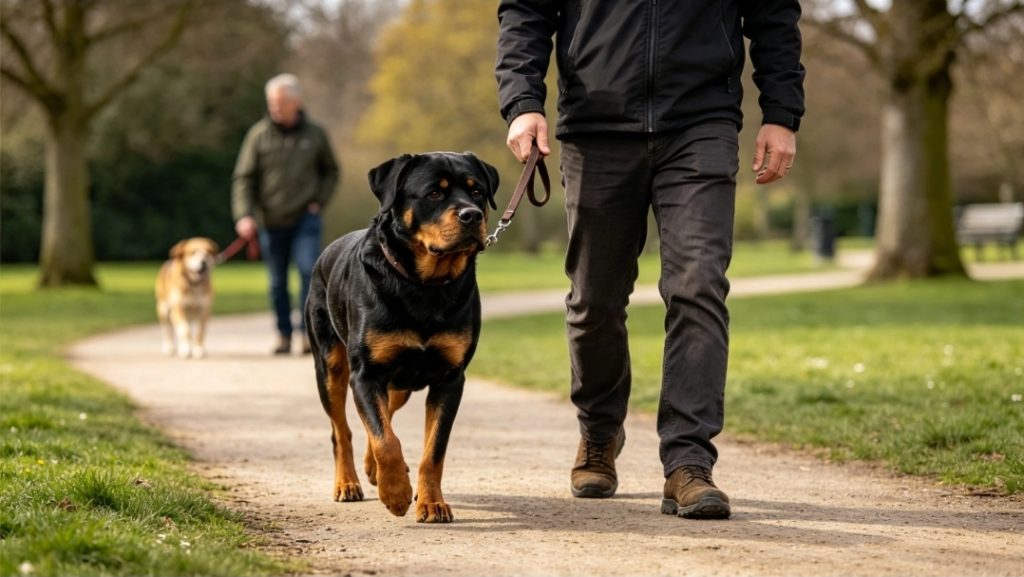
Seeing your dog react aggressively towards another dog can be extremely worrying.
Your dog may bark, growl, lunge, pull on the lead, stare intensely or attempt to get towards another dog.
You may find yourself asking:
“Why is my dog aggressive towards other dogs?”
The first thing to understand is that aggression isn’t always caused by the same thing.
A dog may react because they are frightened.
They may be frustrated.
They may have had a negative experience.
They may be overexcited.
They may be protecting themselves or their handler.
They may have learned that reacting makes another dog move away.
Understanding the reason behind the behaviour is an important part of addressing it.
What Does Dog Aggression Towards Other Dogs Look Like?
Aggressive behaviour can involve much more than biting.
A dog may:
- Stare intensely
- Become very still
- Growl
- Bark
- Snarl
- Lunge
- Pull towards another dog
- Raise their hackles
- Show their teeth
- Snap
- Attempt to bite
Not every bark or growl means a dog wants to attack.
The context matters.
Your dog’s body language, environment, distance from the other dog and previous experiences all need to be considered.
Why Is My Dog Aggressive Towards Other Dogs?
There isn’t one universal explanation.
Two dogs can display almost identical behaviour for completely different reasons.
One may be frightened.
Another may be frustrated because they cannot reach the other dog.
Another may have learned that lunging causes the other dog to leave.
This is why simply labelling a dog as “aggressive” doesn’t necessarily tell you why the behaviour is happening.
You need to look at the circumstances surrounding the reaction.
1. Fear Can Cause Aggressive Reactions
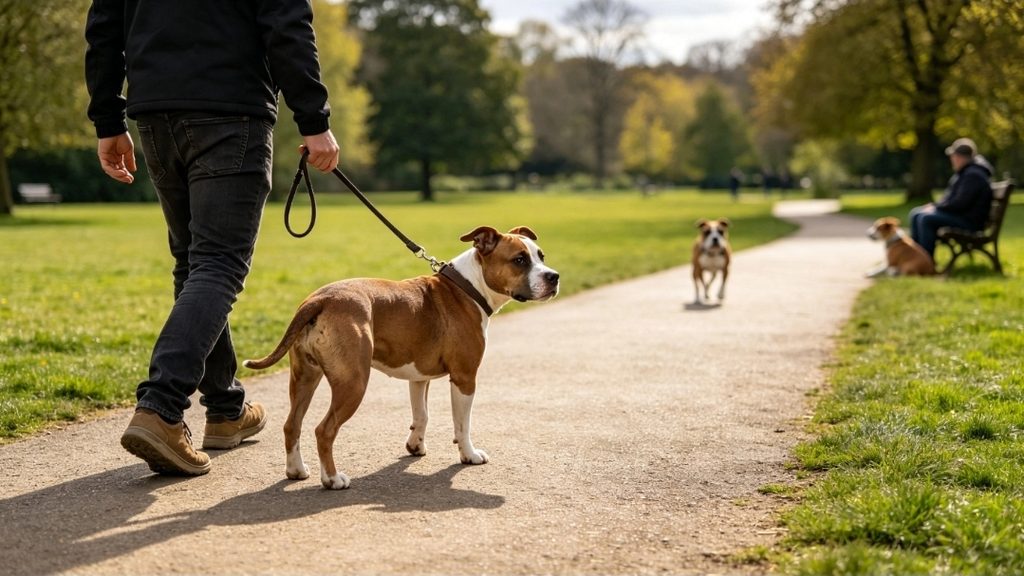
Fear is one possible reason why a dog is aggressive towards other dogs.
A frightened dog may react because they believe another dog is a threat.
Barking, growling and lunging can create distance.
From the dog’s perspective, the behaviour may appear to work.
Another dog approaches.
Your dog reacts.
The other dog moves away.
Your dog learns:
“That worked.”
This can reinforce the behaviour.
A fearful dog shouldn’t simply be forced closer to other dogs.
Creating appropriate distance and working gradually can be far more productive.
2. Frustration Can Look Like Aggression
Not every dog that lunges at another dog wants to fight.
Some dogs become extremely frustrated because they cannot reach the other dog.
They may pull, bark and jump towards them.
The behaviour can look aggressive even though the underlying motivation may be very different.
This is particularly common in dogs that desperately want to greet or interact with other dogs.
The answer isn’t necessarily to allow them to greet every dog.
Instead, the dog needs to learn how to remain calm when another dog is present.
3. Your Dog May Have Had a Bad Experience
A negative experience can affect future behaviour.
Perhaps another dog attacked your dog.
Perhaps your dog was repeatedly intimidated.
Perhaps they were overwhelmed during an interaction.
One unpleasant experience doesn’t automatically create aggression, but it can influence how a dog responds to similar situations afterwards.
The dog may become more defensive.
They may begin reacting earlier.
They may become increasingly uncomfortable around unfamiliar dogs.
4. Your Dog May Be Protecting You
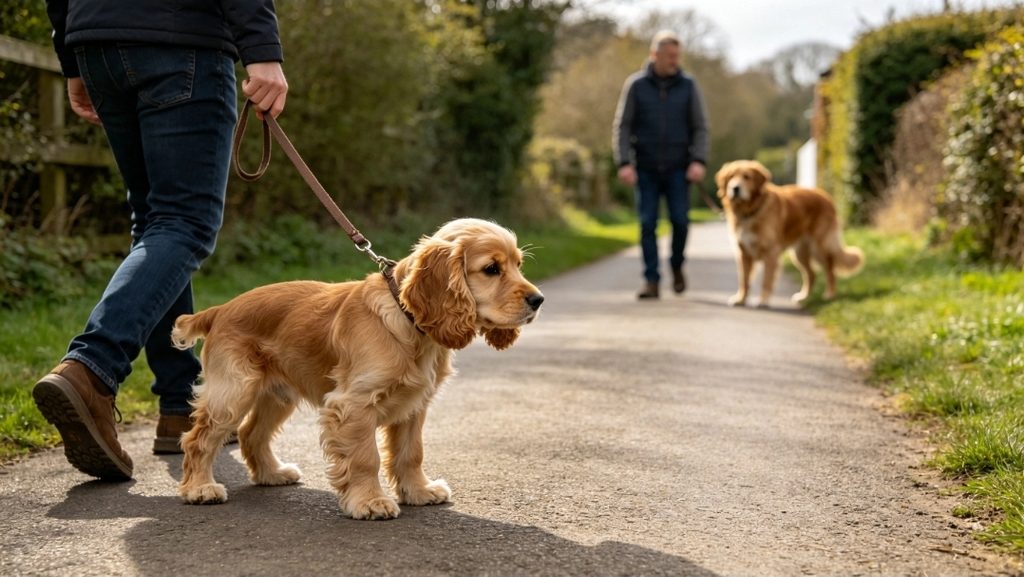
Some dogs become reactive when another dog approaches their handler.
This can appear protective.
However, it’s important not to automatically assume your dog is simply “protecting you.”
The behaviour may involve anxiety, uncertainty, frustration or another motivation.
Regardless of the cause, allowing your dog to repeatedly rehearse lunging or threatening behaviour can make the pattern stronger.
Management and structured training are important.
5. Your Dog May Be Overexcited
Excitement can dramatically affect behaviour.
Your dog sees another dog.
Their excitement increases.
They pull.
They bark.
They jump.
Their ability to respond to you decreases.
This can be mistaken for aggression.
Look at the entire picture.
What does your dog look like when they’re calm?
How do they behave once the other dog has passed?
Do they attempt to greet dogs appropriately?
Are they relaxed when interacting with familiar dogs?
Understanding these details can help identify what’s actually happening.
6. Your Dog Has Learned That Reacting Works
Dogs learn from consequences.
If your dog reacts whenever another dog approaches and the other dog then disappears, your dog may learn that reacting is an effective strategy.
This doesn’t mean your dog is deliberately manipulating you.
It means behaviour can be reinforced by what happens afterwards.
This is one reason repeatedly allowing your dog to rehearse aggressive reactions can make the behaviour increasingly difficult to manage.
7. Your Dog May Not Have Learned How to Behave Around Dogs
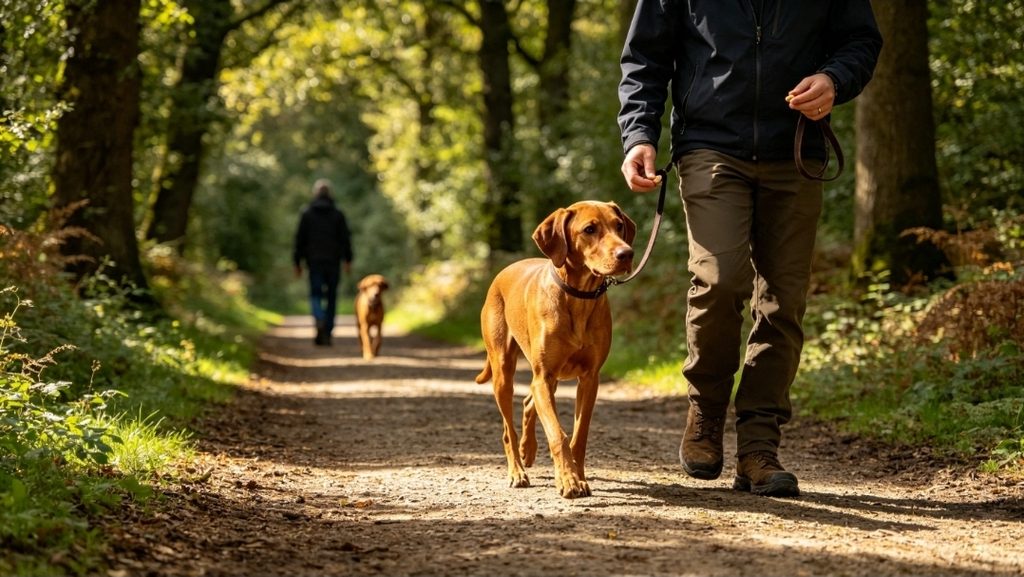
Some dogs simply haven’t developed appropriate social skills.
They may become too excited.
They may invade another dog’s space.
They may stare.
They may rush towards other dogs.
They may fail to recognise when another dog wants space.
This doesn’t necessarily mean the dog is inherently aggressive.
It may mean they need clearer guidance and controlled experiences.
8. Lead Restriction Can Change Behaviour
Some dogs behave differently when they are on a lead.
They cannot move away.
They cannot investigate freely.
They cannot choose the distance between themselves and another dog.
A dog that feels restricted may become more reactive.
This is another reason why simply forcing two dogs to stand close together on leads isn’t necessarily a good socialisation exercise.
Distance and control matter.
9. Your Dog May Be Reacting to a Particular Type of Dog
Some dogs don’t react equally to every dog.
Your dog might be comfortable around small dogs but react towards larger dogs.
They may react towards unfamiliar dogs but remain calm around dogs they know.
They may react to particular breeds, body shapes, movement styles or behaviours.
Look for patterns.
Keep track of:
- Which dogs trigger the reaction
- Distance from the other dog
- Location
- Time of day
- Whether your dog is on lead
- What happened immediately beforehand
- How your dog behaved afterwards
Patterns can provide valuable information.
10. Your Dog May Be in Pain or Unwell
A sudden change in behaviour should never simply be dismissed as disobedience.
If a previously calm dog suddenly becomes reactive or aggressive, there may be an underlying physical issue.
Pain or discomfort can influence behaviour.
If your dog’s behaviour has changed suddenly or significantly, veterinary advice should be considered before assuming the problem is purely a training issue.
Don’t Punish the Warning Signs
Growling is communication.
If your dog growls at another dog, immediately punishing the growl may suppress the warning without addressing why your dog feels uncomfortable.
You need to understand what caused the reaction.
Instead of simply trying to eliminate the warning, work on the underlying behaviour and situation.
The objective is to help your dog develop a more appropriate response.
Don’t Force Your Dog to Meet Other Dogs
If your dog reacts aggressively towards other dogs, repeatedly taking them directly towards other dogs isn’t necessarily going to solve the problem.
More exposure isn’t automatically better.
If your dog is already overwhelmed, moving closer may simply increase the intensity of the reaction.
Instead, start at a distance where your dog can notice another dog while still remaining capable of responding to you.
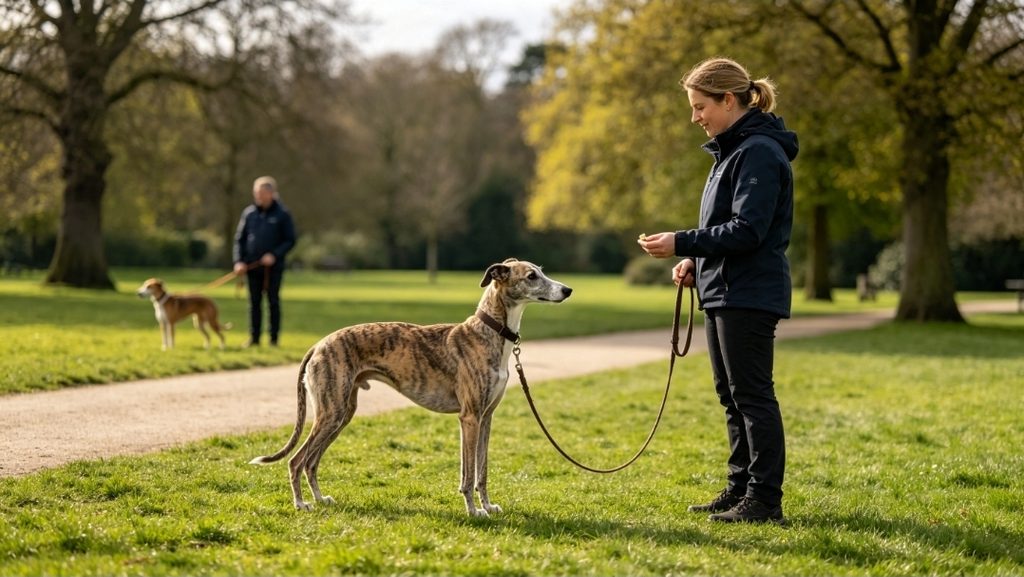
Teach Your Dog What to Do Instead
Stopping a behaviour is only part of training.
Your dog also needs to learn what you want them to do instead.
For example, when another dog appears, you might teach your dog to:
- Look at you
- Walk beside you
- Sit
- Move away
- Follow a direction
- Focus on the handler
- Remain calm
The alternative behaviour needs to be trained before you expect your dog to perform it during a difficult situation.
Build Distance Before You Build Difficulty
Distance is one of the most useful tools when working around triggers.
If your dog reacts at ten metres, ten metres may be too close.
Increase the distance.
If your dog can remain calm at thirty metres, you have a better opportunity to train.
Over time, you can gradually reduce the distance as your dog’s ability to remain calm improves.
The process should be controlled.
Don’t rush it.
Reward Calm Behaviour
Don’t wait until your dog reacts before paying attention to them.
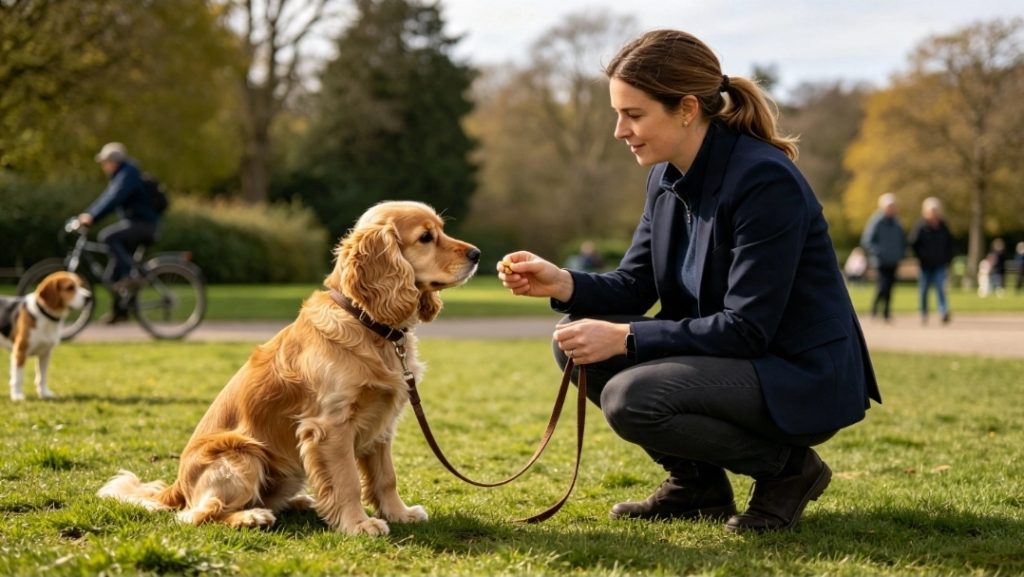
Reward the behaviour you want while your dog is still calm.
Your dog sees another dog.
They look at it.
Then they look back at you.
Reward.
They remain calm.
Reward.
They walk past without reacting.
Reward.
You’re teaching your dog that calm behaviour produces positive outcomes.
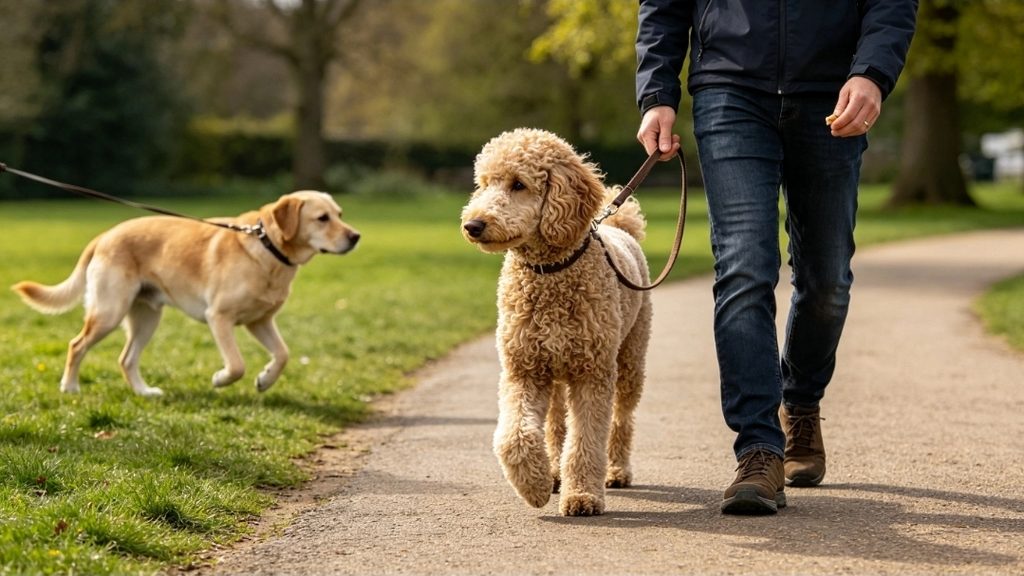
What Should You Do When Your Dog Starts Reacting?
If your dog begins to react, focus on safety and management.
Create distance if possible.
Don’t deliberately move closer.
Don’t allow the dogs to rush towards each other.
Keep yourself calm.
Use your previously trained behaviours where your dog is capable of responding.
Once your dog is calm again, consider what triggered the reaction.
The objective isn’t to win a battle with your dog.
It’s to manage the situation and continue building better behaviour.
Don’t Expect Your Dog to Be Perfect Immediately
Behavioural change takes time.
If your dog has been reacting towards other dogs for months or years, don’t expect the behaviour to disappear after two training sessions.
Progress may involve small improvements.
Your dog notices another dog but reacts less intensely.
They recover faster.
They can remain calm at a greater distance.
They respond to you more quickly.
They can walk past without escalating.
These are all signs of progress.
Why Professional Training Can Help
Dog aggression towards other dogs can be complicated.
The same outward behaviour can have completely different underlying causes.
A structured approach can help you identify triggers, manage distance, establish communication and teach alternative behaviours.
If you’re struggling to manage your dog’s reactions safely, professional assistance can be particularly valuable.
GPK9 and Dog Training
GPK9 focuses on developing communication, obedience, engagement and reliable behaviour between dogs and their handlers.
For an adult dog displaying problems around other dogs, structured training can provide an important foundation for improving engagement and obedience.
GPK9 90 Day Transformation
The GPK9 90 Day Transformation is the most relevant GPK9 course for this article because it provides a structured period for developing training habits and working consistently with your dog.
Rather than expecting an instant change, the 90-day approach gives you time to establish routines, improve communication, reinforce appropriate behaviour and progressively develop your dog’s reliability.
Remember, structured obedience training is not a substitute for professional behavioural assessment where a dog presents a significant safety risk.
A Simple Starting Plan
Step 1 — Identify the Trigger
Work out what situations cause your dog to react.
Step 2 — Manage the Environment
Avoid situations where your dog is likely to become overwhelmed while you establish better control.
Step 3 — Create Distance
Give your dog enough space to remain capable of responding.
Step 4 — Build Engagement
Teach your dog to focus on you.
Step 5 — Reward Calm Behaviour
Reinforce the behaviour you want.
Step 6 — Introduce Controlled Distractions
Gradually work around other dogs without overwhelming your dog.
Step 7 — Increase Difficulty Slowly
Reduce distance or increase distractions only when your dog is ready.
Step 8 — Remain Consistent
Continue practising rather than expecting one successful session to solve the problem.
Final Thoughts: Why Is My Dog Aggressive Towards Other Dogs?
So, why is my dog aggressive towards other dogs?
There isn’t one simple answer.
Your dog may be frightened.
They may be frustrated.
They may have experienced something negative.
They may be overexcited.
They may have learned that reacting makes other dogs move away.
They may lack appropriate social skills.
Or there may be an underlying physical or behavioural issue that needs further investigation.
The important thing is not to immediately label your dog as bad or stubborn.
Look at the behaviour.
Look at the environment.
Look at the distance.
Look at your dog’s body language.
Identify the trigger.
Then create a training plan that allows your dog to succeed.
Don’t force your dog into situations they cannot handle.
Don’t deliberately rehearse aggressive reactions.
Don’t focus solely on stopping the behaviour.
Teach your dog what you want them to do instead.
With appropriate management, consistency, structured training and patience, many dogs can learn to respond more appropriately around other dogs.
The goal isn’t simply to make your dog tolerate another dog standing directly in front of them.
The goal is to develop a dog that can encounter other dogs while remaining calm, responsive and under control.