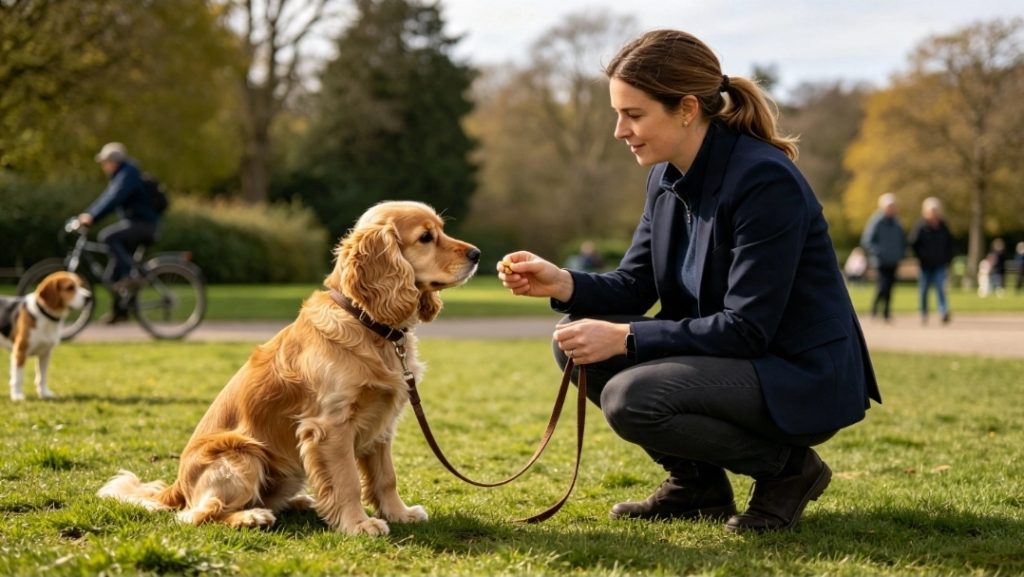
Why Does My Dog Ignore Me? 10 Reasons Your Dog Won’t Listen
Why Does My Dog Ignore Me? 10 Reasons Your Dog Won’t Listen? If you’ve ever called your dog and received absolutely no response, you’re not alone.
You say their name.
Nothing.
You call again.
Still nothing.
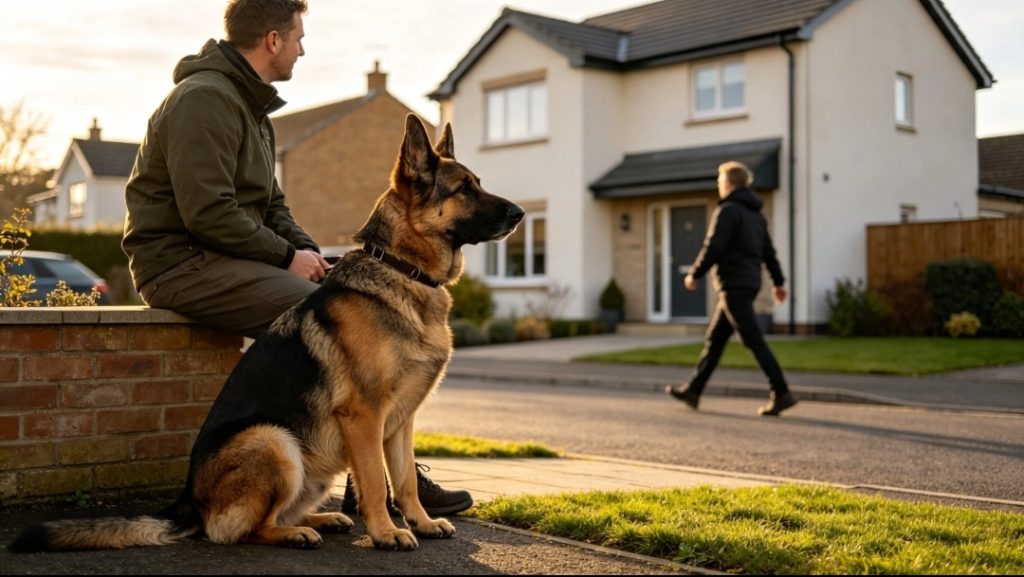
Your dog looks at you for half a second and then goes straight back to whatever they were doing.
So, why does my dog ignore me?
In most cases, your dog isn’t deliberately being rude or trying to challenge you.
There is usually a reason.
Your dog may not fully understand what you’re asking, the environment may be too distracting, the behaviour may not have been properly trained, or your dog may have learned that listening to you isn’t always rewarding.
Understanding why your dog won’t listen is the first step towards improving the problem.
Here are 10 common reasons your dog ignores you and what you can do about them.
1. Your Dog Doesn’t Actually Understand What You’re Asking
One of the biggest mistakes owners make is assuming their dog understands a command simply because they’ve said it many times.
For example, you may say:
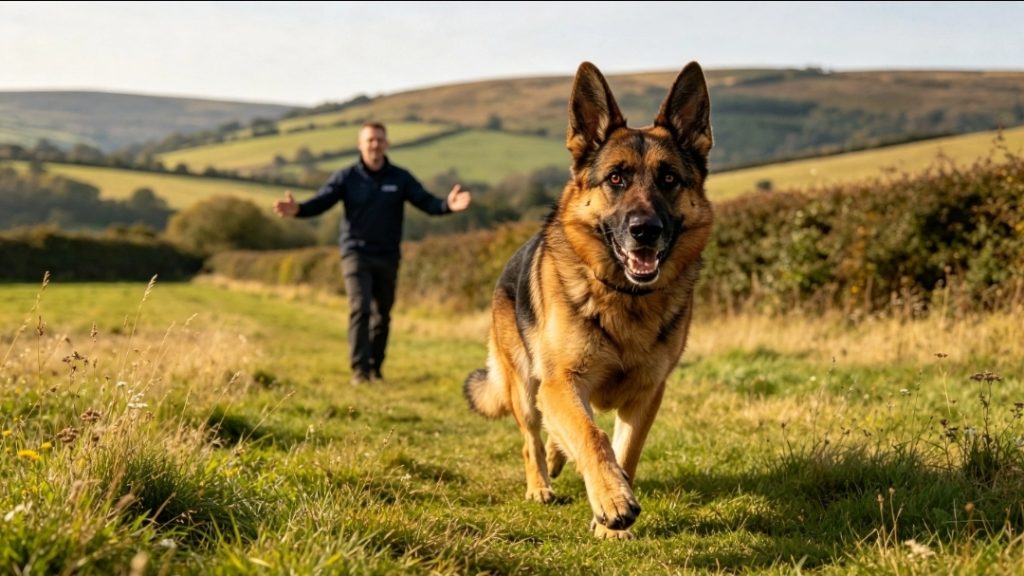
“Come!”
But what does “come” actually mean to your dog?
If you’ve only practised recall inside the house, your dog may understand that the word means to move towards you in your living room.
Take that same command into a busy park surrounded by dogs, people, birds and smells, and suddenly the situation is completely different.
Your dog hasn’t necessarily forgotten their training.
They may simply not understand that the behaviour applies in this new environment.
Training needs to be gradually transferred from easy environments to increasingly distracting situations.
2. You’re Repeating the Command
Another common reason why your dog ignores you is that you repeat yourself.
You say:
“Come.”
“Come.”
“COME!”
“Come here!”
“Come on!”
Eventually, the dog learns that the first command doesn’t really matter.
Nothing happens until you’ve repeated it several times.
Instead, give a clear command once.
Then give your dog an opportunity to respond.
If they don’t, consider why.
Is the environment too distracting?
Have you trained the behaviour sufficiently?
Is your dog confused?
Is the reward valuable enough?
Repeating the command doesn’t necessarily make the behaviour stronger.
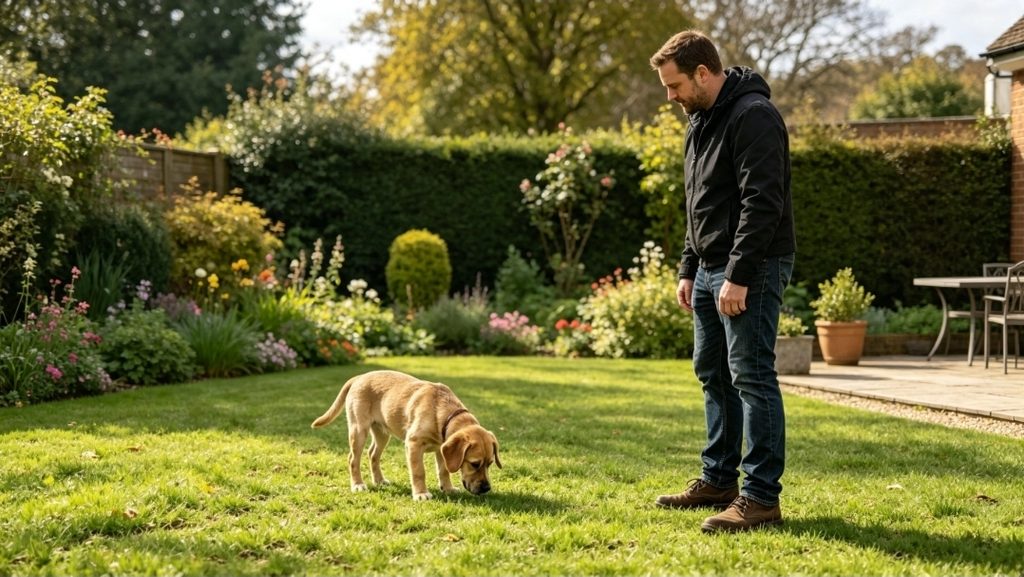
3. Your Dog Finds the Environment More Rewarding
Imagine you’re standing in a park with your dog.
You call them.
At the same moment, another dog runs past.
A rabbit has crossed the path.
There are hundreds of smells.
People are walking everywhere.
Your dog has an enormous amount of information to process.
Then you offer a simple verbal command.
From your dog’s perspective, the environment may currently be far more rewarding than responding to you.
This is one of the biggest reasons why your dog won’t listen outside even though they appear perfectly obedient at home.
The solution isn’t necessarily to shout louder.
You need to gradually train around distractions.
Start in an environment where your dog can succeed.
Then slowly increase the difficulty.
4. Your Dog Hasn’t Been Properly Rewarded for Listening
Dogs repeat behaviours that produce desirable outcomes.
If your dog comes when called and something good happens, they’re more likely to repeat the behaviour.
If coming when called always means:
Fun ends.
The lead goes on.
We go home.
The exciting activity stops.
your dog may become less enthusiastic about responding.
This doesn’t mean you should reward your dog every single time for the rest of their life.
It means you need to establish strong reinforcement during training.
Make responding to you worthwhile.
Use food, toys, praise, play or access to something your dog wants, depending on what motivates your individual dog.
5. Your Dog Gets Too Much Freedom Too Soon
Training needs progression.
If your dog has only recently learned a recall, allowing them to run freely in a huge open park isn’t necessarily the best way to test it.
You need to build reliability first.
Use appropriate management while you’re training.
A long line can provide additional control during recall training where appropriate.
Gradually increase distance.
Introduce distractions.
Practise different environments.
Build reliability before expecting your dog to perform perfectly in difficult situations.
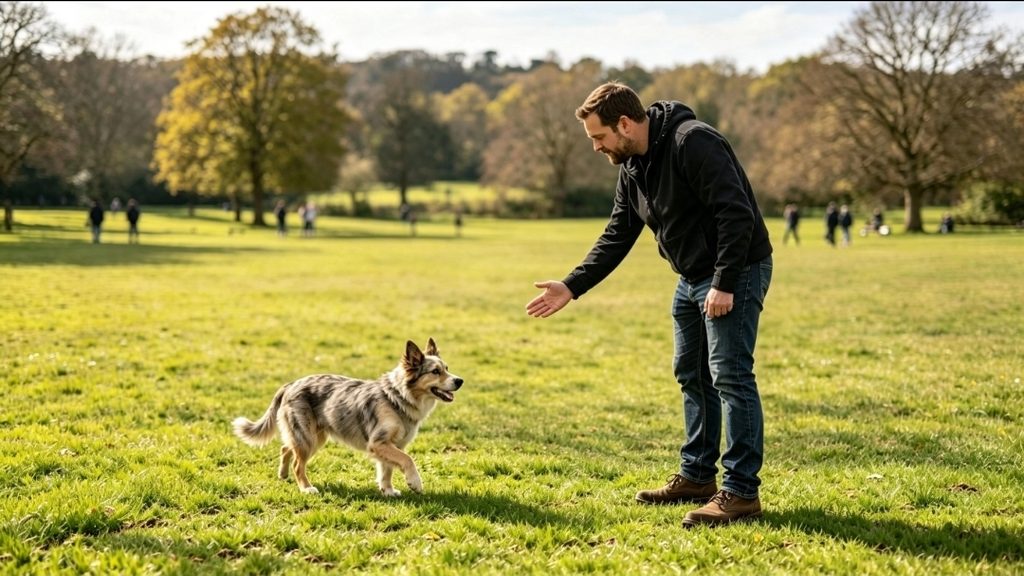
6. You’re Only Training When You Need Something
Another reason why does my dog ignore me can be the relationship your dog has with training.
If you only interact with your dog when you want something from them, your communication may become predictable.
Instead, make training part of everyday life.
Practise simple behaviours during normal routines.
Reward your dog for checking in with you.
Reward calm behaviour.
Play together.
Take time to engage with your dog without constantly demanding something.
A strong working relationship makes training considerably easier.
7. Your Dog Is Too Excited
Excitement can make listening difficult.
Your dog sees another dog.
Their arousal increases.
They pull towards them.
You call.
Nothing.
The problem may not be that your dog doesn’t know the command.
They may simply be too excited to respond reliably in that moment.
This is why training needs to include impulse control and engagement.
Your dog needs to learn how to remain connected with you even when something exciting is happening.
Start with manageable distractions.
Don’t immediately expect your dog to ignore their biggest triggers.
8. You’re Asking for Too Much Too Quickly
Training should be progressive.
If your dog can hold a sit for five seconds in your kitchen, that doesn’t automatically mean they can hold it for five minutes beside a busy road.
If your dog can recall from ten metres in your garden, that doesn’t mean they can recall from 100 metres while another dog is running past.
Each increase in difficulty needs to be trained.
Think about:
Distance
Duration
Distraction
Increase difficulty gradually rather than changing everything at once.
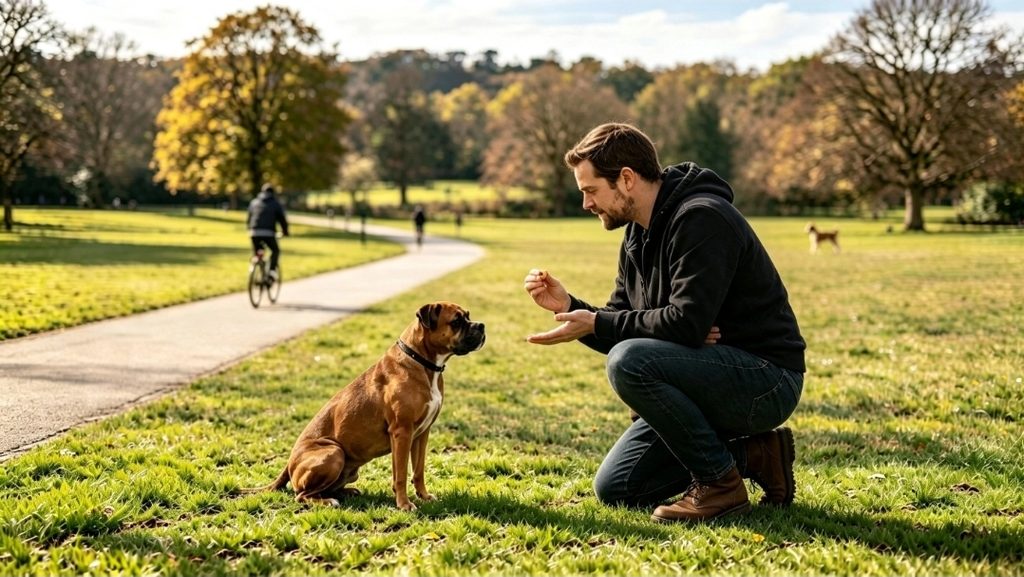
9. Your Communication Isn’t Clear
Dogs learn through consistency.
If you use different words, gestures and expectations every time, your dog may struggle to understand what you’re asking.
For example, if “down” sometimes means lie on the floor and sometimes means get off the sofa, the behaviour can become confusing.
Everyone in the household should try to use consistent cues.
Keep commands clear.
Use the same word for the same behaviour.
Reward the behaviour you want.
Don’t expect your dog to understand complicated instructions.
Clear communication makes training easier for both of you.
10. Your Dog Hasn’t Had Enough Training
Sometimes the simplest explanation is the correct one.
Your dog may ignore you because they haven’t been trained sufficiently.
Training isn’t something you do for five minutes when your dog is a puppy and then stop.
Dogs need ongoing learning and reinforcement.
Training should progress as your dog’s abilities develop.
Practise in different environments.
Add distractions.
Increase distance.
Build duration.
Develop engagement.
Teach your dog that responding to you is valuable.
The more consistent your training becomes, the more reliable your dog’s behaviour can become.
Why Does My Dog Listen at Home but Not Outside?
This is an extremely common question.
Your dog may appear perfectly trained inside your home.
You say:
“Sit.”
They sit.
“Down.”
They lie down.
“Come.”
They run towards you.
Then you go outside.
Suddenly, everything changes.
This happens because the environment has changed.
Your home is familiar and relatively predictable.
Outside, your dog is exposed to smells, sounds, movement, people, dogs and other distractions.
You need to train the behaviour in different environments.
Don’t assume that because your dog knows something in your kitchen, they automatically understand it everywhere.
Why Does My Dog Ignore Me When Other Dogs Are Around?
Other dogs can be one of the biggest distractions.
Your dog may become excited, frustrated, nervous or simply interested.
Instead of immediately testing your dog at close range, create distance.
Find the point where your dog can notice the other dog while still responding to you.
Reward engagement.
Gradually decrease the distance as your dog becomes more reliable.
The objective isn’t necessarily to make your dog ignore every dog.
It’s to teach your dog that they can remain connected with you when another dog is present.
Why Does My Dog Ignore Me Outside?
If your dog ignores you outside, don’t automatically assume they’re stubborn.
Ask yourself:
Have I trained this behaviour outside?
Have I gradually introduced distractions?
Is my dog too excited?
Is the reward valuable enough?
Am I giving my dog too much freedom?
Have I been consistent?
These questions can reveal where the training needs improvement.
Stop Punishing Your Dog for Coming Back
This is particularly important with recall.
If your dog eventually comes back after ignoring you, don’t punish them for returning.
Your dog needs to learn that coming back to you is safe and worthwhile.
If every successful recall results in anger, your dog may become reluctant to return in the future.
Instead, reinforce the behaviour you want.
Then identify why the recall failed and improve your training.
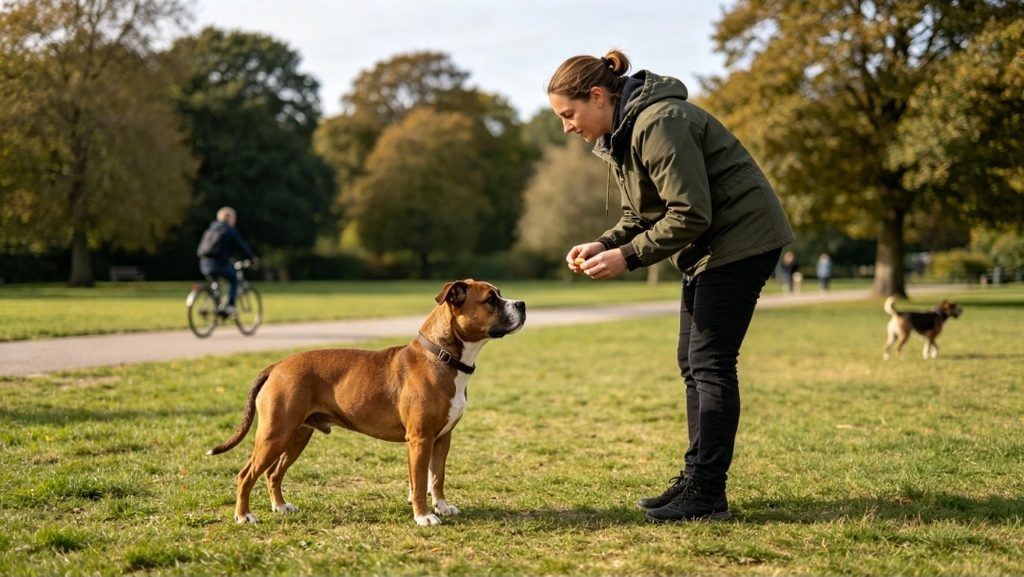
Teach Your Dog to Pay Attention to You
Before expecting perfect obedience, build engagement.
Reward your dog for:
- Looking at you
- Checking in with you
- Following you
- Responding to their name
- Choosing you over distractions
- Returning voluntarily
- Remaining near you
These small behaviours create the foundation for more advanced training.
Don’t Expect Your Dog to Read Your Mind
Sometimes owners become frustrated because their dog doesn’t perform a behaviour they haven’t clearly taught.
Your dog doesn’t automatically understand human expectations.
If you want your dog to stop jumping on visitors, teach an alternative behaviour.
If you want your dog to come when called, train recall.
If you want your dog to walk without pulling, teach loose-lead walking.
If you want your dog to settle, teach calmness.
Don’t simply punish unwanted behaviour and expect your dog to know what you wanted instead.
Teach the behaviour you want.
Training Should Be Consistent
Consistency matters.
If your dog isn’t allowed on the sofa one day but is invited onto it the next, the rules become unclear.
If jumping on people is discouraged with one family member but rewarded with attention from another, the behaviour can continue.
Everyone should understand the training expectations.
Clear rules.
Clear communication.
Consistent reinforcement.
Use Your Dog’s Motivation
Different dogs find different things rewarding.
One dog may work enthusiastically for food.
Another may prefer a toy.
Another may be highly motivated by play.
Some dogs simply want access to something interesting.
Use what motivates your individual dog.
Training becomes easier when your dog has a reason to participate.
Don’t Make Every Command End the Fun
If every recall means the fun stops, your dog may begin avoiding the behaviour.
Practise recall and then release your dog back to what they were doing when it is safe and appropriate.
Call.
Reward.
Release.
Call.
Reward.
Release.
This teaches your dog that coming to you doesn’t always mean the exciting activity has finished.
Build Reliability Before Testing It
You wouldn’t teach someone to drive and immediately put them on the busiest motorway in the country.
Dog training works in a similar way.
Build the behaviour.
Practise it.
Increase distractions.
Increase distance.
Increase duration.
Then test it in increasingly difficult environments.
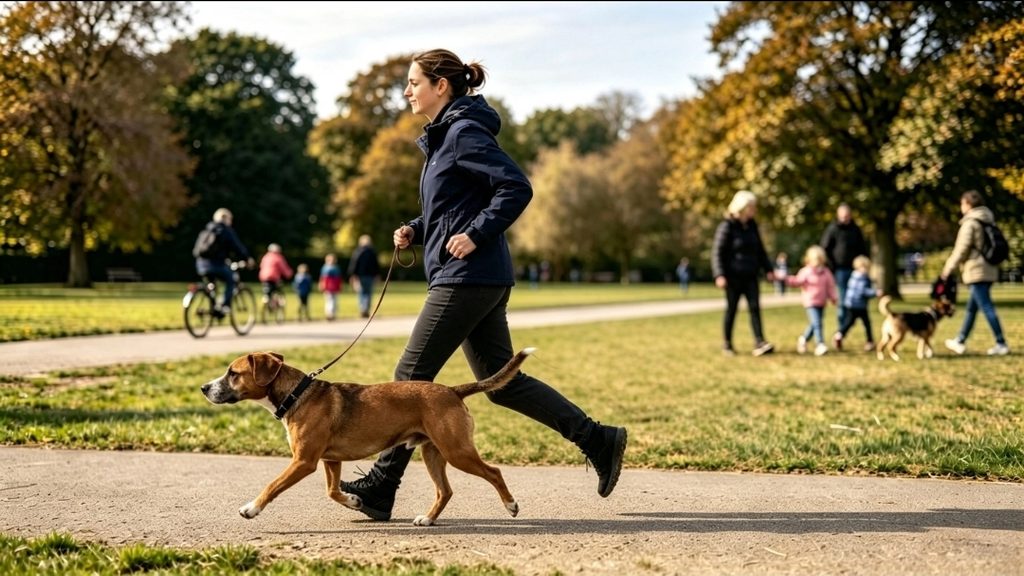
What Should You Do When Your Dog Ignores You?
Stay calm.
Don’t immediately shout.
Don’t repeat the command ten times.
Don’t chase your dog if you can safely avoid doing so.
Instead, consider what caused the failure.
Was the environment too difficult?
Was your dog too excited?
Was the distraction too strong?
Did you increase the difficulty too quickly?
Was your communication unclear?
Use the experience to improve your next training session.
How GPK9 Can Help
If your dog consistently ignores you, the answer usually isn’t simply to become louder or more forceful.
You need to develop communication, engagement, obedience and reliability.
Structured training can help you build those foundations systematically.
GPK9 Fundamentals 1 – 6 Weeks to 6 Months
For puppies between 6 weeks and 6 months, the GPK9 Fundamentals 1 – 6 Weeks to 6 Months course provides an appropriate foundation for developing early communication, engagement and obedience.
Building these skills early can help prevent many common problems from becoming established habits as your puppy grows.
GPK9 Fundamentals 1 – 6 Weeks to 6 Months
For older dogs, the same principles still apply: establish clear communication, build engagement, train progressively and reinforce the behaviour you want.
A Simple Plan to Stop Your Dog Ignoring You
Step 1: Choose One Behaviour
Don’t try to fix everything at once.
Step 2: Train in an Easy Environment
Start somewhere your dog can succeed.
Step 3: Reward Attention
Reward your dog for choosing to focus on you.
Step 4: Introduce Mild Distractions
Gradually make the environment more challenging.
Step 5: Increase Distance
Practise behaviours at progressively greater distances.
Step 6: Increase Duration
Ask your dog to maintain behaviours for longer periods.
Step 7: Practise in Different Locations
Don’t allow your dog to associate a command with only one location.
Step 8: Build Reliability
Repeat the process until the behaviour becomes dependable.
Final Thoughts: Why Does My Dog Ignore Me?
So, why does my dog ignore me?
Usually, there is more to the problem than simply stubbornness.
Your dog may not understand what you’re asking.
The environment may be too distracting.
The behaviour may not have been reinforced sufficiently.
You may have progressed too quickly.
Your dog may be too excited.
Your communication may be inconsistent.
Or your dog may simply need more structured training.
Instead of asking:
“Why won’t my dog listen to me?”
start asking:
“What can I change to make it easier for my dog to succeed?”
Build engagement.
Communicate clearly.
Train progressively.
Reward appropriate behaviour.
Introduce distractions gradually.
And don’t expect your dog to perform a behaviour reliably in an environment where you’ve never properly trained it.
The goal isn’t to make your dog obey because they are afraid of what happens if they don’t.
The goal is to build a dog that understands what you are asking, wants to engage with you and has developed the skills to respond reliably.
That’s how you turn “my dog ignores me” into “my dog listens to me.”