
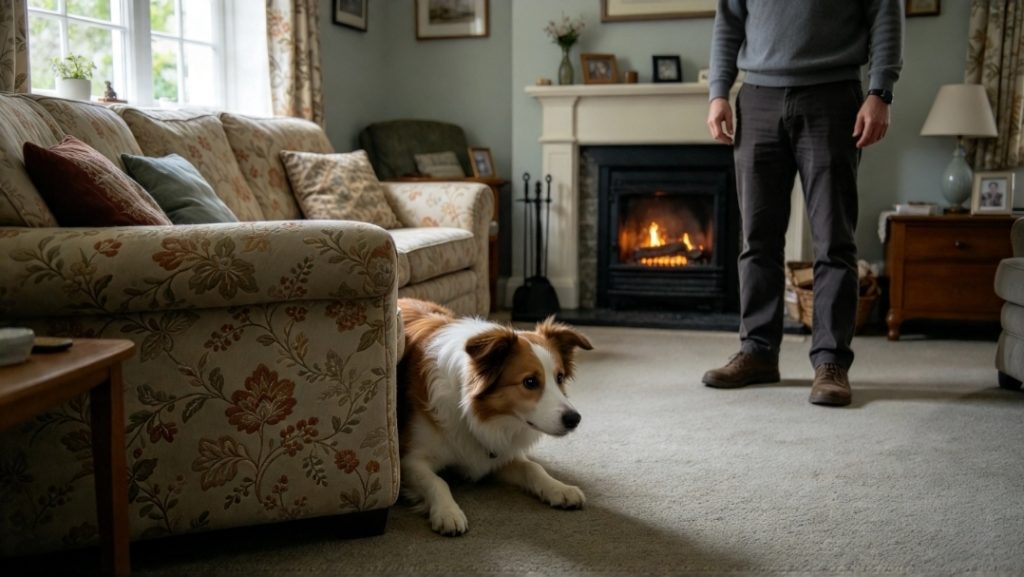
Why Is My Dog Aggressive?
Why is my dog aggressive? Dog aggression can happen for many different reasons, including fear, stress, frustration, pain, guarding, lack of appropriate socialisation, learned behaviour or a response to a particular situation. The first step is to identify what triggers the aggression, prevent unsafe situations and understand what your dog is communicating rather than simply trying to stop the behaviour.
RECOMMENDED PRODUCTS

What Does Aggressive Behaviour Look Like?
Aggression can involve more than biting. A dog may show warning signs before escalating.
These can include:
- Staring or becoming very still
- Body tension
- Growling
- Barking
- Showing teeth
- Lunging
- Snapping
- Chasing
- Attempting to bite
- Biting
The behaviour needs to be considered in context. A growl, for example, is communication that the dog is uncomfortable or wants something to stop.
Why Do Dogs Become Aggressive?
There is rarely one explanation that applies to every dog.
Common causes include:
Fear
A dog may behave aggressively because it believes a person, dog, object or situation is threatening.
The aggression may be an attempt to create distance from something it does not feel safe around.
Stress and Overwhelm
A dog that is already stressed or overwhelmed may have less ability to cope with additional pressure.
Several small triggers can build up until the dog reacts strongly.
Frustration
A dog may become frustrated when it cannot reach something it wants, cannot move towards something, or cannot understand what is expected.
Frustration can contribute to barking, lunging and other aggressive-looking behaviour.
Pain or Illness
A sudden change in behaviour can sometimes be associated with pain or another physical problem.
If your dog’s behaviour has changed suddenly or aggression is unusual for your dog, arrange a veterinary assessment rather than assuming it is simply a training problem.
Resource Guarding
Some dogs become aggressive when they believe someone is going to take away food, toys, resting places or another valuable resource.
Trying to forcibly take the resource can increase the risk of escalation.
Previous Experiences
A negative experience can influence how a dog responds to similar situations in the future.
However, you do not always need to know exactly what happened in the past to begin managing the behaviour safely.
Lack of Appropriate Experience
A dog that has had limited experience with particular people, dogs, environments or situations may struggle to understand or cope with them.
This does not mean the dog should simply be exposed to more of the trigger. Experiences need to be introduced at a level the dog can manage.
Why Is My Dog Aggressive Towards People?
Your dog may react towards people because of fear, uncertainty, previous experiences, territorial behaviour, frustration or discomfort with being approached or handled.
Pay attention to when the behaviour happens.
Does your dog react when someone approaches directly, enters the home, reaches towards them, touches them, stands over them or comes too close?
Understanding the situation surrounding the aggression is more useful than simply labelling the dog as aggressive.
Why Is My Dog Aggressive Towards Other Dogs?
Aggression towards other dogs can be linked to fear, frustration, previous negative experiences, guarding, overexcitement or difficulty coping with close interactions.
Do not assume that your dog needs to meet more dogs.
If your dog is already reacting aggressively, create enough distance to prevent escalation and work on controlled exposure at a level your dog can manage.
Why Is My Dog Aggressive on the Lead?
Being restrained can increase frustration or make a dog feel unable to escape from something it finds threatening.
A dog may therefore bark, lunge, growl or snap when another dog, person or object approaches.
Increase distance where possible and avoid allowing your dog to repeatedly rehearse the aggressive response.
A secure harness and lead can help with safe management. A short line may provide closer control when necessary.
If there is a genuine risk of biting, appropriate muzzle training may also form part of a professional safety plan.
What Should I Do When My Dog Becomes Aggressive?
Your immediate priority is safety and distance.
Stop and assess what is happening. If possible, move your dog away from the trigger and prevent further interaction.
Do not punish, shout at or physically confront your dog.
Once your dog is away from the trigger, allow them time to calm before deciding what to do next.
If your dog cannot calm down or you cannot safely control the situation, seek professional assistance.
Should I Punish My Dog for Aggressive Behaviour?
No. Punishing aggressive behaviour can increase fear, stress or frustration and may make the situation more difficult to manage.
It can also suppress warning signals such as growling without addressing the reason the dog feels uncomfortable.
The aim should be to identify the trigger, manage the environment, teach appropriate responses and reinforce calm behaviour.
Can Aggressive Behaviour Be Trained?
Aggressive behaviour can often be managed and improved, but the approach depends on why the behaviour is happening.
Training should begin at a level where the dog can remain calm enough to learn.
Reward appropriate behaviour, increase difficulty gradually and avoid repeatedly placing the dog into situations that cause an aggressive response.
Progress is more useful when measured by improved ability to cope rather than expecting an immediate complete change.
What If My Dog Is Calm at Home but Aggressive Outside?
This can happen because the outside environment contains more triggers and distractions.
Your dog may be comfortable in familiar surroundings but struggle with people, dogs, traffic, noises, smells or unfamiliar places.
Start training in an environment where your dog can remain calm and gradually increase the level of difficulty.
What If My Dog Is Aggressive Towards Family Members?
Take this seriously.
Do not allow children or vulnerable people to interact with a dog that has shown aggression towards them. Create physical separation where necessary and avoid situations that could trigger another incident.
If the aggression involves biting, snapping, guarding or unpredictable behaviour towards people in the household, seek professional assessment.
What If My Dog Has Bitten Someone?
A bite should be treated as a serious safety issue.
Prevent further opportunities for your dog to bite while you arrange appropriate professional help. Do not attempt to test whether your dog will bite again.
If someone has been injured, make sure they receive appropriate medical attention.
A professional should assess the circumstances surrounding the bite and help establish a safe management and training plan.
RECOMMENDED PRODUCTS
How Can I Prevent Aggressive Behaviour From Getting Worse?
Prevention starts with understanding the situations that trigger your dog.
Keep track of:
- Who or what triggers the behaviour
- How close the trigger was
- What happened immediately beforehand
- Your dog’s body language
- How quickly the reaction developed
- What happened after the reaction
- How long your dog took to recover
This can help you identify patterns and intervene earlier.
When Should I Get Professional Help?
Professional help is particularly important when your dog:
- Has bitten or attempted to bite
- Is aggressive towards people
- Is aggressive towards other animals
- Lunges or snaps regularly
- Is difficult to control safely
- Is becoming more aggressive
- Reacts unpredictably
- Cannot recover after reacting
- Has suddenly developed aggressive behaviour
A qualified professional can assess the behaviour, identify possible triggers and help you establish appropriate management and training.
Conclusion
Aggressive behaviour is communication, and understanding why your dog is reacting is an important part of changing the behaviour safely.
Identify the trigger, prevent unsafe situations, create distance and avoid punishment. Give your dog an opportunity to recover before reassessing the situation.
If aggression is severe, unpredictable, involves biting or is directed towards people or other animals, seek professional assessment rather than trying to manage the problem alone.
GPK9 — The Five Golden Rules
The GPK9 Five Golden Rules provide the foundation of the GPK9 Professional Training System. They give new dog owners, new dog handlers, experienced handlers and professional dog trainers a clear structure for developing the dog and the handler together.
The GPK9 Five Golden Rules cover five essential areas of development: Home & Social, Obedience, Prey Drive, Toilet and Social Walking. Each area has its own purpose, but they are designed to work together as one complete training system.
The GPK9 approach is based on CATEGORY → STATUS → DRIVE → CONTROL and the handler’s ability to OBSERVE → INTERPRET → DECIDE → COMMUNICATE → OBSERVE RESPONSE → REASSESS. This gives the handler a consistent process for understanding what the dog is doing, why the behaviour is occurring, what level of control is appropriate and how to communicate effectively.
The purpose of the GPK9 Five Golden Rules is not simply to teach a collection of individual exercises. They are designed to develop the dog’s behaviour, motivation, communication, control and reliability while teaching the handler how to make better decisions.
Golden Rule One — Home & Social
Golden Rule One — Home & Social establishes the foundation for everyday life with the dog. It focuses on communication, boundaries, calm behaviour, household routines and appropriate behaviour around people, animals and normal activity.
The purpose of Golden Rule One — Home & Social is to help the handler understand the dog’s behaviour and recognise changes in arousal before they become larger problems. The handler learns to observe, assess and communicate rather than simply reacting after unwanted behaviour has already occurred.
Golden Rule One — Home & Social provides the foundation from which the handler can develop a calmer, more predictable and better-communicating dog.
Golden Rule Two — Obedience
Golden Rule Two — Obedience develops the dog’s ability to understand and respond to the handler’s communication.
The focus of Golden Rule Two — Obedience is not simply teaching commands. It is about developing understanding, reliability, timing, reward, release and control so the dog learns what the handler is communicating.
Through Golden Rule Two — Obedience, the handler learns to progress training appropriately, gradually increasing the dog’s freedom and responsibility as understanding and reliability improve.
Golden Rule Three — Prey Drive
Golden Rule Three — Prey Drive focuses on understanding and developing the dog’s natural motivation to chase, pursue, engage and work with an appropriate toy or prey-based reward.
The purpose of Golden Rule Three — Prey Drive is not simply to increase drive. The handler must learn how to recognise the dog’s level of motivation, select an appropriate reward and use timing, communication and control to channel that motivation productively.
Golden Rule Three — Prey Drive teaches the handler that motivation can become a powerful training tool when it is developed and controlled correctly.
Golden Rule Four — Toilet
Golden Rule Four — Toilet establishes reliable toilet habits through consistency, observation, timing, supervision and appropriate reinforcement.
The handler learns through Golden Rule Four — Toilet to recognise when the dog is likely to need the toilet, provide the correct opportunity and reinforce the desired behaviour.
The objective of Golden Rule Four — Toilet is to establish a predictable routine that helps the dog understand where and when toileting is appropriate while reducing opportunities for mistakes.
Golden Rule Five — Social Walking
Golden Rule Five — Social Walking develops the dog’s ability to walk calmly and appropriately in the real world while remaining connected to the handler.
The focus of Golden Rule Five — Social Walking is the relationship between the handler, the dog, the environment, distractions, distance and available control.
Through Golden Rule Five — Social Walking, the handler learns to observe body language, identify potential triggers, assess distance and recognise changes in drive or arousal before behaviour escalates.
The objective of Golden Rule Five — Social Walking is not simply to make the dog walk beside the handler. It is to develop a dog that can experience the outside world while remaining connected to the handler and capable of responding to clear communication.
How the Five Golden Rules Work Together
The GPK9 Five Golden Rules are designed to work together rather than being treated as five completely separate subjects.
Golden Rule One — Home & Social establishes the foundations for everyday behaviour and communication.
Golden Rule Two — Obedience develops understanding, responsiveness and control.
Golden Rule Three — Prey Drive develops motivation and teaches the handler how to channel natural drive appropriately.
Golden Rule Four — Toilet establishes essential household routine and reliability.
Golden Rule Five — Social Walking takes the communication and control developed through the other areas into the outside environment.
Together, the GPK9 Five Golden Rules help the handler develop a complete understanding of the dog rather than treating individual behaviours as isolated problems.
The overall objective of the GPK9 Five Golden Rules is to train the human, train the dog and build the partnership through clear observation, communication, appropriate control and progressive development.




