Why Does My Dog Growl at Other Dogs?
Why does my dog growl at other dogs? Your dog may growl at other dogs because it feels frightened, uncomfortable, threatened, frustrated, overwhelmed or overly excited. A growl is communication, so the safest response is to understand what is causing the reaction, create enough distance and avoid forcing your dog into an interaction it cannot cope with.
What Does It Mean When a Dog Growls at Another Dog?
A growl is a warning signal.
Your dog may be communicating that it wants more distance or that it is uncomfortable with what the other dog is doing. The growl does not automatically mean your dog wants to attack.
Look at the whole situation, including your dog’s body language, the other dog’s behaviour, the distance between them and what happened immediately before the growl.
Why Does My Dog Growl at Other Dogs?
There are several possible reasons.
Fear or Uncertainty
A dog may growl because it feels threatened by another dog and wants the other dog to move away.
This can happen when another dog approaches directly, moves quickly or gets too close.
Frustration
Some dogs become frustrated when they see another dog but cannot reach it.
Being restrained by a lead can make this response stronger.
Previous Negative Experiences
A frightening interaction with another dog can affect how your dog responds to similar situations in the future.
Your dog may become defensive because it expects something unpleasant to happen again.
Overexcitement
Not every growl is caused by fear. Some dogs become highly aroused when they see another dog and struggle to control their excitement.
High arousal can quickly turn into barking, lunging or other reactive behaviour.
Feeling Overwhelmed
A dog may cope with one dog at a distance but become uncomfortable when several dogs, noise, movement and close contact are combined.
The overall environment can be more important than the other dog itself.
How Do I Know If My Dog Is Scared of Other Dogs?
Look at your dog’s body language rather than the growl alone.
Possible signs of fear or discomfort include:
- Moving away
- Hiding behind you
- Freezing
- Lowering the body
- Avoiding eye contact
- Tucking the tail
- Lip licking
- Yawning
- Staring intensely
- Growling
- Barking
- Lunging
- Trying to escape
A frightened dog may become more defensive when it cannot create enough distance.
Should I Let My Dog Meet Other Dogs If It Growls?
No. Do not force a meeting simply because you want your dog to become more comfortable.
If your dog is already growling, increase distance and allow your dog to settle.
Training should take place at a distance where your dog can notice another dog without becoming overwhelmed.
Your dog does not need to greet every dog it sees.
How Do I Stop My Dog Growling at Other Dogs?
The goal is not simply to stop the growl. The goal is to change how your dog responds to other dogs.
Step 1: Find a Manageable Distance
Start far enough away that your dog can see another dog without immediately reacting.
The correct distance will vary between dogs.
Step 2: Let Your Dog Notice the Other Dog
Allow your dog to observe the other dog without forcing them closer.
Watch for early signs of tension.
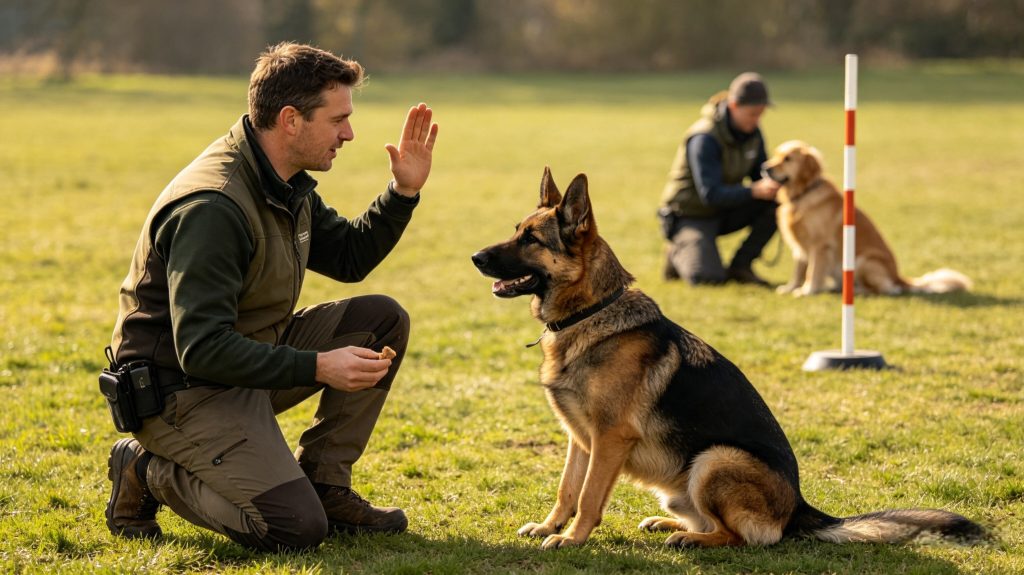
Step 3: Reward Calm Behaviour
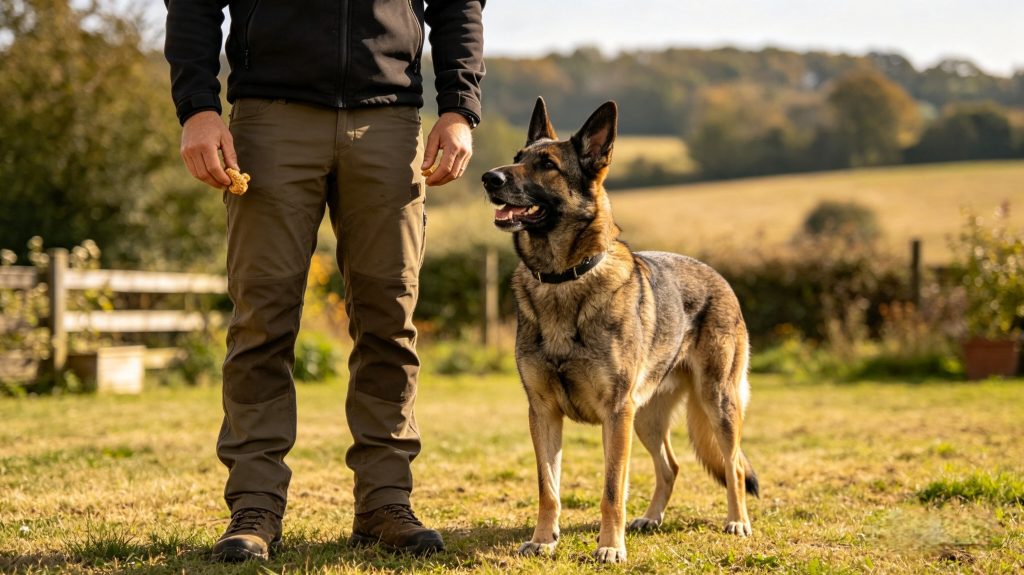
If your dog remains calm, reward the behaviour with something they value.
Food can be useful when your dog is comfortable enough to eat. Play may also be appropriate for dogs that find it rewarding.
Step 4: Increase Difficulty Gradually
As your dog becomes more comfortable, gradually change one part of the situation.
You might reduce the distance slightly or introduce more movement.
Do not rush the process.
Step 5: Increase Distance If Your Dog Reacts
If your dog begins growling, barking, lunging or becoming highly tense, the situation has probably become too difficult.
Move away, reduce the stimulation and allow your dog to recover.
What If My Dog Growls on the Lead?
Lead restraint can increase frustration or make a fearful dog feel unable to escape.
Use a secure harness and lead and create distance from other dogs before your dog reaches the point of reacting.
A short line can provide closer control when necessary.
Do not repeatedly walk your dog towards other dogs hoping they will eventually get used to them.
Can I Socialise My Dog If It Growls at Other Dogs?
Yes, but socialisation does not mean forcing your dog to interact with lots of dogs.
A useful socialisation goal may be teaching your dog that it can calmly observe another dog without needing to approach it.
Controlled exposure at an appropriate distance is more useful than repeated close interactions that cause your dog to become overwhelmed.
Should I Use Treats When My Dog Sees Another Dog?
Yes, if your dog is calm enough to eat and learn.
When your dog notices another dog and remains relaxed, reward the appropriate response.
Do not use treats to lure your dog towards another dog if they are frightened or already highly aroused.
If your dog refuses food that they normally enjoy, increase distance and reduce the difficulty.
What If My Dog Growls Even When the Other Dog Is Far Away?
Your dog may have a larger reaction distance than you initially realise.
Do not assume that the dog needs to be closer before training can begin.
Find the distance where your dog can notice another dog and still remain capable of responding to you. That becomes your starting point.
As your dog’s ability to cope improves, you can gradually work closer.
What If My Dog Growls at Every Dog?
If your dog reacts to almost every dog, start with management rather than repeated exposure.
Choose quieter walking areas or times where possible, create distance when dogs approach and avoid situations where your dog repeatedly rehearses the behaviour.
Once you understand your dog’s reaction distance, structured training can begin at a manageable level.
If the behaviour is severe or difficult to control, professional assessment is recommended.
What Equipment Should I Use?
Equipment should help you manage your dog safely while training.
A secure harness and lead can provide reliable control during normal walks.
A short line can be useful when you need closer management around other dogs.
A long line can be useful for controlled training in a suitable open area where your dog cannot reach another dog or create a safety risk.
A muzzle should only be considered where there is a genuine safety concern, particularly a risk of biting. It should be introduced gradually and positively and should not be used to force close interactions.
What If My Dog Growls and Then Lunges?
Treat the escalation seriously.
Immediately create more distance rather than continuing the interaction.
Do not punish the behaviour or physically confront your dog.
Once your dog has recovered, reassess the situation and make the next training session easier.
Repeated lunging can become a significant safety concern, particularly if your dog is difficult to control.
What If My Dog Has Fought Another Dog?
Do not deliberately recreate the situation to see whether your dog behaves differently.
Prevent further close interactions while you work out what caused the incident.
Consider the environment, distance, previous behaviour, resources, handling and what happened immediately before the fight.
If your dog has seriously injured another dog, has been injured itself or continues to show aggressive behaviour, seek appropriate veterinary and professional behaviour support.
Why Has My Dog Suddenly Started Growling at Other Dogs?
A sudden behavioural change should be taken seriously.
Pain or illness can sometimes affect how tolerant a dog is around other animals.
If your dog has suddenly become reactive when this is unusual for them, arrange a veterinary assessment.
Also consider whether something has changed in the dog’s environment or whether there has been a recent negative experience.
Should I Punish My Dog for Growling?
No.
Punishing the growl can increase fear or frustration and may suppress an important warning signal without changing the underlying problem.
Instead, treat the growl as information.
Create distance, identify what triggered it and work on teaching your dog that calm behaviour around other dogs is safe and rewarding.
When Should I Get Professional Help?
Professional help is particularly important if your dog:
- Lunges aggressively at other dogs
- Snaps or attempts to bite
- Has seriously injured another dog
- Cannot be safely controlled
- Reacts unpredictably
- Becomes increasingly reactive
- Cannot recover after seeing another dog
- Is difficult to manage during normal walks
A qualified professional can assess the behaviour and help establish a safe management and training plan.
Conclusion
A dog that growls at other dogs is communicating that something about the interaction or situation is uncomfortable, exciting or threatening.
Do not force your dog to greet other dogs or punish the growl. Create distance, allow your dog to recover and gradually reward calm behaviour at a level your dog can manage.
The aim is not simply to silence the growl. It is to help your dog become more comfortable and develop a safer, more appropriate response around other dogs.