How to Use a Dog Crate Safely Around Children
How to Use a Dog Crate Safely Around Children
How to use a dog crate safely around children starts with understanding that a dog crate should provide the dog with a safe and structured space rather than becoming another area for children to interact with the dog.
In a family home, children and dogs often spend a great deal of time together. This can create positive relationships, but it can also create problems when people misunderstand what the crate is for.
A common mistake is allowing children to approach the crate whenever they want, touch the dog while it is resting or treat the crate as a place for play. The dog may begin to feel that it cannot relax without being disturbed.
The purpose of how to use a dog crate safely around children is therefore not simply putting a dog inside a crate. It is teaching the whole household how to respect structure, boundaries and calm behaviour.
Why Dog Crate Safety Around Children Matters
A crate can provide a controlled area where a dog can rest, settle and take a break from household activity.
Children naturally have curiosity and energy. They may want to stroke the dog, play with it, look inside the crate or interact with it when the dog is resting.
The difficulty often comes from the human decision to allow this interaction without considering what the dog is communicating.
A dog that is sleeping, resting or trying to disengage should not automatically be encouraged to interact.
Learning how to use a dog crate safely around children helps owners recognise that the crate should be treated as part of the dog’s structured environment.
The Crate Should Not Become a Children’s Play Area
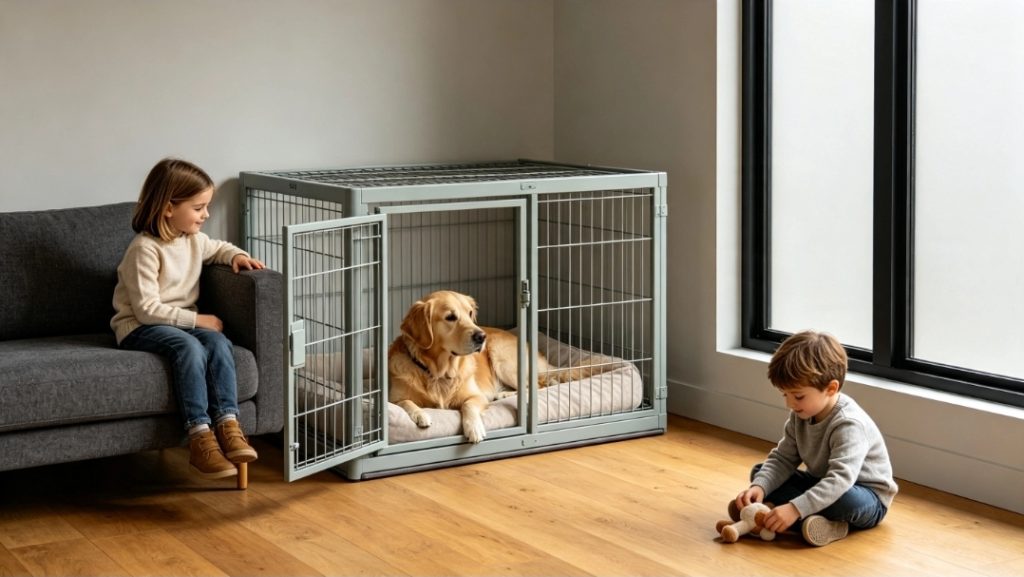
One of the simplest rules is that children should not climb into the crate, reach through the bars, open the door or disturb the dog inside.
The crate belongs to the dog.
Children can learn to recognise the crate as a boundary and understand that the dog is allowed quiet time when it is inside.
This creates a clearer household routine and reduces unnecessary interaction.
Common Human Mistakes Around the Dog Crate
Many problems involving dogs and children begin with human behaviour rather than deliberate aggression from the dog.
An owner may allow a child to stroke the dog through the crate because the dog appears calm. Another may allow children to sit beside the crate and repeatedly call the dog.
These actions can gradually remove the value of the crate as a quiet space.
Allowing Constant Interaction
A common mistake is assuming that because the dog is calm, interaction is always appropriate.
Calm behaviour should often be protected rather than interrupted.
If the dog has settled comfortably, the household should allow that calm state to continue.
Allowing Children to Open the Crate
Children should not be responsible for opening the crate or deciding when the dog comes out.
The owner should control access and decide when the dog is ready to leave the structured area.
Using the Crate as Punishment
Another mistake is using the crate as a punishment after the dog has done something wrong.
The crate should remain associated with safety, rest and structure.
If the dog learns that entering the crate always means punishment, the owner can make future crate training more difficult.
RECOMMENDED PRODUCTS
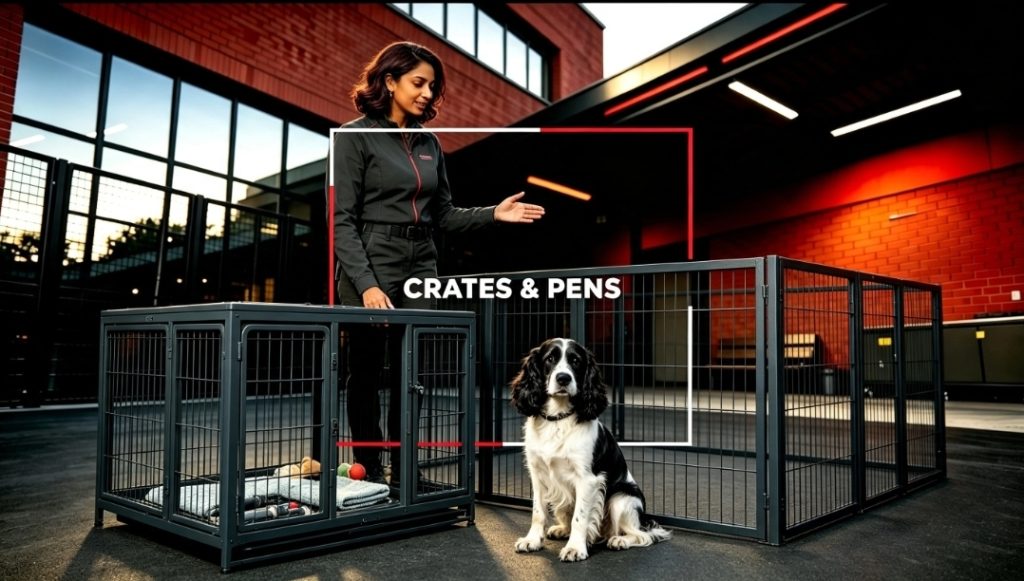
A secure, correctly sized dog crate can provide a defined resting area within a busy family home.
Creating Clear Rules for Children
Children need simple rules that they can understand and follow consistently.
These rules should be introduced as part of normal household education rather than only when a problem occurs.
For example, children can learn:
- The crate is the dog’s space.
- Do not climb into the crate.
- Do not reach inside.
- Do not open the crate door.
- Do not disturb a sleeping dog.
- Ask an adult before interacting with the dog.
- Allow the dog to rest when it chooses to settle.
The important point is consistency.
If one person allows children to disturb the dog while another person prevents it, the household becomes unpredictable for both the dog and the children.
How to Use a Dog Crate Safely Around Children During Busy Times
Family homes can become particularly challenging during meals, homework, visitors, cleaning, children’s play or other busy periods.
This is where structured crate use can become useful.
The dog can have access to its safe resting area while the household continues with normal activities.
The owner should still monitor the situation and make sure the dog is comfortable.
Do Not Wait Until the Dog Becomes Overwhelmed
A common human mistake is waiting until the dog becomes highly excited before introducing structure.
The crate should not only be used after the dog has already become difficult to manage.
Using the crate as part of normal household structure allows the dog to practise calm behaviour before the environment becomes overwhelming.
Teaching Children to Respect the Dog’s Space
Dog training is also human education.
Children should learn that dogs communicate through their behaviour and body language.
If a dog moves away, turns its head, becomes uncomfortable or tries to rest, the correct response is to give the dog space.
The owner should supervise interactions and prevent situations from developing where the dog feels trapped or repeatedly disturbed.
This is an important part of how to use a dog crate safely around children, because the crate should support communication rather than replace it.
RECOMMENDED PRODUCTS
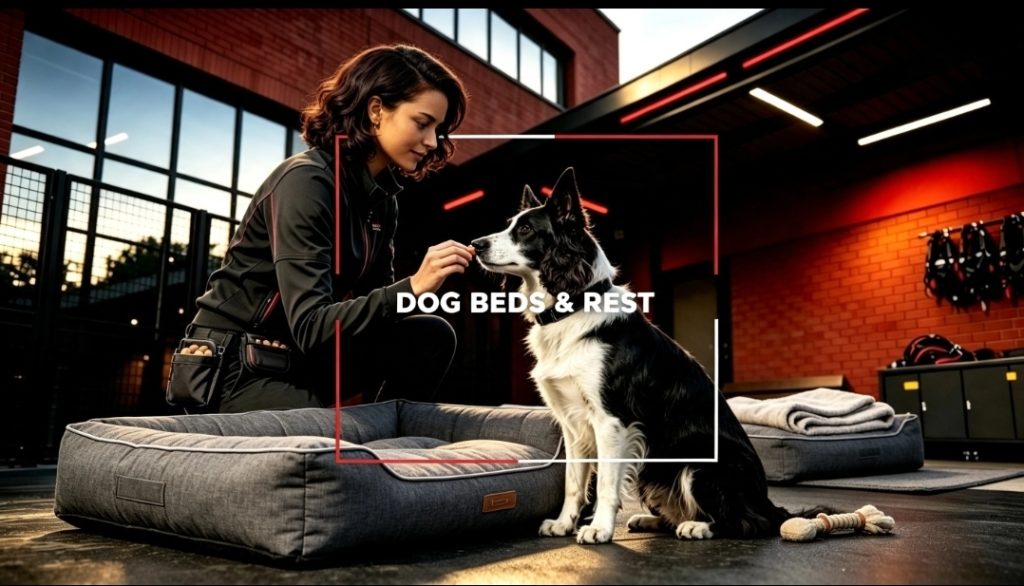
A comfortable resting surface inside or alongside the crate can help establish the area as a place for calm behaviour and relaxation.
Supervision Is the Owner’s Responsibility
Children should never be expected to manage dog safety independently.
The adult remains responsible for supervising interactions and establishing household rules.
Even when a dog and child have a good relationship, circumstances can change.
A tired dog, an excited child, food, toys or unexpected movement can alter the situation quickly.
Good management means anticipating these situations rather than reacting after something has already gone wrong.
When the Dog Should Be Left Alone
A dog should be allowed uninterrupted rest when it is sleeping or settling.
This is especially important when children are active around the home.
The owner can teach children that seeing the dog inside its crate means the dog is having quiet time.
This simple rule can make the crate a predictable part of everyday family life.
Recognising When More Support Is Needed
If a dog repeatedly shows concerning behaviour around children, owners should not attempt to solve the situation simply by increasing crate use.
Professional assessment may be appropriate, particularly where there is fear, guarding, aggression or repeated attempts to avoid interaction.
GPK9 recommends seeking support from a GPK9 Dog Training Instructor where professional assessment is required.
RECOMMENDED COURSE

Golden Rule One: Home and Social
Golden Rule One: Home and Social teaches owners how to create structure within the home and understand how controlled freedom, rest and household boundaries can support better training.
GOLDEN RULE ONE: HOME AND SOCIAL
Home and Social focuses on creating clear structure within the household. The dog learns that the crate can provide safety, rest and a controlled environment while the owner learns how to manage freedom appropriately.
GOLDEN RULE TWO: OBEDIENCE
Obedience develops communication through food, luring, praise, shaping and movement. Around children, clear training communication can help the owner maintain calm behaviour without relying on unnecessary physical intervention.
GOLDEN RULE THREE: PREY DRIVE / PLAY
Prey Drive / Play provides an appropriate outlet for play and engagement away from situations where children may unintentionally increase excitement. The owner learns to monitor arousal and end play when the dog’s state becomes difficult to manage.
GOLDEN RULE FOUR: TOILET TRAINING
Toilet Training uses structure, timing, routine and a consistent toilet area. A predictable routine can also help reduce unnecessary movement and activity around the home while children are present.
GOLDEN RULE FIVE: SOCIAL WALKING / IGNORE THE WORLD
Social Walking / Ignore the World develops calm, manageable behaviour in everyday environments. The focus is on helping the dog remain relaxed around people, movement and distractions rather than expecting constant commands.
Building a Safer Family Routine
How to use a dog crate safely around children is ultimately about teaching the entire household how to work together.
The crate should provide the dog with a predictable place to rest, while children learn that dogs need boundaries and uninterrupted downtime.
The owner controls the routine, supervises interaction and watches the dog’s behaviour.
When humans create clear rules and follow them consistently, the dog has a much better opportunity to understand what is expected.
A crate is therefore not simply a piece of equipment. Used correctly, it becomes part of a structured home environment where the dog can rest, children can learn appropriate behaviour and the owner can manage everyday family life more effectively.
RECOMMENDED PRODUCTS
Choose equipment that provides the dog with an appropriate, secure and comfortable area for rest and structured household management.
Related GPK9 Articles
- Why Use a Dog Crate? Understanding Crate Training
- How to Use a Dog Crate to Create Structure at Home
- How to Use a Dog Crate During Busy Household Activity
- Common Dog Crate Training Mistakes and How to Avoid Them
- How to Calm an Overexcited Dog at Home
- How to Teach a Dog to Settle at Home