How to Teach Your Dog to Get Out of the Car Calmly
Teaching your dog to get out of the car calmly helps prevent rushing, jumping and pulling when you arrive at a destination. The key is to teach your dog to wait while you prepare, leave the vehicle safely when invited, and remain manageable once outside.
Dogs do not automatically understand how to behave around an open car door. Some become excited because they anticipate a walk or play, while others hesitate because they feel uncertain about the surroundings. A safe exit depends on preparation, consistent communication, reward-based training and an understanding of your individual dog’s behaviour.
RECOMMENDED PRODUCTS

Why Do Dogs Rush Out of the Car?
For many dogs, the vehicle stopping signals that something exciting is about to happen. They may recognise a familiar walking area, smell other dogs nearby or anticipate an opportunity to explore.
Common problems include:
- Jumping out before the handler is ready.
- Pushing towards an open door or hatch.
- Pulling immediately towards the walking route.
- Barking or whining in anticipation.
- Becoming distracted by nearby people, dogs or vehicles.
- Hesitating or refusing to leave the vehicle.
- Struggling to settle once outside.
These behaviours can have different causes. Excitement, frustration, uncertainty and physical discomfort may all influence how a dog responds.
The first step is to recognise what your dog is experiencing rather than treating every difficult exit as disobedience.
1. Start Training in a Quiet, Safe Location
Begin practising when you have enough time and space to work without the pressure of a busy car park or crowded walking area.
Initially, the aim is not to complete a journey. It is to teach your dog the sequence of waiting, preparing to exit and leaving the vehicle safely.
Choose a level, secure location away from moving traffic and other hazards. Keep your dog under appropriate control throughout the exercise.
If your dog becomes excited as soon as the vehicle stops, start with short practice sessions. You can work on waiting and settling around the stationary vehicle before progressing to opening the door.
Build the behaviour gradually rather than expecting your dog to manage a highly stimulating environment immediately.
2. Teach Your Dog to Wait Before the Door Opens
Start with your dog safely secured in the vehicle.
Before opening the door or hatch, prepare the lead and any rewards you intend to use. Make sure you can manage the exit without rushing or reaching awkwardly into the vehicle.
Open the door slightly, provided it is safe to do so, and observe your dog’s response.
If your dog pushes forward, becomes frantic or attempts to rush out, pause the exercise and safely close the door if possible. Avoid creating a situation in which the dog can force its way out.
When your dog can remain settled, gradually practise opening the door further. Reward manageable behaviour and progress in small steps.
You are teaching your dog that the opening door is not an automatic signal to launch into the environment.
Do not insist on a long sit or demand perfect stillness if that is unnecessary. The important outcome is a safe, controlled exit.
3. Introduce a Consistent Release Cue
Once your dog can wait while you prepare, introduce a simple release cue such as “out”.
Use the cue when you are ready for your dog to leave and the exit is safe.
The sequence should remain consistent:
- Prepare the lead and check the surroundings.
- Open the vehicle door or hatch safely.
- Wait until your dog is manageable enough to exit.
- Give the release cue.
- Guide or allow your dog to leave safely, according to the vehicle setup.
- Reward calm behaviour once outside.
Avoid repeating the cue while your dog is already rushing or unable to respond. If the exercise becomes difficult, make the next repetition easier.
Practise the release cue in short sessions until your dog begins to understand that leaving the vehicle happens when invited, not simply when the door opens.
4. Reward Calm Behaviour
Reward-based training helps your dog understand which behaviours are worth repeating.
You can use small food rewards, praise or another suitable reward that your dog values. Choose rewards according to your dog’s motivation and the level of distraction.
For example, reward your dog for waiting while the door opens, leaving without rushing and remaining near you once outside.
Deliver rewards at the right moment. If you reward only after your dog has pulled several metres away, you may miss the opportunity to reinforce the behaviour you wanted at the exit.
If food increases your dog’s excitement, use smaller rewards or work at an easier level. The reward should help the exercise rather than make the situation harder to manage.
Keep sessions short and finish before frustration builds.
5. Prevent Jumping and Rushing
A dog that jumps from the vehicle before the handler is prepared can create a safety risk, particularly near roads, other vehicles or unfamiliar dogs.
Make sure the dog is appropriately secured during travel and that the lead is ready before the exit begins. Follow the correct procedure for releasing any travel restraint or opening a crate.
Do not rely on grabbing your dog’s collar at the last moment to prevent an escape.
If your dog repeatedly attempts to bolt, return to easier practice in a secure location. Work on waiting with the door closed, then partially open, before progressing to a complete exit.
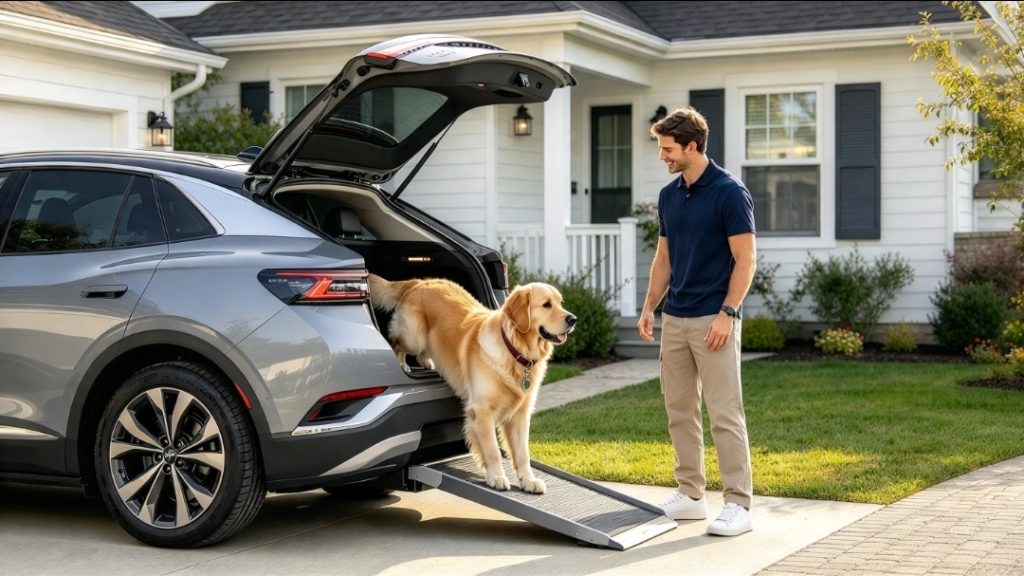
Consider the height of the vehicle and the physical ability of your dog. Jumping down may not be suitable for every dog, especially if the dog is elderly, injured or has mobility difficulties. Use an appropriate ramp or assistance where necessary, and seek veterinary advice if you have concerns about pain or movement.
6. Teach Your Dog to Remain Manageable After Exiting
Getting out calmly is only the first part of the exercise. Your dog also needs to transition safely into the next activity.
Once your dog is outside, reward them for staying near you or moving on a manageable lead. Give them an opportunity to look around without immediately allowing them to rush towards every smell, person or dog.
If your destination is a walking area, assess the surroundings before setting off. Another dog may be approaching, a vehicle may be moving nearby, or the entrance may be crowded.
Where possible, create space and choose a suitable direction before beginning the walk.
If your dog starts pulling, pause or adjust your route when safe. Reward loose-lead movement and calm engagement rather than repeatedly pulling the dog backwards.
For more guidance, read Why Does My Dog Pull on the Lead?.
7. What If Your Dog Refuses to Get Out?
Not every dog rushes from the vehicle. Some hesitate, move backwards or refuse to approach the exit.
Avoid assuming that the dog is being stubborn. The surroundings may feel unfamiliar, the dog may have had a negative experience, or getting in or out may be physically uncomfortable.
First, check that the exit is safe and that the vehicle is positioned appropriately. Give your dog time and avoid crowding, dragging or repeatedly pulling on the lead.
You can make the experience easier by rewarding small steps, such as approaching the opening or moving towards the exit voluntarily.
If the dog remains frightened, end the attempt where possible and reassess the situation. Repeatedly forcing a frightened dog out may increase its anxiety.
If reluctance develops suddenly, or your dog shows signs of pain, difficulty moving or significant distress, seek veterinary advice. Persistent fear may also require support from a suitably qualified behaviour professional.
8. Practise in Different Environments Gradually
A dog that exits calmly at home may struggle when arriving somewhere exciting. The environment changes the difficulty of the exercise.
Quiet Driveway
Start here if possible. There are usually fewer distractions, allowing you to concentrate on the exit itself.
Quiet Parking Area
Once the behaviour is becoming reliable, practise somewhere with slightly more environmental activity while maintaining safe space.
Walking Destination
When your dog can manage the previous stages, practise at a suitable walking location. Check for nearby dogs, people and moving vehicles before opening the door.
Busier Environments
Do not progress simply because your dog managed one successful exit. Increase difficulty gradually and return to a quieter location if the dog begins struggling.
The aim is to develop a behaviour that works under realistic conditions, not just in one familiar place.
9. Common Mistakes to Avoid
Opening the Door Before Preparing
Searching for the lead or treats while your dog is ready to rush can make the situation harder to manage. Prepare before opening the vehicle.
Allowing the Dog to Exit Automatically
If the door opening always leads to immediate freedom, your dog may learn to push forward as soon as it moves. Practise waiting and release on cue.
Using Force to Make the Dog Comply
Dragging a reluctant dog out can increase fear and discomfort. Investigate the reason for reluctance and make the exercise easier.
Repeating Commands During Excitement
Repeated instructions may not help if the environment is too stimulating. Reduce the difficulty, create space and reward achievable behaviour.
Practising Only at the Destination
If your dog associates every car journey with an exciting walk, anticipation may become strong before you arrive. Short practice sessions in a quiet location can help teach the exit behaviour separately from the excitement of the destination.
Ignoring Safety
Never practise where a dog could bolt into traffic or where an uncontrolled exit could endanger people or animals. If you cannot manage the exit safely, do not proceed until you have a safer arrangement.
RECOMMENDED PRODUCTS
A Simple Car Exit Training Routine
Use this sequence to build a consistent habit:
Step 1 — Prepare. Have the lead and rewards ready, and check the surroundings.
Step 2 — Wait. Give your dog an opportunity to remain manageable before the door opens.
Step 3 — Open gradually. Practise opening the door without allowing an uncontrolled exit.
Step 4 — Release. Give your chosen cue when you are ready and the exit is safe.
Step 5 — Exit safely. Allow or assist your dog to leave in a way that suits their size, mobility and vehicle setup.
Step 6 — Reward. Reinforce waiting, a manageable exit and calm behaviour outside.
Step 7 — Continue appropriately. Assess the environment before starting the walk, toilet routine or next activity.
If your dog struggles at any stage, return to an easier step rather than repeatedly pushing through the difficulty.
Final Thoughts
Teaching your dog to get out of the car calmly is a practical safety skill that can make everyday journeys easier to manage.
Start in a quiet, secure location, teach your dog to wait while you prepare, introduce a consistent release cue and reward manageable behaviour. Once outside, continue to observe your dog and assess the environment before moving on.
The goal is a safe, controlled transition—not simply getting the dog out of the vehicle as quickly as possible.
With gradual practice, clear communication and reward-based training, your dog can learn that the door opening is a signal to wait for guidance, leave safely when invited and begin the next activity in a manageable way.