If your dog constantly pulls on the lead, you’re certainly not alone.
You may start every walk with good intentions, only to find yourself being dragged towards another dog, pulled towards an interesting smell or struggling to keep your dog walking beside you.
This can make walks frustrating for both you and your dog.
But why does my dog pull on the lead?
The answer isn’t always that your dog is stubborn or refusing to listen.
Dogs pull for many different reasons.
They may want to investigate something.
They may be excited.
They may have learned that pulling gets them where they want to go.
They may not understand what loose-lead walking actually means.
Or they may simply have never been consistently taught how to walk with their handler.
Understanding why your dog pulls on the lead is the first step towards changing the behaviour.
Why Does My Dog Pull on the Lead?
Dogs naturally want to explore their surroundings.
A walk provides an enormous amount of information.
Your dog can smell other animals, people and food.
They can see movement.
They can hear unfamiliar sounds.
They may see another dog they want to investigate.
If your dog wants to move forward and the lead allows them to do so whenever they pull, the behaviour can quickly become established.
Your dog learns a simple lesson:
Pulling gets me where I want to go.
Once that behaviour becomes habitual, changing it requires consistency.
1. Your Dog Wants to Explore
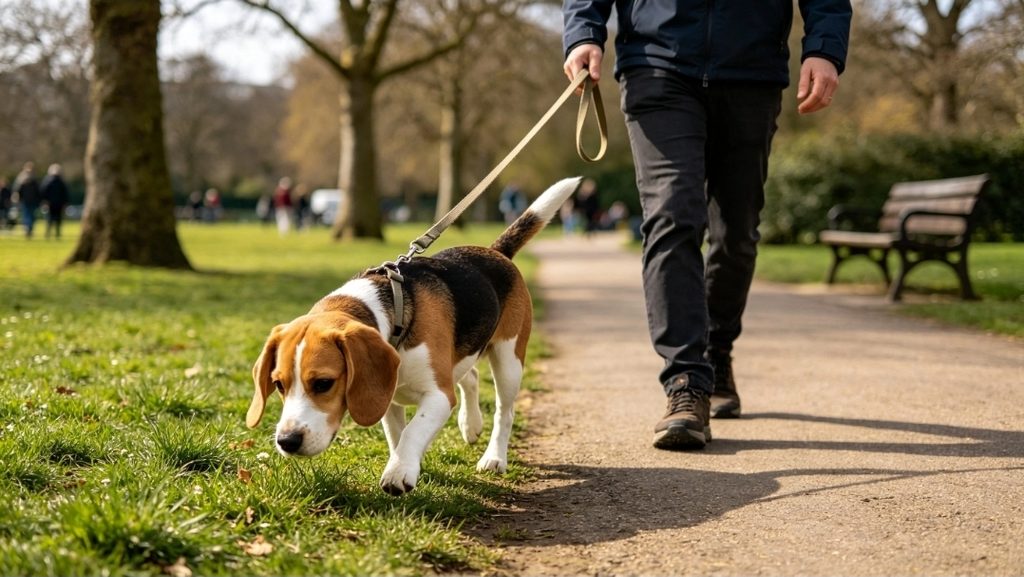
One of the simplest explanations for why your dog pulls on the lead is curiosity.
Your dog doesn’t experience a walk in the same way you do.
You might see a pavement or park.
Your dog experiences thousands of smells and sounds.
Every few metres can provide something interesting to investigate.
If your dog constantly pulls towards smells, allowing them to drag you towards every interesting location can reinforce the behaviour.
Your dog learns that pulling works.
2. Your Dog Is Excited
Excitement can make loose-lead walking difficult.
Your dog sees another dog.
They see a person they know.
They notice a favourite walking area.
Their excitement increases.
They move forward.
The lead becomes tight.
If they continue moving while pulling, the behaviour can become self-rewarding.
The dog gets access to the exciting thing.
This is why simply holding the lead tighter doesn’t necessarily solve the problem.
3. Your Dog Has Learned That Pulling Works
Dogs repeat behaviours that produce results.
If your dog pulls and you continue walking, they learn that pulling doesn’t prevent them from reaching their destination.
In fact, it helps them get there.
Imagine your dog wants to reach a tree.
They pull.
You continue walking.
Your dog reaches the tree.
From the dog’s perspective:
Pulling worked.
If this happens repeatedly, the behaviour becomes increasingly established.
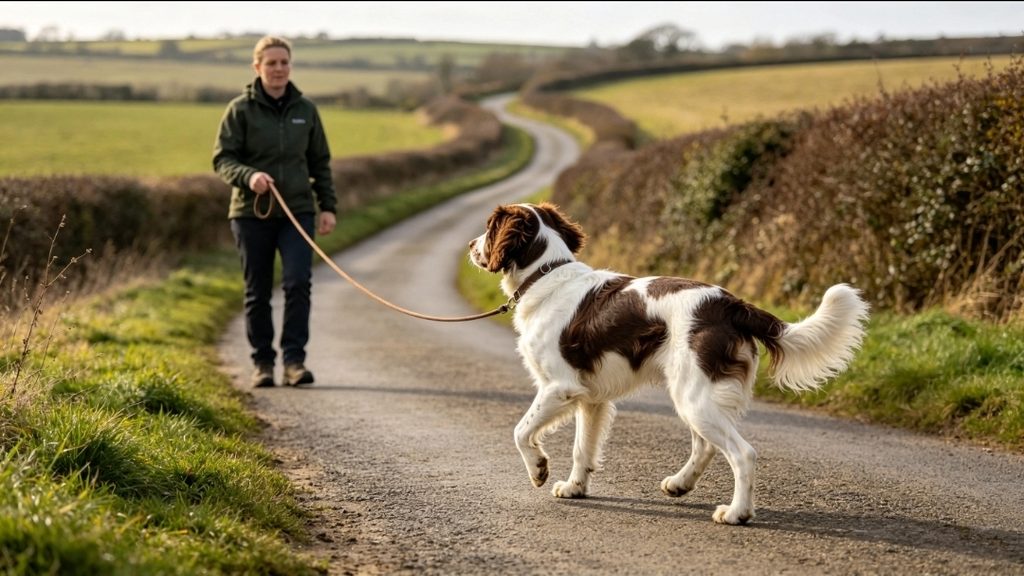
4. Your Dog Hasn’t Been Taught Loose-Lead Walking
Sometimes the answer to why does my dog pull on the lead is simply that nobody has properly taught the dog what is expected.
Putting a lead on a dog doesn’t automatically teach them how to walk politely.
Loose-lead walking is a learned skill.
Your dog needs to understand that walking with you is rewarding.
They need to learn where you want them to walk.
They need to learn how to respond when you change direction.
They need to learn that maintaining a loose lead produces positive outcomes.
5. Your Dog Wants to Reach Other Dogs
Another dog can be one of the biggest distractions during a walk.
Your dog may want to greet them.
They may want to play.
They may simply want to investigate.
Pulling towards another dog can quickly become a habit if the dog regularly gets access to other dogs after pulling.
This doesn’t mean your dog should never interact with other dogs.
It means your dog needs to learn that seeing another dog doesn’t automatically mean they can immediately rush over.
6. Your Dog Is Overstimulated
Some environments contain so many distractions that your dog struggles to concentrate.
Busy parks can contain:
- Other dogs
- Children
- Cyclists
- Birds
- Joggers
- Traffic
- Strong smells
- Loud noises
If your dog is overwhelmed, expecting perfect lead walking may be unrealistic.
Training should begin in environments where your dog can concentrate and gradually become more difficult.
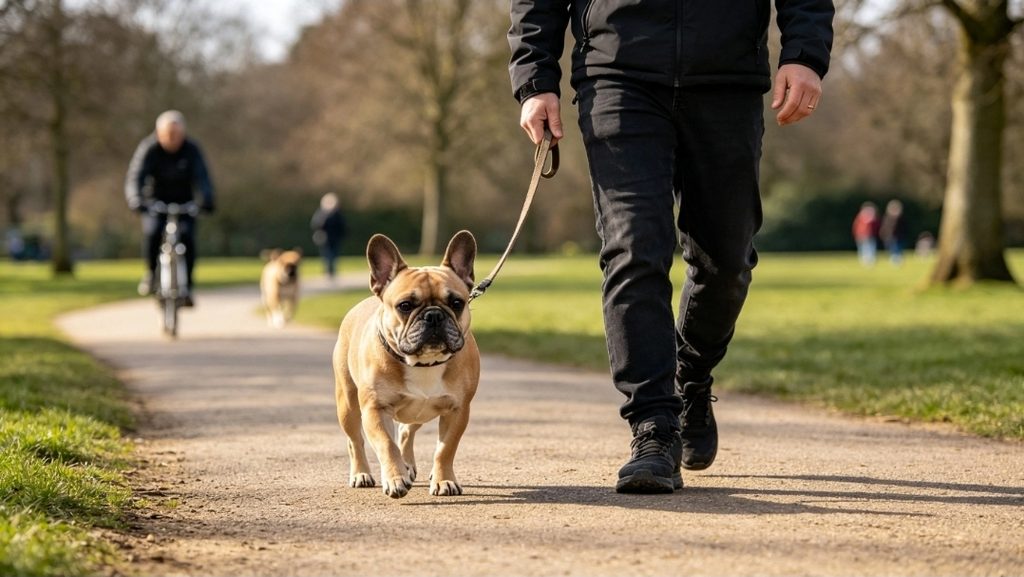
7. Your Dog May Be Walking Too Fast
Some dogs naturally move faster than their handlers.
If your dog is constantly walking several metres ahead, they may naturally reach the end of the lead.
Once the lead becomes tight, the pulling cycle begins.
Teaching your dog to match your pace can make a significant difference.
Start somewhere quiet.
Walk slowly.
Reward your dog for staying with you.
Change direction.
Reward them for following.
Gradually increase the difficulty.
8. Your Dog Doesn’t Know How to Follow Your Direction
Loose-lead walking isn’t simply about preventing your dog from pulling.
Your dog should learn to pay attention to where you’re going.
You can teach this through simple exercises.
Walk forward.
Change direction.
Stop.
Start again.
Reward your dog when they respond.
This teaches your dog that paying attention to their handler is worthwhile.
9. Your Dog Pulls Because of Habit
If your dog has pulled for years, you shouldn’t expect the behaviour to disappear immediately.
Your dog has developed a pattern.
They see something interesting.
They pull.
They reach it.
The behaviour becomes stronger.
Breaking an established habit requires repetition of a new behaviour.
You need to give your dog plenty of opportunities to practise walking correctly.
10. Your Dog May Be Reacting to Something
Not every dog that pulls is simply trying to get somewhere.
Some dogs pull because they are reacting to something in their environment.
For example:
- Another dog
- A person
- A vehicle
- A cyclist
- A loud noise
- Something unfamiliar
If your dog is barking, lunging or becoming extremely tense while pulling, this may be more than a loose-lead walking problem.
The underlying cause needs to be considered.
How Do I Stop My Dog Pulling on the Lead?
The first step is to stop rewarding the pulling behaviour.
If your dog pulls and you continue moving towards whatever they want, the pulling may be reinforced.
Instead, teach your dog that walking calmly produces the outcome they want.
This doesn’t mean constantly standing still for the entire walk.
It means being consistent about what behaviour allows your dog to move forward.
Start Training Somewhere Quiet
Don’t begin by taking your dog into the busiest park you can find.
Start somewhere with minimal distractions.
Your garden may be suitable.
A quiet street may work.
An empty field can provide another option.
The easier the environment, the easier it is for your dog to concentrate.
Once your dog understands the exercise, gradually introduce distractions.
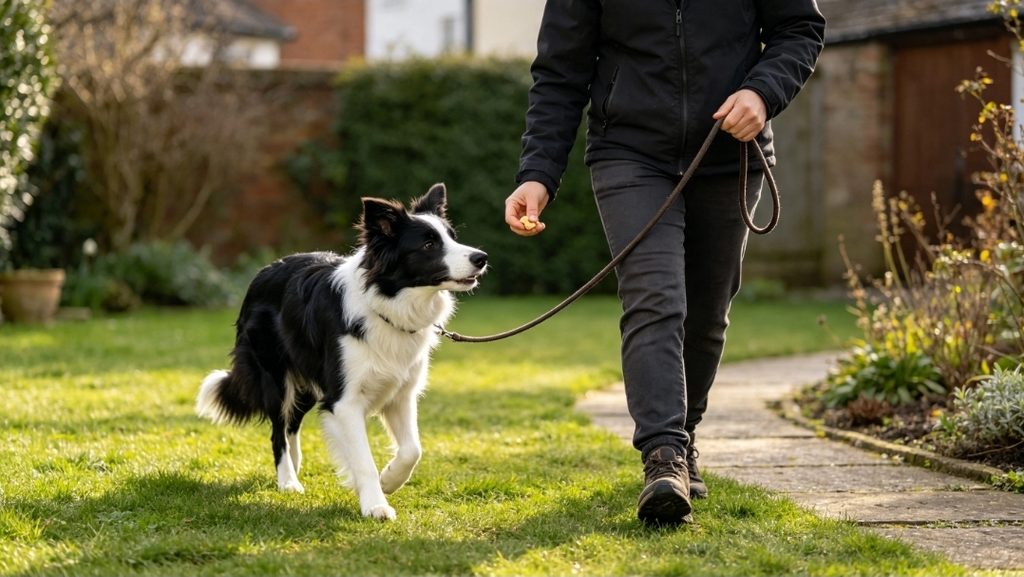
Reward the Position You Want
Your dog needs to understand where you want them to walk.
When your dog is beside you with a loose lead, reward them.
If they move too far forward, calmly redirect them.
Then reward them when they return to the correct position.
Over time, the dog begins to understand that staying near you is rewarding.
Change Direction
Direction changes are useful for teaching your dog to pay attention.
Walk forward.
Change direction.
Encourage your dog to follow.
Reward them.
Repeat.
Your dog begins learning that they need to pay attention to the handler rather than simply deciding where the walk goes.
Don’t Constantly Pull Back
If your dog pulls and you simply pull backwards, you can end up in a constant battle.
The dog pulls.
You pull.
The dog pulls harder.
You pull harder.
This isn’t necessarily teaching the dog what you want.
The objective should be communication.
Show your dog where you want them.
Reward them for being there.
Teach them that a loose lead is the behaviour that allows the walk to continue.
What About Treats?
Food can be a useful training tool.
However, your dog shouldn’t need to stare at a treat permanently to walk beside you.
Use rewards strategically.
Reward good behaviour.
Gradually increase the time between rewards as your dog becomes more reliable.
You can also use access to the environment as a reward.
For example, your dog walks calmly beside you.
You allow them to investigate a safe smell.
Your dog learns that calm behaviour can produce access to things they find rewarding.
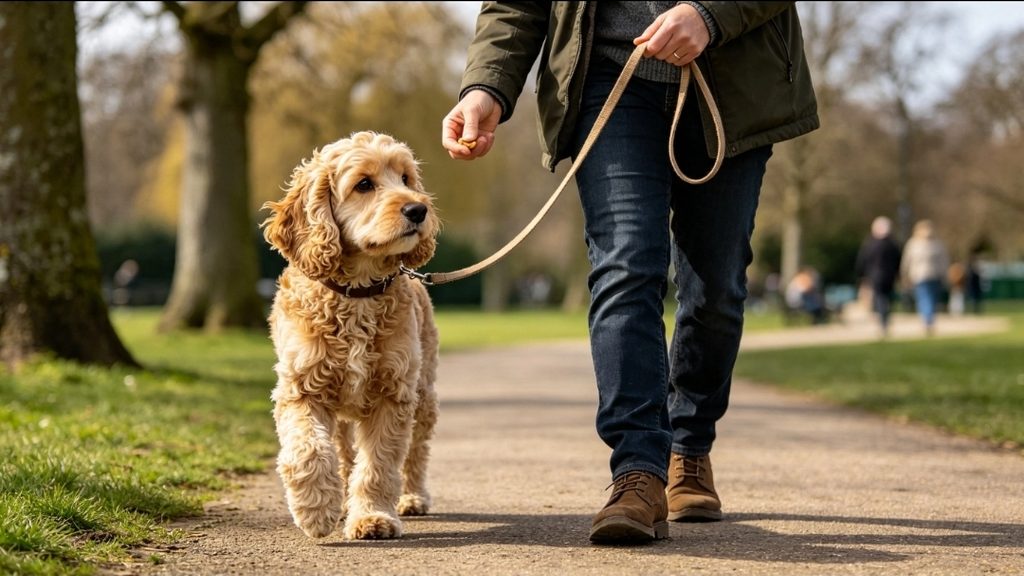
What If My Dog Pulls Towards Other Dogs?
Don’t automatically allow your dog to rush over.
Create appropriate distance.
Get your dog’s attention.
Reward calm behaviour.
Continue walking when your dog is capable of doing so.
If your dog becomes extremely excited or reactive, increase the distance.
Your dog needs to learn that another dog can exist nearby without automatically becoming the destination.
This is particularly important if your dog also displays barking or lunging.
What If My Dog Pulls Towards Smells?
Sniffing is a normal part of being a dog.
You don’t need to prevent your dog from smelling everything.
Instead, teach your dog when it’s time to walk and when it’s time to investigate.
For example:
Walk calmly → reach the area → release your dog to sniff.
This allows your dog to enjoy the environment while still learning that pulling isn’t necessary to access it.
How Long Does It Take to Stop a Dog Pulling?
There isn’t a fixed timeframe.
Some dogs respond quickly to consistent training.
Others need considerably longer.
The timeframe depends on:
- Your dog’s age
- How long they’ve been pulling
- Their temperament
- Their level of excitement
- The environment
- The distractions
- Your consistency
- How often they practise correct walking
Don’t expect a dog that has pulled for years to become perfect after one training session.
Focus on gradual improvement.
Consistency Is More Important Than One Long Training Session
You don’t need to spend an entire day teaching loose-lead walking.
Short, regular training can be more practical.
Practise for a few minutes.
Stop while your dog is doing well.
Repeat later.
Gradually increase the duration.
Eventually, the training becomes part of normal walking.
Don’t Let Bad Habits Continue Unchecked
Every walk is an opportunity for learning.
If your dog spends the entire walk pulling, they’re repeatedly practising pulling.
If possible, manage the environment so you can create opportunities for correct behaviour.
Choose quieter routes when appropriate.
Avoid overwhelming environments during early training.
Practise where your dog can succeed.
Then gradually increase the difficulty.
What If My Dog Is Very Strong?
A strong dog can make lead pulling particularly difficult to manage.
Safety comes first.
Use appropriate walking equipment and make sure you can physically control your dog.
Training remains essential.
The aim isn’t simply to find equipment that allows you to hold the dog back.
The aim is to teach the dog not to continually pull in the first place.
GPK9 and Loose-Lead Training
Understanding why your dog pulls on the lead is only the beginning.
Your dog needs to develop engagement, obedience, communication and control.
For owners who want a structured training approach, GPK9 provides online training designed to help handlers develop these skills.
GPK9 90 Day Transformation
The GPK9 90 Day Transformation is the most relevant GPK9 course for this topic because improving lead behaviour requires consistent practice rather than a single training session.
A structured 90-day period allows you to establish better training habits, reinforce correct behaviour and gradually develop your dog’s reliability around everyday distractions.
The goal isn’t simply to stop your dog pulling for five minutes.
It’s to develop a more reliable walking behaviour that can be maintained in everyday life.
A Simple Plan to Stop Your Dog Pulling on the Lead
Step 1 — Start Somewhere Quiet
Choose an environment where your dog can concentrate.
Step 2 — Teach Engagement
Reward your dog for paying attention to you.
Step 3 — Reward a Loose Lead
Reinforce your dog whenever the lead remains loose.
Step 4 — Change Direction
Teach your dog to follow you rather than constantly choosing the direction.
Step 5 — Introduce Distractions
Gradually add dogs, people, smells and other distractions.
Step 6 — Don’t Reward Pulling
Avoid allowing pulling to become the method your dog uses to reach what they want.
Step 7 — Give Your Dog Opportunities to Sniff
Allow appropriate exploration while maintaining control over the walk.
Step 8 — Practise Regularly
Short, consistent training sessions can build better habits.
Step 9 — Increase Difficulty Gradually
Don’t move from a quiet garden directly into a crowded park.
Step 10 — Stay Consistent
Everyone walking the dog should follow the same basic rules.
Final Thoughts: Why Does My Dog Pull on the Lead?
So, why does my dog pull on the lead?
There are many possible reasons.
Your dog may want to explore.
They may be excited.
They may want to reach another dog.
They may be following an interesting smell.
They may have learned that pulling gets them where they want to go.
Or they may simply never have been properly taught how to walk on a loose lead.
The solution isn’t necessarily about forcing your dog to walk beside you.
It’s about teaching them what you expect.
Build engagement.
Reward calm behaviour.
Teach your dog to follow your direction.
Introduce distractions gradually.
Be consistent.
And give your dog enough time to develop the new habit.
A good walk isn’t one where your dog is constantly being held back.
It’s one where your dog chooses to stay connected with you while enjoying the environment around them.