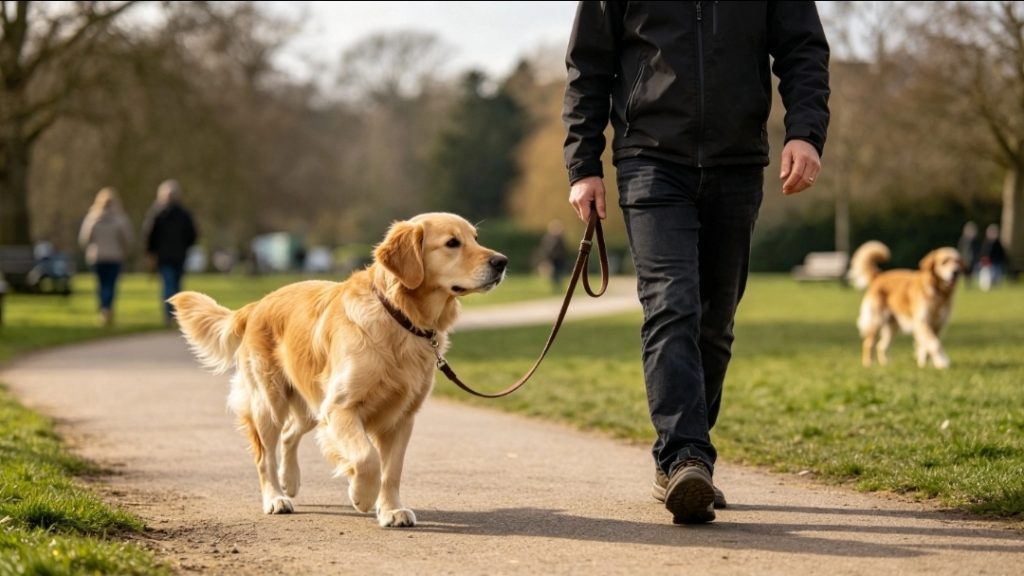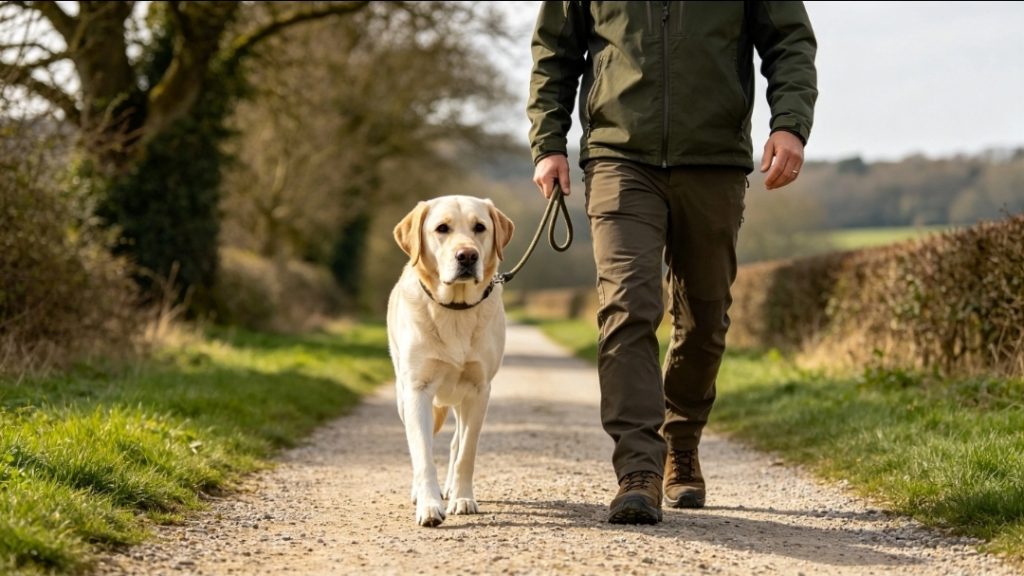
Taking your dog for a walk should be enjoyable for both of you.
But if your dog constantly pulls on the lead, lunges towards other dogs, drags you towards interesting smells or spends the entire walk at the end of the lead, what should be a relaxing walk can quickly become frustrating.
Many dog owners ask the same question:
How do you stop your dog pulling on the lead?
The answer isn’t simply to hold the lead tighter or repeatedly tell your dog to stop pulling.
Loose-lead walking is a skill that needs to be taught.
Your dog needs to learn that walking with a loose lead is rewarding and that pulling doesn’t automatically get them where they want to go.
In this GPK9 guide, we’ll explain how to stop your dog pulling on the lead, why dogs pull, common training mistakes and how to build better lead-walking habits step by step.
Why Does Your Dog Pull on the Lead?
Before learning how to stop your dog pulling on the lead, it helps to understand why dogs pull.
For a dog, the outside world is full of interesting things.
There are:
- New smells
- Other dogs
- People
- Wildlife
- Food
- New environments
- Interesting sounds
- Places they want to investigate
Your dog naturally wants to move towards these things.
If pulling gets your dog closer to something they want, the pulling behaviour can become stronger.
For example, your dog sees another dog.
They pull.
You move forward.
Your dog gets closer.
From your dog’s perspective, pulling worked.
This is why simply telling your dog to stop pulling isn’t always enough.
Your dog needs to learn a different way of getting what they want.
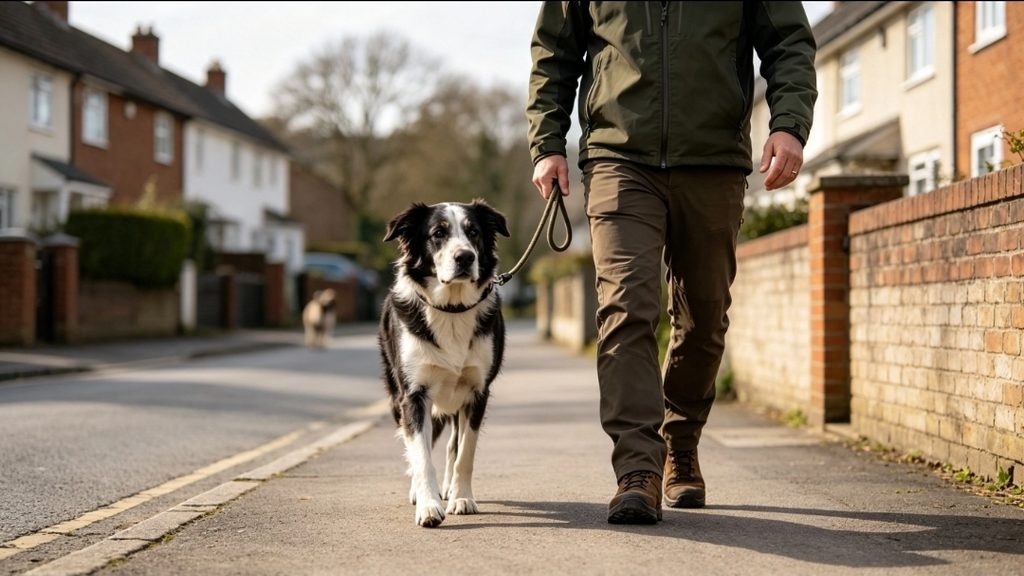
Teach Your Dog What Loose-Lead Walking Means
One of the first things to understand about how to stop your dog pulling on the lead is that your dog needs to understand what behaviour you actually want.
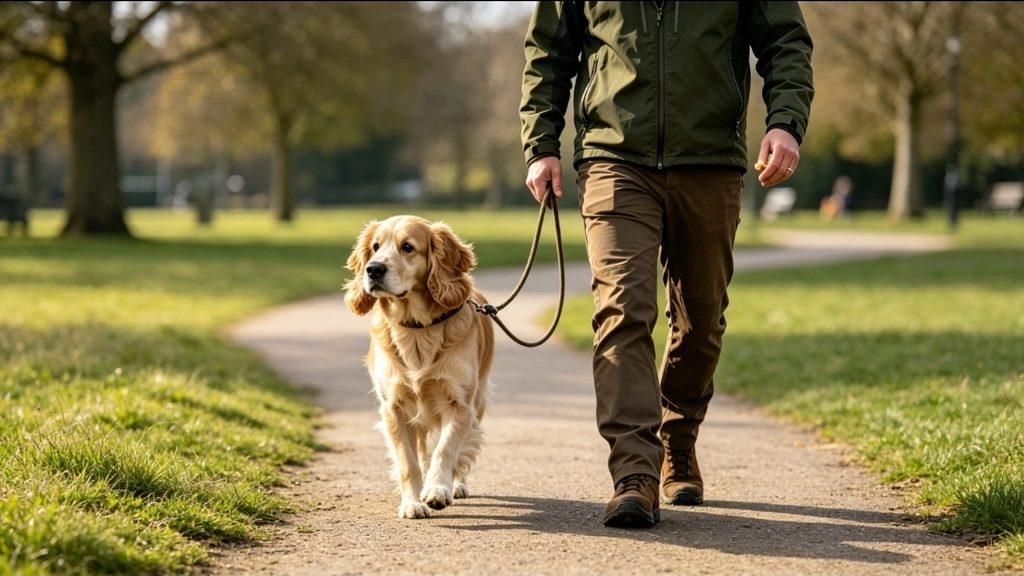
Loose-lead walking means the lead remains relaxed rather than constantly tight.
You don’t necessarily need your dog to walk with their shoulder perfectly positioned against your leg throughout the entire walk.
Instead, the objective is to teach your dog that walking calmly with a loose lead is rewarding.
When the lead is loose, continue moving and reward your dog for staying connected with you.
When the dog pulls, avoid allowing the pulling to become the way they reach whatever they want.
This creates a much clearer system:
Loose lead = walking continues.
Pulling = access to what they want does not automatically happen.
Start Training Somewhere Quiet
Don’t begin lead training on the busiest street you can find.
If your dog is already highly excited, surrounded by distractions and pulling in every direction, you’re making the exercise unnecessarily difficult.
Start somewhere quiet.
Your home, garden or a quiet outdoor area can provide a better environment for teaching the basic behaviour.
Put the lead on your dog.
Reward calm behaviour.
Take a few steps.
If the lead remains loose, reward your dog.
Gradually increase the number of steps before rewarding.
You’re building the behaviour through successful repetitions.
Reward Your Dog for Staying With You
Your dog needs a reason to pay attention to you.
When your dog walks beside you with a loose lead, acknowledge it.
Depending on your dog, you might use:
- Food
- A favourite toy
- Praise
- Play
- Access to something interesting
- Continuing the walk
Different dogs are motivated by different things.
The important point is that your dog learns that choosing to stay connected with you produces positive outcomes.
Don’t wait until your dog is pulling before interacting with them.
Actively reward the behaviour you want.
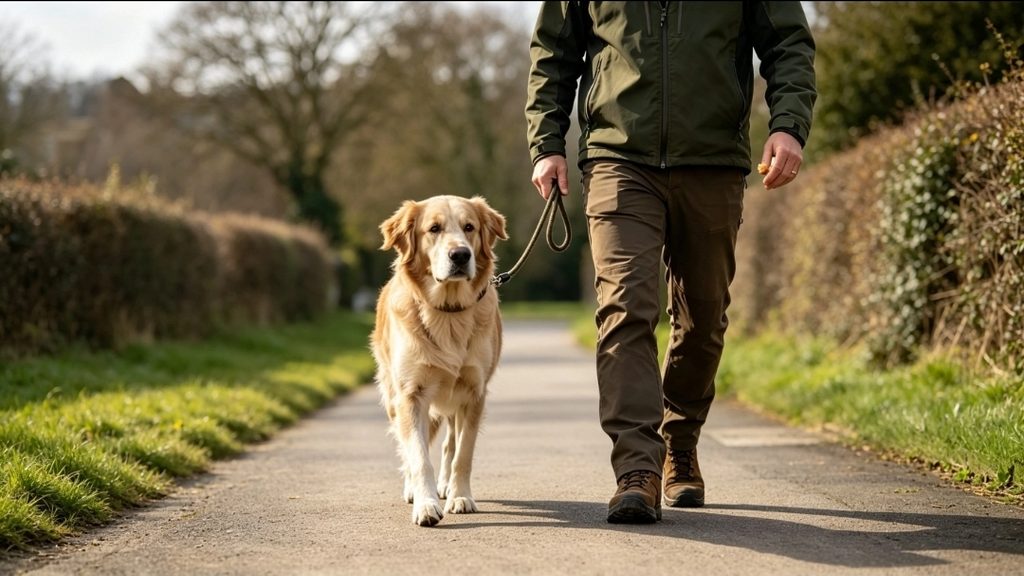
What Should You Do When Your Dog Pulls?
When your dog reaches the end of the lead and begins pulling, don’t automatically continue walking in the direction they want to go.
If pulling consistently gets your dog closer to whatever they want, you’re teaching them that pulling works.
Instead, stop or change direction as appropriate and wait for the dog to reconnect with you.
When the lead becomes loose and your dog is paying attention, continue.
The exact technique can vary depending on the individual dog and situation.
The important principle is consistency.
Your dog should learn that pulling does not control where the walk goes.
Don’t Constantly Pull Back on the Lead
A common reaction to a pulling dog is to pull backwards.
The dog pulls forward.
The owner pulls back.
The dog pulls harder.
The owner pulls harder.
Before long, you’re effectively having a tug-of-war.
This doesn’t teach your dog how to walk calmly.
Instead, focus on teaching the behaviour you want.
A loose lead should become something your dog understands and is rewarded for maintaining.
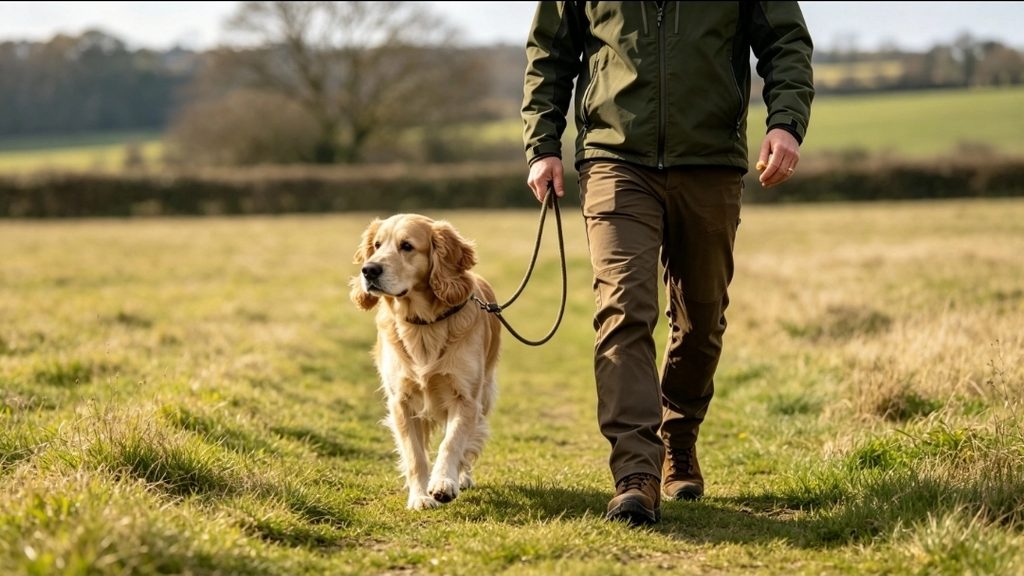
Teach Your Dog to Follow You
Lead walking becomes easier when your dog learns to pay attention to your movement.
Start somewhere quiet.
Take a few steps.
Change direction.
Reward your dog when they notice and follow you.
Walk a short distance.
Change direction again.
Keep the exercise engaging.
You’re teaching your dog that paying attention to their handler is valuable.
This can become particularly useful when you eventually introduce more distractions.
Gradually Introduce Distractions
A dog that walks beautifully in your garden may completely forget its training when it sees another dog.
That’s normal.
The environment has suddenly become much more difficult.
Instead of expecting perfection, gradually increase the level of distraction.
You could progress from:
Quiet home → garden → quiet street → busier street → park → controlled distractions → increasingly difficult environments.
The exact progression will depend on your dog.
If your dog starts pulling intensely, you’ve probably increased the difficulty too quickly.
Move further away from the distraction and make the exercise easier.
Then build again.
How to Stop Your Dog Pulling Towards Other Dogs
Other dogs can be one of the biggest distractions during a walk.
Your dog may pull because they want to say hello, play, investigate or because they become nervous or frustrated.
Don’t automatically assume that pulling towards another dog means your dog is aggressive.
Look at the dog’s overall body language and the context.
Start at a distance where your dog can notice the other dog while still responding to you.
Reward your dog for looking at you.
Then continue walking.
Over time, gradually reduce the distance where appropriate.
The objective is to teach your dog:
See another dog → remain under control → focus on handler → continue walking.
If your dog is highly reactive or displays aggressive behaviour, seek appropriate professional guidance rather than attempting to force close interactions.
Don’t Let Pulling Always Lead to What Your Dog Wants
Imagine your dog sees a tree.
They pull towards it.
You follow.
They reach the tree.
They sniff it.
Your dog has just learned that pulling gets them where they want to go.
Instead, when appropriate, you can teach your dog to walk calmly towards interesting things.
Loose lead.
Calm movement.
Then access to the environment.
This creates an important concept:
Good behaviour can earn access to what the dog wants.
Your dog doesn’t have to be prevented from sniffing, exploring or enjoying the walk.
They simply need to learn how to access those things appropriately.
Let Your Dog Sniff
Stopping your dog from pulling doesn’t mean preventing your dog from sniffing.
Sniffing is an important part of exploring the environment.
A good walk isn’t necessarily one where the dog marches beside you for the entire duration.
There should be opportunities for appropriate exploration.
You can teach your dog the difference between structured walking and permitted exploration.
For example:
Loose lead → reach an appropriate area → release to sniff and explore.
This gives your dog both structure and freedom.
Teach Your Dog to Check In With You
A dog that regularly looks towards its handler is often easier to manage on a lead.
You can reward voluntary check-ins throughout the walk.
Your dog looks at you.
Reward.
Your dog comes back towards you.
Reward.
Your dog chooses to walk beside you.
Reward.
Eventually, these behaviours can become part of your dog’s normal walking pattern.
You aren’t constantly demanding attention.
You’re teaching your dog that staying connected with you is worthwhile.
Use the Right Equipment
Equipment can make managing a dog easier, but equipment alone doesn’t teach loose-lead walking.
A suitable collar or harness and lead should be selected according to your dog’s individual needs, size, breed, behaviour and physical condition.
If you’re unsure which equipment is appropriate, seek advice from a qualified professional.
The important thing to remember is:
Equipment manages the dog. Training teaches the dog.
Don’t rely on equipment as a replacement for training.
How Long Does It Take to Stop a Dog Pulling?
There isn’t a fixed timeframe.
Some dogs learn loose-lead walking quickly.
Others need significantly more repetition.
Factors include:
- Age
- Breed
- Previous training
- Motivation
- Environment
- Excitement level
- Distractions
- Consistency
- Handler experience
Don’t judge progress based on one difficult walk.
Look for gradual improvement.
Maybe your dog previously pulled for an entire walk but now walks calmly for five minutes.
That’s progress.
Build from there.
Puppies and Lead Training
If you have a puppy, don’t expect perfect lead walking immediately.
Everything outside is new.
Sounds, smells, people, vehicles and other dogs can be overwhelming.
Begin by making the lead a normal part of the puppy’s life.
Reward calm behaviour.
Practise short sessions.
Keep expectations realistic.
Most importantly, establish good habits before pulling becomes deeply ingrained.
Common Lead-Walking Mistakes
Expecting Too Much Too Soon
A dog cannot be expected to walk perfectly around every distraction simply because they’ve learned the behaviour at home.
Allowing Pulling Sometimes
If pulling works sometimes and doesn’t work other times, your dog may continue trying.
Only Training During Walks
Lead training can be practised in controlled environments outside normal walks.
Constantly Correcting the Dog
If every step involves telling your dog what they’re doing wrong, the walk can become frustrating for both of you.
Focus on rewarding the behaviour you want.
Forgetting to Reward Good Behaviour
Owners often notice pulling but completely ignore the fact that their dog has just walked calmly for several metres.
Reward those moments.
Using Excessive Lead Tension
A constantly tight lead can create a cycle of pulling against pressure.
Ignoring Distractions
If your dog struggles around other dogs, people or traffic, don’t simply keep walking directly towards the distraction.
Manage the distance and train gradually.
Build Engagement Before Expecting Perfect Lead Walking
Loose-lead walking isn’t simply about where your dog puts their feet.
It is also about the relationship between dog and handler.
Your dog needs to understand that paying attention to you is valuable.
This is why engagement, focus, obedience and communication are important foundations.
A dog that understands how to respond to its handler has more tools available when the environment becomes distracting.
How GPK9 Can Help With Lead Training
At GPK9, lead walking is part of a much broader foundation of dog training.
The aim isn’t simply to stop your dog pulling.
The aim is to develop communication between dog and handler so the dog understands what is expected in different environments.
Lead training becomes much easier when the dog already understands concepts such as engagement, focus, obedience and handler communication.
GPK9 Fundamentals 2 – 6 Months to 18 Months
For owners with a young dog that has moved beyond the earliest puppy stage, GPK9 Fundamentals 2 – 6 Months to 18 Months is a relevant GPK9 course for this stage of development.
The course is designed for dogs from 6 months to 18 months and helps owners continue developing their dog’s training foundations as they mature.
This is particularly relevant to lead training because young dogs are often becoming more confident, curious and environmentally aware. Building stronger obedience, engagement and communication can help owners manage those increasing distractions.
You can continue your dog’s training with GPK9 Fundamentals 2 – 6 Months to 18 Months.
A Simple Lead Training Routine
If you’re learning how to stop your dog pulling on the lead, keep your training simple.
Step 1: Start Somewhere Quiet
Choose an environment where your dog can concentrate.
Step 2: Reward Calm Behaviour
Reward your dog for standing or walking beside you with a loose lead.
Step 3: Take a Few Steps
Keep the initial distance short.
Step 4: Reward Again
Reinforce your dog for remaining connected with you.
Step 5: Change Direction
Teach your dog to notice and follow your movement.
Step 6: Introduce Distractions
Gradually make the environment more challenging.
Step 7: Allow Appropriate Exploration
Give your dog opportunities to sniff and explore without pulling.
Step 8: Increase Difficulty Gradually
Don’t move to a busy environment until your dog is ready.
Step 9: Stay Consistent
Make sure everyone who walks the dog follows the same basic rules.
When Should You Get Professional Help?
Professional help can be particularly useful if your dog:
- Pulls extremely hard.
- Lunges at people.
- Lunges at other dogs.
- Displays aggressive behaviour.
- Becomes extremely anxious outside.
- Is difficult to physically control.
- Has suddenly developed severe lead problems.
- Shows behaviour you don’t understand.
A professional can assess your dog’s individual behaviour and help establish an appropriate training plan.
If your dog’s behaviour has changed suddenly or you suspect pain or illness, speak to your veterinary professional.
Final Thoughts: How to Stop Your Dog Pulling on the Lead
Learning how to stop your dog pulling on the lead isn’t about finding a single piece of equipment or one command that instantly fixes the problem.
It is about teaching your dog what you want.
Start somewhere easy.
Reward loose-lead walking.
Teach your dog to follow you.
Build engagement.
Manage distractions.
Allow appropriate exploration.
Increase difficulty gradually.
And remain consistent.
Remember that your dog doesn’t naturally understand how to walk politely on a lead.
You have to teach them.
The goal isn’t necessarily for your dog to walk perfectly beside your leg every second of every walk.
The goal is a dog that can walk calmly, respond to its handler, manage distractions and enjoy the environment without constantly dragging the person holding the lead.
Loose lead. Clear communication. Consistent training.
That’s how you build better walks.
For young dogs that need stronger obedience and communication foundations, explore GPK9 Fundamentals 2 – 6 Months to 18 Months.