
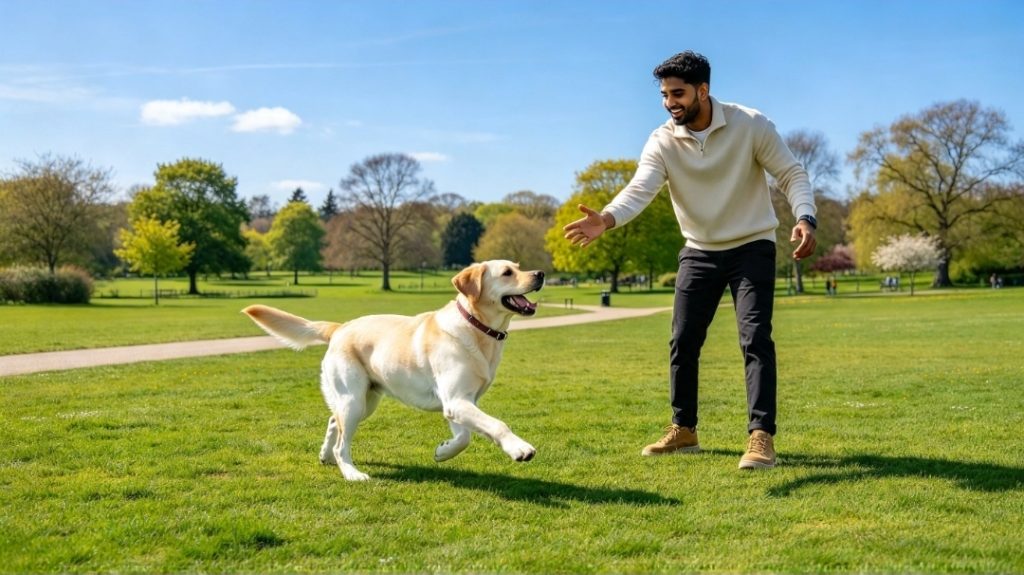
How Do I Train My Dog Off Lead?
How do I train my dog off lead? Start by teaching reliable responses on lead, then gradually increase distance, freedom and distractions before allowing your dog to go fully off lead. Your dog should be able to respond to important cues such as recall, name, stop, wait and leave it before you increase freedom.
RECOMMENDED PRODUCTS

What Does Off-Lead Training Mean?
Training your dog off lead is not simply removing the lead and hoping your dog stays close.
It means teaching your dog to make appropriate choices while having more freedom to move, explore and respond to you without physical restraint.
Your dog needs to understand that coming back, staying within an appropriate distance and responding to your instructions are part of being off lead.
The goal is reliable behaviour with increasing freedom.
What Should My Dog Know Before Going Off Lead?
Before introducing full off-lead freedom, your dog should have a reasonable understanding of:
- Their name
- Recall
- Wait
- Stop
- Leave it
- Walking with you
- Returning to you when distracted
- Ignoring appropriate distractions
- Settling after excitement
Do not move straight from basic lead walking to unrestricted off-lead freedom.
Build each skill gradually and make sure your dog can perform it in different environments.
How Do I Start Training My Dog Off Lead?
Begin in a secure, low-distraction area where your dog cannot run into danger.
Keep your dog on a suitable harness and long line initially. This gives your dog more freedom to move while allowing you to maintain control if they ignore a cue or become distracted.
Allow your dog to explore.
Then practise short recalls.
Call your dog clearly and positively. When your dog comes back, reward them and allow them to continue exploring.
This teaches your dog that coming back to you does not always mean the freedom ends.
How Do I Teach Reliable Recall Before Going Off Lead?
Recall should be one of the strongest behaviours your dog has before you remove the lead.
Start at a short distance.
Call your dog’s name or recall cue once. When your dog turns towards you and comes back, reward them immediately.
Gradually increase the distance.
Then introduce mild distractions.
Only increase one difficulty at a time. For example, increase distance before adding a major distraction, rather than increasing distance and distractions simultaneously.
If your dog repeatedly ignores the recall, the training is too difficult at that stage. Reduce the distance or distraction and rebuild the response.
How Do I Use a Long Line for Off-Lead Training?
A long line is useful because it allows your dog to experience greater freedom without immediately giving them complete freedom.
Start with the line in a safe area.
Allow your dog to move away from you naturally. Call them back periodically and reward successful responses.
As your dog’s reliability improves, increase the distance and introduce controlled distractions.
The long line should be used as a safety and training tool, not as something to constantly pull your dog back with.
Your dog should learn to choose to return, rather than simply being dragged back towards you.
When Should I Let My Dog Off Lead?
Do not base the decision simply on your dog’s age.
Consider your dog’s behaviour, recall reliability, environment, distractions and ability to remain responsive.
Your dog should demonstrate reliable responses on a long line before progressing to a secure off-lead area.
When you first remove the lead, choose somewhere enclosed and safe.
Keep the first sessions short and continue rewarding good responses.
If your dog’s behaviour deteriorates, return to the long line and rebuild the skill.
How Do I Train My Dog to Stay Close Off Lead?
You do not need your dog to walk directly beside you every second while off lead.
Instead, teach your dog to remain within an appropriate distance and regularly check in with you.
Reward your dog when they voluntarily return, look towards you or choose to stay within a sensible range.
Change direction occasionally and allow your dog to notice and follow you.
Avoid constantly calling your dog back just because they are exploring.
The aim is to develop awareness and responsiveness, not constant control through commands.
How Do I Train My Dog Off Lead Around Distractions?
Distractions should be introduced gradually.
Start with mild distractions and increase difficulty as your dog’s responses become more reliable.
Possible distractions include:
- Other people
- Other dogs
- Birds
- Wildlife
- Food
- Toys
- Traffic at a safe distance
- New environments
- Busy parks
- Interesting smells
Do not deliberately place your dog into a situation where you already know they are likely to ignore you.
Increase freedom as reliability improves.
RECOMMENDED PRODUCTS
What If My Dog Runs Away When Off Lead?
If your dog repeatedly runs away, do not chase them unless there is an immediate safety emergency.
Chasing can turn the situation into a game and encourage your dog to continue moving away.
Use your recall cue calmly if your dog is still responsive.
If your dog is not responding, your training level was too advanced for the situation.
Return to a long line or secure area and rebuild recall before trying again.
How Do I Stop My Dog Chasing Wildlife?
Wildlife can be one of the most difficult distractions because it can trigger a strong chase response.
Work on your dog’s recall and leave-it behaviour before giving them unrestricted freedom around wildlife.
Use a long line where necessary so you can prevent your dog from rehearsing unwanted chasing behaviour.
Do not rely on being able to physically catch your dog after they have started chasing.
Build the behaviour before increasing freedom.
Should I Reward My Dog for Coming Back?
Yes.
Rewarding your dog for returning helps maintain a strong recall.
The reward should be meaningful to your dog and appropriate to the situation.
Food can be useful in many situations, while praise, interaction, play or being released to continue exploring can also become valuable rewards.
Sometimes the best reward is simply allowing your dog to return to what they were doing.
This helps prevent your dog from learning that coming back to you always ends the fun.
What Should I Do If My Dog Ignores Me?
Do not repeatedly shout the same command.
If your dog ignores a cue, assess why.
The distraction may be too difficult, the distance may be too great, the reward may not be valuable enough, or the behaviour may not yet be reliable in that environment.
Reduce the difficulty.
Move closer, reduce distractions and return to a behaviour your dog understands.
Then build the difficulty again gradually.
What Equipment Do I Need for Off-Lead Training?
The equipment you use should match your dog’s level of reliability and the environment.
A harness can provide a suitable attachment point for controlled training.
A short line can provide close control during early training.
A long line allows greater freedom while maintaining a physical connection during recall training.
A muzzle may be appropriate for dogs that require additional safety management, but it does not replace training and should be introduced correctly.
Equipment should support training rather than replace reliable behaviour.
How Do I Increase My Dog’s Freedom?
Increase freedom gradually.
A useful progression is:
Short line → greater distance → long line → controlled off lead → more distractions → greater freedom.
Do not increase everything at once.
If your dog becomes less responsive, reduce the level of freedom and return to the previous stage.
More freedom should come with greater behavioural responsibility.
RECOMMENDED PRODUCTS
How Long Does Off-Lead Training Take?
There is no fixed timeframe.
Some dogs develop reliable off-lead behaviour quickly, while others need considerably more training because of their temperament, previous experiences, prey drive, recall history or environmental distractions.
Focus on reliability rather than speed.
Your dog should earn greater freedom through consistent behaviour rather than receiving it simply because they have completed a certain number of training sessions.
Common Off-Lead Training Mistakes
Avoid these common mistakes:
- Removing the lead too early
- Expecting recall to work everywhere immediately
- Increasing distance and distractions at the same time
- Repeating recall commands
- Chasing your dog when they run away
- Punishing your dog when they eventually return
- Calling your dog back only when freedom is ending
- Allowing repeated chasing of wildlife
- Giving too much freedom before reliability has been established
- Training only in one familiar location
The biggest mistake is giving a dog more freedom than their current behaviour can safely support.
How Do I Maintain Reliable Off-Lead Behaviour?
Off-lead training should continue even after your dog becomes reliable.
Practise recall regularly.
Change environments.
Introduce new distractions gradually.
Reward good decisions.
Continue giving your dog opportunities to explore while maintaining communication with you.
Reliability can decline if a behaviour is never practised or reinforced.
Frequently Asked Questions
Can I train my dog off lead at any age?
Yes. Dogs can learn off-lead skills at different ages. The training should be adjusted to the dog’s ability, experience and environment.
Should I let my puppy off lead?
Start puppy off-lead training in secure areas where there is no risk of the puppy running away or entering danger. Build recall and responsiveness before introducing greater freedom.
Is a long line better than an off-lead area?
They serve different purposes. A secure area allows unrestricted movement, while a long line allows you to practise freedom and recall while maintaining physical control.
Why does my dog listen on lead but not off lead?
The environment and level of freedom have changed. Your dog may understand the behaviour but not yet be reliable when distractions, distance and freedom increase.
How do I know when my dog is ready for more freedom?
Look for consistent responses across different environments and distractions. If your dog regularly ignores important cues, they are not ready for additional freedom.
Conclusion
Training your dog off lead is a gradual process of building reliability before increasing freedom. Start with basic communication and recall, use a long line to safely increase distance, introduce distractions progressively and only remove the lead when your dog’s behaviour is reliable enough for the environment.
The goal is not simply to have a dog that runs freely. The goal is to have a dog that can enjoy greater freedom while remaining responsive, aware of you and able to return when called.




