
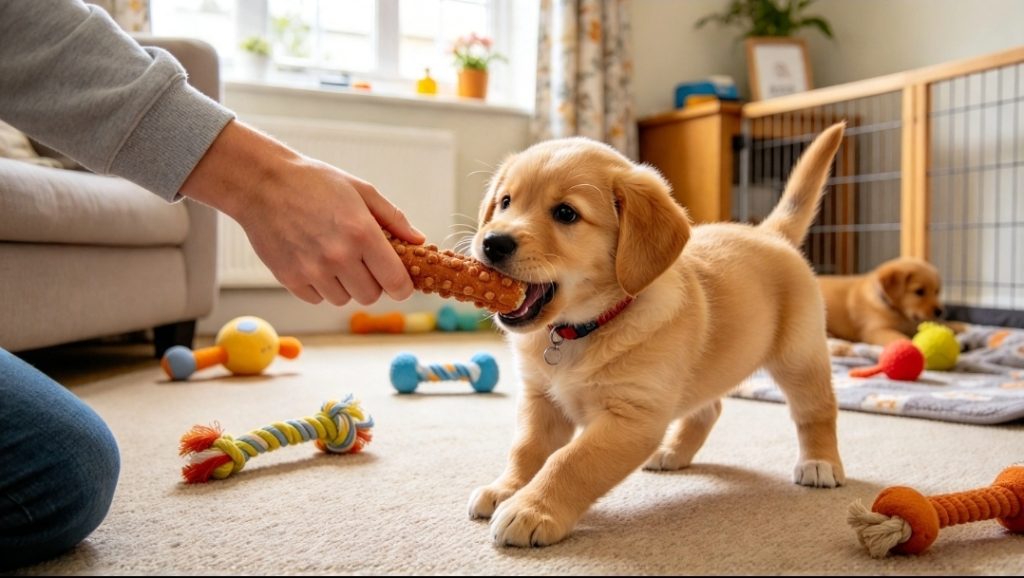
How Do I Stop Puppy Biting, Chewing and Mouthing?
Puppy biting, chewing and mouthing are common behaviours as young dogs explore their surroundings, play and learn how to interact with people. To manage them, provide suitable chew toys, supervise your puppy, redirect unwanted mouthing towards appropriate alternatives and reward calm, gentle behaviour. Consistency helps your puppy learn what they can bite, what they should leave alone and how to interact appropriately.
The aim is not simply to stop your puppy using their mouth. It is to understand what is contributing to the behaviour and teach alternatives that meet their needs while keeping people, your puppy and your home safe.
Why Do Puppies Bite, Chew and Mouth?
Puppies use their mouths to investigate objects, explore textures and interact with the world. Mouthing can also occur during play, excitement, frustration or periods when a puppy is tired and struggling to settle.
Chewing is a normal behaviour, but it can become a problem when puppies target hands, clothing, furniture, shoes or other unsuitable objects.
Understanding the circumstances can help you choose the right response.
Puppy Biting During Play
Puppies may nip hands, grab clothing or bite more intensely when playing with people. They are still learning how to regulate their behaviour and what forms of interaction are appropriate.
If play becomes too rough, calmly pause the interaction and redirect your puppy towards a suitable toy. Resume play when they are calmer, rather than encouraging them to continue biting hands or clothing.
Everyone in the household should respond consistently. If one person encourages hand-biting as a game while another tries to stop it, the puppy may struggle to understand which behaviour is expected.
Chewing Household Objects
Puppies may chew furniture, shoes, cables, cushions and other objects because they are accessible, interesting or satisfying to chew.
Rather than relying on repeated corrections, make the environment easier for your puppy to navigate successfully. Put unsuitable objects out of reach, protect potential hazards and provide safe alternatives that are appropriate for your puppy’s size and chewing style.
Electrical cables, swallowed objects and other household hazards require particular attention. Supervision and prevention are more reliable than expecting a young puppy to make safe choices independently.
Biting When Tired or Overexcited
Some puppies become increasingly mouthy when they are tired, overstimulated or struggling to settle. You may notice faster movements, repeated grabbing, difficulty responding to familiar cues or an inability to disengage from play.
When this happens, reduce stimulation and help your puppy move towards a calm, comfortable resting area. Puppies need sufficient sleep and quiet time as well as play, exploration and training.
Do not assume that every increase in biting means your puppy needs more exercise. Sometimes the more appropriate response is to reduce activity and provide an opportunity to rest.
How Do I Stop My Puppy Biting My Hands?
The most useful approach is to make appropriate interaction rewarding while preventing hand-biting from becoming the way your puppy continues a game.
When your puppy mouths your hands:
- Stay calm. Avoid shouting, sudden movements or turning the interaction into a more exciting game.
- Redirect towards a toy. Offer a suitable toy that gives your puppy an appropriate object to grab and chew.
- Pause play if biting continues. Briefly withdraw your attention or calmly end the interaction if your puppy cannot settle.
- Reward appropriate behaviour. Encourage and reward gentle interaction, playing with toys or settling calmly.
- Review the situation. Consider whether your puppy is tired, overstimulated, frustrated or in need of a break.
If your puppy repeatedly returns to biting, make the situation easier. Increase supervision, shorten play sessions and provide a calmer activity or rest.
Avoid hitting your puppy, holding their mouth shut, deliberately frightening them or using physical punishment. These responses can cause distress and may make interactions less predictable or safe.
How Can I Manage Puppy Chewing?
Successful chewing management combines appropriate alternatives, environmental control and supervision.
Provide Suitable Chew Toys
Offer safe, age-appropriate toys with different textures and shapes. Choose items suitable for your puppy’s size, chewing strength and developmental stage, and supervise their use where necessary.
Inspect toys regularly and remove damaged items that could break apart or be swallowed. Avoid objects that are too hard for your puppy’s teeth or small enough to become choking hazards.
Rotate suitable toys to maintain interest without overwhelming your puppy with too many choices.
Redirect Chewing Without Creating a Game
If your puppy starts chewing something unsuitable, calmly guide them towards an appropriate alternative. Reward them for engaging with the toy rather than the household object.
Avoid repeatedly chasing your puppy to retrieve stolen items. Chasing can make the object more exciting and may encourage your puppy to grab things to initiate play.
For potentially dangerous items, prioritise safety and use an appropriate exchange or management strategy rather than putting yourself at risk by forcibly taking the object.
Prevent Repeated Access to Unwanted Objects
Puppies learn through repetition, so regularly practising unwanted chewing can make the behaviour more established.
Use barriers, closed doors, secure storage and suitable supervised areas to reduce opportunities to chew inappropriate objects. Keep shoes, rubbish, cables and other tempting items inaccessible.
Environmental management is not a substitute for training. It gives your puppy more opportunities to practise appropriate behaviour while reducing the chance of accidents.
How Do Play and Motivation Affect Puppy Biting?
Play can be an important part of puppy development, but the way people interact with their puppies can influence which behaviours become rewarding.
If biting hands consistently leads to exciting movement, attention or continued play, your puppy may repeat it. Providing a suitable toy gives them a more appropriate way to engage.
The Play, Toys and Motivation course explores how play, toys and motivation can support training and interaction. Understanding what your puppy enjoys can help you choose alternatives that are more appealing than the objects or behaviours you are trying to discourage.
During play:
- Use toys that allow your puppy to engage without repeatedly grabbing hands or clothing.
- Keep interactions appropriate for your puppy’s age and physical development.
- Pause when excitement becomes difficult to manage.
- Reward calm engagement and appropriate use of toys.
- End the session before your puppy becomes excessively tired or overstimulated.
Not every puppy responds to the same toy or reward. Observe your puppy and adjust the activity to suit their preferences and ability to remain calm.
What Does Prey Drive Have to Do With Puppy Biting?
Some puppies become highly interested in moving objects, chasing toys, grabbing fabric or pursuing things that move quickly. These behaviours can be influenced by play, excitement, individual temperament and predatory motor patterns.
Movement may make hands, trouser legs or dangling clothing especially interesting to a puppy. Pulling away quickly can sometimes increase that interest because the movement makes the target more exciting to chase.
Try to reduce unnecessary movement when your puppy grabs clothing, calmly redirect them to a suitable toy and reward appropriate play. Avoid encouraging your puppy to chase people or repeatedly grab clothing as part of a game.
The Golden Rule 3 — Prey Drive provides further context for understanding prey-related behaviour, movement and motivation.
Remember that not all puppy biting is caused by prey drive. Consider the whole situation, including tiredness, frustration, teething, play and the puppy’s response to interaction.
How Does Everyday Interaction Influence Puppy Mouthing?
Puppies learn from how people respond to them. The same action may produce different outcomes depending on what happens next.
For example, if a puppy mouths a hand and the person waves their fingers, talks excitedly or pushes the puppy away in a playful manner, the interaction may become more rewarding. If the person calmly redirects the puppy towards a toy and rewards appropriate play, the puppy has a clearer alternative to learn.
The FUSS With Purpose course explores how everyday interaction, affection and engagement should take account of the dog’s responses. Pay attention to whether your puppy is enjoying the interaction, becoming overexcited or showing signs that they need space.
Look at the context rather than responding to mouthing in isolation. Your puppy may need a toy, a quieter activity, a break from handling or an opportunity to rest.
How Can Early Training Help Reduce Puppy Biting?
Biting and chewing are easier to manage when they are addressed alongside the wider foundations of puppy training. Communication, routines, supervision and consistent responses help puppies learn which behaviours are appropriate.
The Puppy Training Foundations course focuses on early learning, communication and everyday routines. These foundations can help you teach your puppy what to do, rather than relying only on stopping unwanted behaviour.
Build these habits into everyday life:
- Reward your puppy for choosing toys rather than hands or clothing.
- Encourage calm behaviour before excitement escalates.
- Provide regular opportunities for sleep, play and exploration.
- Supervise interactions with children and other animals.
- Keep training sessions short and suitable for your puppy’s age.
- Ensure everyone in the household follows a consistent approach.
Children should not be expected to manage puppy biting independently. An adult should supervise interactions closely and separate the puppy and child safely if the play becomes too rough or either appears uncomfortable.
What Mistakes Should I Avoid When Managing Puppy Biting?
Using punishment: Shouting, hitting or frightening a puppy may create distress without teaching an appropriate alternative.
Encouraging hand-biting during play: Inconsistent rules can make it harder for your puppy to understand which forms of play are acceptable.
Chasing a puppy that has stolen something: Chasing may turn the object into a more exciting game and encourage repeated grabbing.
Providing unsuitable chew items: Objects that splinter, break apart or are too hard can pose safety risks.
Ignoring tiredness and overstimulation: More play is not always the answer when a puppy is becoming increasingly mouthy.
Expecting immediate results: Learning takes repetition. Continue managing the environment and rewarding appropriate behaviour while your puppy develops.
When Should I Seek Professional Advice?
Mouthing and chewing are common during puppy development, but some situations need individual assessment.
Seek advice from a suitably qualified professional if biting is severe, repeatedly breaks skin, appears increasingly intense or is difficult to manage safely. Be particularly cautious if your puppy stiffens, guards objects, reacts strongly to handling or shows other concerning changes in behaviour.
If biting begins suddenly or appears associated with pain, sensitivity or illness, contact your vet. Do not assume that every behaviour change is simply a training issue.
In the meantime, prioritise safety, prevent situations from escalating and avoid physical confrontation.
Frequently Asked Questions
Will My Puppy Grow Out of Biting?
Many puppies become less mouthy as they mature and learn appropriate ways to play and interact. However, improvement should not be left entirely to age. Consistent management, suitable alternatives and rewarding appropriate behaviour help establish better habits.
Should I Give My Puppy a Toy Every Time They Bite Me?
Redirecting towards a suitable toy can help, especially during play. If your puppy is repeatedly biting because they are overstimulated or tired, however, a toy may not be enough. Pause the interaction, reduce stimulation and consider whether your puppy needs rest.
Why Does My Puppy Bite My Clothes and Ankles?
Moving clothing and feet can attract a puppy’s attention and trigger chasing or grabbing. Try to avoid turning the behaviour into a chase game. Reduce movement where safe, redirect towards a toy and manage the environment to prevent repeated opportunities.
Is Puppy Biting Always Aggression?
No. Puppy mouthing is often related to play, exploration, excitement or developing bite inhibition. However, the context and intensity matter. Severe, escalating or unusual biting should be assessed rather than automatically dismissed as normal puppy behaviour.
How Long Does It Take to Reduce Puppy Biting?
There is no fixed timescale. Progress depends on your puppy, the situations in which biting occurs, consistency and whether their needs are being met. Look for gradual improvements and seek professional guidance if the behaviour is severe or difficult to manage.
Help Your Puppy Learn Appropriate Ways to Play and Chew
Puppy biting, chewing and mouthing are best managed by understanding what drives the behaviour, preventing unwanted habits from becoming established and teaching appropriate alternatives.
Provide suitable toys, supervise closely, reward calm interaction and ensure your puppy has enough rest as well as opportunities for play and exploration. Consistent responses help your puppy learn what is expected without unnecessary fear or confusion.
For further guidance, explore Puppy Training Foundations, Play, Toys and Motivation, Golden Rule 3 — Prey Drive and FUSS With Purpose. Each provides a different perspective on early learning, motivation and everyday interaction.
With patience, suitable management and consistent training, you can help your puppy develop safer, more appropriate habits as they grow.




