
How Do I Teach My Dog to Settle in a Crate?
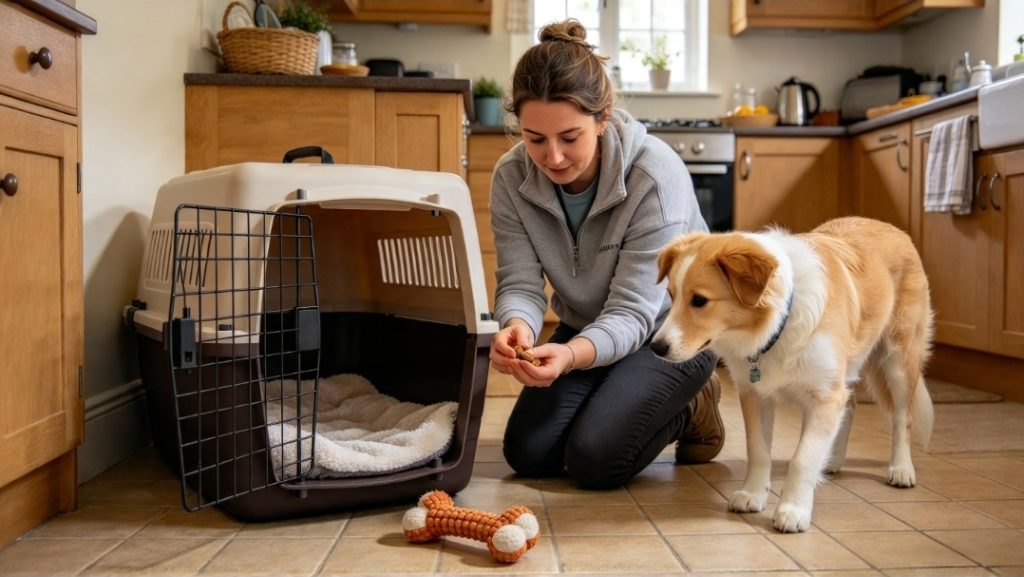
To teach your dog to settle in a crate, introduce it gradually, make it comfortable and reward your dog for choosing to enter and relax inside. Begin with the door open, build positive associations through short sessions and only introduce closed-door periods when your dog is comfortable. Never use the crate as punishment or force your dog to remain inside when they are distressed.
Crate training is about helping your dog learn to rest comfortably in a designated space. With a suitable setup, consistent routines and gradual progression, the crate can become a useful part of everyday life.
How Do I Introduce My Dog to a Crate?
Start by placing the crate in a suitable area of your home where your dog can feel comfortable without being constantly disturbed. Depending on your dog’s needs, this may be near family activity or in a quieter space for rest.
Make sure the crate is appropriately sized. Your dog should be able to stand up, turn around, lie down comfortably and change position. Provide suitable bedding if your dog does not chew or ingest it, and keep the space clean and well ventilated.
Let Your Dog Explore the Crate
Initially, leave the door open and allow your dog to investigate the crate voluntarily. Avoid pushing, pulling or carrying your dog inside to make them stay.
You can place a suitable reward near the entrance and gradually encourage your dog to explore further. Reward calm investigation, voluntary entry and any decision to relax inside.
Allow your dog to leave when they choose. This helps prevent the crate from becoming associated with being trapped and gives you a better opportunity to build confidence at your dog’s pace.
Build a Positive Association
Make the crate part of normal daily life rather than introducing it only when you need to leave the house.
You can reward your dog for entering, offer an appropriate toy where safe and encourage short periods of relaxed rest while you remain nearby. Keep early sessions easy enough that your dog remains comfortable.
The aim is for your dog to learn that the crate is a predictable place to rest, not a signal that something unpleasant is about to happen.
How Do I Teach My Dog to Settle in the Crate?
Once your dog is comfortable entering the crate, begin encouraging calm behaviour inside it. Progress in small steps and pay attention to your dog’s response.
Start With the Door Open
Allow your dog to enter and leave freely. Reward moments when they remain inside calmly, lie down or settle without needing constant encouragement.
If your dog walks out, let them do so. You can repeat the exercise later rather than trying to keep them inside before they are ready.
Introduce the Closed Door Gradually
When your dog is relaxed with the door open, begin closing it for a very short period while you remain nearby. Open it again before your dog becomes uncomfortable, then repeat at a manageable pace.
Gradually build duration only when your dog remains relaxed. Practise small changes rather than making each session substantially more difficult.
If your dog starts panting excessively, repeatedly pawing at the door, trying to escape, vocalising persistently or showing other signs of distress, reassess the exercise. Return to an easier stage rather than expecting your dog to tolerate the situation.
Practise While You Are Nearby
Once your dog is comfortable with short periods behind the closed door, practise moving around the room while they settle. Increase distance and brief periods out of sight gradually, always considering your dog’s response.
Crate comfort and being comfortable alone are not necessarily the same skill. A dog that settles happily while you are nearby may still struggle when left alone, so progress at a suitable pace.
How Can I Make Crate Training Part of My Dog’s Routine?
Dogs benefit from predictable opportunities to rest, interact, exercise and learn. A crate can form part of this routine, but it should not replace these other needs.
Consider offering crate rest after an appropriate period of activity, such as a walk, play or training session. Keep the transition calm and give your dog the opportunity to settle without excessive stimulation.
The Golden Rule 1 — Home & Social provides the wider context for creating a suitable home environment, establishing routines and managing everyday interactions.
Establish Consistent Household Expectations
Everyone in the household should understand how the crate is used. Keep the approach consistent, and make sure nobody uses the crate to punish the dog or sends them there angrily after unwanted behaviour.
The Home Training and House Rules course can help you develop consistent household routines, boundaries and expectations. These complement crate training by helping your dog understand where to rest and how to behave during everyday life.
A consistent routine also makes it easier to recognise when your dog needs a toilet break, activity, interaction or a quieter environment.
What Should I Do if My Dog Cries in the Crate?
Crying or barking can have several causes. Your dog may need to toilet, feel uncomfortable, be unfamiliar with the crate, need more gradual training or be experiencing distress.
Do not automatically assume that your dog is simply demanding attention. Consider the circumstances and look for signs that indicate what they need.
Ask yourself:
- Could my dog need a toilet break?
- Have they had enough appropriate activity and opportunities to rest?
- Is the crate comfortable and suitable for their size?
- Did I increase the duration or distance too quickly?
- Are they showing signs of fear or distress?
If your dog is unsettled, make the exercise easier and reassess the situation. For a puppy, remember that toilet needs and limited bladder control may affect how long they can comfortably remain in the crate.
Avoid leaving a distressed dog to struggle for prolonged periods in the hope that they will eventually give up. If distress persists, seek appropriate professional advice.
How Does Crate Training Help Develop Calm Behaviour?
Settling is a skill that develops through practice, appropriate routines and the ability to relax in different situations. A crate can provide a suitable resting area, but simply placing a dog inside does not automatically teach calmness.
Observe what happens before your dog becomes restless or overexcited. They may need a quieter environment, shorter activities, more predictable routines or help learning to disengage from stimulation.
The Behaviour, Calmness and Self-Control course focuses on developing settling, patience and more appropriate responses in everyday situations.
These skills complement crate training because the objective is not merely to keep a dog inside a confined space. It is to help them develop the ability to rest and respond more calmly when their needs are being met.
Common Crate-Training Mistakes to Avoid
Using the crate as punishment. This can undermine the positive association you are trying to establish. Keep the crate separate from reprimands and confrontational interactions.
Closing the door too soon. Entering the crate voluntarily does not necessarily mean your dog is ready to remain behind a closed door. Build up gradually.
Leaving the dog for too long. Consider age, toilet needs, physical comfort, exercise, interaction and the individual dog’s ability to settle.
Ignoring signs of distress. Repeated escape attempts, intense panting or persistent distress mean you should reassess the setup and training process.
Using the crate as a substitute for training. A crate can help with safe management and rest, but it does not resolve every behavioural concern.
Making the crate predictably mean separation. Practise positive crate experiences during normal household life, not only when you are preparing to leave.
Frequently Asked Questions
How Long Does It Take to Crate Train a Dog?
There is no fixed timescale. Some dogs become comfortable with the crate relatively quickly, while others need a more gradual approach. Progress depends on the dog’s previous experiences, confidence and response to each stage. Focus on comfort rather than a deadline.
Should I Leave the Crate Door Open?
Yes, during the initial introduction, leaving the door open allows your dog to explore and leave voluntarily. Once your dog is comfortable entering and settling, introduce brief closed-door periods gradually.
Should I Put My Dog in the Crate When They Misbehave?
No. The crate should be a comfortable resting place, not a punishment. Manage unwanted behaviour by addressing its cause, adjusting the environment and teaching appropriate alternatives.
Can a Crate Help With Separation Anxiety?
A crate is not a cure for separation anxiety and may increase distress in some dogs. If your dog panics, attempts to escape or becomes extremely distressed when separated from you, seek veterinary advice and suitable professional behavioural support.
How Long Can My Dog Stay in a Crate?
This depends on your dog’s age, health, individual needs and ability to remain comfortable. Puppies generally need more frequent toilet opportunities, while all dogs need appropriate movement, interaction, exercise and rest outside confinement. Do not use the crate for longer than your dog can comfortably manage.
Help Your Dog Learn to Settle Comfortably
Successful crate training relies on gradual introduction, positive experiences and a routine that respects your dog’s needs. Allow your dog to explore voluntarily, reward relaxed behaviour and build duration only when they remain comfortable.
Combine crate training with suitable household routines and opportunities to develop calm behaviour. Explore Golden Rule 1 — Home & Social, Home Training and House Rules and Behaviour, Calmness and Self-Control for related guidance.
With patience and consistency, you can help your dog learn that the crate is a comfortable place to rest, rather than somewhere they are sent when something goes wrong.




