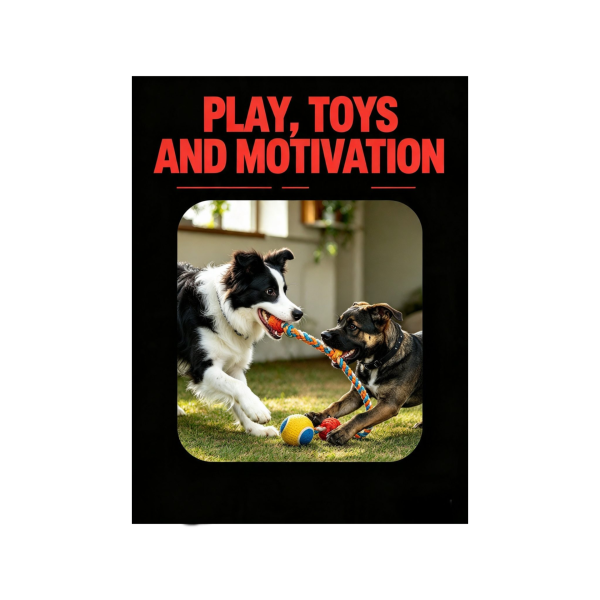
PLAY, TOYS AND MOTIVATION
£49.99
PLAY, TOYS AND MOTIVATION
Online Dog Training Course | £49.99
Why does one dog become completely absorbed in chasing a ball, while another shows little interest in toys? Why do some dogs enjoy tug games, while others prefer food, sniffing or interaction with their owner?
Play and motivation are individual to every dog. Understanding what your dog finds enjoyable and rewarding can make a significant difference to how you interact, provide enrichment and approach everyday training.
The GPK9 Play, Toys and Motivation course is a comprehensive educational programme designed to help dog owners understand canine play behaviour, develop appropriate play activities, improve engagement and use different forms of motivation more effectively.
With 49 lessons covering the science and behaviour of play alongside practical everyday applications, this course explores everything from introducing a dog’s first toy to developing cooperative games, managing excitement and maintaining enjoyable play throughout a dog’s life.
Understanding Why Dogs Play and What Motivates Them
Before encouraging a dog to play, it is important to understand why dogs play and how their individual preferences influence their behaviour.
Explore the different types of play, including object play, social play, interactive games and play with people. Learn how dogs communicate during play, how to recognise enjoyable interaction and how body language can help you understand whether your dog is comfortable, interested or becoming overwhelmed.
The course examines individual motivation and why dogs can respond differently to the same activity. You will explore the relationship between natural preferences, reward value and the different ways dogs find enjoyment.
This provides a foundation for making more appropriate choices rather than expecting every dog to respond to the same toys or activities.
Understanding Dog Toys and Choosing the Right Equipment
Not all toys provide the same experience. Their movement, texture, size, shape and interaction can influence whether a dog finds them interesting.
Discover the different types of dog toys and their uses, how to select toys that match your dog’s preferences, and why appropriate supervision and toy safety matter.
Learn how toy access, rotation and the surrounding environment can influence engagement. The course also explores why some dogs refuse to play with toys and how owners can introduce positive associations without forcing interaction.
Building Toy Interest, Chase and Engagement
Some dogs naturally show interest in moving objects, while others need time and suitable experiences to develop confidence and enthusiasm.
Explore how movement and presentation can encourage toy interest, how to develop chase and pursuit, and how to increase play duration without creating pressure.
You will learn how to introduce toys in ways that encourage voluntary interaction, maintain interest and allow the dog to participate at a comfortable level.
The programme also examines how to develop cooperative play rather than simply encouraging a dog to take possession of an object and move away.
Developing Tug, Retrieve and Cooperative Games
Tug and retrieve activities can provide enjoyable opportunities for interaction when introduced appropriately.
Learn how to introduce tug play, encourage suitable toy interaction and develop cooperative tug games. Understand how to teach a dog to release a toy and how to introduce retrieve activities, including chasing, catching and returning an object to the handler.
The course also explores two-toy games and cooperative switching, helping owners understand how different toy activities can be developed into enjoyable shared experiences.
For dogs that do not particularly enjoy toys, you will also explore food-based play, combining food with toys and personal interaction without equipment.
Using Play to Improve Dog Training
Play can be valuable beyond recreation. For dogs that find particular toys or activities rewarding, play can become part of an effective reward-based training approach.
Discover how important play is in dog training, whether play can improve training and how to identify suitable rewards for different behaviours.
Explore reward value, food reward hierarchies and individual motivation. Understand how hunger, fullness and feeding times may influence a dog’s interest in food, as well as the differences between hand-feeding and bowl-feeding.
The course explains how toys can be used as rewards for specific behaviours and how play can help develop engagement and focus.
You will also examine how to develop play skills across different locations and situations, helping dogs become familiar with activities in a wider range of everyday environments.
Understanding Arousal, Excitement and Behaviour During Play
Excitement is a normal part of many play activities, but recognising when it becomes excessive or uncomfortable is important for the dog’s welfare and the quality of the interaction.
Explore canine arousal and the behavioural changes that may occur as excitement increases. Learn to recognise when play is becoming too intense, when a dog may be uncomfortable and when interaction should be adjusted or stopped.
The course applies the GPK9 Green, Amber and Red system to play-related situations, helping owners recognise changes in their dog’s behaviour and understand how to respond appropriately.
You will also explore how to recognise enjoyable play compared with interaction that is becoming uncomfortable, how to introduce play breaks and calm transitions, and how to develop self-control around toys.
The programme further examines how to help dogs settle after exciting activities and how to manage common play-related behavioural problems.
Encouraging Independent Play and Mental Stimulation
Dogs do not need every activity to involve direct interaction with their owner.
Appropriate independent play can provide opportunities for exploration and engagement, while toys and other activities can contribute to mental stimulation and enrichment.
Learn how to encourage independent play, introduce appropriate toy use and provide activities that suit your dog’s interests and abilities.
The course also explores the difference between interactive play and independent activities, helping owners understand how both can contribute to a dog’s everyday experiences.
Understanding Social Play and Managing Shared Activities
Play between dogs can involve different communication styles, levels of excitement and individual preferences. Understanding these differences is important when allowing dogs to interact.
Explore how to recognise appropriate social play, understand changes in interaction and manage play between dogs.
The programme also considers the challenges of multi-dog households, including managing access to toys and reducing the potential for competition or conflict.
You will also examine play with children and other family members, with attention to appropriate supervision, safe interaction and recognising when an activity should be stopped.
Adapting Play Throughout Your Dog’s Life
A dog’s interests, physical abilities and willingness to participate can change with age, development and experience.
Learn how to adapt play for puppies and developing dogs, taking account of their changing coordination, confidence and physical development.
Explore suitable adaptations for older dogs and dogs with physical limitations, including how to consider mobility and individual comfort when choosing activities.
The course also examines dogs that prefer food, sniffing or other activities instead of conventional toys, helping owners recognise that motivation does not have to involve chasing a ball or playing tug.
Understanding and Resolving Common Play-Related Problems
Not every dog will engage with toys consistently. Some become distracted, lose interest, refuse to participate or show possessiveness around particular objects.
This course explores why these difficulties can occur and how owners can make more appropriate adjustments.
You will examine toy-related possessiveness and resource guarding, troubleshooting reduced engagement, and recognising when changes in play behaviour may indicate a concern requiring veterinary or professional behavioural advice.
The emphasis throughout is on understanding the individual dog, recognising relevant behavioural changes and supporting positive experiences rather than forcing participation.
Maintaining Enjoyable Play Throughout Life
Play should remain an enjoyable experience for both the dog and the owner. It should not become a constant training exercise or an activity in which the dog is expected to perform on demand.
Discover how to maintain appropriate play opportunities, vary activities, observe changing interests and adapt familiar games as your dog develops.
Learn why voluntary participation matters, how to recognise when a dog is enjoying an activity and how to maintain a positive relationship through play at different stages of life.
What Is Included in This Course?
The programme contains 49 lessons covering:
- Why dogs play and the different characteristics of canine play.
- Individual motivation, preferences and behavioural communication.
- Toy types, selection, safety and management.
- Building toy confidence, interest and engagement.
- Chase, pursuit, tug, retrieve and cooperative games.
- Food rewards, reward value and motivation.
- Using play to support training, focus and engagement.
- Arousal, excitement, play breaks and self-control.
- Independent play, toys and mental enrichment.
- Social play, multi-dog households and family interaction.
- Adapting activities for puppies, older dogs and dogs with physical limitations.
- Resource guarding, reduced interest and common play-related problems.
- Recognising when professional advice may be needed.
- Maintaining enjoyable play and motivation throughout life.
Who Should Take This Course?
This course is suitable for dog owners who want to understand their dog’s behaviour, improve play opportunities and develop a better understanding of motivation.
It is particularly relevant to owners whose dogs show limited interest in toys, struggle to engage in interactive games, become overly excited during play or prefer food, sniffing and other forms of enrichment.
It is also suitable for owners who want to understand how play can support reward-based training and how to provide more varied and appropriate activities throughout their dog’s life.
Where a dog displays serious aggression, resource guarding or behaviour that presents a safety concern, specialist professional assessment should be sought rather than attempting to resolve the problem through play exercises alone.
Start Understanding Your Dog’s Motivation
Every dog has individual preferences. The aim is not to make every dog play in the same way, but to understand what motivates your dog, recognise what they enjoy and provide suitable opportunities for positive interaction.
With 49 detailed lessons, PLAY, TOYS AND MOTIVATION brings together canine behaviour, practical play development, reward-based training, enrichment and everyday problem-solving in one comprehensive online course.
Develop your understanding of play, discover what motivates your dog and make everyday interaction more rewarding.
ENROL TODAY
Course price: £49.99
GPK9 – Professional Dog Training & K9 Education
Train the Human. Train the Dog. Build the Partnership.