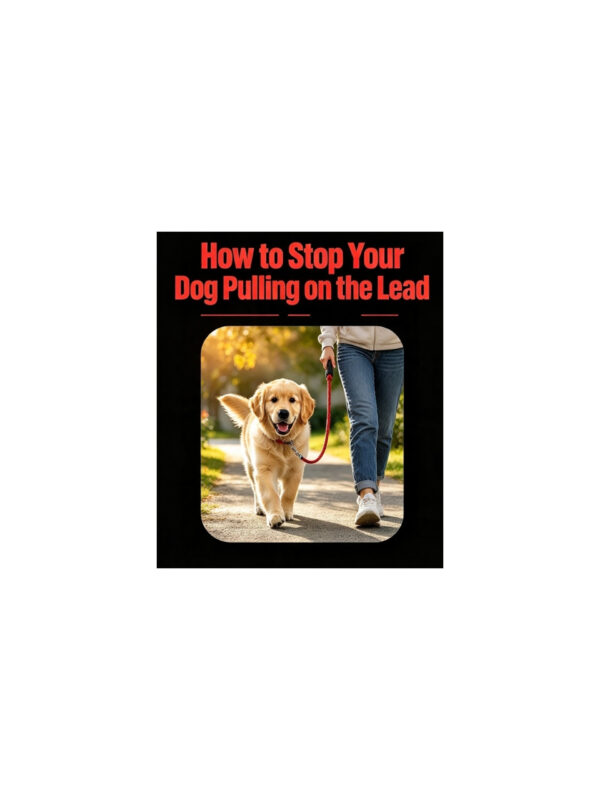
How to Stop Your Dog Pulling on the Lead
£29.99
How to Stop Your Dog Pulling on the Lead
Course Price: £29.99
Introduction to Maintaining Loose-Lead Walking
GPK9 Maintaining Loose-Lead Walking Across Different Everyday Environments is designed to help handlers understand how to improve their dog’s walking behaviour and develop more consistent loose-lead walking during everyday activities.
Teaching a dog to walk without pulling requires more than simply shortening the lead or repeatedly asking the dog to stay beside the handler. Dogs encounter different distractions, smells, sounds, people, animals and environmental changes throughout their walks. These factors can influence their attention, motivation and ability to maintain a suitable walking position.
This training programme introduces practical techniques for developing loose-lead walking through positive reinforcement, appropriate rewards, clear communication and gradual progression.
The objective is to help handlers recognise why dogs pull, understand how different environments influence walking behaviour and develop a consistent approach that can be applied during everyday walks.
What Is Loose-Lead Walking Training?
Loose-lead walking is the process of teaching a dog to walk with a manageable amount of lead slack rather than constantly pulling against the handler.
The dog learns that maintaining a suitable walking position, responding to handler communication and remaining engaged during movement are behaviours that can be positively reinforced.
However, walking behaviour can change depending on the environment. A dog that walks comfortably in a quiet location may struggle when introduced to unfamiliar surroundings or increased distractions.
GPK9 focuses on developing walking behaviour gradually, helping the handler recognise when to continue, when to adjust the exercise and when the dog needs a reduction in environmental pressure.
What Will You Learn?
1. Understanding Why Dogs Pull on the Lead
Understand common reasons why dogs develop pulling behaviour.
Recognise how excitement, environmental distractions, motivation and unfamiliar surroundings can influence walking.
Understand why pulling should be assessed in context rather than treated as one behaviour with a single cause.
Recognise the importance of observing the dog’s walking position, attention and response to the handler.
Understand how the handler’s movement and communication can influence walking behaviour.
2. Developing a Consistent Walking Position
Understand how to introduce and maintain a suitable walking position.
Learn how food rewards can encourage the dog to remain in the desired position.
Understand the importance of reward placement and timing.
Recognise how changes in handler direction and movement can help maintain engagement.
Understand why consistency is important when developing reliable walking behaviour.
3. Using Rewards and Motivation During Walking
Understand how food rewards can reinforce loose-lead walking.
Recognise the importance of selecting rewards that motivate the individual dog.
Learn why rewards should be delivered in a position that supports the desired walking behaviour.
Understand how reward frequency can be adjusted as the dog becomes more consistent.
Recognise when alternative rewards or environmental opportunities may help maintain engagement.
4. Managing Distractions During Everyday Walks
Understand how different environments can influence a dog’s ability to maintain loose-lead walking.
Learn how to introduce distractions gradually without making the exercise unnecessarily difficult.
Recognise when the dog is becoming distracted or losing its walking position.
Understand how to adjust distance, direction, movement and reward delivery.
Learn why increasing only one aspect of difficulty at a time can support more consistent progress.
5. Maintaining Loose-Lead Walking in Different Environments
Understand how to apply walking techniques in quieter streets, pavements, town centres and open spaces.
Recognise why a dog may respond differently when moving between familiar and unfamiliar locations.
Learn how to maintain consistent communication when changing environments.
Understand how to adjust the exercise when distractions increase.
Recognise the importance of developing walking behaviour through gradual exposure and repeated positive experiences.
6. Recognising and Resolving Changes in Walking Behaviour
Understand how to recognise when previously successful walking techniques are no longer producing the expected response.
Observe changes in the dog’s attention, motivation and ability to maintain a manageable lead.
Learn why repeating the same instruction is not always the appropriate response.
Understand how to reduce difficulty, change direction or move away from distractions when necessary.
Recognise when the dog needs time to settle before continuing the exercise.
The GPK9 Approach to Training
GPK9 places importance on understanding the dog’s behaviour before deciding how to progress a training exercise.
Loose-lead walking is developed through positive reinforcement, appropriate motivation, clear handler communication and gradual progression.
The training process uses the GPK9 Green, Amber and Red system to help handlers assess the dog’s behaviour and make appropriate decisions.
Green: The dog is maintaining a manageable lead, responding to the handler and demonstrating that the current walking exercise is suitable. The handler can continue reinforcing the behaviour and gradually progress when appropriate.
Amber: The dog is becoming distracted, increasing lead tension or struggling to maintain its walking position. The handler should observe and assess the situation, reduce or remove the distraction where possible, allow the dog to settle and reassess before continuing.
Red: The dog is no longer able to manage the exercise safely or is displaying significant distress or behaviour that creates an immediate risk. The handler should stop the exercise, identify the problem, remove the dog from the difficulty and allow recovery before reassessing whether any further training is appropriate.
This approach encourages handlers to respond to the dog’s actual behaviour rather than automatically increasing instructions or training pressure.
Why Positive Reinforcement Matters
Positive reinforcement helps the dog understand which walking behaviours are desirable by providing an appropriate reward when the required behaviour occurs.
Food rewards can be used to encourage position, reinforce attention and support changes in direction. Reward placement is particularly important because delivering food in the correct position can help communicate where the dog should be walking.
As the dog becomes more consistent, the handler can gradually adjust reward frequency while continuing to reinforce successful walking behaviour.
The aim is to develop understanding and cooperation rather than relying on harsh corrections, lead jerking or punishment.
Who Is This Course For?
This training programme may be suitable for:
Dog owners whose dogs pull on the lead during everyday walks.
Handlers who want to improve their dog’s walking position and lead management.
Owners whose dogs become distracted when encountering people, animals or unfamiliar surroundings.
Handlers who have already introduced loose-lead walking but want to develop greater consistency.
Learners who want to understand how positive reinforcement can improve everyday walking behaviour.
The techniques should be adapted to the individual dog’s ability, motivation and behavioural needs.
Important Training and Safety Information
Loose-lead walking should be developed in environments that are appropriate for the dog’s current ability.
Handlers should use suitable walking equipment, maintain control of the lead and avoid introducing distractions that exceed the dog’s ability to cope.
Dogs displaying serious aggression, attempted biting, severe distress or behaviour that creates an immediate safety risk should receive an appropriate professional assessment before continuing with ordinary walking exercises.
Training should always prioritise the dog’s welfare, the handler’s safety and the safety of other people and animals.
What Should You Take Away from This Training?
By studying the techniques covered in this programme, learners should develop a clearer understanding of:
Why dogs pull on the lead and how different environments influence walking behaviour.
How to establish and maintain a suitable walking position.
How to use food rewards, motivation and reward placement effectively.
How to introduce distractions gradually and adjust training difficulty.
How to maintain loose-lead walking across different everyday environments.
How to recognise Green, Amber and Red behaviour during walking exercises.
How to make responsible training decisions when walking behaviour changes.
Develop Better Walking Habits with GPK9
Loose-lead walking is an important part of everyday dog handling. Developing consistent walking behaviour requires patience, observation, appropriate rewards and an understanding of how the environment affects the dog.
GPK9 provides practical, positive reinforcement training principles to help handlers improve communication, reduce unnecessary lead tension and develop more manageable everyday walks.
Course: GPK9 Maintaining Loose-Lead Walking Across Different Everyday Environments
Training Focus: How to Stop Your Dog Pulling on the Lead
Price: £29.99 — one-off purchase
Start developing better walking habits, improve your communication with your dog and build more consistent loose-lead walking with GPK9.