How Do I Toilet Train My Puppy?
To toilet train a puppy, establish a consistent routine, supervise them closely, provide frequent opportunities to toilet in the right place and reward success immediately. Take your puppy out after waking, eating, drinking and playing, and watch for signs that they need to go. When accidents happen, clean them thoroughly and adjust your routine rather than punishing your puppy.
Reliable toilet training develops through repetition, timing and consistency. Your puppy needs to learn where to toilet, while you learn to recognise their signals and anticipate when they are likely to need another opportunity.
How Do I Start Toilet Training a Puppy?
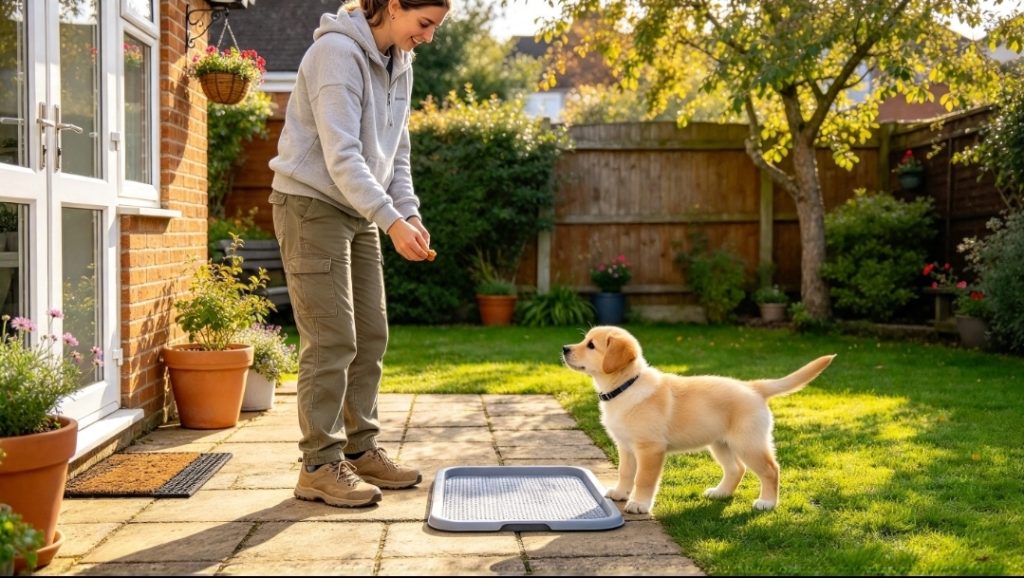
Choose a suitable toilet area and take your puppy there regularly. Use the same general location where practical, allowing them enough time to sniff and toilet without unnecessary distractions.
When your puppy toilets in the right place, reward them promptly with praise, a small food reward or another suitable reward they enjoy. This helps them associate toileting in that location with a positive outcome.
In the early stages, do not rely on your puppy to tell you every time they need to go outside. Young puppies have limited bladder control and are still developing their habits. Your routine and supervision are essential.
Take Your Puppy Out at the Right Times
Puppies commonly need toilet opportunities at predictable points throughout the day. Make a habit of taking your puppy out:
- Immediately after waking up.
- After meals and drinking.
- After play, excitement or training.
- Before settling down for a rest.
- Before bedtime and when waking during the night.
- Whenever you notice signs that they may need to toilet.
Very young puppies may need opportunities much more frequently than older puppies. Adjust the schedule to your puppy’s age, size, health and individual pattern rather than relying on a fixed timetable.
Recognise Your Puppy’s Toilet Signals
Learning your puppy’s behaviour can help you anticipate when they need to go. Possible signs include:
- Sniffing the floor or ground persistently.
- Circling or searching for a suitable spot.
- Moving away from people or play.
- Becoming restless or suddenly stopping an activity.
- Heading towards a door or a previously used toilet area.
These signs are not always obvious, and some puppies may show very little warning. When in doubt, calmly offer another toilet opportunity rather than waiting for an accident.
How Can I Establish a Reliable Toilet Routine?
A predictable routine helps your puppy practise the behaviour you want and gives you a better understanding of their needs.
Keep track of when your puppy eats, drinks, sleeps, plays and toilets. Over time, these observations can help you identify patterns and adjust the timing of toilet breaks.
Use Supervision to Prevent Accidents
When your puppy is awake and indoors, keep them within sight or use a safe, puppy-appropriate area where you can monitor them. Supervision allows you to notice early signals and respond before an accident occurs.
If you cannot watch your puppy closely, use a suitable management arrangement that meets their needs and keeps them safe. Do not leave a puppy confined for longer than they can comfortably manage.
If your puppy begins sniffing, circling or becoming restless, calmly guide them to their toilet area. Avoid turning the process into a game or creating unnecessary excitement.
Keep Household Responses Consistent
Everyone caring for your puppy should follow the same basic routine. Use the same toilet area where possible, provide opportunities at appropriate times and reward success consistently.
Avoid confusing your puppy by allowing them to toilet in one indoor location but expecting them to avoid another without clear guidance. If indoor toilet pads are part of your plan, decide how they fit into your longer-term toilet-training goal and maintain a consistent approach.
For a broader approach to establishing reliable habits through timing, supervision and consistent responses, Golden Rule 4 — Toilet provides the wider toilet-training foundation.
What Should I Do When My Puppy Has an Accident?
Accidents are a normal part of learning, especially during the early stages. If you find an accident after it has happened, your puppy is unlikely to understand punishment delivered afterwards.
Clean the area thoroughly with an appropriate pet-safe cleaning product, following its instructions. Removing residual odours can help reduce the chance of your puppy returning to the same spot.
Review what happened before the accident:
- Was it too long since the last toilet opportunity?
- Had your puppy just woken up, eaten or finished playing?
- Were they unsupervised or out of sight?
- Did they show a signal that was missed?
- Has the usual routine changed?
Use the answers to make practical adjustments. You may need to provide more frequent toilet breaks, improve supervision or take your puppy out earlier after meals and play.
Should I Tell My Puppy Off for Toileting Indoors?
No. Shouting, frightening your puppy or physically punishing them for an accident can create stress and may make them reluctant to toilet in front of you.
If you catch your puppy beginning to toilet indoors, calmly interrupt only if you can do so without frightening them, then guide them to the appropriate area. Reward them if they finish there.
If the accident has already happened, clean it up and focus on preventing the next one. Consistent opportunities and timely rewards are more useful than punishment.
How Long Does It Take to Toilet Train a Puppy?
There is no single timescale for toilet training. Some puppies develop a predictable routine relatively quickly, while others need several weeks or longer to become reliable.
Progress depends on factors such as age, health, previous experience, supervision, routine and individual development. Occasional accidents do not necessarily mean training has failed.
Look for gradual improvement: fewer accidents, more predictable toilet habits and increasing success when taken to the appropriate area. Continue supervising and providing opportunities even when your puppy appears to be making good progress.
Avoid expecting a young puppy to hold their bladder for long periods. Their physical development and comfort must guide the routine.
How Does Toilet Training Fit Into My Puppy’s Wider Development?
Toilet training is one part of helping a puppy learn how to live comfortably within a household. Communication, supervision, rest, appropriate play and consistent routines all support early development.
The Puppy Training Foundations course covers early learning, communication, engagement and everyday routines. These foundations help you build a consistent approach while your puppy learns what is expected.
Your home environment matters, too. The Home Training and House Rules course focuses on establishing household routines, boundaries and appropriate everyday habits. These can help you manage your puppy’s access to different areas, provide suitable rest and supervise them more effectively.
Together, consistent puppy foundations and household routines can make toilet training easier to manage without treating every accident as a separate problem.
When Should I Be Concerned About Toilet Training?
If your puppy is repeatedly having accidents despite a consistent routine, review the timing of toilet breaks, supervision and any changes in their environment.
However, do not assume every toileting problem is a training issue. Contact your vet if your puppy appears to be in pain, strains to urinate, passes blood, develops diarrhoea, drinks unusually large amounts or suddenly starts having frequent accidents after previously making progress. Difficulty passing urine can require urgent veterinary attention.
Your puppy’s health and comfort should always come first.
Frequently Asked Questions
How Often Should I Take My Puppy Outside to Toilet?
Take your puppy out frequently, especially after waking, eating, drinking and playing. Very young puppies usually need more opportunities than older puppies. Observe your puppy’s individual pattern and adjust the schedule accordingly.
Should I Use the Same Toilet Spot Every Time?
Using the same general area can help establish a predictable routine, although it is not essential for every puppy. Choose a suitable, accessible location and reward your puppy for toileting there.
Should I Stay Outside Until My Puppy Goes?
Give your puppy enough time to sniff and toilet without rushing them. If they do not go, return indoors under close supervision and try again shortly afterwards. Avoid giving them unrestricted access to the house if you suspect they still need to toilet.
Why Does My Puppy Toilet Indoors After Coming Inside?
Your puppy may not have fully emptied their bladder, may have become distracted outside or may not yet understand the routine. Stay with them during toilet breaks, reward success promptly and offer another opportunity soon if they do not go.
Should I Wake My Puppy During the Night?
Young puppies may need overnight toilet opportunities, depending on their age and individual needs. Keep overnight trips calm and focused on toileting, then help your puppy settle again. Adjust the arrangement as their ability to remain comfortable overnight develops.
Build Reliable Toilet Habits Through Consistency
Successful toilet training relies on providing the right opportunities, recognising your puppy’s signals, supervising closely and rewarding success. Accidents are useful information: they can show you where the routine or supervision needs to improve.
Start with a manageable schedule, make sure everyone in the household follows the same approach and give your puppy time to develop. Use Puppy Training Foundations to support early learning, and Home Training and House Rules to help establish the wider routines that support everyday life.
With patience, suitable supervision and consistent responses, you can help your puppy develop more reliable toilet habits as they grow.