
How Do I Start Training a Puppy?
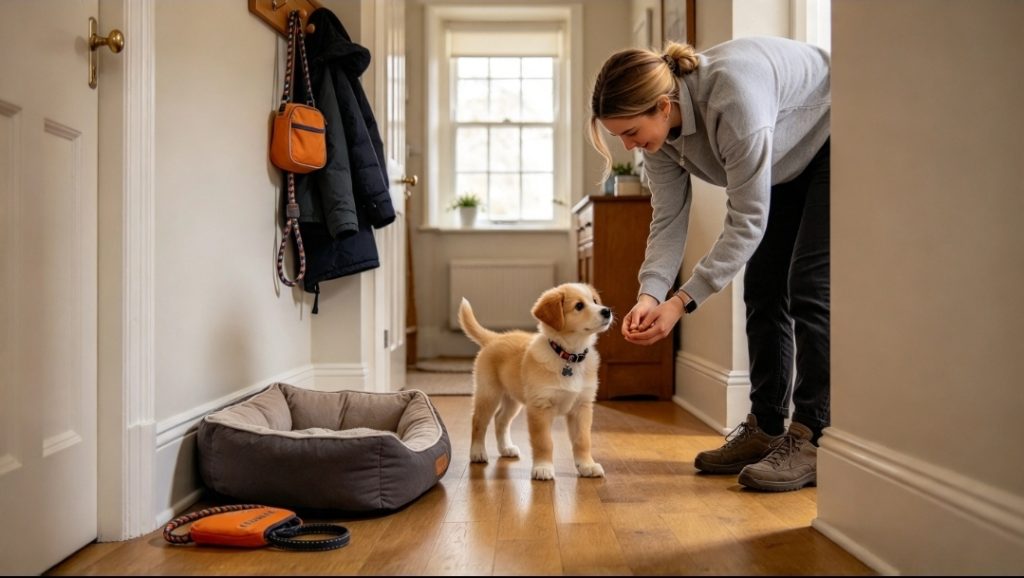
Start training your puppy by building communication, establishing consistent household routines and rewarding the behaviours you want to encourage. Begin with short, positive training sessions and focus on everyday skills such as responding to their name, settling, toilet training, gentle handling and learning appropriate behaviour around the home.
Puppies learn through their everyday experiences. What you consistently encourage, prevent, reward and practise helps shape the habits they develop as they grow. You do not need to teach every command straight away. The priority is to help your puppy understand how to live comfortably with you and begin learning the skills needed for everyday life.
What Should I Teach My Puppy First?
When deciding where to begin, focus on the foundations that make everyday life easier to manage. These include communication, routines, appropriate play, toilet habits, household boundaries and early obedience.
Start with the following:
- Communication: Teach your puppy to recognise their name and learn that responding to you can lead to positive outcomes.
- Toilet training: Establish a consistent routine and reward successful toileting in the appropriate place.
- Household routines: Help your puppy learn where to rest, how to settle and which behaviours are appropriate at home.
- Appropriate play: Provide suitable toys and encourage acceptable ways to play, explore and interact.
- Basic obedience: Begin introducing simple skills such as attention, recall and following you.
- Suitable experiences: Introduce everyday sounds, surfaces, people and environments gradually, taking account of your puppy’s comfort and development.
These foundations work together. For example, a predictable routine can help with toilet training, while clear communication can make it easier to guide your puppy towards appropriate behaviour.
How Do I Build Good Training Habits From the Start?
Keep Training Short and Positive
Young puppies have developing attention spans and need plenty of sleep and recovery time. Begin with short sessions that end while your puppy is still interested and able to concentrate.
Use suitable rewards, such as small food rewards, play or praise, depending on what your puppy enjoys and responds to. Reward the behaviour you want to encourage as soon as practical so your puppy can make the connection between their action and the outcome.
If your puppy becomes distracted, frustrated or tired, simplify the exercise or take a break. Repeating an exercise when your puppy is struggling may make learning harder rather than more effective.
Teach Your Puppy Their Name
Your puppy’s name is a useful starting point for building attention and communication.
In a quiet environment, say their name once in a friendly voice. When they look towards you, reward them. Repeat this in short sessions and gradually practise in different rooms and suitable environments.
Avoid repeatedly saying your puppy’s name when they are unlikely to respond. Instead, make the exercise easier by reducing distractions and giving them a better opportunity to succeed.
Reward the Behaviour You Want to See
Puppies are constantly learning, even when you are not conducting a formal training session. They may learn to settle, wait, follow you or play appropriately through everyday interactions.
Notice desirable behaviour and reward it when appropriate. For example, you can reward your puppy for calmly greeting someone, choosing a toy instead of a household object or settling on their bed.
When unwanted behaviour occurs, consider how you can manage the situation, prevent repeated rehearsal and guide your puppy towards a suitable alternative.
How Important Are Routines When Training a Puppy?
Consistent routines help puppies learn what to expect and provide more opportunities to practise appropriate behaviour. Feeding, toilet breaks, rest, play and training should fit around your puppy’s age, needs and individual circumstances.
Start Toilet Training Early
Take your puppy to their designated toilet area regularly, particularly after waking, eating, drinking and playing. Supervise them closely indoors and reward successful toileting in the right place.
Accidents are part of the learning process. Clean them thoroughly and review whether your puppy needed more frequent opportunities or closer supervision.
For more detailed guidance, the Puppy Toilet Training course focuses on establishing routines, recognising toilet signals, managing accidents calmly and rewarding success.
Establish Household Rules
Decide which household rules matter most and make sure everyone in the home follows them consistently. Your puppy needs clear, predictable guidance rather than different expectations from different people.
For example, decide where your puppy can rest, how you will manage access to certain rooms and how you will encourage calm greetings. Use supervision and suitable management to prevent your puppy from repeatedly practising unwanted habits.
The Home Training and House Rules course can help you develop consistent household routines, boundaries and everyday habits.
How Do I Manage Puppy Biting, Chewing and Mouthing?
Puppies naturally explore their surroundings with their mouths. They may chew objects, mouth hands during play or become more excitable when tired or overstimulated.
Your response should teach your puppy what is appropriate while keeping people, the puppy and the environment safe.
- Provide suitable toys and safe opportunities to chew.
- Redirect your puppy towards an appropriate item when they mouth hands or household objects.
- If play becomes too rough, calmly pause the interaction and allow your puppy to settle.
- Manage access to valuable or dangerous objects and supervise your puppy closely.
- Make sure your puppy has sufficient rest, suitable play and opportunities to meet their everyday needs.
Avoid shouting, physical punishment or deliberately frightening your puppy. These responses can create confusion or distress without teaching the alternative behaviour you want.
For more focused guidance, Puppy Biting, Chewing and Mouthing explores how to manage these common puppy behaviours and encourage more appropriate alternatives.
If biting is severe, causes injury or raises concerns about safety, seek individual advice from a suitably qualified professional.
When Should I Start Teaching Basic Obedience?
You can begin introducing simple obedience skills as soon as your puppy is settled enough to learn. Keep the exercises appropriate for their age and experience, and build skills gradually rather than expecting reliable responses immediately.
Start With Attention and Following You
Reward your puppy for choosing to look towards you, approaching when called and following you over a short distance. These behaviours help develop engagement and provide a foundation for future recall and lead training.
Introduce Simple Cues
You can gradually introduce cues such as “sit” and “come” by encouraging the behaviour, marking the successful response and rewarding your puppy.
For example, reward your puppy when they naturally sit, then gradually introduce the verbal cue as they begin to understand the action. Keep the process calm and avoid physically forcing them into position.
Build Reliability Gradually
A puppy that responds in a quiet room may find it much harder to respond in a garden or around unfamiliar distractions. Practise each skill in manageable situations before gradually increasing the difficulty.
The Basic Obedience and Commands course focuses on clear cues, rewarding responses, attention and recall to help develop useful everyday obedience skills.
For a structured starting point, Puppy Training Foundations brings together early learning, communication, engagement and routines to help prepare your puppy for everyday life.
How Should I Introduce My Puppy to New Experiences?
Early experiences can help your puppy learn about the world, but the quality of those experiences matters more than exposing them to as many things as possible.
Introduce everyday sounds, surfaces, objects, people and suitable environments gradually. Allow your puppy to observe, investigate or move away when they need space. Reward calm curiosity and avoid forcing interactions that cause obvious distress.
Follow veterinary guidance about vaccinations, health and appropriate outdoor exposure. Suitable social experiences can be planned around your puppy’s individual needs and developmental stage.
Watch your puppy’s behaviour throughout each experience. If they appear frightened, overwhelmed or unable to settle, reduce the intensity or increase the distance. The aim is to support confidence, not to make your puppy endure a situation they cannot cope with.
How Often Should I Train My Puppy?
Aim for frequent, short opportunities to learn throughout the day rather than relying on one long training session. The right amount depends on your puppy’s age, energy, attention span and need for rest.
Training can take place during everyday activities. You might practise name recognition before a meal, reward calm behaviour while your puppy settles or reinforce recall during a suitable play session.
Keep a simple routine that includes:
- Short training sessions.
- Regular toilet opportunities.
- Appropriate play and exploration.
- Calm rest and sufficient sleep.
- Supervised opportunities to practise household rules.
- Suitable new experiences introduced at a manageable pace.
Consistency matters more than rushing through a long list of commands. If your puppy is struggling, make the exercise easier and give them time to develop the skill.
What Mistakes Should I Avoid When Training a Puppy?
Some common mistakes can make early training more confusing than it needs to be.
Expecting too much too soon: Puppies need repetition and time to develop reliable behaviour. Progress at a pace suited to your puppy.
Inconsistent household rules: If one person allows a behaviour and another discourages it, your puppy may struggle to understand what is expected.
Punishing accidents or unwanted behaviour: Punishment can create fear or confusion. Focus on supervision, prevention, appropriate alternatives and rewarding desirable behaviour.
Introducing too many distractions too quickly: Build skills in manageable situations before increasing difficulty.
Ignoring signs of tiredness or stress: A puppy that is struggling to concentrate may need rest, space or a simpler exercise.
Relying only on formal sessions: Everyday routines and interactions provide valuable opportunities for learning, too.
Frequently Asked Questions
What Is the First Thing I Should Teach My Puppy?
Start by building communication and establishing a predictable routine. Teach your puppy to recognise their name, reward attention, provide regular toilet opportunities and encourage calm, appropriate behaviour at home.
At What Age Should I Start Training My Puppy?
Training can begin as soon as your puppy comes home, using gentle, age-appropriate activities. Early training should focus on communication, routines, positive experiences and simple skills rather than demanding lengthy sessions or perfect obedience.
How Long Does It Take to Train a Puppy?
There is no single timescale. Some behaviours may begin to develop quickly, while others need consistent practice over weeks or months. Reliability also changes with the environment, distractions and your puppy’s development.
Should I Correct My Puppy When They Do Something Wrong?
Focus on teaching your puppy what to do instead. Manage the environment, prevent repeated unwanted behaviour where possible, redirect appropriately and reward the alternative you want to encourage. Avoid frightening or physically punishing your puppy.
What If My Puppy Is Struggling to Learn?
Reduce distractions, simplify the exercise and check that your puppy is comfortable, rested and motivated by the reward you are offering. If you are concerned about persistent fear, distress or behaviour that is difficult to manage safely, seek veterinary advice or support from a suitably qualified professional.
Start Building Your Puppy’s Foundations
Successful puppy training begins with clear communication, consistent routines and positive everyday learning. Focus on the behaviours that matter most in your home, provide suitable experiences and build new skills gradually as your puppy develops.
Start with Puppy Training Foundations, then use the relevant guidance on Puppy Toilet Training, Puppy Biting, Chewing and Mouthing, Home Training and House Rules and Basic Obedience and Commands to focus on the areas where your puppy needs the most support.
Keep training manageable, reward the behaviour you want to encourage and give your puppy time to learn. Building strong foundations now can help you develop clearer communication and more reliable everyday behaviour as your dog grows.




