How Do I Stop My Dog Digging?
How do I stop my dog digging? Stop your dog digging by identifying why they are digging, preventing repeated access to areas you want to protect, providing appropriate outlets for digging and rewarding alternative behaviour. Digging can be caused by boredom, excess energy, instinct, searching for something, trying to escape or simply because the behaviour is enjoyable. RSPCA guidance also recognises digging as a behaviour that can occur when dogs are bored and recommends providing suitable activities and training.
RECOMMENDED PRODUCTS

Why Does My Dog Dig?
Dogs dig for different reasons, so the solution depends on what is causing the behaviour.
Your dog may dig because they:
- Are bored or under-stimulated
- Have excess energy
- Enjoy digging
- Are searching for something
- Want to bury or retrieve an object
- Are trying to escape
- Are following an instinctive behaviour
- Are digging to find cooler or softer ground
- Have learned that digging gets attention
Watch when and where your dog digs. The pattern can help you identify what is maintaining the behaviour.
How Do I Stop My Dog Digging in the Garden?
Start by preventing your dog from repeatedly practising the behaviour.
If your dog immediately goes into the garden and starts digging, do not simply allow them to continue while hoping the behaviour disappears.
Supervise them where possible and redirect them towards an appropriate activity.
Reward your dog when they choose the behaviour you want instead.
Reward-based training helps reinforce behaviours you want your dog to repeat.
How Do I Stop My Dog Digging Holes?
Step 1: Identify When Your Dog Digs
Notice exactly when the digging starts.
Does your dog dig when left alone? After playing? When they see something in the ground? When they are bored? Or whenever they enter a particular part of the garden?
Understanding the trigger makes it easier to change the behaviour.
Step 2: Prevent Access to Favourite Digging Areas
Temporarily prevent your dog from accessing areas where digging is a problem.
You could supervise garden time, use suitable barriers or restrict access to particular sections of the garden.
Management is important because every successful digging session gives your dog another opportunity to practise the behaviour.
Step 3: Provide Something Appropriate to Do
Make sure your dog has suitable opportunities for exercise, play, exploration and mental stimulation.
Safe toys and activities can help prevent boredom and provide alternative ways for your dog to use their energy.
Step 4: Reward Alternative Behaviour
When your dog chooses to play, explore, settle or engage with you instead of digging, reward them.
The reward can be food, a toy, praise or another activity your dog enjoys.
The aim is to make appropriate behaviour more rewarding than repeatedly digging.
Step 5: Gradually Increase Freedom
Once your dog is making better choices, gradually give them more access to the garden.
Continue supervising and reinforcing the behaviour you want.
If digging starts again, reduce the freedom temporarily and make the situation easier.
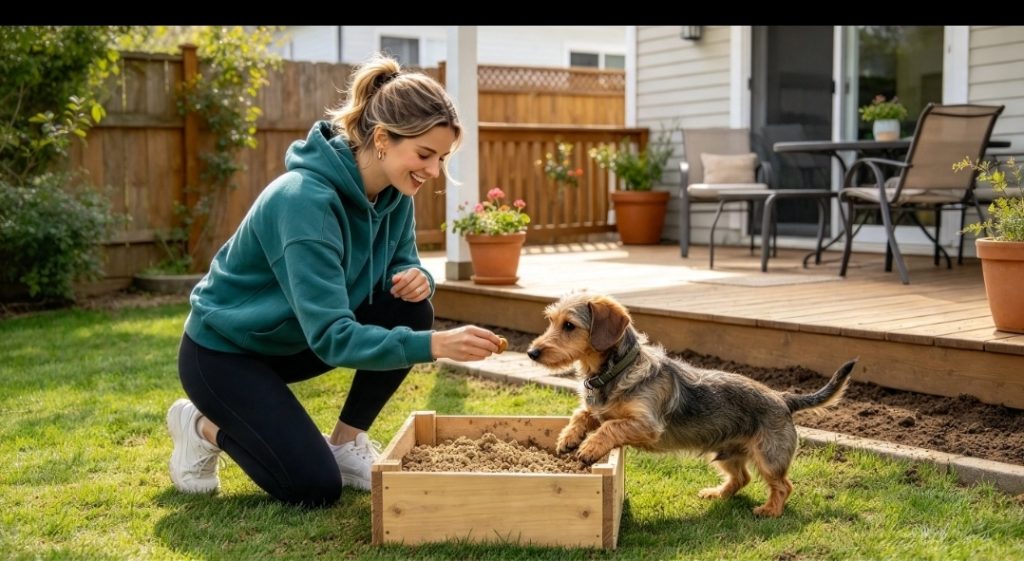
Should I Give My Dog a Digging Area?
For some dogs, yes.
If your dog genuinely enjoys digging, providing an appropriate digging area can be a useful alternative to trying to eliminate the behaviour completely.
Choose a safe section of the garden where digging is allowed.
Encourage your dog to investigate that area and reward them when they dig there.
Gradually teach your dog that this is the place where digging is appropriate.
This can be particularly useful for dogs with a strong natural desire to dig.
How Do I Teach My Dog to Dig in One Place?
Start by making the designated digging area interesting.
Place suitable toys or rewards there and encourage your dog to investigate.
When your dog digs in the correct area, reward them.
If they move to an area where digging is not allowed, calmly interrupt the behaviour and redirect them to the appropriate digging area.
Do not punish the dog for digging elsewhere. Teach them where the behaviour is acceptable instead.
How Do I Stop My Dog Digging When They Are Bored?
Increase the amount of appropriate physical and mental activity your dog receives.
This does not necessarily mean simply taking longer walks.
You can also provide:
- Training exercises
- Interactive play
- Safe toys
- Recall practice
- Searching games
- Short obedience sessions
- Appropriate opportunities to explore
Dogs need regular exercise and stimulation, and boredom can contribute to unwanted behaviours such as digging.
Keep training sessions short and regular rather than trying to do everything in one long session.
How Do I Stop My Dog Digging When Left Alone?
If your dog mainly digs when you leave them alone, look at the wider pattern.
Digging may be caused by boredom, but it can also occur alongside separation-related behaviour.
Look for other signs such as:
- Barking or whining
- Destructive behaviour
- Pacing
- Toileting indoors
- Attempts to escape
- Difficulty settling
If these behaviours occur together, the problem may require more than simply stopping access to the garden.
Avoid punishing your dog when you return and discover a hole. Punishment after the event does not teach the dog what you wanted them to do instead and can increase anxiety.
RECOMMENDED PRODUCTS
How Do I Stop My Dog Digging Under the Fence?
If your dog is digging under a fence, treat it as a safety issue.
Prevent access to the area and supervise your dog until you have dealt with the problem.
Check why your dog is trying to get through the boundary.
They may be responding to something outside, trying to reach another animal or person, or attempting to escape because they are distressed.
Do not rely solely on telling your dog not to dig. Secure the environment as well as training an alternative behaviour.
Why Does My Dog Dig Under the Fence?
Digging under a fence can happen because your dog wants to investigate something outside, follow a scent, reach another animal or escape from the garden.
The reason matters.
If your dog is repeatedly trying to escape, focus on preventing access while investigating what is motivating the behaviour.
A dog that is attempting to escape may require a different training approach from a dog that simply enjoys digging in the soil.
How Do I Stop My Dog Digging Up Plants?
Prevent access to the plants while you teach an alternative behaviour.
Supervise your dog in the garden and redirect them towards a toy, training exercise or designated digging area.
Reward them for leaving the plants alone.
If your dog repeatedly returns to the same plant, increase management rather than repeatedly correcting them after they have already started digging.
Should I Punish My Dog for Digging?
No.
Do not shout at, hit or physically punish your dog for digging.
Punishment does not teach your dog where digging is acceptable.
Instead, prevent unwanted digging, redirect your dog and reward appropriate behaviour.
Reward-based training is recommended for teaching dogs and should be used consistently by everyone in the household.
Should I Fill the Hole While My Dog Is Watching?
Filling the hole does not teach your dog not to dig.
You can repair the garden when your dog is elsewhere, but the important part is changing what happens before the next digging attempt.
Identify the reason for the behaviour, manage access and provide an appropriate alternative.
What If My Dog Keeps Digging Despite Training?
If your dog continues digging, look at whether they are receiving enough appropriate activity and whether they have too much unsupervised access to the garden.
Also consider whether the alternative behaviour is genuinely rewarding.
If digging is highly rewarding to your dog, simply telling them to stop may not be enough.
Make the preferred behaviour easier and more rewarding while preventing opportunities to rehearse the digging.
How Long Does It Take to Stop a Dog Digging?
There is no fixed timeframe.
The time required depends on why your dog digs, how long the behaviour has been established and how consistently the behaviour is managed.
Some dogs improve quickly when boredom or lack of activity is addressed.
Others need longer-term management and training, particularly when digging is strongly rewarding or linked to escape behaviour.
Progress should be measured by how consistently your dog chooses appropriate behaviour, rather than by a specific number of days.
What Mistakes Should I Avoid?
Avoid:
- Punishing your dog for digging
- Allowing repeated digging and expecting it to stop by itself
- Leaving a dog unsupervised in an area where they constantly dig
- Providing too little physical or mental stimulation
- Ignoring attempts to escape under a fence
- Repeatedly interrupting digging without teaching an alternative
- Expecting one command to solve the problem
- Giving your dog complete garden freedom before they are ready
Instead, identify the reason, manage access, provide appropriate outlets and consistently reward the behaviour you want.
When Should I Get Professional Help?
Seek professional help if your dog’s digging is extreme, is accompanied by repeated attempts to escape, occurs alongside severe anxiety or other concerning behaviour, or you cannot safely manage the problem.
If your dog’s behaviour changes suddenly or you notice signs of stress, fear, illness or injury, speak to your vet. Behaviour changes can sometimes have an underlying cause that needs professional assessment.
Conclusion
To stop your dog digging, work out why they are digging first.
Prevent repeated access to areas where digging is unwanted, provide appropriate exercise and mental stimulation, redirect your dog towards an acceptable activity and reward calm, appropriate behaviour.
If your dog loves digging, teaching them where they are allowed to dig can be more effective than trying to remove the behaviour completely.
GPK9 — The Five Golden Rules
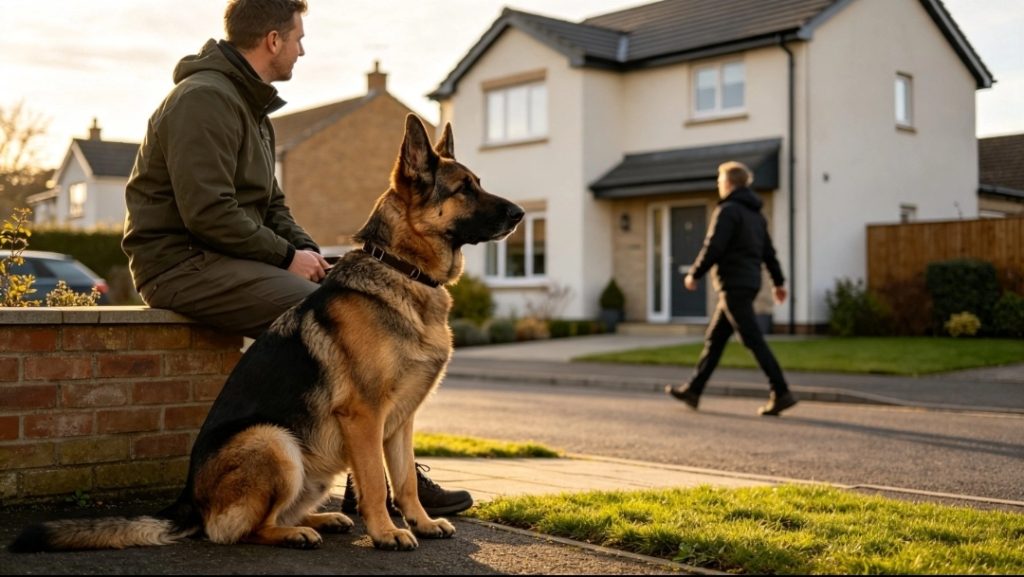
The GPK9 Five Golden Rules provide the foundation of the GPK9 Professional Training System. They give new dog owners, new dog handlers, experienced handlers and professional dog trainers a clear structure for developing the dog and the handler together.
The GPK9 Five Golden Rules cover five essential areas of development: Home & Social, Obedience, Prey Drive, Toilet and Social Walking. Each area has its own purpose, but they are designed to work together as one complete training system.
The GPK9 approach is based on CATEGORY → STATUS → DRIVE → CONTROL and the handler’s ability to OBSERVE → INTERPRET → DECIDE → COMMUNICATE → OBSERVE RESPONSE → REASSESS. This gives the handler a consistent process for understanding what the dog is doing, why the behaviour is occurring, what level of control is appropriate and how to communicate effectively.
The purpose of the GPK9 Five Golden Rules is not simply to teach a collection of individual exercises. They are designed to develop the dog’s behaviour, motivation, communication, control and reliability while teaching the handler how to make better decisions.
Golden Rule One — Home & Social
Golden Rule One — Home & Social establishes the foundation for everyday life with the dog. It focuses on communication, boundaries, calm behaviour, household routines and appropriate behaviour around people, animals and normal activity.
The purpose of Golden Rule One — Home & Social is to help the handler understand the dog’s behaviour and recognise changes in arousal before they become larger problems. The handler learns to observe, assess and communicate rather than simply reacting after unwanted behaviour has already occurred.
Golden Rule One — Home & Social provides the foundation from which the handler can develop a calmer, more predictable and better-communicating dog.
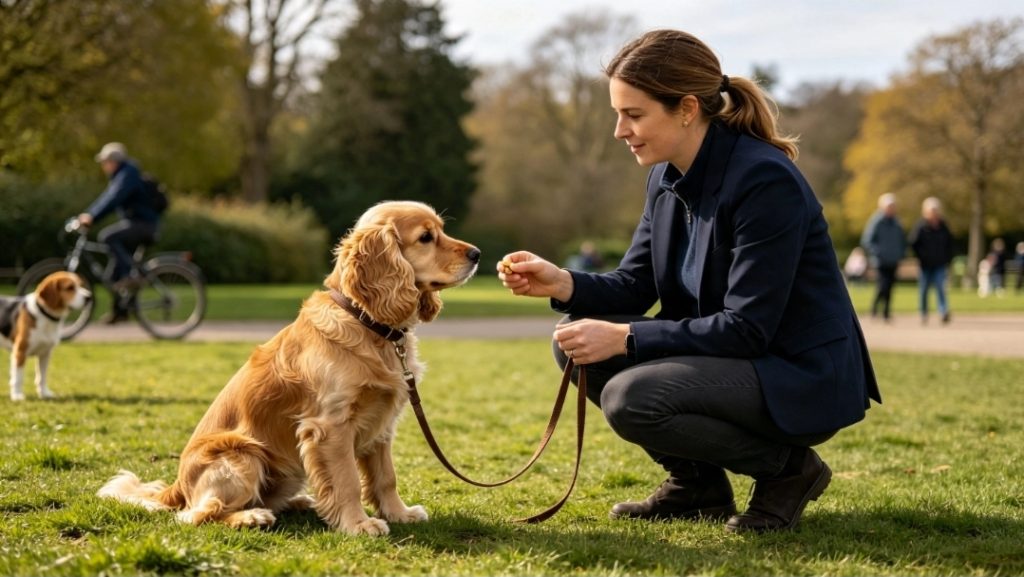
Golden Rule Two — Obedience
Golden Rule Two — Obedience develops the dog’s ability to understand and respond to the handler’s communication.
The focus of Golden Rule Two — Obedience is not simply teaching commands. It is about developing understanding, reliability, timing, reward, release and control so the dog learns what the handler is communicating.
Through Golden Rule Two — Obedience, the handler learns to progress training appropriately, gradually increasing the dog’s freedom and responsibility as understanding and reliability improve.
Golden Rule Three — Prey Drive
Golden Rule Three — Prey Drive focuses on understanding and developing the dog’s natural motivation to chase, pursue, engage and work with an appropriate toy or prey-based reward.
The purpose of Golden Rule Three — Prey Drive is not simply to increase drive. The handler must learn how to recognise the dog’s level of motivation, select an appropriate reward and use timing, communication and control to channel that motivation productively.
Golden Rule Three — Prey Drive teaches the handler that motivation can become a powerful training tool when it is developed and controlled correctly.
Golden Rule Four — Toilet
Golden Rule Four — Toilet establishes reliable toilet habits through consistency, observation, timing, supervision and appropriate reinforcement.
The handler learns through Golden Rule Four — Toilet to recognise when the dog is likely to need the toilet, provide the correct opportunity and reinforce the desired behaviour.
The objective of Golden Rule Four — Toilet is to establish a predictable routine that helps the dog understand where and when toileting is appropriate while reducing opportunities for mistakes.
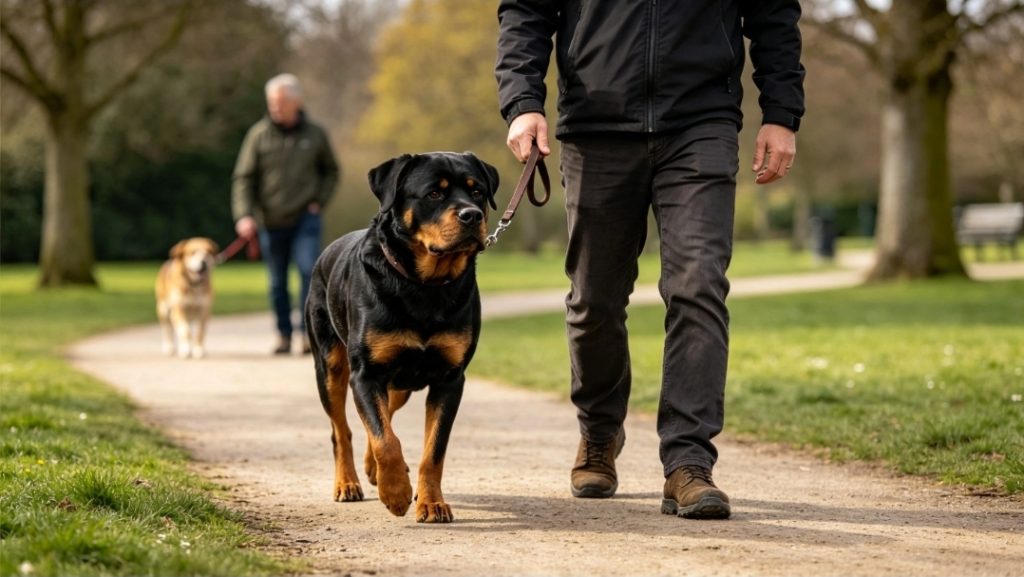
Golden Rule Five — Social Walking
Golden Rule Five — Social Walking develops the dog’s ability to walk calmly and appropriately in the real world while remaining connected to the handler.
The focus of Golden Rule Five — Social Walking is the relationship between the handler, the dog, the environment, distractions, distance and available control.
Through Golden Rule Five — Social Walking, the handler learns to observe body language, identify potential triggers, assess distance and recognise changes in drive or arousal before behaviour escalates.
The objective of Golden Rule Five — Social Walking is not simply to make the dog walk beside the handler. It is to develop a dog that can experience the outside world while remaining connected to the handler and capable of responding to clear communication.
How the Five Golden Rules Work Together
The GPK9 Five Golden Rules are designed to work together rather than being treated as five completely separate subjects.
Golden Rule One — Home & Social establishes the foundations for everyday behaviour and communication.
Golden Rule Two — Obedience develops understanding, responsiveness and control.
Golden Rule Three — Prey Drive develops motivation and teaches the handler how to channel natural drive appropriately.
Golden Rule Four — Toilet establishes essential household routine and reliability.
Golden Rule Five — Social Walking takes the communication and control developed through the other areas into the outside environment.
Together, the GPK9 Five Golden Rules help the handler develop a complete understanding of the dog rather than treating individual behaviours as isolated problems.
The overall objective of the GPK9 Five Golden Rules is to train the human, train the dog and build the partnership through clear observation, communication, appropriate control and progressive development.