Dog Enrichment: Toys, Activities & Ideas for Mental Stimulation
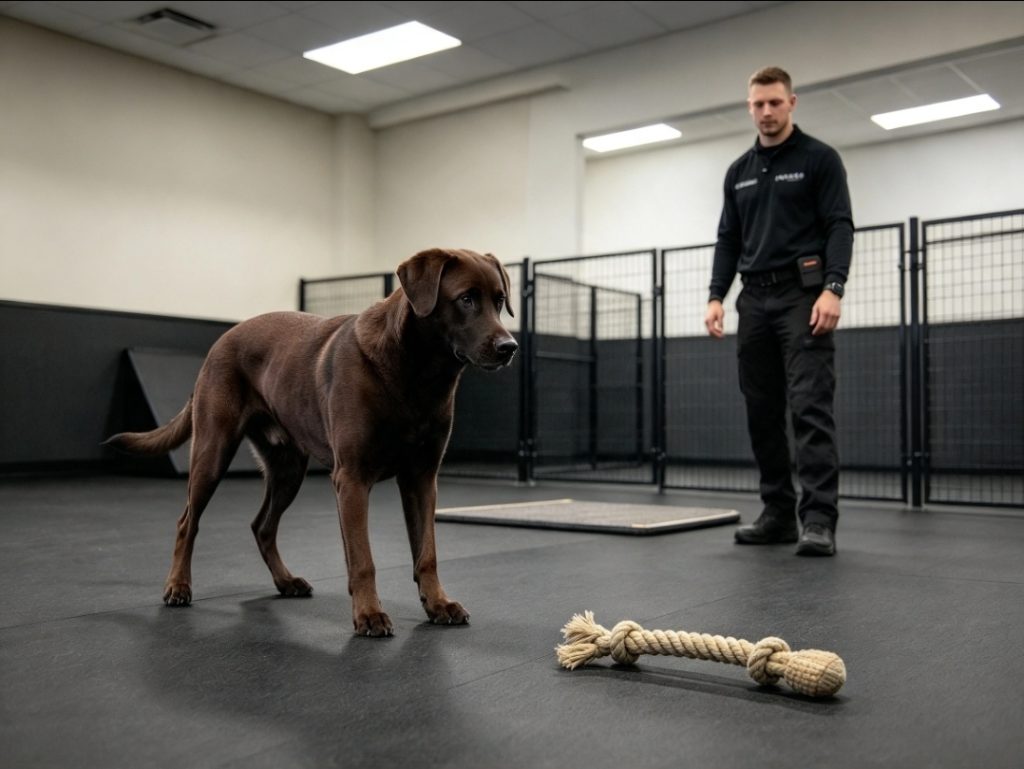
Dog enrichment is about giving a dog appropriate opportunities to think, explore, investigate, solve problems and express natural behaviours. A well-designed enrichment activity can provide much more than something to keep a dog occupied. It can become part of a wider approach to training, behaviour and everyday wellbeing.
Dogs experience their environment through movement, scent, observation, interaction and problem-solving. Providing suitable activities can help prevent boredom while giving the dog structured ways to use both body and mind.
Dog Enrichment: Toys, Activities & Ideas for Mental Stimulation explores practical enrichment ideas, from food-based activities and puzzle toys to searching, chewing, interactive play and training games. It also explains how enrichment can support focus, confidence, impulse control and engagement.
RECOMMEND PRODUCTS
- RELATED ARTICLES
- Dog Toys & Rewards: Choosing Toys for Training & Play
- Dog Training Treats: Choosing the Right Rewards for Training
- Dog Care & Health: Essential Everyday Care for Your Dog
Understanding Dog Enrichment
Mental Stimulation
Mental stimulation involves giving a dog something meaningful to investigate or solve.
A simple walk may provide physical exercise, but allowing a dog time to investigate scents, search for hidden food or work out how to access a reward adds another dimension.
Problem-solving activities require the dog to process information. The dog may need to investigate an object, make a choice, remember a previous experience or experiment with different behaviours.
This can make enrichment particularly useful when incorporated into a balanced daily routine.
Physical Stimulation
Enrichment does not replace appropriate physical activity.
Dogs still need opportunities to move, walk and exercise according to their individual requirements. However, enrichment can complement physical exercise by providing activities that involve controlled movement and mental engagement.
Interactive play, searching games and training activities can combine physical and mental stimulation.
The important principle is balance. The aim is not simply to make a dog tired, but to provide appropriate outlets for different needs.
Natural Behaviours
Many enrichment activities allow dogs to perform behaviours they would naturally find rewarding.
Searching, sniffing, chewing, manipulating objects and exploring their surroundings can all form part of enrichment.
For example, scattering suitable food across a controlled area encourages searching and scent investigation. A safe chew can provide an appropriate outlet for chewing behaviour.
Understanding natural behaviours makes it easier to create enrichment that is meaningful rather than simply providing more objects.
Preventing Boredom
Boredom can develop when a dog’s environment offers too little appropriate stimulation.
This does not mean a dog needs to be entertained constantly. Dogs also need opportunities to rest and settle.
Good enrichment provides variety without creating a permanent expectation of activity.
A dog might have a quiet chewing activity in one part of the day, a searching game later and a short training session at another time.
The activities can therefore become part of a predictable routine.
Types of Dog Enrichment
Food Enrichment
Food can be used in many ways beyond simply placing it into a bowl.
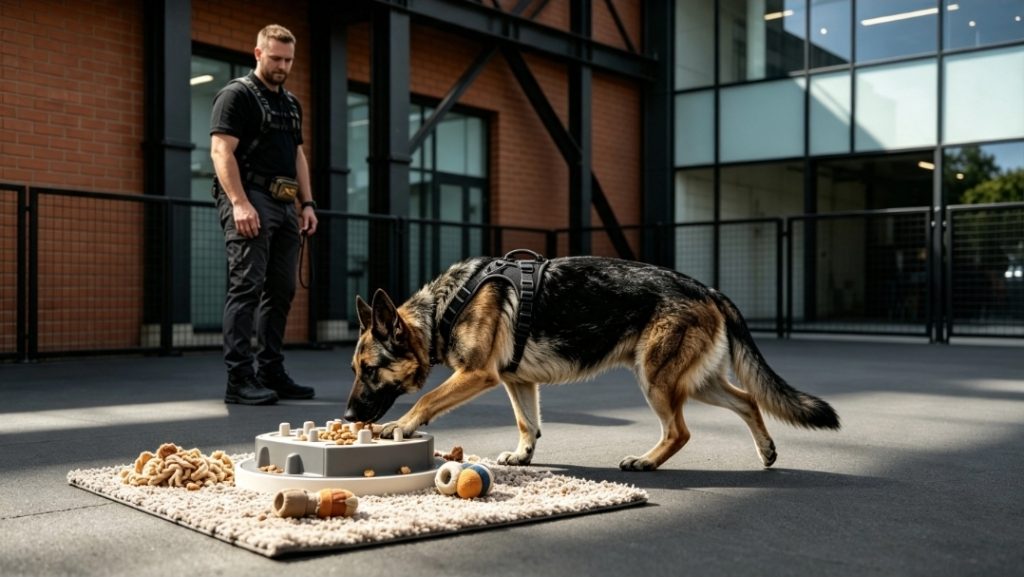
A dog may search for small food rewards, work with a suitable food-dispensing toy or investigate a controlled enrichment activity.
Food enrichment can slow down the process of obtaining food and introduce an element of problem-solving.
The activity should remain appropriate for the dog. Difficulty should be increased gradually rather than immediately presenting a complicated challenge.
For broader information about using food as a training reward, Dog Training Treats: Choosing the Right Rewards for Training provides a natural connection between food-based enrichment and structured reward use.
Puzzle Toys
Puzzle toys encourage dogs to investigate how an object works.
Some activities may require simple manipulation, while others involve multiple stages.
The starting point should always match the dog’s ability.
If an activity is too difficult, the dog may lose interest or become frustrated. If it is too easy, it may provide very little stimulation.
The objective is to find a level that encourages the dog to continue investigating and solving the problem.
Snuffle Activities
Snuffle activities encourage dogs to use their sense of smell to locate food.
This can be as simple as hiding appropriate food rewards within a suitable snuffle surface or creating a controlled searching exercise.
Scent-based enrichment can be particularly useful because the dog must actively investigate its environment rather than simply waiting for food to appear.
Searching
Searching games can be created indoors or outdoors.
A handler might hide several suitable rewards around a safe area and encourage the dog to locate them.
Difficulty can be changed by altering the number of hiding places, the accessibility of the rewards and the size of the search area.
Searching can also become a useful bridge between enrichment and training because the handler can introduce cues, waiting behaviours and controlled release into the activity.
Chewing
Chewing can provide an appropriate outlet for dogs that enjoy this behaviour.
The chosen item should be suitable for the individual dog and used with appropriate supervision. Not every chew or toy is suitable for every dog.
The aim is to provide a safe and appropriate activity rather than assuming that any chew product is automatically suitable.
Interactive Play
Interactive play involves the handler rather than leaving the dog to interact with an object independently.
Tug, retrieving games and other structured activities can create opportunities for engagement and communication.
The handler can introduce rules around starting, stopping and releasing the toy.
This means play can become more than physical activity. It can also become a training opportunity.
RECOMMEND PRODUCTS
- RELATED ARTICLES
- Dog Toys & Rewards: Choosing Toys for Training & Play
- Dog Training Treats: Choosing the Right Rewards for Training
- Dog Care & Health: Essential Everyday Care for Your Dog
Suitable toys can become valuable enrichment tools when they are selected according to the dog’s preferences and used appropriately. This article connects enrichment with interactive play and explains how toys can also function as rewards during training.
Training Through Enrichment
Enrichment and training do not have to be separate activities.
A well-designed enrichment game can teach the dog to think, make choices and remain engaged with the handler.
Problem-Solving
Problem-solving activities encourage the dog to work something out rather than simply receive a reward.
Consider a simple searching game.
The dog watches the handler place a reward somewhere accessible. The dog is then released to investigate.
At first, the dog may search randomly. After several repetitions, it may begin using scent, memory or visual information to locate the reward more efficiently.
The handler can gradually introduce greater difficulty.
This creates a learning process rather than simply giving the dog an object to play with.
Impulse Control
Enrichment can also provide opportunities to practise impulse control.
A dog might need to wait before being released to search for food. It might need to pause before receiving a toy or wait for the handler’s cue before starting an interactive game.
These small moments can teach the dog that immediate access is not always necessary.
The activity itself remains rewarding, while the handler introduces structure around it.
Engagement
Engagement means the dog is actively interested in interacting with the handler or completing the task.
Interactive enrichment can be particularly useful here.
A handler might use a toy, food or searching game to encourage the dog to stay connected rather than becoming completely absorbed in the environment.
This can complement the principles discussed in Obedience Dog Training: Equipment, Commands & Techniques, where engagement and communication form part of structured obedience work.
Focus
Focus can be developed through short enrichment games.
For example, the handler may begin with a simple activity in a quiet environment. Once the dog understands the game, distractions can gradually be introduced.
The dog learns that paying attention and responding to the handler can lead to access to something valuable.
The activity therefore becomes part of a larger reinforcement system.
Confidence
Enrichment can also support confidence when the difficulty is carefully controlled.
A cautious dog may initially hesitate when presented with a new object or activity. Rather than forcing interaction, the handler can create easy opportunities for success.
A reward for approaching, investigating or interacting can help the dog learn that exploring new things can produce positive outcomes.
The goal is not to overwhelm the dog. Confidence develops through appropriate experiences where the dog can succeed.
RECOMMEND COURSE
Fundamentals 1
Fundamentals 1 connects naturally with enrichment because foundational training can be incorporated into simple games. Engagement, focus, reward delivery and basic communication can all be practised through appropriately structured activities.
Choosing the Right Enrichment
Age
Age should influence enrichment choices.
Puppies may require simpler activities with appropriate equipment and carefully managed difficulty. Older dogs may enjoy more complex searching, problem-solving or interactive activities, provided the activity remains physically appropriate.
A young dog should not automatically be given the most difficult puzzle available.
Learning should progress gradually.
For owners working with puppies, Puppy Training: Essential Skills, Equipment & Techniques provides a useful connection between enrichment and the development of foundational behaviours.
Breed Tendencies
Different dogs may show different natural preferences.
Some may become highly engaged by searching and scent activities. Others may prefer chasing, retrieving, carrying, chewing or interactive play.
Breed tendencies can provide useful clues, but they should not be treated as absolute rules.
The individual dog remains the most important consideration.
Individual Preferences
Two dogs living in the same household may respond completely differently to the same enrichment activity.
One may enthusiastically investigate a puzzle toy while another ignores it and immediately searches for food elsewhere.
Observation is therefore essential.
Watch what the dog chooses, how long it remains engaged and whether the activity appears to create productive interest or frustration.
Difficulty Level
Difficulty should be adjustable.
If the dog solves an activity immediately, it may be possible to introduce another layer of challenge.
If the dog repeatedly fails to understand the activity, simplify it.
A useful enrichment challenge sits between effortless and impossible.
The dog should have a realistic opportunity to succeed.
Safety
Safety must come before entertainment.
Inspect toys regularly for damage. Remove broken or unsafe items. Consider whether the dog is likely to chew, swallow or destroy parts of the equipment.
Food-based activities should also take the dog’s normal diet into consideration.
Supervision is particularly important when introducing unfamiliar toys, chews or equipment.
RECOMMEND PRODUCTS
- RELATED ARTICLES
- Dog Toys & Rewards: Choosing Toys for Training & Play
- Dog Training Treats: Choosing the Right Rewards for Training
- Dog Care & Health: Essential Everyday Care for Your Dog
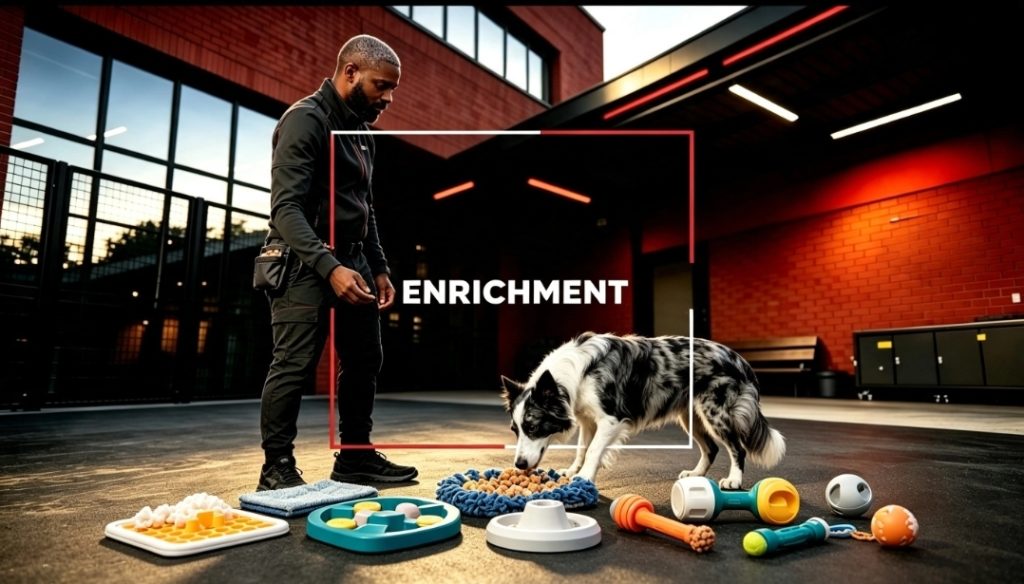
The right enrichment equipment should be selected around the individual dog rather than simply following a trend. Puzzle toys, snuffle activities, suitable chews and interactive toys can all have a place when their difficulty and safety are appropriate.
Increasing or Decreasing Difficulty
One of the most useful principles in enrichment is the ability to change difficulty.
If an activity is too easy, increase one variable at a time.
You might:
- Increase the search area.
- Add additional hiding locations.
- Reduce the visibility of the reward.
- Introduce a simple waiting period.
- Add controlled environmental distractions.
- Use a more complex puzzle.
- Increase the duration of the activity.
Conversely, if the dog struggles, reduce the difficulty.
Make the reward easier to access. Shorten the search area. Remove distractions. Return to a simpler version of the activity.
This approach prevents the dog from being placed in a situation where failure becomes inevitable.
RECOMMEND COURSE
Fundamentals 2
Fundamentals 2 can complement progressive enrichment because the handler can begin applying greater structure and gradually increasing the challenge presented to the dog. The same principle applies across training: establish understanding first, then increase difficulty.
Enrichment as Part of Everyday Training
Enrichment works particularly well when it becomes part of normal life rather than an occasional activity.
A short searching game can be introduced during the day. A suitable chew can provide a calm activity. Interactive play can be used before or after training. A food puzzle can turn part of a meal into an investigative activity.
This variety helps prevent enrichment from becoming repetitive.
However, more enrichment is not always better.
Dogs need rest, sleep and periods where nothing is expected of them.
A balanced routine might therefore include physical exercise, structured training, enrichment and quiet recovery.
For owners looking at the wider needs of their dog, Dog Care & Health: Essential Everyday Care for Your Dog provides a broader connection between enrichment and everyday care.
RECOMMEND PRODUCTS
- RELATED ARTICLES
- Dog Toys & Rewards: Choosing Toys for Training & Play
- Dog Training Treats: Choosing the Right Rewards for Training
- Dog Care & Health: Essential Everyday Care for Your Dog
Dog Training Treats: Choosing the Right Rewards for Training
Food rewards can be used within searching games and training-based enrichment, but the quantity should be managed as part of the dog’s overall daily food intake. Selecting appropriately sized rewards makes it easier to use food frequently without unnecessarily increasing portion sizes.
Turning Enrichment Into Training Games
A simple activity can become a structured training game when the handler introduces clear rules.
For example, a toy can be used to practise:
- Waiting.
- Starting on cue.
- Releasing the toy.
- Returning to the handler.
- Refocusing after play.
A searching activity can be used to practise:
- Waiting for release.
- Searching on cue.
- Returning after finding the reward.
- Settling after the activity.
This is where enrichment becomes particularly valuable.
The dog is not simply being entertained. The activity is creating opportunities to practise useful behaviours in an enjoyable context.
RECOMMEND COURSE
90-Day Transformation
The 90-Day Transformation course connects with enrichment because consistent progress comes from integrating training into everyday routines. Enrichment games can provide additional opportunities to practise engagement, focus, impulse control and communication outside traditional training sessions.
What the Reader Learns
Understanding Dog Enrichment: Toys, Activities & Ideas for Mental Stimulation means recognising that enrichment is not simply about buying more toys.
Effective enrichment considers the dog’s individual needs, preferences, abilities and environment.
The key principles are:
- Provide appropriate mental stimulation.
- Combine mental and physical activities.
- Encourage natural behaviours such as searching and chewing.
- Use food strategically.
- Introduce puzzle activities at an appropriate difficulty.
- Use interactive play to build engagement.
- Incorporate training into enrichment games.
- Develop problem-solving opportunities.
- Practise impulse control through structured activities.
- Build confidence through achievable challenges.
- Choose enrichment according to age and individual preferences.
- Consider breed tendencies without assuming every dog is the same.
- Prioritise safety and supervision.
- Increase difficulty gradually.
- Simplify activities when the dog struggles.
- Allow adequate rest between stimulating activities.
The most effective enrichment is purposeful.
It gives the dog something appropriate to do, provides opportunities to think and explore, and can strengthen the relationship between dog and handler.
When enrichment is combined with structured training, it can become another way to train the human, train the dog and build the partnership.