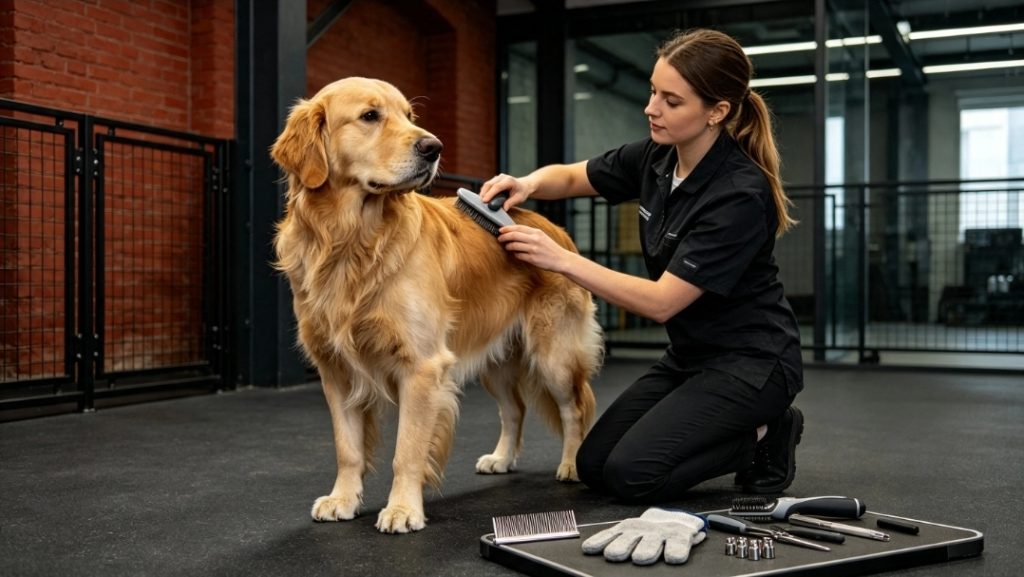
Dog Grooming Essentials: Brushes, Combs & Everyday Care
Dog grooming is an important part of everyday canine care. Regular brushing, coat inspection, nail care and appropriate ear care can help owners maintain their dog’s hygiene while also becoming an opportunity to build calm handling habits.
Grooming is not simply about making a dog look clean. It involves understanding the dog’s coat, choosing appropriate equipment and teaching the dog that being handled can be a normal part of everyday life.
This is particularly important with puppies and young dogs. A dog that becomes comfortable with gentle handling and grooming equipment from an early age can find future grooming routines easier to manage.
Dog Grooming Essentials: Brushes, Combs & Everyday Care explains the purpose of grooming, the different types of equipment available, how coat type affects equipment selection and how training can make grooming more manageable.
RECOMMEND PRODUCTS
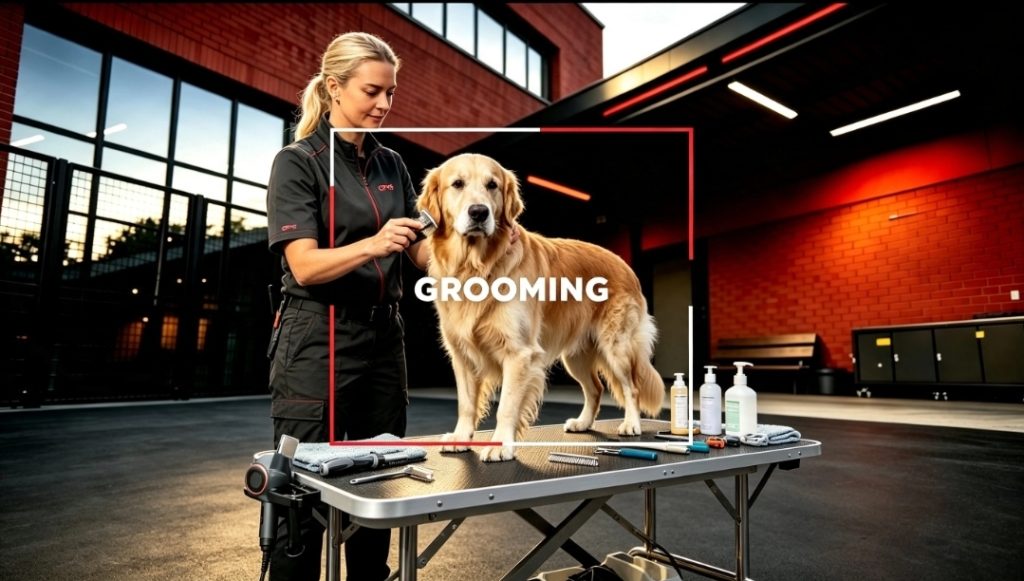
- RECOMMEND ARTICLES
- Dog Care & Health: Essential Everyday Care for Your Dog
- Puppy Essentials: Everything You Need for a New Puppy
- Dog Beds: How to Choose the Right Bed for Your Dog
Understanding Grooming
Why Grooming Matters
Grooming provides an opportunity to regularly inspect the dog’s coat, skin and general condition.
Brushing can remove loose hair and help prevent some coats from becoming tangled or matted. Grooming also allows the owner to become familiar with what is normal for their individual dog.
Changes in the coat, skin, ears, nails or general condition may become easier to notice when handling is part of a regular routine.
Grooming requirements vary considerably between dogs. A short-coated dog may need a very different routine from a long-haired or curly-coated dog.
The objective is therefore not simply to groom more often, but to establish an appropriate routine for the individual dog.
Coat Maintenance
Different coats require different approaches.
Some dogs can be maintained with relatively simple brushing, while others require regular attention to prevent tangles and manage loose undercoat.
Brushing should be carried out calmly and methodically rather than rushing through the process.
The handler should pay attention to areas where hair can become particularly difficult to manage, including behind the ears, around the legs and other areas where friction and movement may encourage tangling.
Handling Tolerance
Grooming requires physical handling.
A dog may need to have its paws touched, ears examined, coat brushed and body positioned during routine care.
A dog that has never experienced this type of handling may find it uncomfortable or confusing.
This is why handling tolerance should be developed gradually.
The objective is to teach the dog that gentle handling and grooming equipment are normal parts of life.
Routine Building
Dogs often benefit from predictable routines.
Rather than waiting until the coat is heavily tangled or the dog desperately needs its nails checked, grooming can be introduced as a regular part of everyday care.
Short, successful sessions can be more productive than forcing a long session when the dog is already uncomfortable or frustrated.
This principle connects naturally with Dog Care & Health: Essential Everyday Care for Your Dog, which provides broader information about maintaining a consistent everyday care routine.
Grooming Equipment
Brushes
Brushes are among the most commonly used grooming tools.
The appropriate brush depends on the dog’s coat.
A brush should be selected according to the coat’s length, density and structure rather than simply choosing the tool that looks most professional.
The handler should also consider how the brush feels against the dog’s skin.
Grooming should be controlled and gentle, particularly when introducing a new tool.
Combs
Combs can be useful for checking the coat after brushing and identifying areas where hair may still be tangled.
They can also provide more precise access to areas around the ears, legs and other areas requiring closer attention.
A comb should never be forced through a difficult knot. If significant matting is present, professional grooming advice may be appropriate.
Deshedding Tools
Deshedding tools are designed to help remove loose undercoat or shedding hair from appropriate coat types.
They should be used according to their intended purpose and instructions.
More pressure is not necessarily more effective. Excessive or inappropriate use can irritate the skin or remove coat unnecessarily.
The dog’s individual coat should determine whether a deshedding tool is appropriate.
Grooming Gloves
Grooming gloves can provide a gentle alternative for some dogs.
They can be useful for removing loose hair while allowing the handler to maintain direct contact with the dog’s body.
Some dogs that dislike traditional brushes may initially tolerate a glove more readily because the sensation can feel more like normal handling.
However, individual preference remains important.
Nail Equipment
Nail care requires suitable equipment and careful handling.
Dogs can become uncomfortable if nails are cut too far or if they are not accustomed to having their paws handled.
Introducing paw handling gradually can make nail care easier later.
Owners who are uncertain about nail trimming should seek guidance from a suitably qualified professional rather than taking unnecessary risks.
Ear-Care Equipment
Ear care should be approached carefully.
Not every dog requires the same level of ear cleaning, and excessive cleaning can be inappropriate.
Owners should follow appropriate veterinary or professional guidance regarding ear health, particularly where there is redness, discharge, unpleasant odour, pain or persistent scratching.
Equipment should support appropriate care rather than replacing professional assessment where a problem is suspected.
RECOMMEND PRODUCTS
- RECOMMEND ARTICLES
- Dog Care & Health: Essential Everyday Care for Your Dog
- Puppy Essentials: Everything You Need for a New Puppy
- Dog Beds: How to Choose the Right Bed for Your Dog
When selecting grooming equipment, start with the dog’s actual coat and care requirements. A basic collection of appropriate tools is generally more useful than buying numerous products that are unsuitable for the individual dog.
The equipment should make grooming easier, not create unnecessary discomfort or complexity.
Grooming Equipment and Coat Type
Short Coats
Short-coated dogs often require less equipment than dogs with long or dense coats.
A suitable brush or grooming glove may be sufficient for routine loose-hair removal, although individual dogs can still have different grooming needs.
Short coat does not mean no grooming.
Regular brushing also provides an opportunity to inspect the dog’s skin and develop handling tolerance.
Medium Coats
Medium coats may require more regular brushing to manage loose hair and prevent tangles.
A combination of a suitable brush and comb may provide greater control over the coat.
The frequency required will depend on the individual dog’s coat, lifestyle and tendency to develop knots.
Long Coats
Long coats generally require more consistent maintenance.
Loose hair can become tangled more easily, particularly around areas exposed to friction.
Regular brushing can help prevent small tangles from developing into larger problems.
Owners should work methodically through the coat rather than repeatedly brushing only the most visible areas.
Dense Coats
Dense coats can contain substantial undercoat and may require tools designed specifically for managing loose hair.
German Shepherds are a good example of why coat structure matters. A dog may appear to have a relatively manageable outer coat while also having a dense undercoat that requires appropriate attention.
Using the wrong tool or excessive force can be counterproductive.
Curly Coats
Curly coats can have different grooming requirements again.
Tangles and matting can develop within the curls, making regular maintenance particularly important.
The owner should learn how the individual coat behaves and choose equipment accordingly.
Where a coat has become significantly matted, professional grooming assistance may be more appropriate than attempting to remove severe matting at home.
RECOMMEND PRODUCTS
- RECOMMEND ARTICLES
- Dog Care & Health: Essential Everyday Care for Your Dog
- Puppy Essentials: Everything You Need for a New Puppy
- Dog Beds: How to Choose the Right Bed for Your Dog
Dog Grooming Essentials: Brushes, Combs & Everyday Care
Coat type should remain the starting point when selecting grooming equipment. The same brush should not automatically be used on every dog.
Choosing equipment based on coat length, density, texture and the dog’s tolerance creates a more practical grooming system.
Training for Grooming
Grooming is easier when the dog understands how to remain calm while being handled.
This does not happen automatically.
It can be taught through gradual exposure and positive reinforcement.
Introducing Equipment
A grooming brush should not necessarily be placed straight onto a dog’s body for the first time.
Allow the dog to see and investigate the equipment.
The handler can hold the brush nearby and reward calm behaviour. Once the dog is comfortable with its presence, the handler can introduce brief, gentle contact.
The process should remain controlled.
The aim is to build familiarity rather than force acceptance.
Handling
Handling can be introduced separately from grooming equipment.
Touch the dog’s shoulders, chest, legs and paws calmly. Reward relaxed behaviour.
Over time, handling can become more comprehensive.
This prepares the dog for situations where grooming requires the handler to reach different parts of the body.
Gradual Exposure
If a dog becomes uncomfortable, reduce the intensity.
A five-second successful interaction is more useful than turning the session into a prolonged struggle.
Difficulty can be increased gradually:
- Introduce the equipment.
- Allow investigation.
- Introduce brief contact.
- Reward calm behaviour.
- Increase duration gradually.
- Introduce different body areas.
- Practise in different environments.
This progression allows the dog to build familiarity without being overwhelmed.
Rewarding Calm Behaviour
Rewards can help communicate what the handler wants.
For example, the dog remains still while the handler touches its paw. The handler marks the calm response and provides a suitable reward.
The same principle can be applied when introducing brushing.
This creates a clear association between calm behaviour and positive consequences.
Dog Training Treats: Choosing the Right Rewards for Training provides useful additional information about choosing and delivering rewards effectively.
RECOMMEND COURSE
Fundamentals 1
Fundamentals 1 is relevant to grooming preparation because foundational training includes engagement, communication and reward-based learning. These skills can be incorporated into handling exercises and help establish a more structured approach to introducing grooming.
RECOMMEND PRODUCTS
- RECOMMEND ARTICLES
- Dog Care & Health: Essential Everyday Care for Your Dog
- Puppy Essentials: Everything You Need for a New Puppy
- Dog Beds: How to Choose the Right Bed for Your Dog
Making Grooming More Manageable
A successful grooming routine is built around cooperation rather than rushing.
The handler should consider the dog’s physical comfort, emotional response and ability to remain engaged.
If the dog becomes restless after several minutes, it may be better to end the session positively and continue another time.
Short sessions can gradually become longer as tolerance improves.
The same approach applies to different types of equipment.
A dog may accept a brush but dislike having its paws handled. There is no reason to assume that because one aspect of grooming is comfortable, everything else will be.
Each component can be trained separately.
Creating Positive Associations
Positive associations develop through repeated experiences.
The brush appears.
The dog remains calm.
The handler performs a brief grooming action.
The dog receives reinforcement.
The equipment disappears.
Repeated calmly, this sequence can become familiar.
The handler can gradually increase the duration and complexity of the interaction.
Avoiding Unnecessary Pressure
If the dog repeatedly struggles, freezes, snaps or attempts to escape grooming, the situation should not simply become a battle of persistence.
The handler should consider why the dog is uncomfortable.
There may be unfamiliar equipment, excessive pressure, an uncomfortable coat, pain or another underlying issue.
Where pain or a health concern is suspected, appropriate professional advice should be sought.
Training should help the dog become more comfortable, not teach the dog that grooming inevitably results in prolonged distress.
RECOMMEND PRODUCTS
- RECOMMEND ARTICLES
- Dog Care & Health: Essential Everyday Care for Your Dog
- Puppy Essentials: Everything You Need for a New Puppy
- Dog Beds: How to Choose the Right Bed for Your Dog
Building Grooming Into Everyday Life
Grooming can become easier when incorporated into the dog’s normal routine.
A few minutes of brushing can follow a walk once the dog has settled. Paw handling can be briefly practised during calm periods. Equipment can be introduced during short training sessions.
This approach prevents grooming from becoming a rare and unpredictable event.
It also creates regular opportunities for the handler to observe the dog’s coat and handling tolerance.
For puppies, this is particularly valuable.
Puppy Essentials: Everything You Need for a New Puppy connects with grooming because appropriate grooming equipment and handling routines are part of preparing a puppy for everyday care.
RECOMMEND COURSE
90-Day Transformation
The 90-Day Transformation course can complement a consistent grooming routine because grooming tolerance is developed through repetition and structured practice. Integrating short handling exercises into a broader training routine can help make these behaviours part of everyday life.
What the Reader Learns
Understanding Dog Grooming Essentials: Brushes, Combs & Everyday Care means recognising that effective grooming depends on three things: appropriate equipment, an understanding of the dog’s coat and gradual training for calm handling.
The key principles are:
- Understand why grooming matters.
- Choose equipment according to coat type.
- Use brushes appropriately.
- Use combs to inspect and manage the coat.
- Consider whether a deshedding tool is suitable.
- Use grooming gloves where appropriate.
- Introduce nail equipment carefully.
- Approach ear care responsibly.
- Consider the differences between short, medium, long, dense and curly coats.
- Introduce grooming equipment gradually.
- Build handling tolerance through short sessions.
- Reward calm behaviour.
- Avoid forcing difficult grooming interactions.
- Increase duration and difficulty gradually.
- Monitor the dog’s comfort throughout the process.
- Seek professional or veterinary advice when appropriate.
Grooming should become a normal part of the relationship between dog and handler.
The brush, comb or grooming glove is only one part of that process. The handler’s ability to introduce equipment calmly, recognise the dog’s responses and build positive associations is equally important.
A consistent grooming routine can therefore provide more than coat maintenance. It can help the dog become accustomed to handling, develop cooperation and make everyday care easier to manage.
When grooming is approached with patience, appropriate equipment and structured training, it becomes another opportunity to train the human, train the dog and build the partnership.
RECOMMENDED ARTICLES
Dog Care & Health: Essential Everyday Care for Your Dog
Provides wider information about everyday canine care and connects grooming with maintaining the dog’s general routine.
Puppy Essentials: Everything You Need for a New Puppy
Useful for new owners preparing grooming equipment and handling routines for a puppy.
Puppy Training: Essential Skills, Equipment & Techniques
Connects grooming preparation with foundational training, communication and reward-based learning.
Dog Training Treats: Choosing the Right Rewards for Training
Explains how rewards can be selected and used when teaching calm behaviour during grooming.
Dog Enrichment: Toys, Activities & Ideas for Mental Stimulation
Provides additional ideas for structured activities that can complement training and everyday canine care.