
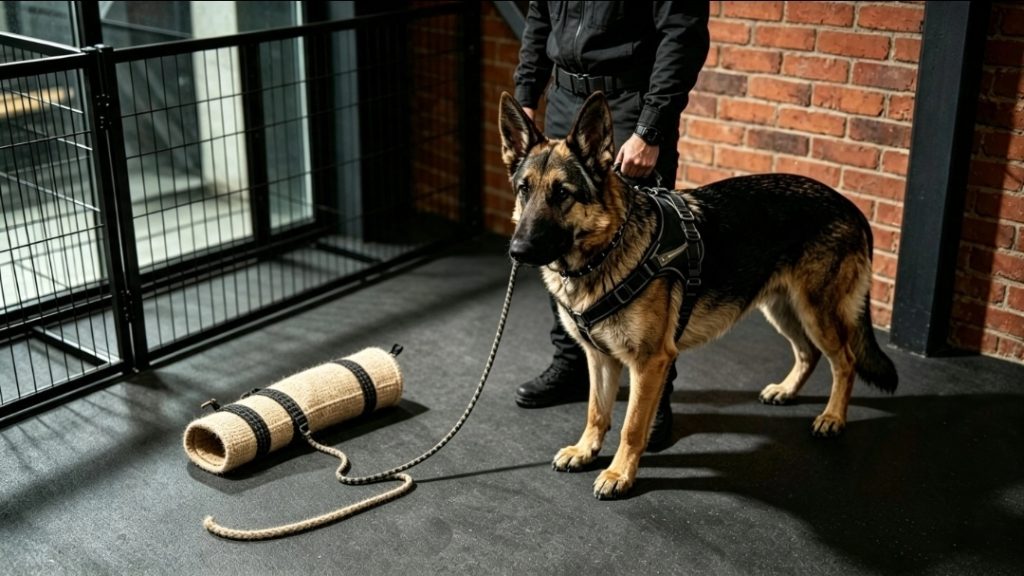
Protection Dog Equipment: Essential Working-Dog Equipment
Protection dog work requires considerably more than a dog, a lead and a training area. Protection Dog Equipment: Essential Working-Dog Equipment is about understanding how the right equipment supports communication, control, safety and structured progression when working with a trained working dog.
Working-dog equipment should never be selected simply because it looks professional or is designed for a particular type of dog. Every item has a purpose, and the handler needs to understand how that purpose fits into the wider training system.
For anyone researching protection work, equipment should be viewed as part of a complete training structure. The dog, handler, environment, equipment and training objectives all need to work together.
RECOMMEND PRODUCTS
- RELATED ARTICLES
- Obedience Dog Training: Equipment, Commands & Techniques
- Dog Training Leads & Long Lines: What to Choose & Why
- Dog Training Harnesses: Types, Uses & How to Choose
Understanding Working-Dog Equipment
Purpose
Working-dog equipment exists to support specific tasks. A collar may provide identification and everyday control, a harness may provide an alternative point of connection, while a long line can provide controlled distance during appropriate training exercises.
In protection work, equipment can become more specialised because the dog may be working in environments where reliability, secure attachment and careful handling are particularly important.
The equipment itself does not create a trained protection dog. Instead, it provides the physical tools through which an appropriately trained handler can manage the dog safely and consistently.
This is why equipment selection should begin with the training objective rather than the appearance of the equipment.
Professional handling
Professional handling means understanding what each piece of equipment is designed to do and using it appropriately.
The handler should know how equipment is fitted, how it connects, how it should be checked and when it should or should not be used. Good handling also involves maintaining awareness of the dog’s behaviour, the surrounding environment and the people nearby.
Equipment should support communication rather than replace training.
Equipment selection
There is no single equipment setup that is appropriate for every working dog. Breed, size, physical structure, training stage, environment and intended application can all influence equipment selection.
A correctly selected piece of equipment should be secure, durable, appropriately fitted and suitable for the task.
For readers wanting to understand how different connection points and equipment types influence training, Dog Training Collars: Types, Uses & Choosing the Right Collar provides useful background on collar selection, fit and practical training applications.
Safety
Safety should remain central to equipment selection.
Working-dog equipment needs regular inspection. Clips, stitching, buckles, adjustment points, handles and attachment areas can all experience wear. A piece of equipment that appears acceptable at first glance may still require closer inspection before use.
The handler should also consider whether equipment is appropriate for the individual dog and whether it can be used safely within the intended environment.
RECOMMEND PRODUCTS
- RELATED ARTICLES
- Obedience Dog Training: Equipment, Commands & Techniques
- Dog Training Leads & Long Lines: What to Choose & Why
- Dog Training Harnesses: Types, Uses & How to Choose
Working-dog equipment can be divided into several categories. Understanding these categories makes it easier to see why different pieces of equipment may be used at different stages of training.
Working collars
A working collar should be appropriately fitted and suitable for the dog’s individual requirements. The handler needs to understand positioning, adjustment and the intended use of the collar.
Collars can form part of everyday management and structured training, but the choice of collar should always be based on the dog’s needs and the training objective.
A collar should never be treated as a substitute for teaching reliable behaviour.
Working harnesses
Harnesses provide another way of connecting the dog to the handler and can be particularly useful where a harness is more appropriate for the task or the individual dog.
Correct fit is essential. The harness should allow appropriate freedom of movement while remaining secure and correctly positioned.
A harness that is too loose may create an escape risk, while an incorrectly positioned harness can affect comfort and movement.
For a wider explanation of harness design and fitting, Dog Training Harnesses: Types, Uses & How to Choose connects directly with this aspect of working-dog equipment.
Leads
Leads provide the physical connection between handler and dog. In working environments, the lead needs to be appropriate for the dog’s size, strength and training requirements.
The handler should also understand lead management. Excessive tension, poor grip or inappropriate handling can interfere with communication and create unnecessary safety concerns.
Dog Training Leads & Long Lines: What to Choose & Why provides additional information about lead types, long lines, handling and practical training applications.
Long lines
Long lines can provide controlled distance during suitable training exercises. They allow the handler to work with additional space while maintaining a physical connection to the dog.
Long-line work requires good handling skills. The handler needs to understand how to manage slack, avoid entanglement and select an appropriate training environment.
Long lines should not be viewed as a way of giving a dog unrestricted freedom. They are a training tool that requires awareness and responsible handling.
RECOMMEND PRODUCTS
- RELATED ARTICLES
- Obedience Dog Training: Equipment, Commands & Techniques
- Dog Training Leads & Long Lines: What to Choose & Why
- Dog Training Harnesses: Types, Uses & How to Choose
A durable lead or long line should be selected according to the training environment, dog and intended use. Before every session, inspect the attachment points and the condition of the material.
For a detailed explanation of long-line selection and handling, Dog Training Leads & Long Lines: What to Choose & Why provides a natural next step within the GPK9 equipment topic cluster.
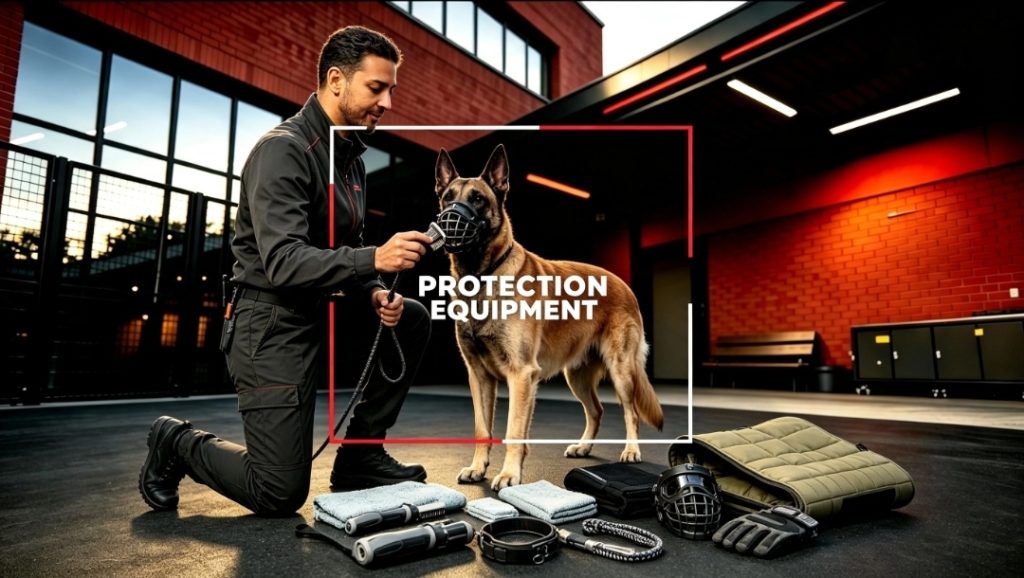
Muzzles
A muzzle can be an important management and safety tool when appropriately selected, correctly fitted and introduced properly.
A muzzle should allow the dog to breathe comfortably and, where the design permits, behave normally within the limitations of the equipment. The dog should be introduced to wearing a muzzle gradually rather than having it suddenly placed on the dog in an unfamiliar situation.
Muzzle use should be based on responsible management and professional guidance where appropriate. It should never be used as a substitute for understanding the dog’s behaviour or addressing training requirements.
Protective equipment
Protection training can involve specialist protective equipment, particularly within controlled professional training environments.
Such equipment has a specific purpose and should be used by appropriately trained people who understand how the equipment interacts with the dog, handler and training environment.
Protective equipment should be inspected regularly and stored correctly. Damage, poor fit or inappropriate use can introduce unnecessary risk.
Training rewards
Food rewards, toys and other suitable reinforcement can remain important parts of working-dog training. Protection dogs still need clear communication and reliable foundations.
Rewards can help develop engagement, reinforce appropriate behaviour and maintain motivation during suitable exercises.
Dog Training Treats: Choosing the Right Rewards for Training explains how reward selection and timing can influence learning, while Dog Toys & Rewards: Choosing Toys for Training & Play provides further information about toys and rewards as part of structured training.
Handler Considerations
Control
Equipment can support physical control, but genuine control comes from training, communication and consistent handling.
A handler should be able to understand what the dog is communicating and respond appropriately. Equipment should make that communication clearer and safer rather than becoming the primary method of control.
This principle connects closely with Obedience Dog Training: Equipment, Commands & Techniques, because reliable obedience provides an important foundation for structured working-dog training.
Communication
Good working-dog handling involves clear communication between dog and handler.
The handler’s body language, timing, positioning and use of equipment can all influence the dog’s understanding of an exercise. Consistency matters because the dog needs predictable information from the person handling it.
Advanced equipment cannot compensate for unclear communication.
Equipment inspection
Equipment inspection should become routine rather than something performed only when a problem becomes obvious.
Check collars for damage, harnesses for worn stitching, leads for fraying, clips for damage and adjustment points for security. Any equipment showing significant wear should be removed from service until it has been properly assessed or replaced.
Fit
Fit is particularly important with working equipment because the dog may be moving, changing direction and working within different environments.
A collar should sit correctly without causing unnecessary discomfort. A harness should remain secure without restricting appropriate movement. A muzzle should be correctly sized and introduced appropriately.
The handler should reassess fit periodically because dogs can change in size, condition and body shape.
RECOMMEND COURSE
Fundamentals 3
The fundamentals of reliable handling remain important before progressing into more advanced working-dog exercises. Fundamentals 3 can provide a relevant training pathway for developing clearer communication, control and reliability before specialist protection work becomes the focus.
Protection Training Environment
Controlled training
Protection training should take place within an environment where the handler can control the variables involved.
The training area should be appropriately secure, and the session should have a clear purpose. Uncontrolled environments introduce additional variables that can make training more difficult to manage safely.
A professional training environment should allow exercises to be stopped, adjusted or progressed according to the dog’s development.
Professional supervision
Advanced working-dog equipment requires appropriate knowledge.
A person can purchase specialist equipment relatively easily, but owning the equipment does not mean the person has the knowledge required to use it correctly.
Professional supervision can help ensure that training objectives, equipment, handling and progression remain appropriate.
This becomes increasingly important as the complexity of training increases.
Structured progression
Working-dog training should progress systematically.
A dog should not simply be placed into a more difficult environment because it has performed a behaviour successfully in a simple one. Reliability needs to be developed progressively, with appropriate consideration given to distractions, distance, duration and environmental changes.
The same principle applies to equipment. The handler should understand why a particular piece of equipment is being introduced and what role it has within the training programme.
Clear boundaries
Clear boundaries are essential.
A working dog needs to understand the difference between training, everyday management and situations where particular behaviours are expected.
The handler also needs clear boundaries regarding when specialist equipment should be used and when it should remain stored away.
This creates consistency for both dog and handler.
RECOMMEND COURSE
Level 1 Protection Dog
Level 1 Protection Dog is directly connected to the transition from foundational handling into structured protection-dog training. The course pathway can be considered alongside the equipment discussed in this article, particularly where the handler is learning how specialist equipment fits into a controlled training system.
RECOMMEND COURSE
Level 2 Protection Dog
As training becomes more advanced, equipment selection and handling need to remain connected to the dog’s training stage and the specific objectives of the session. Level 2 Protection Dog provides a further progression within the GPK9 protection-dog course pathway.
RECOMMEND COURSE
Level 3 Protection Dog
Level 3 Protection Dog represents a further stage within the specialist protection-dog pathway. At this level, the importance of appropriate knowledge, structured progression and professional handling becomes even more significant.
Advanced equipment should never be treated as a shortcut to advanced capability.
Building a Complete Working-Dog Equipment System
The most useful way to approach equipment is as a complete system rather than a collection of individual products.
A working dog may require different equipment for different circumstances. A collar may be appropriate for one situation, a harness for another, and a long line for controlled distance work. Training rewards may be used to reinforce appropriate behaviour, while specialist equipment may be reserved for structured professional training.
The handler’s responsibility is to understand these differences.
Equipment should also be transported and stored responsibly. This is particularly important when specialist equipment is being used because it should remain under the control of the appropriate handler rather than being treated as ordinary household dog equipment.
Dog Walking Essentials: Equipment for Safe Outdoor Adventures provides useful additional information about everyday outdoor equipment, while Dog Travel Safety: Essential Equipment for Safe Journeys can help extend the equipment discussion into transportation and journey management.
RECOMMEND PRODUCTS
- RELATED ARTICLES
- Obedience Dog Training: Equipment, Commands & Techniques
- Dog Training Leads & Long Lines: What to Choose & Why
- Dog Training Harnesses: Types, Uses & How to Choose
A practical working-dog equipment setup should focus on secure, durable and correctly fitted equipment that has a clear purpose within the dog’s training or management routine.
For reward-based training, Dog Training Treat Pouches: How to Choose the Right One is particularly relevant because quick access to rewards can help the handler maintain accurate timing during training.
Why Equipment Knowledge Matters
Equipment is only one part of working-dog training.
A high-quality harness cannot teach reliable behaviour. A specialist collar cannot replace communication. A long line cannot replace recall training. Protective equipment cannot replace professional knowledge and structured progression.
The equipment becomes valuable when the handler understands its purpose and uses it as part of an organised training system.
This is particularly important with protection dogs because the consequences of poor equipment selection or poor handling can be greater than in ordinary pet training environments.
The goal should therefore be to develop the handler’s knowledge alongside the dog’s training.
What the Reader Learns
By understanding Protection Dog Equipment: Essential Working-Dog Equipment, the reader should now have a clearer understanding of:
- The purpose of working-dog equipment.
- Why equipment should be selected according to the dog, handler and training objective.
- The different roles of working collars, harnesses, leads and long lines.
- Why appropriate muzzle selection and introduction matter.
- How protective equipment fits into controlled professional training.
- Why training rewards remain valuable within working-dog training.
- The importance of control, communication, inspection and correct fit.
- Why protection training should take place within controlled environments.
- Why professional supervision is important when using advanced equipment.
- Why structured progression and clear boundaries matter.
- Why specialist equipment requires appropriate knowledge rather than simply being purchased and used without instruction.
RECOMMENDED ARTICLES
Obedience Dog Training: Equipment, Commands & Techniques
Dog Training Leads & Long Lines: What to Choose & Why
Dog Training Harnesses: Types, Uses & How to Choose
Dog Training Collars: Types, Uses & Choosing the Right Collar
Dog Training Treats: Choosing the Right Rewards for Training
Dog Training Treat Pouches: How to Choose the Right One
Dog Toys & Rewards: Choosing Toys for Training & Play
Dog Walking Essentials: Equipment for Safe Outdoor Adventures
Dog Travel Safety: Essential Equipment for Safe Journeys
The GPK9 equipment topic cluster is designed to help readers move from understanding individual pieces of equipment to understanding how those pieces work together within a structured training programme.