Common Puppy Playpen Mistakes and How to Avoid Them
A puppy playpen can provide useful structure within the home, but mistakes in how it is introduced, positioned or managed can create new difficulties instead of making everyday life easier. Puppies may become frustrated when they are repeatedly placed inside without understanding what is expected, become overly excited when the playpen is associated with constant interaction, or struggle to settle when the surrounding environment remains too stimulating. Handlers can also become frustrated when a puppy repeatedly jumps against the panels, barks, mouths the bars, attempts to escape or becomes unsettled whenever it is placed inside. These problems can become more noticeable when the playpen is used inconsistently or when expectations change from one situation to another.
RECOMMENDED PRODUCTS
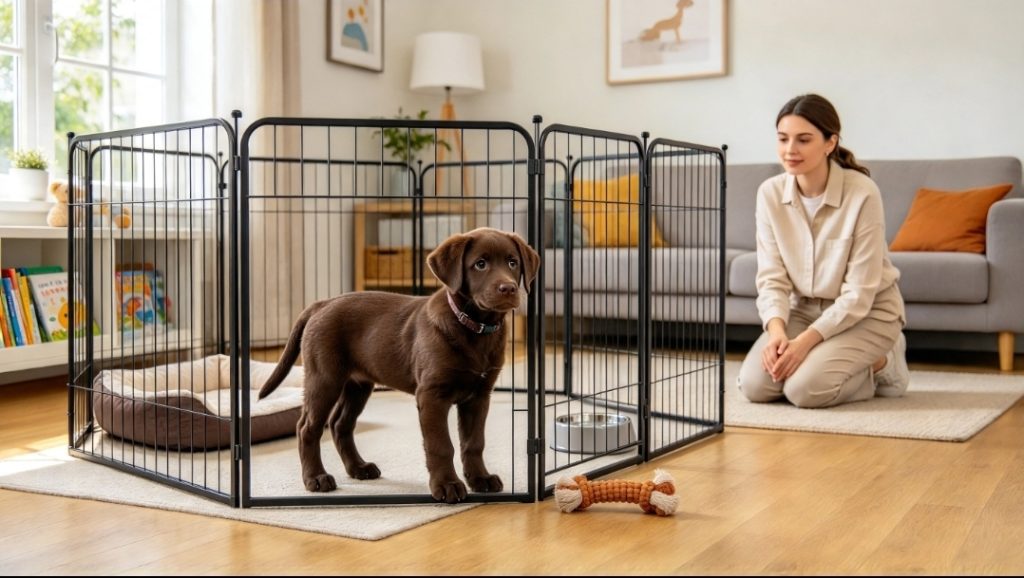
A secure puppy playpen provides a defined area for structured management within the home and can form part of a puppy’s progression towards greater freedom.
Common Problems
One common problem is expecting the playpen itself to teach the puppy how to behave. A physical boundary can restrict access to parts of the home, but it does not automatically create understanding. If the puppy has no clear experience of what the space represents, it may treat the playpen as another place to jump, bark, chew, play or seek attention.
Another problem is using the playpen only when the puppy is causing difficulty. If the puppy repeatedly experiences the playpen immediately after unwanted behaviour, the space can become closely associated with interruption or restriction. This can make the puppy more resistant to entering or remaining inside.
Common Issues
Poor positioning can also create issues. A playpen placed directly beside a busy doorway, in the centre of constant household movement or beside an area where people repeatedly interact with the puppy can expose the dog to more stimulation than it can comfortably manage.
Another issue is allowing the puppy too much freedom inside the playpen before it has developed appropriate understanding. Toys, food, movement, children, household noise and constant human interaction can all contribute to increased excitement. The puppy may then struggle to remain settled because the playpen has become an active environment rather than a structured one.
Common Mistakes
One of the most common mistakes is changing the rules from one day to the next. A puppy may be allowed to jump against the panels on one occasion but discouraged from doing it on another. It may receive attention for barking at the playpen one time and receive no response the next time.
Another mistake is repeatedly reaching into the playpen whenever the puppy becomes excited. This can create additional interaction at precisely the moment when the puppy is already struggling to manage its behaviour.
A further mistake is giving the puppy unrestricted access to the playpen without considering its age, development, environment or current level of understanding.
Frustration
Repeated playpen problems can become frustrating for both puppy and handler. The puppy may repeatedly attempt to leave, vocalise, jump or seek attention, while the handler may feel that the playpen is not working.
Frustration can increase when the handler expects rapid progress and does not recognise that the puppy’s behaviour can change depending on tiredness, stimulation, household activity and previous experiences.
Timing
Timing can affect how the playpen is perceived and how the puppy responds to it. Introducing the puppy into the playpen when it is already highly excited can make it more difficult for the puppy to settle.
Timing can also become inconsistent when the puppy is removed from the playpen immediately after vocalising, jumping or scratching. If the pattern is repeated, the puppy may begin to associate certain behaviours with gaining access to the handler or the wider environment.
Misunderstanding and Miscommunication
A puppy cannot be expected to understand a playpen in the same way a person does. The handler may see the pen as a management tool, while the puppy may initially see it as an obstacle preventing access to something interesting.
Miscommunication can also occur when different people in the household use different rules. One person may encourage interaction through the panels while another expects the puppy to remain settled. These inconsistent experiences can make the puppy’s expectations less clear.
RECOMMENDED PRODUCTS
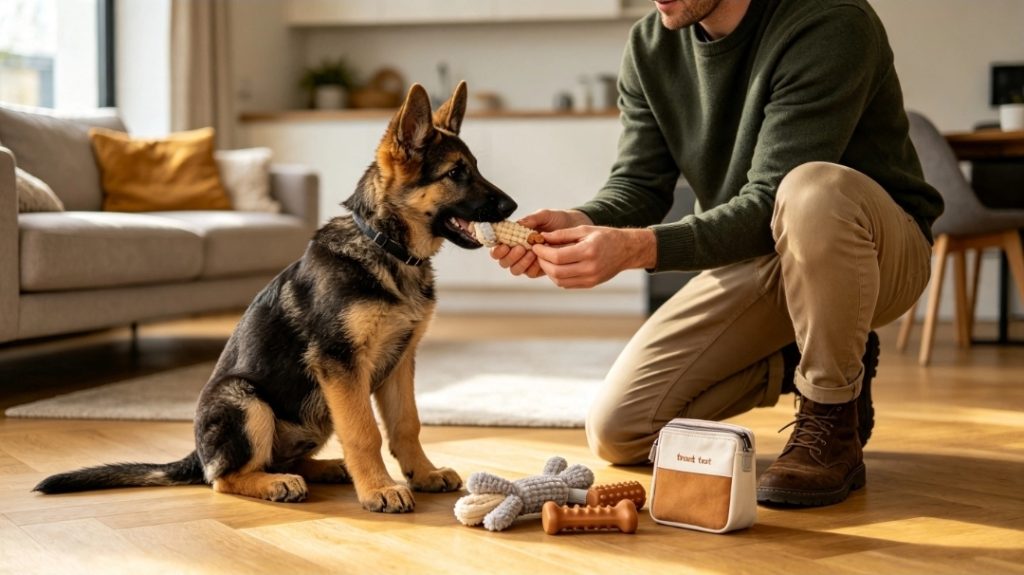
Appropriately sized puppy training treats can be used during structured exercises when food is part of the training method and adult supervision is maintained.
GPK9’S FIVE GOLDEN RULES
The GPK9 Five Golden Rules provide a connected system for addressing the types of problems that can develop around puppy playpen management. The playpen should not be viewed as an isolated piece of equipment. It forms part of the wider relationship between the puppy, handler, home environment, routine, communication and progression.
The system can be applied by a new puppy owner, someone with limited training experience, an experienced dog owner or a professional dog handler. Its purpose is to create clearer structure and help the handler recognise what is happening before problems become established.
Golden Rule One — Home and Social
Common Puppy Playpen Mistakes and How to Avoid Them connects directly to Golden Rule One because the playpen forms part of the puppy’s structured home environment.
GPK9 Golden Rule One uses a progression of crate, placemat and playpen. The crate provides a secure area for safety, reset and toilet support. The placemat introduces calm home freedom, while the playpen provides monitored freedom.
This progression helps prevent the playpen from being treated as simply a place to contain the puppy. It gives the handler a clearer framework for understanding the puppy’s level of freedom and recognising whether the puppy is progressing appropriately.
The traffic-light approach also provides a way to monitor behaviour. Green indicates appropriate progress, Amber indicates that behaviour requires observation and review, and Red indicates that the current situation needs to stop or return to a more controlled stage.
Golden Rule Two — Obedience
Obedience connects to Common Puppy Playpen Mistakes and How to Avoid Them because unclear communication can contribute to many of the difficulties associated with playpen management.
Structured obedience helps the handler develop clearer expectations around engagement, timing, movement and communication. Food and luring can be incorporated into appropriate exercises while maintaining a consistent training environment.
This helps place the playpen within the wider training system rather than treating it as a separate solution to unwanted behaviour.
Golden Rule Three — Prey Drive and Play
Play can become a significant factor when a puppy repeatedly becomes excited inside or around its playpen. Toys, movement and human interaction can quickly increase engagement and arousal.
GPK9 Golden Rule Three separates structured play from obedience training and focuses on recognising the puppy’s level of engagement and arousal. This is directly relevant to Common Puppy Playpen Mistakes and How to Avoid Them when inappropriate play becomes part of the puppy’s behaviour around the pen.
The traffic-light system helps the handler observe whether the puppy remains manageable during play or whether the level of excitement is increasing beyond what can be appropriately managed.
Golden Rule Four — Toilet
Toilet training can also be affected by poor playpen management, particularly when the puppy’s routine becomes inconsistent.
GPK9 Golden Rule Four establishes greater consistency around the same place, the same time and a clear toilet command. This connects the playpen to the wider home routine rather than treating it as an isolated area.
When toilet expectations are unclear, accidents can become another source of frustration and can complicate the handler’s understanding of how the puppy is progressing.
Golden Rule Five — Social Walking and Ignore the World
Although Common Puppy Playpen Mistakes and How to Avoid Them focuses on the home, Golden Rule Five connects with the puppy’s wider ability to remain manageable around environmental activity.
A puppy that becomes highly reactive to movement, noise or distractions within the home may also experience difficulties when exposed to unfamiliar environments outside the home. GPK9 Golden Rule Five focuses on maintaining a calm, relaxed and manageable walk without continually relying on commands.
The wider principle is that the puppy’s ability to remain manageable should develop across different environments and circumstances rather than being limited to the playpen.
Final Connection
Common Puppy Playpen Mistakes and How to Avoid Them demonstrates why a playpen should be considered part of a wider training structure rather than simply a physical barrier.
Problems such as excessive excitement, inconsistent boundaries, poor positioning, unclear expectations, inappropriate interaction, poor timing and household inconsistency can all affect how a puppy responds to the playpen.
The GPK9 Five Golden Rules connect these areas into one structured system. Home and social structure establishes the foundation, while obedience, play, toilet routines and social walking contribute to the puppy’s wider development.
Understanding the original problem first allows the handler to recognise what is happening before deciding how to progress. The playpen can then form part of a structured approach that develops alongside the puppy, helping create clearer expectations, more consistent communication and appropriate progression through the different stages of training.