How to Use a Puppy Playpen Around Children
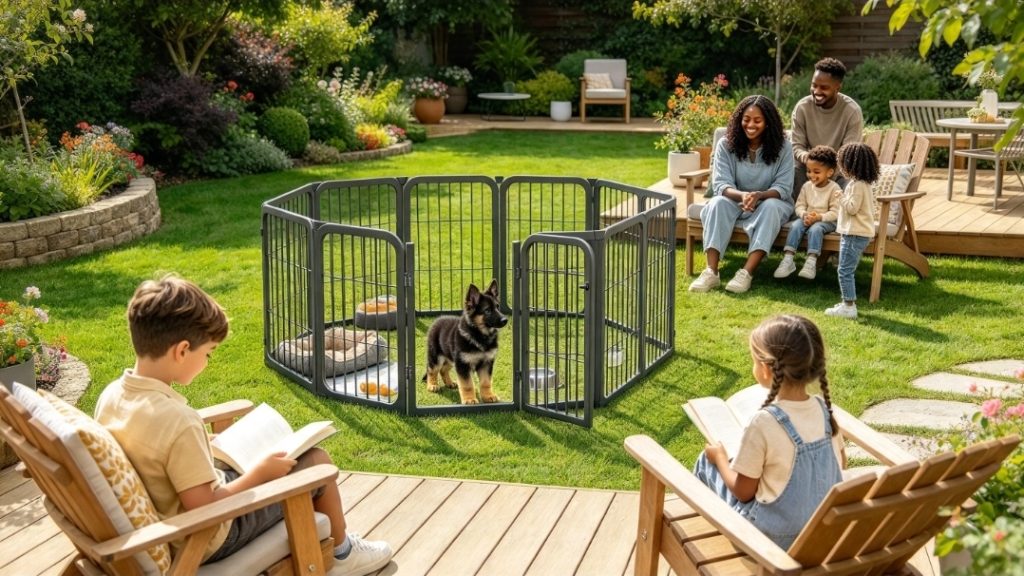
Using a puppy playpen around children can become difficult when the puppy does not understand the difference between its own space and the children’s space. Young puppies are naturally curious and may become excited by children moving, running, playing, shouting or carrying toys around the home. Children may also approach the playpen repeatedly, place their hands through the bars, attempt to touch the puppy while it is resting, or become frustrated when the puppy reacts with jumping, barking, mouthing or increased excitement. Without clear boundaries and consistent supervision, normal puppy behaviour can quickly become difficult for both the puppy and the family. The problem is not simply the presence of children or the use of a playpen; it is the lack of clear structure, timing, communication and understanding surrounding the puppy’s space.
RECOMMENDED PRODUCTS
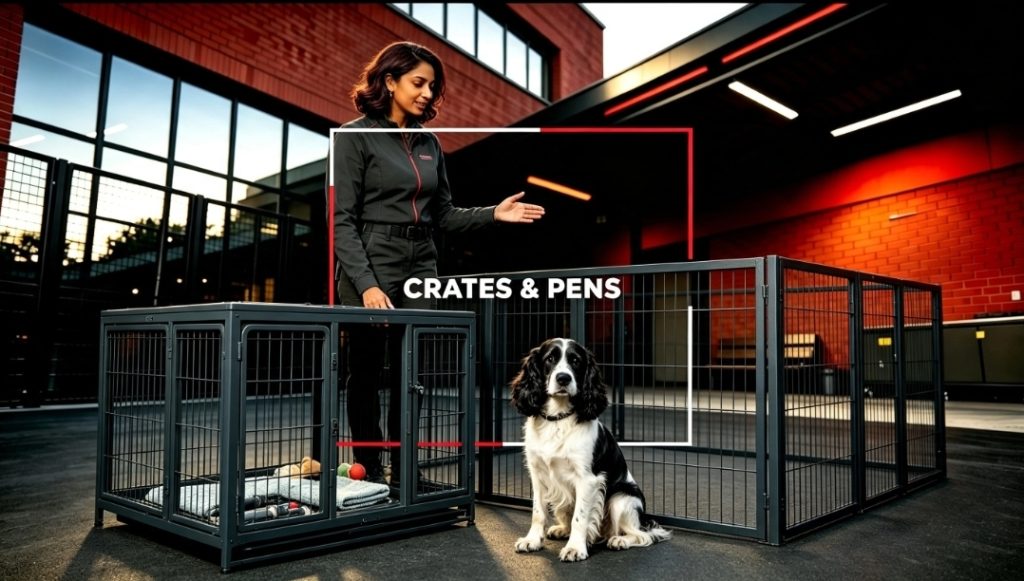
Secure puppy playpen — Crates & Pens
A secure puppy playpen provides a defined area that can help separate the puppy from busy household activity while allowing appropriate supervision and management.
Common Problems
One of the most common problems when using a puppy playpen around children is that the playpen becomes an area of constant interaction rather than a clearly defined space. Children may naturally want to see, touch or play with the puppy whenever they are nearby. The puppy can begin to expect attention whenever children approach, making it harder to remain calm when activity is happening around the pen.
Another problem can occur when the puppy becomes overstimulated by movement around the home. Children moving quickly around the playpen can attract the puppy’s attention and encourage jumping, barking, pacing, mouthing or repeated attempts to engage. The puppy may struggle to settle because the surrounding environment continually provides something interesting to watch or react to.
Common Issues
A further issue is inconsistent access to the puppy’s space. If children are sometimes allowed to approach the puppy while it is resting but are discouraged from doing so at other times, the puppy receives an unclear pattern of interaction. The children may also become unsure about when they should leave the puppy alone.
The physical position of the playpen can create additional difficulties. If it is placed directly in the middle of children’s games or in an area with constant foot traffic, the puppy may have very little opportunity to experience periods of reduced stimulation. The playpen can then become associated with continuous activity rather than a structured area within the home.
Common Mistakes
A common mistake is assuming that placing a puppy inside a playpen automatically creates calm behaviour. A playpen provides physical boundaries, but the puppy still has to learn how to respond appropriately to the environment surrounding it.
Another mistake is allowing children to use the playpen as part of their play. Knocking on the panels, waving toys through the bars, repeatedly calling the puppy or encouraging the puppy to chase hands can increase excitement and make appropriate boundaries more difficult to establish.
Frustration
Repeated excitement around children can create frustration for both the puppy and the family. The puppy may repeatedly try to gain access to the children, while the children may become frustrated when the puppy jumps, mouths clothing or refuses to settle.
The handler can also become frustrated when the puppy appears calm at one moment and then becomes highly excited as soon as children begin moving around the room. Without a consistent understanding of what the puppy is experiencing, these changes can appear unpredictable even though they may be closely connected to the surrounding activity.
Timing
Timing can become particularly important when children and puppies share the same household environment. If the puppy is already highly excited before being placed into the playpen, the playpen may be introduced when the puppy is already struggling to regulate its behaviour.
Poor timing can also occur when children are encouraged to interact with the puppy immediately after the puppy has become calm. This can repeatedly interrupt periods of reduced activity and make it difficult for the puppy to understand when interaction is appropriate and when the surrounding environment should simply be observed.
Misunderstanding and Miscommunication
Misunderstanding can occur when the puppy is expected to understand household boundaries without consistent communication from the people around it. The puppy does not automatically understand why it can interact with children at one moment but must remain separate at another.
Children can also misunderstand what the playpen represents. If they see it only as a place where the puppy is confined, they may continually try to interact with the puppy through the boundary. If the adults in the household use different expectations, the puppy can receive mixed signals about what behaviour is acceptable.
RECOMMENDED PRODUCTS

Training treats — Training Treats
Appropriately sized training treats can support structured puppy training when food is being used as part of an established training exercise and handled under adult supervision.
GPK9’S FIVE GOLDEN RULES
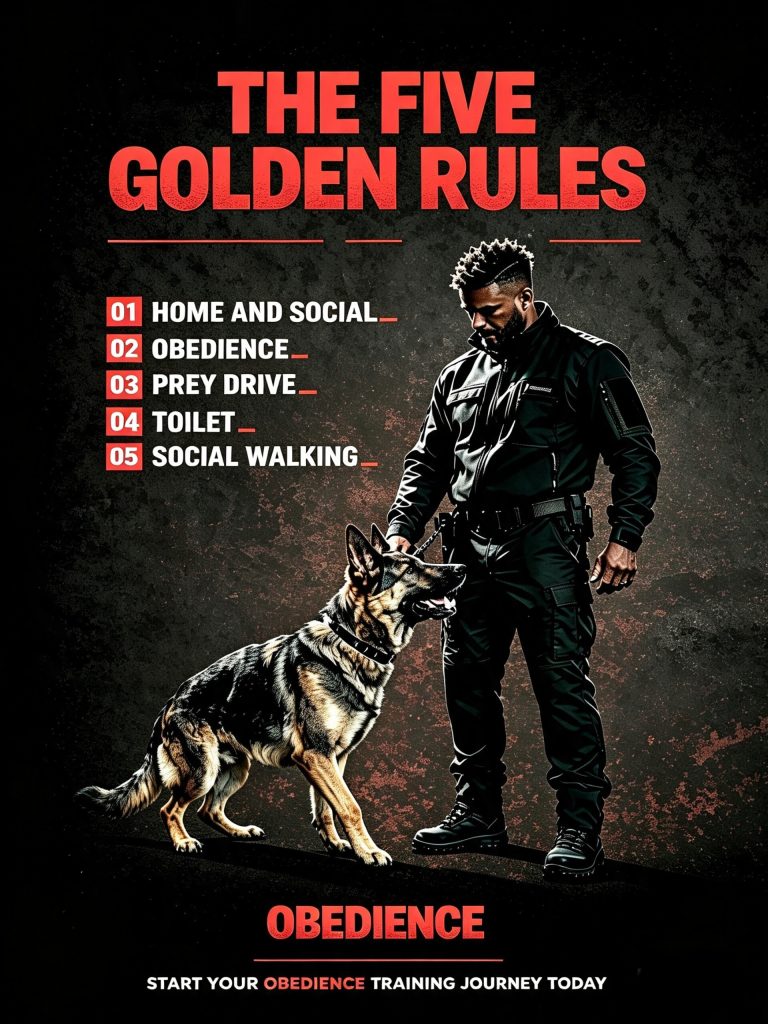
The GPK9 Five Golden Rules provide one connected training system for understanding how the puppy, handler and household environment work together. Using a puppy playpen around children is not an isolated exercise. It connects to home structure, obedience, play and motivation, toilet routines and the puppy’s ability to remain manageable around everyday environmental activity.
The purpose of the system is to provide clearer structure rather than relying on the puppy to work everything out independently. The same framework can be used by a new puppy owner, someone with limited dog-training experience, an experienced dog owner or a professional dog handler.
Golden Rule One — Home and Social

How to Use a Puppy Playpen Around Children is directly connected to GPK9 Golden Rule One because the playpen forms part of the structured home environment.
The progression of crate, placemat and playpen provides different levels of management and freedom. The playpen represents monitored freedom, making it particularly relevant when a puppy is living alongside children and normal household activity.
This structure helps separate the puppy’s space from the children’s space while allowing the handler to observe behaviour and progression. The traffic-light approach provides a way to recognise whether the puppy is coping appropriately with the environment or whether the level of activity is becoming too much.
Golden Rule Two — Obedience

Obedience provides another part of the solution because the puppy needs clear communication and consistent expectations throughout everyday life.
When How to Use a Puppy Playpen Around Children is considered within the wider GPK9 system, obedience is not simply about formal commands. It contributes to the puppy’s understanding of handler direction, timing, engagement and appropriate behaviour.
A structured approach to obedience can help the handler recognise whether the puppy is responding appropriately or whether its behaviour is becoming increasingly difficult to manage around household activity.
Golden Rule Three — Prey Drive and Play

Children can naturally create movement, noise and excitement that may increase a puppy’s desire to chase, grab, mouth or engage. Play therefore has an important relationship with How to Use a Puppy Playpen Around Children.
GPK9 Golden Rule Three separates structured play from other training activities. Understanding when play is appropriate and recognising increasing arousal can help the handler identify why a puppy may become increasingly excited around children’s movement.
The traffic-light system helps the handler monitor the puppy’s behaviour and recognise when play or environmental stimulation is becoming difficult to manage.
Golden Rule Four — Toilet

Toilet training can also form part of the wider home structure when a puppy is being managed around children.
A puppy may become distracted by household activity and fail to maintain an appropriate toilet routine. GPK9 Golden Rule Four establishes consistency around place, timing and the toilet command, helping the puppy develop clearer expectations within the home.
This supports the wider structure surrounding How to Use a Puppy Playpen Around Children, particularly when the playpen forms part of the puppy’s daily home routine.
Golden Rule Five — Social Walking and Ignore the World

Although How to Use a Puppy Playpen Around Children takes place within the home, the puppy’s ability to remain manageable around environmental activity connects with GPK9 Golden Rule Five.
The principle of remaining calm and manageable around the surrounding environment is relevant when a puppy is exposed to movement, distractions and changing activity. Children provide one example of normal household movement, while walks introduce many other environmental pressures.
The wider GPK9 system therefore considers the puppy’s ability to remain manageable across different circumstances rather than treating each situation as a completely separate training problem.
Final Connection
How to Use a Puppy Playpen Around Children is ultimately about more than placing a puppy behind a physical boundary. The playpen becomes part of a wider structure involving the puppy’s behaviour, the handler’s communication, children’s interaction, household activity, timing and progression.
The GPK9 Five Golden Rules connect these areas into one structured system. Golden Rule One establishes the home and social structure, while obedience, play, toilet routines and social walking contribute to the puppy’s wider development and ability to remain manageable in different situations.
When the original problems of excitement, unclear boundaries, inconsistent interaction, poor timing and misunderstanding are considered first, the purpose of the playpen becomes clearer. It is not simply a restriction. Within the GPK9 system, it forms part of structured management that can help the puppy and household develop clearer expectations as training progresses.