How to Position a Food Lure When Training Your Dog
How to Position a Food Lure When Training Your Dog is an important part of understanding how food can be used to guide movement during training. The position of the lure can influence where the dog looks, how the dog moves and how the dog responds to the handler’s hand. When the lure is held too high, too low, too far away or moved without clear purpose, the dog may change position incorrectly, jump towards the food, lose concentration or become focused on obtaining the reward rather than following the intended movement. Poor lure positioning can therefore create frustration and inconsistent training, particularly when the handler is unsure how close the reward should be or when it should move.
RECOMMENDED PRODUCTS
Training Treats — Small, suitable training treats can make lure positioning easier because the handler can use controlled rewards without needing large pieces of food that may distract from the exercise.
Common Problems With Food Lure Position
One of the most common problems is holding the food lure too far away from the dog’s nose.
When the reward is positioned too far forward, the dog may stretch towards it rather than maintaining a controlled position. This can create unnecessary movement and make the exercise less precise.
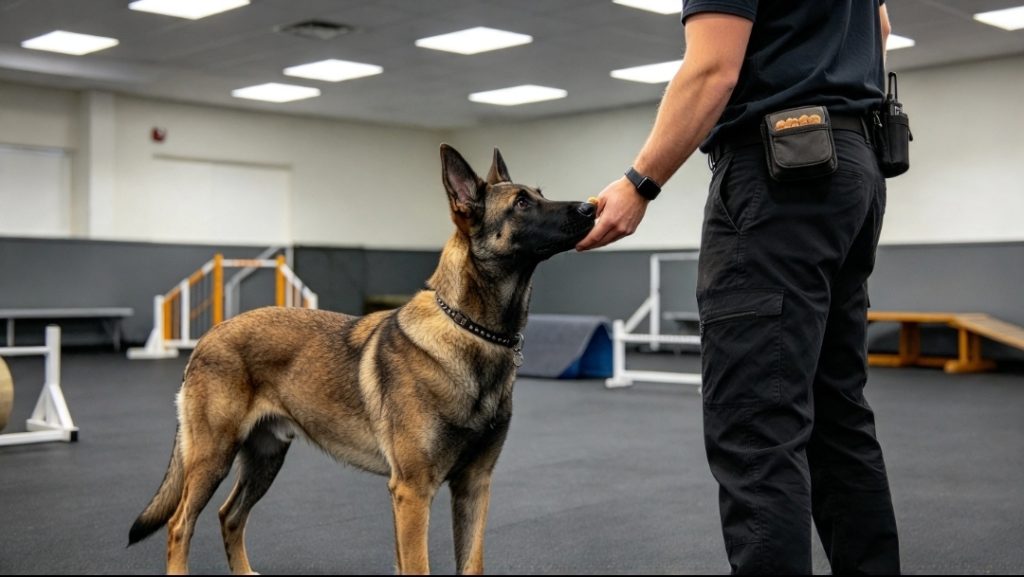
The opposite can also happen when the lure is held too close. The dog may become fixated on the food, attempt to take it immediately or struggle to maintain a natural posture.
The correct position therefore needs to allow the dog to notice and follow the lure without making the reward itself the entire focus of the exercise.
Common Issues With Lure Height
The height of the food lure can change the dog’s physical response.
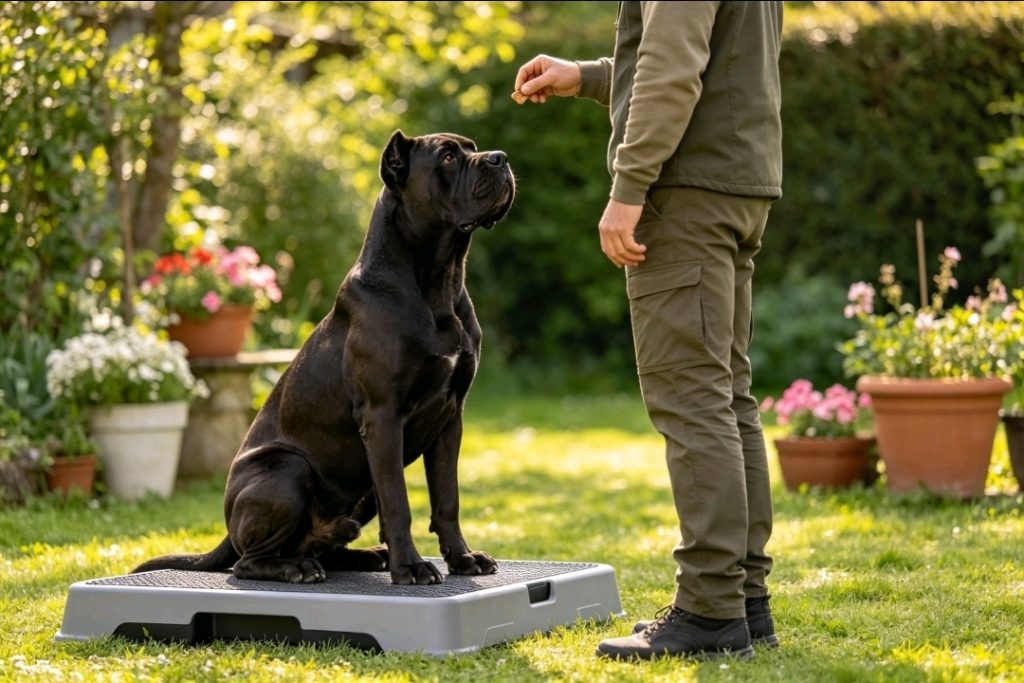
Holding the lure too high may encourage the dog to lift its head excessively, jump or shift its weight backwards. Holding it too low may encourage the dog to lower its head, move forwards unnecessarily or become focused on the floor.
Small changes in hand position can therefore produce noticeable changes in the dog’s body movement.
This becomes particularly important when the handler is trying to create a specific movement. If the lure is not positioned consistently, the dog may repeatedly perform different responses.
Common Mistakes With Hand Position
Another common mistake is moving the hand too much.
The handler may unintentionally wave the food around, move it from side to side or repeatedly change its height. Although the dog may continue following the food, the movement can become less clear.
The handler can also make the mistake of changing their own body position at the same time as moving the lure. This can make it difficult to understand whether the dog is responding to the lure, the handler’s body movement or both.
Consistent hand positioning is therefore important when the objective is to create predictable movement.
RECOMMENDED PRODUCTS
Treat Pouch — A treat pouch keeps rewards readily available and allows the handler to return the hand to a consistent position instead of carrying several pieces of food throughout the exercise.
Frustration During Lure Positioning
Incorrect lure positioning can create frustration for both dog and handler.
The dog may see the food clearly but struggle to understand how to reach it. The handler may then move the lure more quickly, change its position repeatedly or offer the reward before the intended movement has been completed.
This can create a cycle where the dog becomes more excited while the handler becomes less precise.
Frustration may also appear when the dog repeatedly jumps, paws at the hand, turns away or loses concentration. These responses can make it difficult to maintain a controlled training exercise.
Timing and Food Lure Position
Position and timing are closely connected.
The lure may be positioned correctly, but if it is moved at the wrong moment, the dog can still produce an unwanted response.
For example, moving the lure before the dog is attentive may cause the dog to rush towards it. Moving it too late may mean the dog has already changed position before the lure begins to guide the intended movement.
Reward delivery also needs appropriate timing. If the reward is delivered after the dog has moved away from the desired position, the handler may unintentionally reinforce the wrong part of the movement.
Effective lure positioning therefore involves both where the food is placed and when it moves.
Misunderstanding and Miscommunication
A food lure can create misunderstanding when the handler assumes that the dog’s eyes being fixed on the food means the dog understands the exercise.
The dog may simply be following the reward.
This distinction is important because the purpose of luring is to help guide learning, not to create permanent dependence on a visible piece of food.
If the handler continually changes the lure position without understanding the dog’s response, the dog may learn to follow the hand rather than understand the behaviour being developed.
The handler can then become confused when the food is removed and the previously successful movement becomes less reliable.
GPK9’S FIVE GOLDEN RULES
The GPK9 Five Golden Rules provide a connected training system that places individual techniques into a wider structure. Food lure positioning is particularly relevant to obedience, but effective training also depends on home structure, play, routines and the dog’s ability to remain manageable in different environments.
The system helps the handler consider the dog’s behaviour, their own actions, timing, communication and progression rather than treating food luring as an isolated exercise.
Golden Rule One — Home and Social
How to Position a Food Lure When Training Your Dog begins with the dog’s ability to operate within an appropriate level of structure.
A dog that is constantly distracted, unsettled or given too much freedom may struggle to concentrate during focused training.
The progression of crate → placemat → playpen provides different levels of controlled freedom.
The crate provides safety, reset and toilet support. The placemat introduces calm home freedom, while the playpen provides monitored freedom.
This structure helps create an environment where the handler can recognise whether the dog is ready for focused training rather than immediately relying on food to obtain attention.
Golden Rule Two — Obedience
Golden Rule Two has the strongest direct connection to food lure positioning.
Food and luring can be used to guide movement, shape behaviour and establish clearer expectations during obedience training.
The position of the lure can influence the dog’s head, body and movement, which means the handler needs to understand how small changes in hand position affect the exercise.
Working in the same area and around the same time can also provide greater consistency. Food can be hand-delivered, while praise, shaping and movement form part of the wider training process.
The focus remains on creating clear communication rather than simply moving food around until the dog follows it.
Golden Rule Three — Prey Drive / Play
Food luring and play have different purposes within the GPK9 system.
Golden Rule Three provides a separate area for working with prey drive, toys, movement and engagement. Tug or toy-based play can be used without turning every interaction into an obedience exercise.
This distinction helps the handler recognise the difference between using food to guide learning and using play to develop engagement and manage arousal.
If play becomes too intense, the handler needs to recognise the change in the dog’s behaviour and respond appropriately rather than allowing excessive arousal to continue.
Golden Rule Four — Toilet
Golden Rule Four focuses on consistency, location, timing and the use of a toilet command.
Although food lure positioning is not the central subject of toilet training, the same principles of predictable timing and clear communication remain relevant.
The dog benefits from knowing what is expected within a consistent routine, while the handler needs to recognise patterns rather than relying on random timing.
This contributes to the wider GPK9 approach of establishing structure across different parts of the dog’s daily life.
Golden Rule Five — Social Walking / Ignore the World
Food lure positioning also needs to be considered within the wider context of walking and environmental distractions.
Golden Rule Five focuses on a calm, relaxed and manageable walk without constantly placing the dog under command.
A food lure should not become a tool that the handler must constantly use simply to manage every distraction. The handler needs to understand when food-based training is appropriate and when the priority should be calm movement through the environment.
This helps maintain a distinction between structured training exercises and normal social walking.
Solution Connection
The problems associated with food lure positioning can be traced through several areas: incorrect hand height, excessive distance, inconsistent movement, poor timing, frustration and misunderstanding.
The GPK9 Five Golden Rules provide a structure for addressing these issues without treating the lure as a standalone technique.
Problem → Issue → Mistake / Timing / Frustration / Misunderstanding → GPK9 Five Golden Rules → Structured Solution
Golden Rule One provides home and social structure.
Golden Rule Two connects food, luring, obedience, shaping, praise and movement.
Golden Rule Three provides an appropriate place for play, engagement and arousal management.
Golden Rule Four reinforces routine, timing and consistency.
Golden Rule Five considers how the dog’s behaviour needs to remain manageable when moving through different environments.
Together, these rules help place food lure positioning within a broader training process.
Final Connection
How to Position a Food Lure When Training Your Dog is not simply about holding food in front of a dog’s nose. The position of the lure can influence the dog’s movement, posture, attention and response to the handler, making hand position, distance, height, movement and timing important parts of the exercise.
When these elements are inconsistent, the dog can become confused, frustrated or overly focused on the reward. The handler may then find it difficult to understand why an exercise works one moment and becomes unreliable the next.
The GPK9 Five Golden Rules connect lure positioning with the wider training system. From crate → placemat → playpen, through structured obedience, play, toilet routines and calm social walking, each area contributes to clearer structure and communication.
The objective is not simply to make a dog follow food. The objective is to use the food lure as a controlled training tool within a structured system that helps the handler understand the dog’s behaviour, maintain appropriate timing and develop clearer communication throughout training.