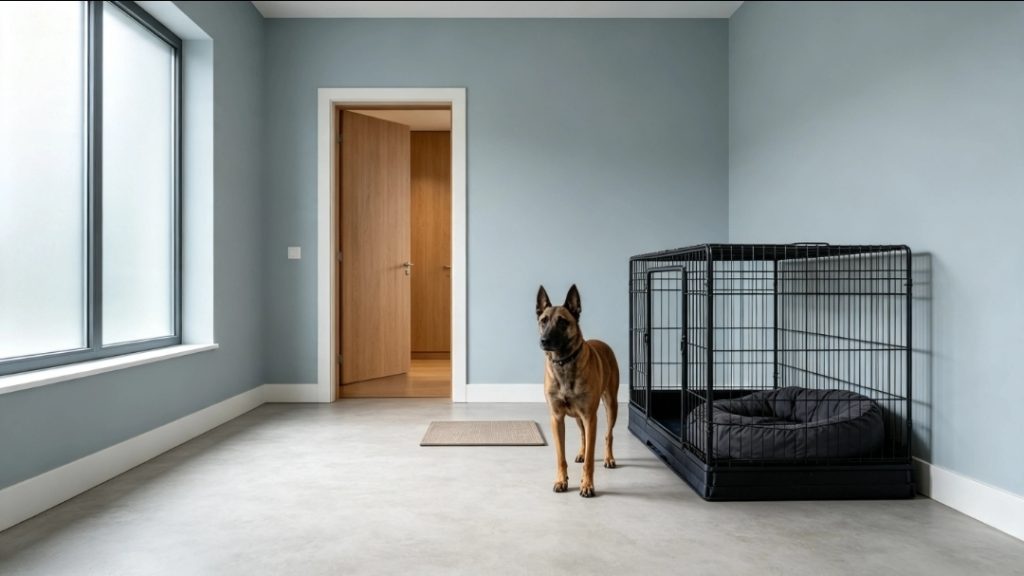
How to Use a Dog Crate to Create Structure at Home
Why Do Problems Occur When Creating Structure at Home?
How to Use a Dog Crate to Create Structure at Home is about understanding how problems can develop when a dog is given too much freedom before they are ready for it.
A puppy or newly introduced dog may not yet understand which areas of the home are available, where they should rest or how they are expected to behave when household activity increases.
Giving unrestricted access to the entire home can make it difficult for the owner to monitor what is happening.
This can result in chewing, unwanted toileting, excessive excitement, jumping, constant movement or difficulty settling.
The positive side is that structure can be developed gradually.
A dog does not necessarily need access to every part of the home immediately. A carefully managed environment can give the dog clearer boundaries while allowing the owner to observe progress.
Why Is Crate Position Important?
Another common problem is placing the crate in the wrong part of the home.
Some owners place the crate directly beside a busy doorway, in the middle of a family walkway or somewhere where the dog is constantly exposed to people moving past.
This can make settling more difficult.
A crate should be positioned with consideration for the household environment. A suitable location can allow the dog to remain part of normal household life without being placed directly in the centre of constant activity.
The problem is not always the crate itself.
Sometimes the surrounding environment is making it difficult for the dog to relax.
RECOMMENDED PRODUCTS
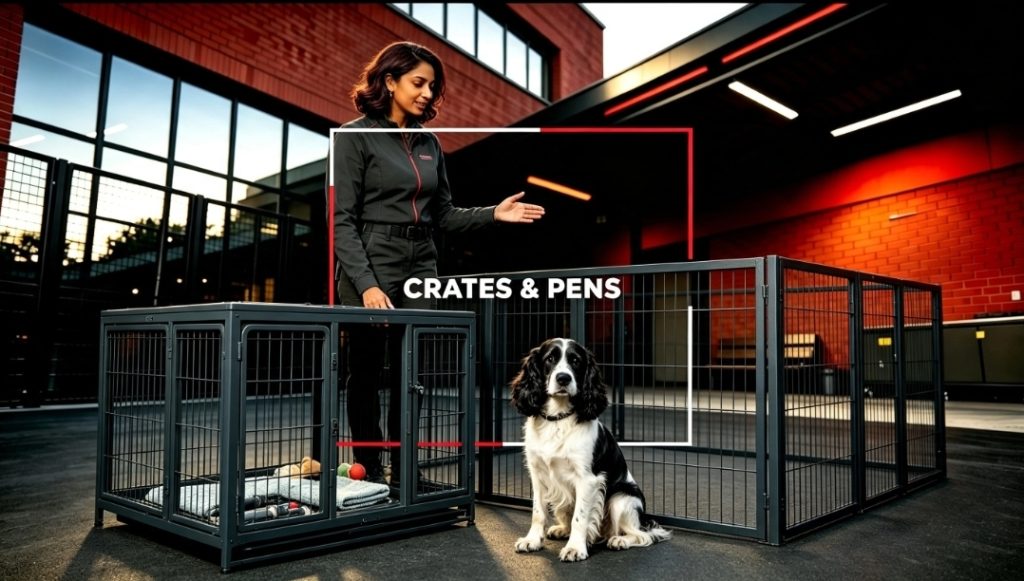
A suitable crate can provide a defined resting area when introduced positively and used appropriately.
Is the Crate Being Used as a Punishment?
One of the biggest mistakes owners can make is using the crate after becoming frustrated with their dog.
For example, a dog may knock something over, become overexcited or make a mess, and the owner immediately sends the dog into the crate because they are annoyed.
This can create an unwanted association between the crate and negative experiences.
The crate should not become a punishment area.
A better way to think about the crate is as part of the dog’s overall home structure.
The positive side is that owners can still manage situations without turning the crate into a penalty area.
RECOMMENDED PRODUCTS
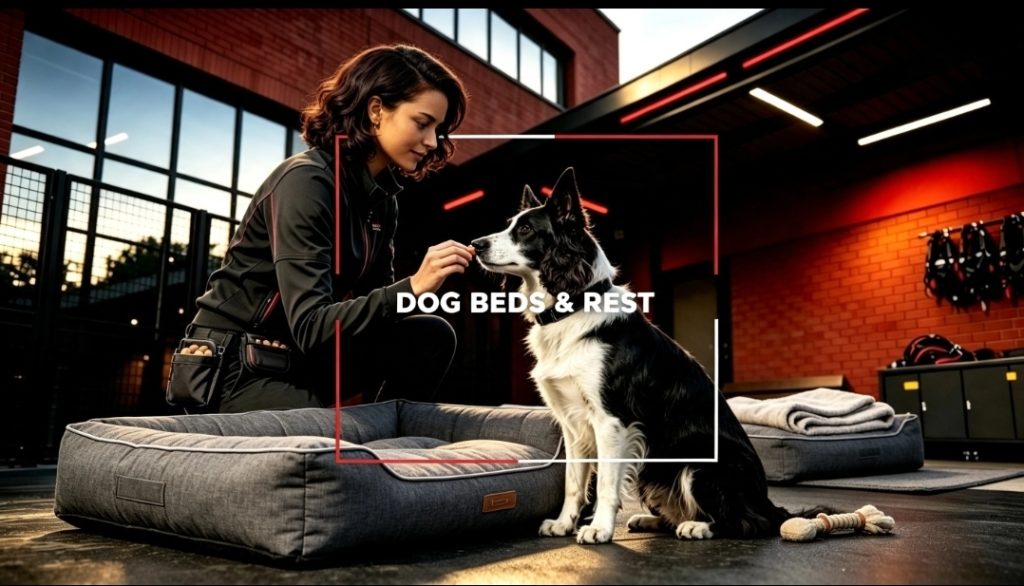
Comfortable resting equipment can help create a clearer distinction between active areas and rest areas within the home.
Why Does Too Much Freedom Cause Problems?
Another problem occurs when owners increase freedom because the dog appears to be doing well for a short period.
A dog may settle successfully for several days and then suddenly become distracted, destructive or overexcited when something changes in the home.
This does not necessarily mean training has failed.
The environment may simply have become more difficult.
Visitors, children playing, household cleaning, deliveries, other animals or changes to the normal routine can all create additional activity.
The mistake is assuming that one successful period automatically means the dog is ready for unlimited freedom.
RECOMMENDED PRODUCTS
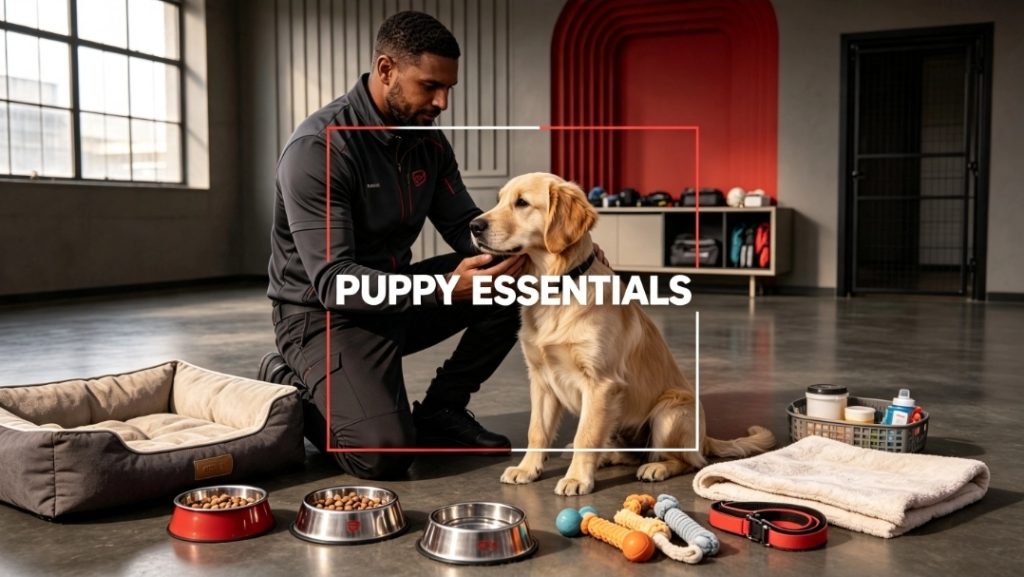
Appropriate puppy equipment can help owners manage developing routines while a young dog learns how to behave within the home.
How Can Household Activity Create Problems?
Busy household activity can be particularly challenging.
A dog may become excited when people enter the room, rush towards the door, follow everyone around the house or struggle to settle when normal household activity increases.
Owners can sometimes respond by repeatedly telling the dog to stop.
If this happens throughout the day, both the owner and dog can become frustrated.
The underlying problem may be a lack of structure around the environment rather than a lack of effort from the dog.
The crate can form part of a structured home environment where the dog has an appropriate place to rest away from excessive activity.
RECOMMENDED PRODUCTS

Food rewards can be useful within positive reinforcement training when building desirable associations with training areas and equipment.
What Happens When the Crate Is Used Too Much?
The opposite problem can also occur.
Some owners discover that the crate helps manage the household and then begin relying on it too frequently.
The crate should not become a substitute for training, exercise, social interaction or appropriate freedom.
A dog needs opportunities to learn how to behave in different situations.
If the crate is used every time something becomes difficult, the owner may avoid the original training problem rather than developing the dog’s ability to cope with normal household situations.
The aim should be structure, not simply confinement.
What If the Dog Does Not Want to Enter the Crate?
Another common problem is expecting a dog to immediately accept the crate.
Some dogs may walk straight inside.
Others may hesitate, remain near the entrance or avoid entering altogether.
Trying to force the dog inside can make the situation worse.
The positive approach is to recognise that dogs can respond differently to new equipment and environments.
If a dog is struggling, the training approach should be reviewed rather than simply increasing pressure.
RECOMMENDED PRODUCTS

A training pouch provides convenient access to suitable rewards during short positive training sessions.
Why Does Consistency Matter?
Another problem is inconsistent use of the home environment.
One day the dog is allowed onto furniture, into every room and around every household activity.
The next day the owner expects the dog to remain settled in one specific area.
The dog can receive mixed information when boundaries change constantly.
Structure becomes easier to understand when the owner is consistent with expectations.
This does not mean the home needs to become rigid.
It means the dog should experience predictable patterns that help them understand what is expected.
How Can the GPK9 Golden Rules Support Home Structure?
GPK9 approaches dog training through separate areas of education that can support different parts of a dog’s development.
GPK9 Golden Rule One: Home and Social
GPK9 Golden Rule One: Home and Social focuses specifically on the relationship between the dog, the home environment and structured freedom.
GPK9 Golden Rule Two: Obedience
GPK9 Golden Rule Two: Obedience addresses the development of obedience, communication and positive reinforcement within training.
GPK9 Golden Rule Three: Prey Drive and Play
GPK9 Golden Rule Three: Prey Drive and Play focuses on appropriate engagement and play while helping owners recognise when play becomes too intense.
GPK9 Golden Rule Four: Toilet Training
GPK9 Golden Rule Four: Toilet Training focuses on appropriate toilet routines and the problems that can develop when routines are inconsistent.
GPK9 Golden Rule Five: Social Walking
GPK9 Golden Rule Five: Social Walking focuses on calm and manageable walking and helping the dog cope with the outside environment.
Each Golden Rule has its own purpose within GPK9 dog training education.
What Is the Most Common Mistake With Home Structure?
Perhaps the most common problem is expecting equipment to do the training for the owner.
A crate is equipment.
It does not automatically teach a dog how to behave.
The same applies to beds, training mats, playpens, leads and other training equipment.
Problems can occur when an owner buys equipment expecting an immediate change in behaviour without establishing consistent training and appropriate expectations.
RECOMMENDED PRODUCTS

Training equipment should support the owner’s training approach rather than replace it.
How to Use a Dog Crate to Create Structure at Home
How to Use a Dog Crate to Create Structure at Home starts with recognising that problems are often created by the way the environment is managed.
Too much freedom can create confusion.
Poor crate placement can make settling difficult.
Using the crate as punishment can create negative associations.
Inconsistent boundaries can make expectations unclear.
Using the crate too frequently can prevent the dog from developing appropriate freedom.
Expecting the crate to solve behaviour problems can also distract from the underlying training issue.
The positive side is that these problems can be recognised and addressed through better structure, clearer expectations and appropriate positive reinforcement training.
A dog crate can become a useful part of a well-managed home environment when it is introduced correctly, used appropriately and supported by wider training.
RECOMMENDED COURSE

GPK9 Golden Rule One: Home and Social
GPK9 provides professional online dog training education designed to help owners understand the How, Why and When behind structured dog training.
Related Articles
What Is a Dog Crate? How Crate Training Works
Why Use a Dog Crate? Understanding Crate Training
When Should You Use a Dog Crate? Practical Crate Training
How to Introduce Your Dog to a Crate Step by Step
How to Use a Dog Crate When Visitors Arrive
How to Use a Dog Crate When the Postman Arrives
How to Use a Dog Crate When Someone Comes to the Door
How to Use a Dog Crate During Busy Household Activity
How to Use a Dog Crate Safely Around Children
How to Use a Dog Crate Around Other Animals
Common Dog Crate Training Mistakes and How to Avoid Them
What to Do When Your Dog Leaves the Training Mat
Dog Crate vs Training Mat vs Playpen: What Is the Difference?
How to Use a Dog Crate, Training Mat and Playpen Together
How Much Freedom Should You Give a Puppy at Home?