How to Introduce Your Dog to a Crate Step by Step
How to introduce your dog to a crate is an important question for anyone bringing a puppy or adult dog into a home. Although a crate can become a familiar and useful part of everyday life, problems can occur when the introduction is rushed, inconsistent or approached without considering how the dog is responding.
A positive introduction does not need to be complicated. Understanding the common mistakes first can make the process clearer and help create a better experience for both the dog and the owner.
RECOMMENDED PRODUCTS
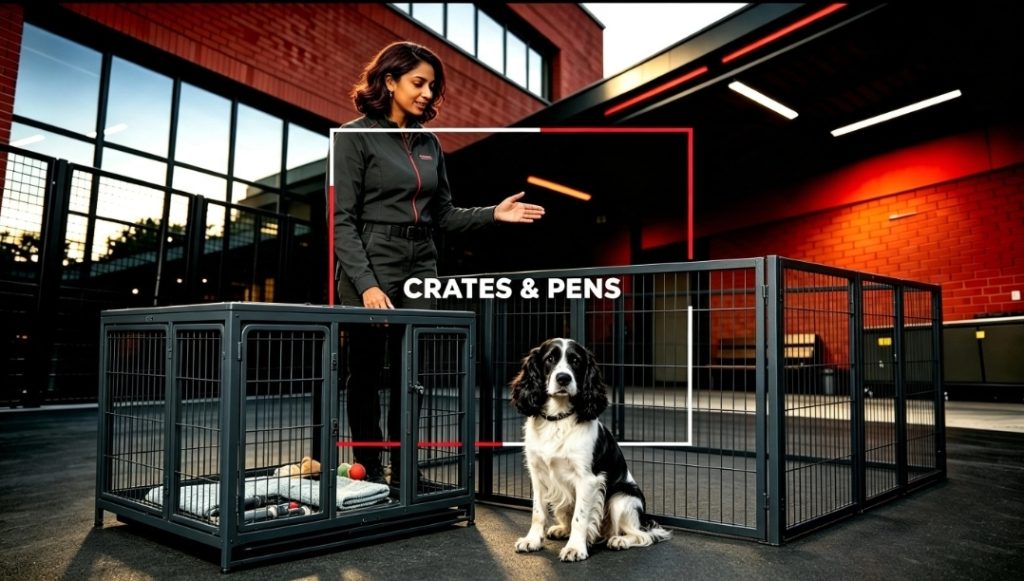
A correctly sized crate is an important starting point. Look for a crate that gives the dog appropriate room to stand, turn around, lie down and settle comfortably.
Why Introducing a Dog to a Crate Can Become Difficult
One of the most common problems is expecting a dog to immediately understand what the crate means.
A crate may be completely unfamiliar to a puppy or adult dog. It has a new shape, new smells, a different surface and may initially change the way the dog moves around the home.
Problems can arise when an owner assumes that the dog should simply walk inside and settle.
Instead of viewing hesitation as failure, it is more useful to recognise it as information.
Your dog is communicating through its behaviour.
Problem: Moving Too Quickly
One of the biggest challenges when introducing a dog to a crate is moving through the process too quickly.
An owner may purchase the crate, assemble it and immediately expect the dog to remain inside with the door closed.
For some dogs, this can create uncertainty.
The dog may try to leave, avoid the crate, become restless or show little interest in approaching it again.
This does not mean crate training cannot work.
It simply means the dog may need more time to become comfortable with the environment.
RECOMMENDED PRODUCTS

Small, suitable training rewards can be useful for creating positive associations during training when appropriate for the individual dog.
Problem: Putting the Crate in the Wrong Place
Location can make a significant difference.
A crate positioned in a busy doorway, directly beside a television, next to a noisy appliance or in the middle of constant household movement may make settling more difficult.
The opposite problem can also occur when the crate is placed somewhere completely isolated from normal household activity.
Dogs are social animals, and many benefit from having an appropriate balance between being part of the household and having somewhere calm to rest.
The best location depends on the individual home and dog.
Problem: Making the Crate Mean “The Fun Is Over”
Another common issue occurs when the crate is repeatedly used only when something enjoyable is about to stop.
If the dog learns that entering the crate always means play finishes, visitors disappear or access to the household ends, the crate can develop an unhelpful association.
This is why the overall experience surrounding the crate matters.
A crate should become a normal part of the dog’s environment rather than carrying one negative meaning.
Problem: Closing the Door Too Soon
The crate door can become an important part of the introduction.
One potential problem is closing it before the dog has become comfortable with the crate itself.
The dog may then focus entirely on the closed door rather than learning that the crate is a comfortable place.
Signs such as persistent attempts to leave, excessive restlessness or obvious distress should not simply be ignored.
The aim should always be to develop confidence progressively.
RECOMMENDED PRODUCTS
A suitable crate bed or washable resting surface can help make the crate comfortable and practical for everyday use.
Problem: Using the Crate as Punishment
A crate should not become a punishment area.
If the dog is repeatedly sent into the crate immediately after unwanted behaviour, the dog may begin to associate the space with correction rather than calmness.
This can make future crate training more difficult.
A positive approach gives the crate a different meaning: a familiar part of the dog’s environment where appropriate rest and calm behaviour can take place.
Problem: Expecting Every Dog to Respond the Same Way
Dogs are individuals.
A confident adult dog may investigate a crate immediately.
A young puppy may be more cautious.
Another dog may be interested in the crate but become uncomfortable when the environment changes.
Breed, age, previous experiences, temperament, environment and individual behaviour can all influence the introduction.
Comparing your dog with another dog can therefore create unnecessary pressure.
Progress should be based on the individual dog rather than someone else’s timetable.
Problem: Too Much Excitement Around the Crate
Sometimes the problem is not fear or avoidance but excessive excitement.
An owner may become very enthusiastic whenever the dog approaches the crate, repeatedly encouraging the dog or creating too much activity around it.
Although enthusiasm can be positive, excessive excitement can make it harder for some dogs to settle.
Calm, consistent communication can help keep the environment predictable.
RECOMMENDED PRODUCTS

A training pouch provides convenient access to suitable rewards while allowing training to remain organised and consistent.
Problem: Inconsistent Training
Another common problem is inconsistency.
One day the dog may be encouraged to use the crate.
The next day the crate may be ignored.
The following day the dog may suddenly be expected to remain inside for a long period.
Dogs learn through repetition and experience, so inconsistent expectations can make it difficult for the dog to understand what is expected.
A clear routine can make the process easier to understand.
Problem: Expecting the Crate to Solve Behaviour Problems
A crate is a training tool, not a complete behaviour solution.
If a dog is barking excessively, showing fear, displaying aggression or struggling with significant anxiety, placing the dog into a crate does not automatically address the reason behind the behaviour.
In these situations, the behaviour needs to be understood properly.
Professional advice may be appropriate where there are significant behavioural concerns.
Problem: Forgetting That Puppies Have Different Needs
Puppies require particular consideration.
They are developing physically and mentally and have limited ability to remain settled for extended periods.
A puppy that becomes restless may not be deliberately refusing to cooperate.
It may need the toilet, food, water, movement, interaction or appropriate rest.
Understanding these needs can prevent the crate from being blamed for a problem that actually has another cause.
RECOMMENDED PRODUCTS

Puppy essentials can help create a more organised environment while your puppy learns household routines and develops appropriate habits.
How the GPK9 Approach Connects Crate Training With Home Structure
At GPK9, crate training is considered within a wider approach to home and social development.
GPK9 Golden Rule One: Home and Social focuses on the importance of structure within everyday life and forms part of the wider GPK9 Professional Online Dog Training Course.
The Golden Rule provides a broader framework for understanding how the home environment can influence training, behaviour and the development of appropriate freedom.
The detailed training approach is taught separately within the GPK9 course.
RECOMMENDED COURSE

GPK9 Golden Rule One: Home and Social
Learn the GPK9 approach to home structure, social development and creating an appropriate training environment for your dog.
Problem: Giving Too Much Freedom Too Soon
Another common issue is allowing a puppy or newly trained dog unrestricted access to the entire home before it has developed the necessary understanding.
This can lead to unwanted chewing, accidents, jumping, excessive excitement or difficulty settling.
When these problems appear, it is easy to think the dog is being difficult.
Often, the environment simply provides more freedom than the dog is currently ready to manage.
Training should develop alongside increasing freedom.
Problem: Not Watching What the Dog Is Telling You
One of the most useful skills an owner can develop is observation.
Look at what happens before, during and after crate training.
Does the dog approach willingly?
Does it appear relaxed?
Does it repeatedly attempt to leave?
Does its behaviour change when the door is closed?
Does it settle after entering?
These observations provide useful information.
Instead of becoming frustrated by a problem, owners can use the dog’s behaviour to understand what needs to be adjusted.
Creating Positive Associations
The aim of crate introduction should be to build familiarity and positive associations.
The crate should become something the dog recognises as part of normal life.
Food rewards, calm interaction, suitable bedding and an appropriate environment can all contribute to positive experiences when used correctly.
The exact approach should always take the individual dog into consideration.
RECOMMENDED PRODUCTS
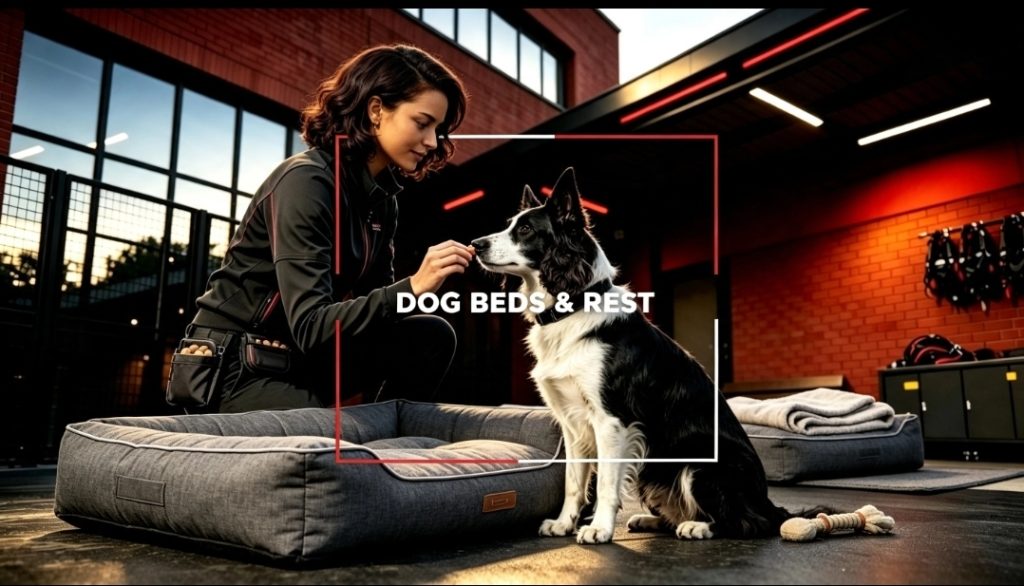
Comfortable resting equipment can complement a structured home environment and provide your dog with an appropriate place to relax.
The Importance of Patience
Patience is particularly important when introducing something new.
A dog does not need to understand everything immediately.
Some dogs investigate new equipment quickly, while others need more time.
Small signs of confidence are worth recognising.
Approaching the crate voluntarily, investigating the interior, resting nearby or remaining calm around the crate can all provide useful indications of progress.
Crate Training as Part of a Wider Training System
Crate training does not exist on its own.
It can connect with other areas of everyday dog training, including obedience, play, toilet training and social walking.
This is why GPK9 uses separate Golden Rules rather than treating every area of dog training as one single exercise.
GPK9 Golden Rule One: Home and Social addresses the home environment.
GPK9 Golden Rule Two: Obedience addresses structured obedience development.
GPK9 Golden Rule Three: Prey Drive / Play addresses engagement and appropriate play.
GPK9 Golden Rule Four: Toilet Training addresses routine and appropriate toilet habits.
GPK9 Golden Rule Five: Social Walking / Ignore the World addresses calm and manageable walking within different environments.
Each Golden Rule has its own purpose while contributing to the wider GPK9 approach.
RECOMMENDED COURSE
GPK9 Professional Online Dog Training Course – Five Golden Rules
Explore the GPK9 training framework and develop a broader understanding of how home structure, obedience, play, toilet training and social walking can contribute to a stronger partnership between dog and owner.
Positive Progress Comes From Understanding Problems
When crate training does not immediately go according to plan, it is important not to assume that the dog has failed.
The problem may be the environment.
It may be the timing.
It may be the length of the session.
It may be an unsuitable location.
It may simply be that the dog needs more time.
Identifying the problem gives the owner an opportunity to make a positive change.
When to Seek Professional Support
Some crate-training problems are straightforward to manage, while others may be connected to more significant behavioural concerns.
If your dog displays persistent distress, fear, aggression or other serious behavioural problems, professional assessment can help determine the most appropriate approach.
A GPK9 Dog Training Instructor can provide structured guidance based on the individual dog and circumstances.
How to Introduce Your Dog to a Crate Step by Step: A Positive Approach
How to introduce your dog to a crate step by step is ultimately about more than getting a dog inside a crate.
It is about developing familiarity, confidence and appropriate understanding.
The most common problems often occur when owners rush, expect too much, use the crate negatively or fail to recognise what their dog is communicating.
With patience, consistency and a positive training environment, crate training can become a useful part of everyday life.
The crate is one element of a much wider approach to developing a well-structured home and a confident, appropriately trained dog.
RECOMMENDED PRODUCTS
A suitable crate can provide a practical foundation for structured home training when introduced appropriately and used alongside exercise, interaction, training and rest.
Related GPK9 Articles
- What Is a Dog Crate? How Crate Training Works
- Why Use a Dog Crate? Understanding Crate Training
- When Should You Use a Dog Crate? Practical Crate Training
- How to Use a Dog Crate to Create Structure at Home
- How to Use a Dog Crate When Visitors Arrive
- How to Use a Dog Crate When the Postman Arrives
- How to Use a Dog Crate When Someone Comes to the Door
- How to Use a Dog Crate During Busy Household Activity
- How to Use a Dog Crate Safely Around Children
- How to Use a Dog Crate Around Other Animals
- Common Dog Crate Training Mistakes and How to Avoid Them
- What to Do When Your Dog Leaves the Training Mat
- Dog Crate vs Training Mat vs Playpen: What Is the Difference?
- How to Use a Dog Crate, Training Mat and Playpen Together
- How Much Freedom Should You Give a Puppy at Home?