Why Use a Dog Training Placemat? Creating Structure at Home
Why use a dog training placemat? Creating structure at home gives owners a practical way to establish a defined area where their dog can remain calm while still being part of normal household life.
RECOMMENDED PRODUCTS
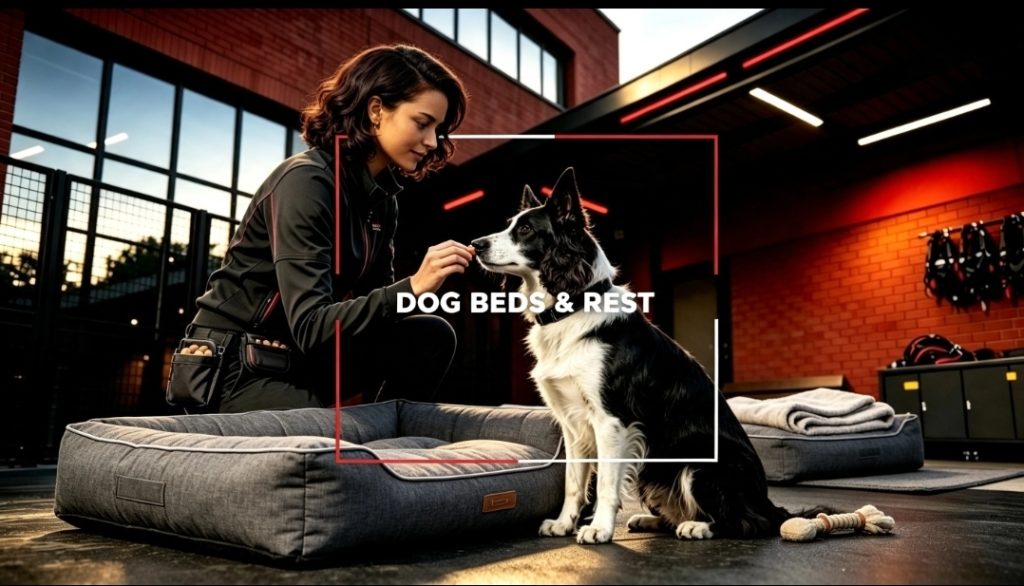
A training placemat can provide more freedom than a crate while still giving the dog a clear physical boundary. The dog is not enclosed, but the owner has established a specific location where calm behaviour is expected.
Why use a dog training placemat? Because owners can sometimes give a dog too much freedom before the dog has learned how to manage that freedom. The placemat provides an intermediate stage between physical containment and unrestricted movement around the home.
Why Use a Dog Training Placemat at Home?
Why use a dog training placemat? A clearly defined place can help the dog understand where it should settle during everyday household activity.
The purpose is not simply to make the dog lie on a particular mat. The owner is creating a predictable part of the home where the dog can practise remaining calm.
People can create problems when they allow the dog to move continuously around the house and then expect it to settle only when it becomes inconvenient.
Creating a Clear Physical Boundary
The placemat gives the dog something physical to recognise.
Instead of relying entirely on verbal instructions, the owner can use the mat as a consistent reference point.
This is one reason why use a dog training placemat can be particularly useful during the early stages of developing controlled freedom.
How a Placemat Creates Structure
A structured home environment does not mean the dog has to be restricted constantly.
The aim is to teach the dog how to behave appropriately within different levels of freedom.
The placemat can be used when the owner wants the dog to remain in a particular area while normal activities continue.
Controlled Freedom
A crate provides physical containment, whereas a placemat allows the dog to remain free within the room.
This difference is important.
The dog is being given greater freedom while still receiving a clear expectation about where it should settle.
Why use a dog training placemat? Because it can help bridge the gap between being physically contained and being given unrestricted access to the home.
RECOMMENDED PRODUCTS
A comfortable training mat or defined resting surface can provide the dog with a consistent location for calm behaviour and structured rest.
How Humans Can Create Problems
Many place-training difficulties begin with the owner.
An owner may introduce the placemat but allow the dog to leave whenever it wants, move the mat repeatedly or constantly interact with the dog while it is trying to settle.
The dog then receives inconsistent information.
Why use a dog training placemat? If the human does not provide consistent structure, the equipment cannot create the desired behaviour by itself.
Giving Too Much Freedom
One of the most common mistakes is progressing too quickly.
The dog may appear calm for a short period, so the owner gives it access to more areas of the home.
If the dog then becomes distracted or starts moving around again, the owner may assume the training has failed.
The problem may simply be that the human increased freedom before the dog was ready.
Constantly Interrupting the Dog
Another mistake is repeatedly talking to, touching or calling the dog while it is settling on the mat.
If the goal is calm behaviour, the owner should allow calm behaviour to continue.
Why Use a Dog Training Placemat During Everyday Activity?
Why use a dog training placemat? One of its practical uses is helping a dog remain settled while normal household activity continues.
The owner might be preparing food, watching television, working from home or completing household tasks.
The dog can remain in its designated area without needing constant attention.
This teaches the dog that household activity does not automatically mean it needs to participate in everything happening around it.
RECOMMENDED PRODUCTS
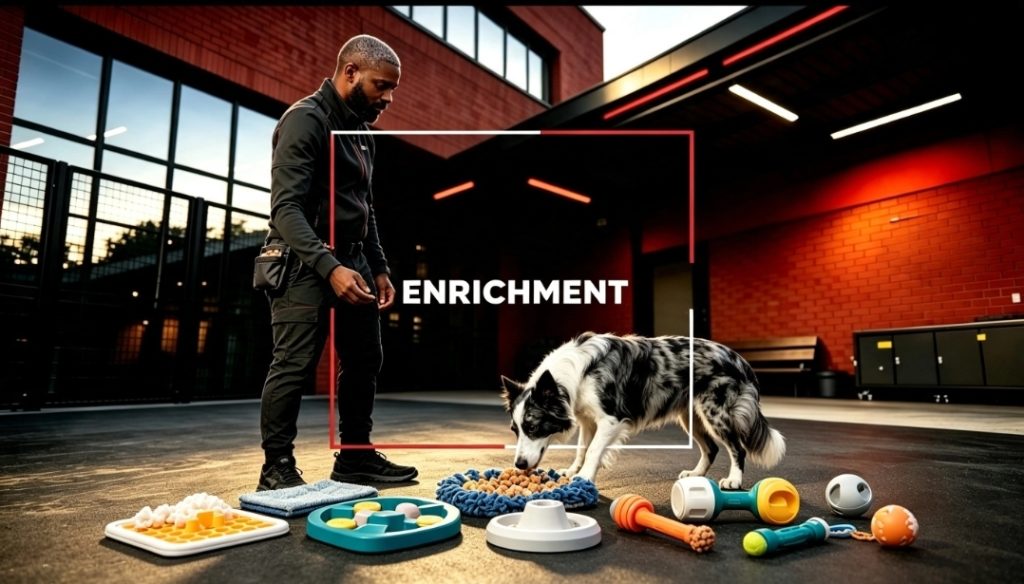
Suitable enrichment can complement structured rest by giving owners appropriate ways to provide mental activity at suitable times rather than constantly stimulating the dog during settling periods.
Choosing the Right Location
The location of the placemat can influence how easy it is for the dog to settle.
A mat positioned directly beside a doorway or in the centre of a busy walkway may create unnecessary interruptions.
A suitable location allows the dog to remain part of the household while avoiding excessive traffic.
Avoiding Unnecessary Distractions
Owners should consider how much movement occurs around the chosen location.
Why use a dog training placemat? The answer is partly about creating an environment where the dog has an opportunity to practise calmness successfully.
Building Progress Through Structure
The placemat can form part of a progression from greater restriction towards greater independence.
A dog may initially require more controlled management and later become capable of settling on a mat while the owner moves freely around the home.
The human determines when progression is appropriate.
Crate to Placemat
The crate can provide safety, reset and controlled rest.
The placemat provides increased freedom while maintaining a defined location for calm behaviour.
The transition should be based on the dog’s ability to manage the additional freedom rather than simply the owner’s desire to move forward.
RECOMMENDED PRODUCTS
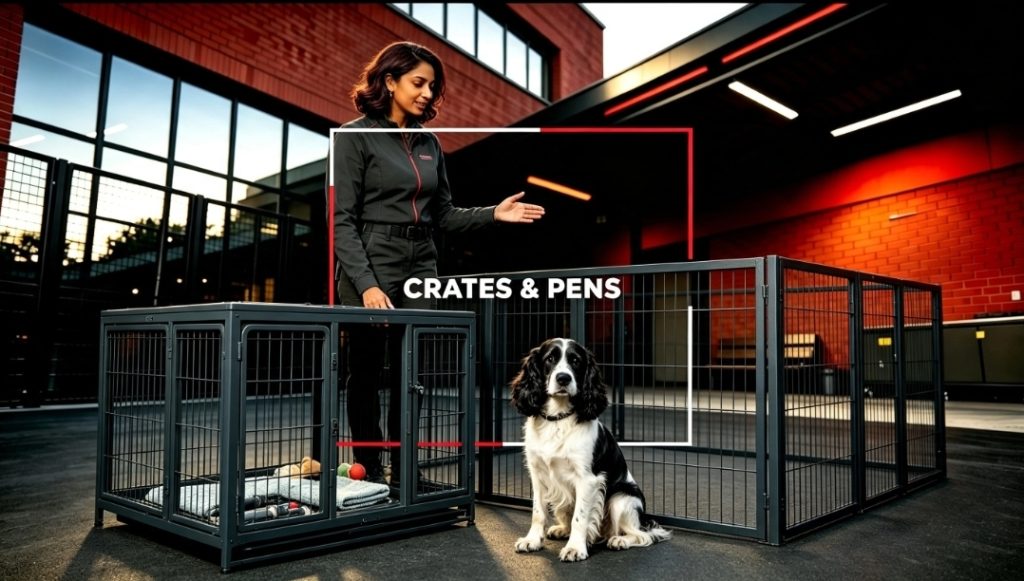
Crates and pens can complement placemat training by providing different levels of controlled freedom as the dog progresses through its home-training routine.
Using the Placemat With Visitors
Visitors can create excitement, movement and changes to the normal household routine.
The placemat can provide the dog with a defined location where the owner can encourage calm behaviour while the visitor enters and settles.
However, people can create problems by immediately allowing the dog to rush towards every visitor.
Why use a dog training placemat? It can provide an alternative to unrestricted access and help the owner establish clearer household structure.
Using the Placemat During Busy Household Activity
Children playing, people moving between rooms, cooking and other normal household activities can make settling more difficult.
The owner should not wait until the dog becomes highly excited before introducing structure.
The placemat can be incorporated into the normal routine so the dog learns that activity around the home does not automatically require a reaction.
When Place Training Is Not Progressing
If the dog repeatedly leaves the mat, becomes highly aroused or struggles to settle, the owner should look at what they are asking the dog to manage.
The exercise may be too difficult, the environment may contain too many distractions or the owner may be progressing too quickly.
Why use a dog training placemat? It should support learning rather than become a constant battle between the owner and dog.
Where significant behavioural concerns are present, including fear or aggression, professional assessment from a GPK9 Dog Training Instructor may be appropriate.
RECOMMENDED COURSE

Golden Rule One: Home and Social
Golden Rule One: Home and Social teaches owners how to create household structure and progress controlled freedom through appropriate use of the crate, training mat and playpen.
GOLDEN RULE ONE: HOME AND SOCIAL
Home and Social establishes the foundations of calm household behaviour by teaching owners how to manage space, boundaries and controlled freedom within the home.
GOLDEN RULE TWO: OBEDIENCE
Obedience develops communication through food, luring, praise, shaping and movement, giving owners practical tools for developing clearer communication during training.
GOLDEN RULE THREE: PREY DRIVE / PLAY
Prey Drive / Play provides a separate opportunity for engagement and controlled activity. Keeping play distinct from settling helps the owner create clearer expectations for different parts of the dog’s routine.
GOLDEN RULE FOUR: TOILET TRAINING
Toilet Training develops predictable routines through consistent timing, location and a toilet command, helping owners establish clearer structure throughout the dog’s day.
GOLDEN RULE FIVE: SOCIAL WALKING / IGNORE THE WORLD
Social Walking / Ignore the World develops calm and manageable behaviour in everyday environments, helping the dog learn that environmental activity does not always require a response.
Creating Better Structure at Home
Why use a dog training placemat? Because the placemat gives owners another way to manage controlled freedom without relying entirely on physical confinement.
The equipment is simple, but the human behaviour surrounding it is what determines how useful it becomes.
Owners create better results when they establish clear expectations, choose an appropriate location, progress gradually and allow calm behaviour to continue without unnecessary interruption.
A training placemat can therefore become an important part of a structured home-training routine, helping the dog understand where it can settle while gradually developing greater independence.
Related GPK9 Articles
- What Is a Dog Training Placemat? Place Training Explained
- When Should You Use a Dog Training Placemat?
- How to Teach Your Dog to Settle on a Training Mat
- How to Use a Dog Training Mat to Create Structure at Home
- How to Use a Dog Training Mat When Visitors Arrive
- How to Use a Dog Training Mat During Busy Household Activity
- How to Use a Dog Training Mat Around Children
- Common Dog Place Training Mistakes and How to Fix Them
- What to Do When Your Dog Leaves the Training Mat