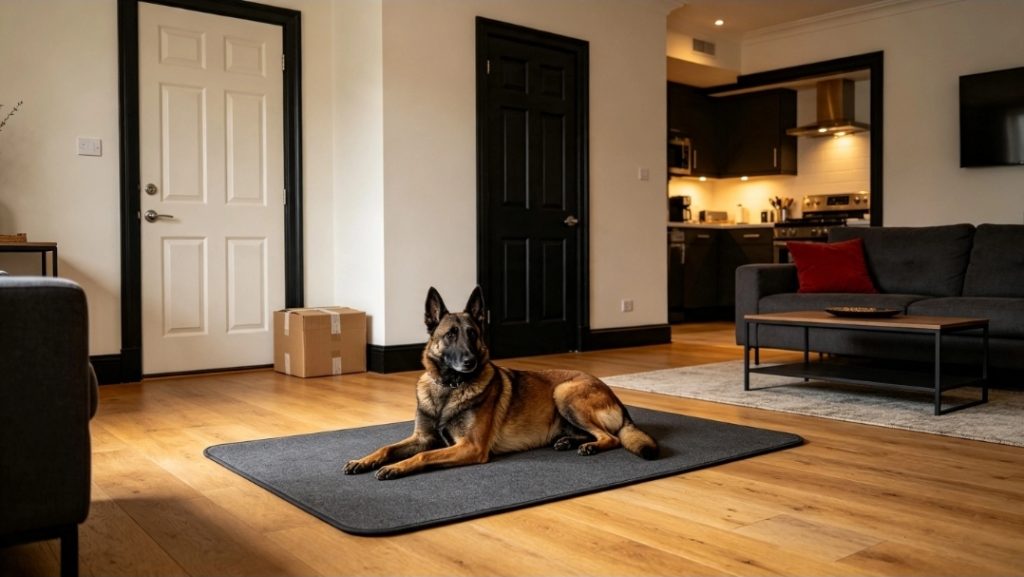
When Should You Use a Dog Training Placemat?
When Should You Use a Dog Training Placemat?
When should you use a dog training placemat? A placemat can be useful when a dog needs more freedom than a crate provides but still needs a clear place to settle within the home.
RECOMMENDED PRODUCTS
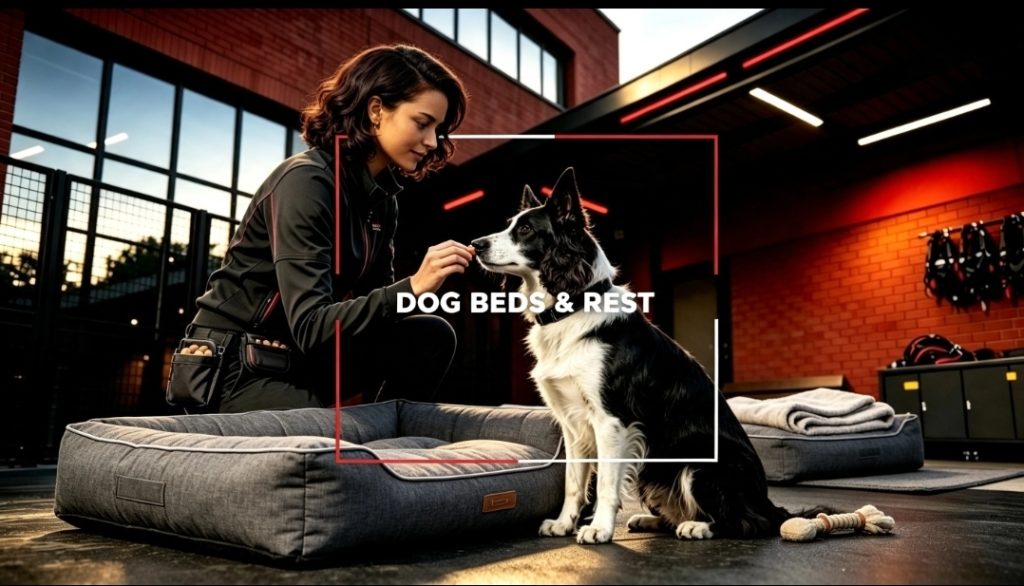
The important part is not simply putting a mat on the floor. The owner needs to recognise when the dog is ready for this level of freedom and when the environment is suitable for calm place training.
When should you use a dog training placemat? The answer depends on what the dog can currently manage. If an owner gives too much freedom too early, the dog may begin moving around the home, following people, becoming overexcited or repeatedly leaving the designated area.
When Is a Training Placemat Appropriate?
When should you use a dog training placemat? It is particularly useful when the dog has developed enough understanding of basic household structure to work with a defined area without physical confinement.
The placemat provides a physical reference point for calm behaviour. Rather than expecting the dog to understand a verbal instruction from anywhere in the home, the owner gives the dog a clear location associated with settling. This physical target can make place training easier to understand and can later be used as distractions are introduced gradually.
Moving Beyond the Crate
A crate provides a more controlled environment. A placemat provides increased freedom.
This means the placemat can become useful when the owner wants to begin giving the dog greater access to normal household life while still maintaining structure.
When should you use a dog training placemat? When the dog can reasonably manage the additional freedom without becoming overwhelmed by the environment.
When the Owner Needs the Dog to Settle
A common reason to use a placemat is when normal household activity is taking place.
The owner may be cooking, working, watching television, eating a meal or carrying out everyday tasks.
Instead of allowing the dog to follow every movement around the house, the owner can provide a defined place where calm behaviour is expected.
When should you use a dog training placemat? When the dog needs to remain part of the household without needing to participate in every activity.
RECOMMENDED PRODUCTS

A suitable training mat can provide a consistent physical reference point for practising calm behaviour and controlled freedom within the home.
When the Dog Is Following Everyone Around
Some dogs create difficulties because they constantly follow their owners from room to room.
The human response can accidentally reinforce this behaviour. An owner may talk to the dog, stroke it, give it attention or repeatedly engage with it every time it follows.
The placemat can provide an alternative.
When should you use a dog training placemat? When the owner needs to teach the dog that remaining settled in one location can also be part of normal household life.
When Visitors Arrive
Visitors can change the atmosphere of the home.
The door opens, people enter, voices change and movement increases. A dog that normally settles may become excited because the owner allows it to immediately rush towards every person entering the property.
A placemat can provide a defined location for the dog while the owner manages the situation.
When should you use a dog training placemat? When the owner wants to create structure around household events rather than reacting after the dog has already become highly excited.
The difficulty is often created by the human decision to allow unrestricted access too quickly.
When the Home Becomes Busy
Busy household activity can include cooking, cleaning, children moving around, deliveries arriving or people moving between rooms.
The owner may assume that the dog should simply learn to cope with everything.
That can make the exercise unnecessarily difficult.
When should you use a dog training placemat? When the owner can use the mat to give the dog a clear location while gradually building its ability to remain calm around normal household distractions.
Place training is generally developed progressively, with duration, distance and distractions increased as the dog becomes more comfortable with the behaviour.
RECOMMENDED PRODUCTS
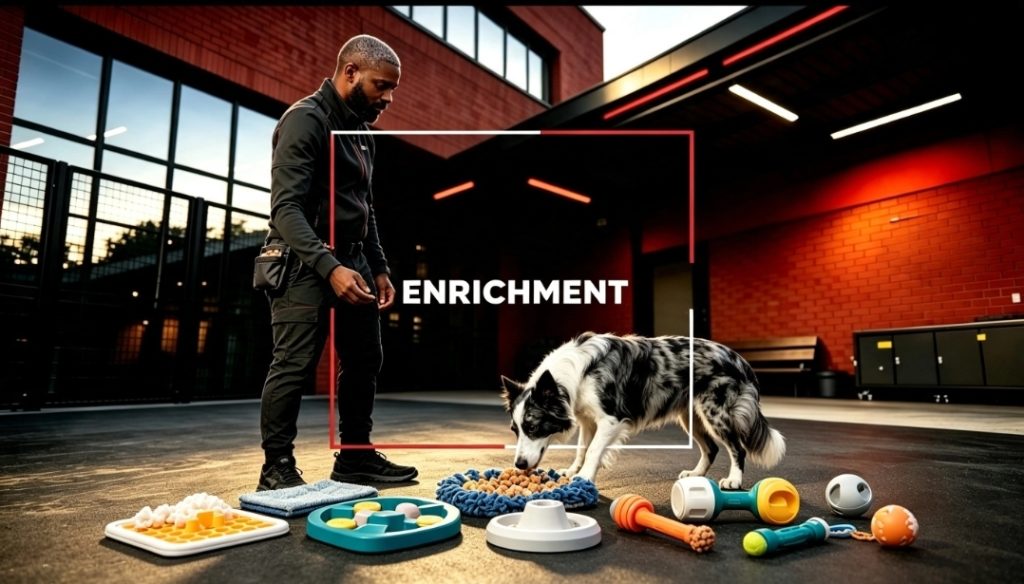
Appropriate enrichment can be used separately from settling exercises, helping owners provide suitable mental activity without turning every period of calm into an active interaction.
When Should You Not Use the Placemat?
Knowing when not to use the placemat is just as important.
If the dog is already highly aroused, frightened or struggling to settle, simply placing the mat down and expecting the dog to remain there may make the exercise too difficult.
The owner should consider what created the behaviour first.
Avoid Using the Mat as a Punishment
The placemat should not become somewhere the dog is sent because the owner is frustrated.
This can create an association between the mat and negative experiences.
The purpose is to build a predictable location for calm behaviour rather than create another form of punishment.
Avoid Progressing Too Quickly
A dog that can settle for a short period in a quiet room may not yet be ready to settle while visitors are moving around the home.
People can create problems by assuming that success in one environment automatically transfers to another.
When should you use a dog training placemat? When the dog has an appropriate level of understanding for the environment being presented.
When the Placemat Becomes Part of Daily Routine
The placemat can become more useful when it is incorporated naturally into everyday life.
The owner does not need to turn every use into a formal training session.
A dog can learn that the appearance of the mat means that it is time to settle while the household continues normally.
This helps make the behaviour practical rather than something that only exists during a training exercise.
RECOMMENDED PRODUCTS
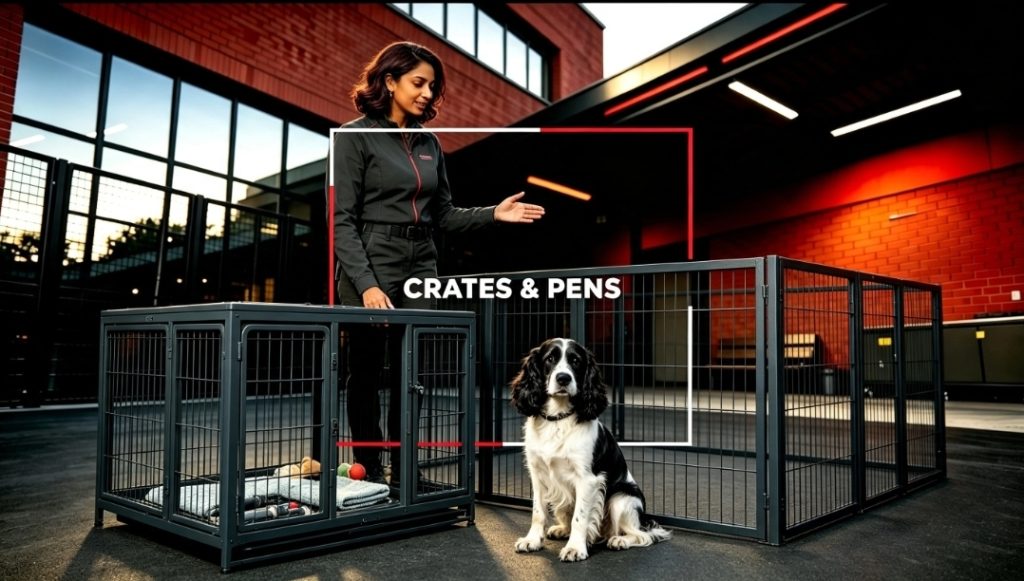
Crates and pens can provide alternative levels of management when the placemat does not provide enough structure for the dog’s current stage of development.
When the Dog Is Ready for More Freedom
The placemat can also be useful as part of progression.
A dog may move from greater physical management towards controlled freedom and eventually develop the ability to settle without needing the mat in every situation.
The owner should not rush this process.
When should you use a dog training placemat? When it provides the right amount of structure for the dog’s current ability rather than simply because the owner wants to remove the crate.
This is where good human judgement becomes important.
When the Dog Keeps Leaving the Placemat
If the dog repeatedly leaves the mat, the owner should look at the circumstances rather than simply repeating the same instruction.
The environment may contain too many distractions.
The duration may be too long.
The dog may have been given more freedom than it can currently manage.
Or the owner may be unintentionally rewarding the behaviour they are trying to reduce.
When should you use a dog training placemat? When the exercise can be set up so the dog has a realistic opportunity to succeed.
When Other People or Animals Are Present
Other people and animals can add another level of difficulty.
A dog may settle successfully when alone with its owner but struggle when another dog, cat, child or visitor moves through the room.
The owner should recognise that this represents a new training environment.
Instead of assuming the dog is being disobedient, the human should consider whether the difficulty has simply increased too quickly.
RECOMMENDED PRODUCTS
Appropriate household barriers and management equipment can help owners control the environment while the dog develops greater confidence and calmness around distractions.
The Placemat Within GPK9’s Five Golden Rules
The placemat has a specific role within GPK9’s wider training structure, particularly within Golden Rule One: Home and Social.
The purpose is not to turn the placemat into a universal solution. It is one part of a broader approach to helping owners understand when different types of structure are appropriate.
The other Golden Rules develop different areas of the dog’s education and should remain separate rather than being treated as one combined exercise.
Golden Rule One: Home and Social

Golden Rule One: Home and Social explains how household structure and controlled freedom can develop progressively, including understanding when a crate, placemat or playpen is appropriate.
GOLDEN RULE ONE: HOME AND SOCIAL
Home and Social focuses on the dog’s behaviour within the household, including appropriate use of space, rest and controlled freedom.
GOLDEN RULE TWO: OBEDIENCE
Obedience develops communication through food, luring, praise, shaping and movement, helping the owner develop clearer interaction during practical training.
GOLDEN RULE THREE: PREY DRIVE / PLAY
Prey Drive / Play provides an appropriate outlet for engagement and controlled activity, while keeping high-energy play separate from calm household settling.
GOLDEN RULE FOUR: TOILET TRAINING
Toilet Training creates predictable routines around timing, location and a consistent toilet command, supporting clearer daily structure.
GOLDEN RULE FIVE: SOCIAL WALKING / IGNORE THE WORLD
Social Walking / Ignore the World focuses on calm and manageable behaviour while experiencing everyday environments and distractions.
RECOMMENDED PRODUCTS
Practical training equipment can help owners establish consistent routines while developing clearer communication and controlled freedom.
Making the Right Decision About Place Training
When should you use a dog training placemat? The answer should always come back to the dog’s current ability and the owner’s management of the environment.
The placemat is useful when the dog needs a defined place to settle without the physical restriction of a crate.
Problems can arise when humans give too much freedom, introduce too many distractions, allow repeated interruptions or expect the dog to understand the exercise without gradual development.
Good place training is therefore not about simply keeping a dog on a mat.
It is about teaching the dog that calm behaviour has a clear place within everyday life, while the owner learns when to increase freedom, when to reduce difficulty and when another form of structure is more appropriate.