Why Has My Dog’s Behaviour Changed?
Why has my dog’s behaviour changed? A dog’s behaviour can change because of changes in health, environment, routine, learning, emotional state, social experiences or reinforcement. A sudden or significant behaviour change should not simply be treated as disobedience. First identify what has changed, consider possible causes and then decide what action is appropriate.
What Can Cause a Dog’s Behaviour to Change?
Behaviour is influenced by what happens before, during and after an event, as well as how your dog is feeling physically and emotionally.
Common causes include:
- Changes in routine
- Changes in the home
- New people or animals
- Changes in exercise
- Changes in sleep or rest
- New environments
- Increased distractions
- Fear or stress
- Frustration
- Changes in learned behaviour
- Accidental reinforcement
- Pain or illness
The first step is to look for what changed before the behaviour changed.
Why Has My Dog Suddenly Changed Behaviour?
A sudden change deserves particular attention.
If a dog that normally behaves in a certain way suddenly becomes withdrawn, irritable, unusually reactive, reluctant to move, aggressive or unable to settle, there may be an underlying physical or emotional reason.
Pain and illness can affect behaviour even when there are no obvious physical symptoms.
If the change is sudden, unusual or significant, contact your vet for advice rather than assuming the problem is purely a training issue.
Can Changes at Home Affect My Dog’s Behaviour?
Yes. Dogs can respond to changes in their environment and routine.
Changes can include:
- Moving house
- New furniture
- Building work
- New people
- A new baby
- A new pet
- Changes to household routines
- Different working patterns
- Increased noise or activity
A dog that previously coped well may need time and appropriate training to adjust.
Keep routines as predictable as possible and provide your dog with opportunities for rest and calm behaviour.
Can Stress Change a Dog’s Behaviour?
Yes. Stress can affect how a dog responds to its surroundings.
A stressed dog may become more vocal, restless, avoidant, reactive or less able to concentrate.
Look at the situations in which the behaviour occurs rather than judging the behaviour in isolation.
If your dog becomes uncomfortable around a particular situation, reduce the difficulty and give the dog enough space to recover.
Can Fear Change a Dog’s Behaviour?
Fear can produce behaviours that owners may interpret as disobedience.
A fearful dog may:
- Bark
- Growl
- Retreat
- Freeze
- Avoid interaction
- Pull away
- Lunge
- Attempt to escape
The behaviour is communicating that the situation is difficult for the dog.
Do not force the dog closer to something it fears. Increase distance, reduce pressure and work gradually within a level the dog can manage.
For serious fear or aggression, seek professional assessment.
Can My Dog’s Behaviour Change Because of Training?
Yes. Behaviour that is repeatedly rewarded can become stronger.
For example, if barking consistently results in attention, access to something exciting or removal from something uncomfortable, the dog may learn that barking produces a useful outcome.
Likewise, calm behaviour can become stronger when it consistently receives an appropriate reward.
Look at what happens immediately after the behaviour.
That consequence can help explain why the behaviour is continuing.
Why Is My Dog Behaving Differently in Different Places?
Dogs do not automatically generalise a behaviour from one environment to another.
Your dog may respond perfectly at home but struggle in the garden, on a walk or around other dogs.
The behaviour may not have disappeared. The environment may simply be more difficult.
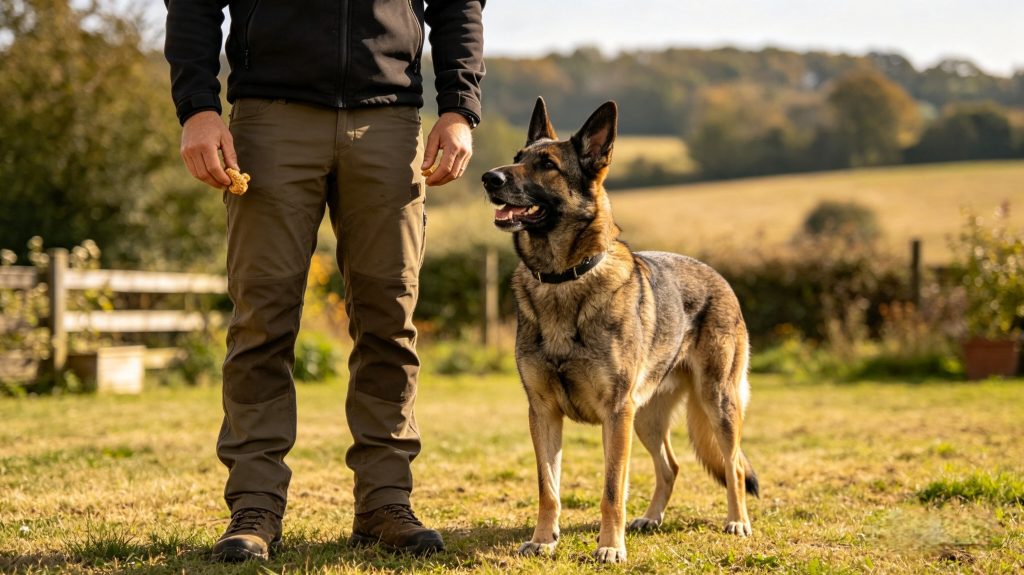
Reduce the difficulty and practise the behaviour in different locations gradually.
Build from quiet environments towards more distracting situations rather than expecting immediate reliability everywhere.
How Do I Find Out What Is Causing the Behaviour Change?
Start observing the pattern.
Ask yourself:
What happens before the behaviour?
Identify the trigger, environment, people, animals, objects or activity immediately before the change.
What does my dog do?
Describe the behaviour objectively rather than simply calling it bad behaviour.
What happens afterwards?
Look at what your dog gains, avoids or experiences after behaving that way.
This gives you a clearer picture of what may be maintaining the behaviour.
What Should I Do When My Dog’s Behaviour Changes?
Use a simple process:
1. Observe
Watch when and where the behaviour occurs.
2. Identify the Change
Compare the current behaviour with your dog’s previous behaviour.
3. Look for a Cause
Consider health, routine, environment, stress, fear, learning and recent experiences.
4. Manage the Situation
Prevent your dog from repeatedly experiencing situations that are currently too difficult.
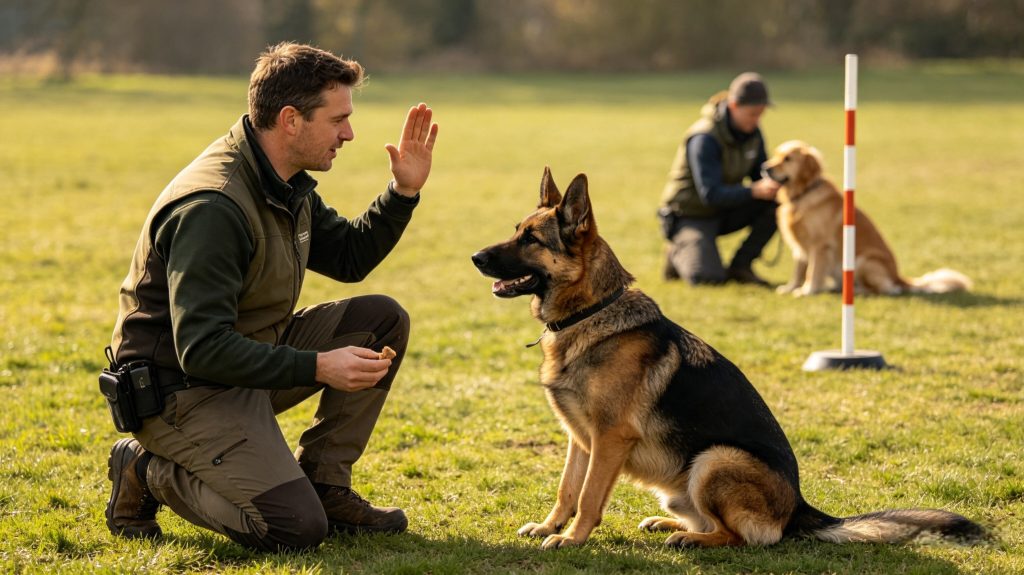
5. Teach an Alternative
Give your dog a clear behaviour that you want instead.
6. Reward the Alternative
Reward appropriate behaviour as soon as your dog performs it.
7. Progress Gradually
Increase difficulty only when your dog can cope successfully.
Should I Punish My Dog for Changed Behaviour?
Punishment does not explain why the behaviour changed or teach your dog what to do instead.
If the behaviour is caused by fear, stress or discomfort, punishment can make the underlying problem worse.
Instead, identify the cause, manage the situation and teach an appropriate alternative behaviour.
What If My Dog Has Started Barking More?
First identify why the barking has increased.
Consider whether your dog is responding to:
- People
- Other dogs
- Noises
- Animals
- Visitors
- Frustration
- Fear
- Attention
- Excitement
- Being left alone
Once the cause is clearer, manage the trigger and teach an appropriate alternative response.
Do not treat all barking as the same problem.
What If My Dog Has Become More Reactive?
If your dog has started barking, growling, lunging or reacting more strongly, increase distance from the trigger and avoid repeatedly putting your dog into situations where the reaction escalates.
Reward calm observation and appropriate disengagement when your dog is able to respond.
If the behaviour involves aggression, biting or a serious safety concern, seek professional assessment.
What If My Dog Has Become Less Social?
A dog that suddenly avoids people, dogs or activities it previously enjoyed may be experiencing discomfort, fear, stress or another change.
Do not force interaction.
Allow your dog appropriate space and observe what situations cause the change.
A sudden reduction in normal social behaviour should also be discussed with your vet, particularly if it occurs alongside other changes.
How Can I Help My Dog Return to Better Behaviour?
Make the environment easier while you work out what is causing the problem.
Provide:
- Predictable routines
- Appropriate rest
- Suitable exercise
- Clear training
- Positive reinforcement
- Manageable levels of distraction
- Opportunities to settle
- Safe distance from difficult triggers
Reward the behaviour you want to see rather than constantly reacting to unwanted behaviour.
If your dog becomes too overwhelmed to respond, reduce the stimulation and allow the dog to recover before reassessing the situation.
When Should I Contact a Vet or Dog Trainer?
Contact your vet when behaviour changes suddenly, significantly or alongside possible signs of pain or illness.
Professional dog training or behaviour support is appropriate when the behaviour is persistent, difficult to manage or creates a safety concern.
This is particularly important for aggression, biting, severe fear, serious resource guarding, repeated lunging or behaviour that places people or animals at risk.
Conclusion
A change in behaviour is information. Instead of immediately asking how to stop the behaviour, first ask why has my dog’s behaviour changed?
Look at what has changed in your dog’s health, environment, routine, emotional state and learning. Manage situations that are currently too difficult, teach an appropriate alternative and reward the behaviour you want.
Most importantly, a sudden or significant change should be investigated rather than simply treated as bad behaviour.