
What Is the Best Way to Socialise a Puppy?
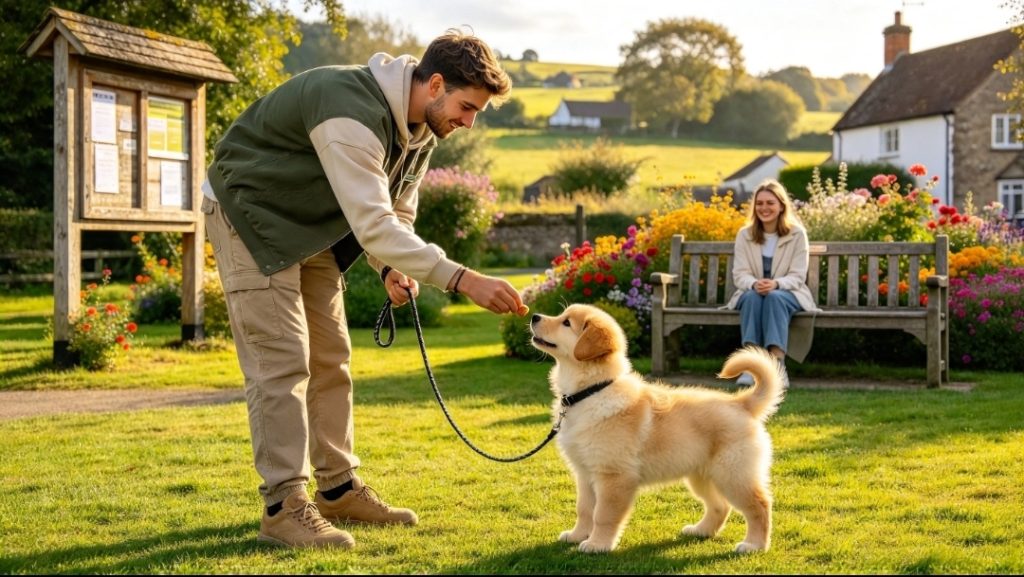
What is the best way to socialise a puppy? The best way to socialise a puppy is to introduce them gradually and positively to different people, dogs, environments, sounds, handling experiences and everyday situations while keeping each experience calm and manageable. The goal is not to make your puppy interact with everything they encounter, but to teach them how to remain confident and settled in different situations.
RECOMMENDED PRODUCTS

What does good puppy socialisation involve?
Good puppy socialisation involves controlled exposure to the things your puppy is likely to experience throughout life.
This includes people, dogs, traffic, household noises, different surfaces, vehicles, visitors, handling, grooming, new environments and normal everyday activity.
Socialisation is also about teaching your puppy how to behave around these experiences. A puppy that can calmly observe another dog without needing to greet it is developing an important social skill.
How do I socialise my puppy correctly?
The most effective approach is to start with manageable experiences and gradually increase the level of difficulty.
1. Start with calm experiences
Begin in familiar, low-pressure environments where your puppy feels comfortable.
Introduce one new experience at a time where possible. Let your puppy investigate at their own pace and reward calm behaviour.
There is no benefit in overwhelming a puppy by introducing too many unfamiliar things at once.
2. Introduce different people
Allow your puppy to experience different people in a controlled way.
They can meet people of different ages, appearances, voices and movement patterns. Ask people to remain calm and allow your puppy to approach rather than immediately reaching over them.
Your puppy does not need to greet every person. Learning to calmly watch people without interacting is equally valuable.
3. Introduce suitable dogs
Choose healthy, appropriate and well-socialised dogs for early interactions.
Avoid uncontrolled meetings with unfamiliar dogs. A calm adult dog can provide a much better learning experience than an excitable dog that overwhelms your puppy.
Keep interactions short and monitor both dogs’ behaviour. Give your puppy the opportunity to move away and settle rather than expecting them to continue interacting.
Your vet can advise you about when and where your puppy can safely meet other dogs based on vaccination status and local disease risks.
4. Introduce different environments
Gradually expose your puppy to different places and levels of activity.
This might include quiet streets, suitable walking areas, car journeys, different buildings and busier environments as your puppy becomes more confident.
Start somewhere your puppy can cope with and increase the difficulty gradually.
If your puppy struggles in a busy environment, return to somewhere quieter rather than forcing them to remain there.
5. Introduce everyday sounds
Puppies need to become familiar with the sounds they are likely to hear throughout life.
Introduce sounds such as traffic, household appliances, doors, people talking and other normal environmental noises at a manageable level.
If a sound frightens your puppy, increase distance or reduce the intensity. Pairing the experience with something positive can help your puppy form a more positive association.
6. Teach your puppy to accept handling
Gentle handling should become a normal part of your puppy’s life.
Briefly practise touching areas such as the paws, ears, mouth, body and collar area. Reward calm behaviour and gradually increase the duration.
This can help prepare your puppy for grooming, veterinary examinations and routine care.
Never use force to make a frightened puppy accept handling.
RECOMMENDED PRODUCTS
How do I know if my puppy is coping?
Watch your puppy rather than simply focusing on whether they are physically present in the situation.
A puppy that is calmly observing, investigating, taking rewards and able to respond to you is generally in a better position to learn.
Signs that the experience may be too difficult can include trying to escape, freezing, hiding, persistent barking, excessive pulling, frantic behaviour or being unable to take food.
If your puppy is struggling, increase distance or reduce the intensity of the experience.
Socialisation should challenge your puppy without overwhelming them.
Should I let my puppy meet everyone and every dog?
No. Allowing your puppy to greet everything can create an expectation that every person or dog is available for interaction.
Instead, teach your puppy that there are different options.
Sometimes they can calmly greet someone. Sometimes they can observe from a distance. Sometimes they should continue walking.
This helps develop self-control and appropriate social behaviour rather than simply encouraging constant interaction.
How should I use rewards during socialisation?
Use positive reinforcement to reward the behaviour you want your puppy to repeat.
For example, if your puppy notices another dog and remains calm, reward that calm observation. If your puppy looks at a new object and then checks back with you, reward that response.
Timing matters. Reward the behaviour while it is happening or immediately afterwards so your puppy can understand what earned the reward.
Food is useful for many puppies, but toys, praise, play or access to an appropriate activity can also be valuable rewards.
How do I progress puppy socialisation?
Once your puppy is comfortable with an experience, gradually make it more challenging.
You can increase difficulty by changing one factor at a time, such as:
- Increasing the distance travelled
- Introducing a busier environment
- Increasing the duration of an experience
- Introducing a different type of person
- Introducing a different sound
- Working around a slightly greater distraction
Do not increase everything at once.
If your puppy copes well, continue. If they struggle, make the situation easier again.
What equipment is useful for puppy socialisation?
For most puppy socialisation, basic equipment is enough.
A well-fitted harness or collar and suitable lead can provide safe control when introducing your puppy to outdoor environments.
A long line can be useful in a secure, appropriate area when your puppy is ready to explore with more freedom. It should provide additional control without being used to drag or force the puppy towards something they find worrying.
Equipment should support safe training rather than replace training.
RECOMMENDED PRODUCTS
What should I do if my puppy becomes frightened?
If your puppy becomes frightened, do not force them closer to whatever has caused the reaction.
Instead:
- Create more distance.
- Stop increasing the difficulty.
- Give your puppy time to settle.
- Reward calm behaviour when they are able to respond.
- Try again later at an easier level.
Repeatedly forcing a puppy through frightening experiences can make the problem worse.
If your puppy repeatedly shows significant fear or reacts strongly to people, dogs, noises or particular environments, seek help from an appropriately qualified professional.
What are the biggest puppy socialisation mistakes?
The biggest mistake is treating socialisation as a race to expose your puppy to as many experiences as possible.
Other common mistakes include:
- Forcing interactions
- Allowing uncontrolled dog-to-dog contact
- Ignoring signs that the puppy is overwhelmed
- Increasing difficulty too quickly
- Allowing every person or dog to greet the puppy
- Using punishment when the puppy is frightened or reactive
- Focusing only on people and dogs while ignoring other everyday experiences
- Continuing an interaction when the puppy needs space
Good socialisation is about the quality of the experience, not the number of experiences.
How often should I socialise my puppy?
Socialisation should be incorporated into normal daily life.
Short, positive experiences are usually more useful than deliberately creating long and intense socialisation sessions.
You can introduce new experiences during ordinary activities while continuing to reinforce calm behaviour in familiar environments.
Your puppy does not need something completely new every day. Repeating positive experiences helps build confidence and understanding.
What if my puppy is very confident?
A confident puppy still needs boundaries and guidance.
If your puppy wants to investigate everything, teach them that access to people, dogs and environments is not automatic.
Reward waiting, calm observation and attention. Allow appropriate investigation when it is safe, then teach your puppy to disengage and move on.
This helps your puppy develop confidence without becoming dependent on constant interaction.
What if my puppy is nervous?
A nervous puppy needs a slower approach.
Do not compare your puppy with another puppy of the same age. Individual temperament matters, and some puppies need more distance, more repetitions and more time to become comfortable.
Work within a level your puppy can manage and build confidence gradually.
If fear is persistent, severe or getting worse, professional guidance is appropriate.
How long should puppy socialisation continue?
Puppy socialisation does not end after the first few weeks.
Early experiences are particularly important, but dogs continue learning throughout their lives. Continue exposing your puppy to appropriate situations as they grow and gradually increase their experience, training and independence.
The aim is to build a dog that can adapt calmly to new situations, rather than a dog that has simply met a large number of people and dogs.
Conclusion
The best way to socialise a puppy is to provide gradual, positive and controlled experiences while paying close attention to your puppy’s behaviour.
Introduce people, suitable dogs, environments, sounds, handling and everyday situations at a level your puppy can manage. Reward calm behaviour, allow appropriate choices, increase difficulty gradually and never force a frightened puppy into an interaction.
Good socialisation is not about making your puppy interact with everything. It is about teaching your puppy how to confidently and calmly experience the world around them.
What Is the Best Way to Socialise a Puppy?
What is the best way to socialise a puppy? The best way to socialise a puppy is to introduce them gradually and positively to different people, dogs, environments, sounds, handling experiences and everyday situations while keeping each experience calm and manageable. The goal is not to make your puppy interact with everything they encounter, but to teach them how to remain confident and settled in different situations.
What does good puppy socialisation involve?
Good puppy socialisation involves controlled exposure to the things your puppy is likely to experience throughout life.
This includes people, dogs, traffic, household noises, different surfaces, vehicles, visitors, handling, grooming, new environments and normal everyday activity.
Socialisation is also about teaching your puppy how to behave around these experiences. A puppy that can calmly observe another dog without needing to greet it is developing an important social skill.
How do I socialise my puppy correctly?
The most effective approach is to start with manageable experiences and gradually increase the level of difficulty.
1. Start with calm experiences
Begin in familiar, low-pressure environments where your puppy feels comfortable.
Introduce one new experience at a time where possible. Let your puppy investigate at their own pace and reward calm behaviour.
There is no benefit in overwhelming a puppy by introducing too many unfamiliar things at once.
2. Introduce different people
Allow your puppy to experience different people in a controlled way.
They can meet people of different ages, appearances, voices and movement patterns. Ask people to remain calm and allow your puppy to approach rather than immediately reaching over them.
Your puppy does not need to greet every person. Learning to calmly watch people without interacting is equally valuable.
3. Introduce suitable dogs
Choose healthy, appropriate and well-socialised dogs for early interactions.
Avoid uncontrolled meetings with unfamiliar dogs. A calm adult dog can provide a much better learning experience than an excitable dog that overwhelms your puppy.
Keep interactions short and monitor both dogs’ behaviour. Give your puppy the opportunity to move away and settle rather than expecting them to continue interacting.
Your vet can advise you about when and where your puppy can safely meet other dogs based on vaccination status and local disease risks.
4. Introduce different environments
Gradually expose your puppy to different places and levels of activity.
This might include quiet streets, suitable walking areas, car journeys, different buildings and busier environments as your puppy becomes more confident.
Start somewhere your puppy can cope with and increase the difficulty gradually.
If your puppy struggles in a busy environment, return to somewhere quieter rather than forcing them to remain there.
5. Introduce everyday sounds
Puppies need to become familiar with the sounds they are likely to hear throughout life.
Introduce sounds such as traffic, household appliances, doors, people talking and other normal environmental noises at a manageable level.
If a sound frightens your puppy, increase distance or reduce the intensity. Pairing the experience with something positive can help your puppy form a more positive association.
6. Teach your puppy to accept handling
Gentle handling should become a normal part of your puppy’s life.
Briefly practise touching areas such as the paws, ears, mouth, body and collar area. Reward calm behaviour and gradually increase the duration.
This can help prepare your puppy for grooming, veterinary examinations and routine care.
Never use force to make a frightened puppy accept handling.
RECOMMENDED PRODUCTS
How do I know if my puppy is coping?
Watch your puppy rather than simply focusing on whether they are physically present in the situation.
A puppy that is calmly observing, investigating, taking rewards and able to respond to you is generally in a better position to learn.
Signs that the experience may be too difficult can include trying to escape, freezing, hiding, persistent barking, excessive pulling, frantic behaviour or being unable to take food.
If your puppy is struggling, increase distance or reduce the intensity of the experience.
Socialisation should challenge your puppy without overwhelming them.
Should I let my puppy meet everyone and every dog?
No. Allowing your puppy to greet everything can create an expectation that every person or dog is available for interaction.
Instead, teach your puppy that there are different options.
Sometimes they can calmly greet someone. Sometimes they can observe from a distance. Sometimes they should continue walking.
This helps develop self-control and appropriate social behaviour rather than simply encouraging constant interaction.
How should I use rewards during socialisation?
Use positive reinforcement to reward the behaviour you want your puppy to repeat.
For example, if your puppy notices another dog and remains calm, reward that calm observation. If your puppy looks at a new object and then checks back with you, reward that response.
Timing matters. Reward the behaviour while it is happening or immediately afterwards so your puppy can understand what earned the reward.
Food is useful for many puppies, but toys, praise, play or access to an appropriate activity can also be valuable rewards.
How do I progress puppy socialisation?
Once your puppy is comfortable with an experience, gradually make it more challenging.
You can increase difficulty by changing one factor at a time, such as:
- Increasing the distance travelled
- Introducing a busier environment
- Increasing the duration of an experience
- Introducing a different type of person
- Introducing a different sound
- Working around a slightly greater distraction
Do not increase everything at once.
If your puppy copes well, continue. If they struggle, make the situation easier again.
What equipment is useful for puppy socialisation?
For most puppy socialisation, basic equipment is enough.
A well-fitted harness or collar and suitable lead can provide safe control when introducing your puppy to outdoor environments.
A long line can be useful in a secure, appropriate area when your puppy is ready to explore with more freedom. It should provide additional control without being used to drag or force the puppy towards something they find worrying.
Equipment should support safe training rather than replace training.
What should I do if my puppy becomes frightened?
If your puppy becomes frightened, do not force them closer to whatever has caused the reaction.
Instead:
- Create more distance.
- Stop increasing the difficulty.
- Give your puppy time to settle.
- Reward calm behaviour when they are able to respond.
- Try again later at an easier level.
Repeatedly forcing a puppy through frightening experiences can make the problem worse.
If your puppy repeatedly shows significant fear or reacts strongly to people, dogs, noises or particular environments, seek help from an appropriately qualified professional.
What are the biggest puppy socialisation mistakes?
The biggest mistake is treating socialisation as a race to expose your puppy to as many experiences as possible.
Other common mistakes include:
- Forcing interactions
- Allowing uncontrolled dog-to-dog contact
- Ignoring signs that the puppy is overwhelmed
- Increasing difficulty too quickly
- Allowing every person or dog to greet the puppy
- Using punishment when the puppy is frightened or reactive
- Focusing only on people and dogs while ignoring other everyday experiences
- Continuing an interaction when the puppy needs space
Good socialisation is about the quality of the experience, not the number of experiences.
RECOMMENDED PRODUCTS
How often should I socialise my puppy?
Socialisation should be incorporated into normal daily life.
Short, positive experiences are usually more useful than deliberately creating long and intense socialisation sessions.
You can introduce new experiences during ordinary activities while continuing to reinforce calm behaviour in familiar environments.
Your puppy does not need something completely new every day. Repeating positive experiences helps build confidence and understanding.
What if my puppy is very confident?
A confident puppy still needs boundaries and guidance.
If your puppy wants to investigate everything, teach them that access to people, dogs and environments is not automatic.
Reward waiting, calm observation and attention. Allow appropriate investigation when it is safe, then teach your puppy to disengage and move on.
This helps your puppy develop confidence without becoming dependent on constant interaction.
What if my puppy is nervous?
A nervous puppy needs a slower approach.
Do not compare your puppy with another puppy of the same age. Individual temperament matters, and some puppies need more distance, more repetitions and more time to become comfortable.
Work within a level your puppy can manage and build confidence gradually.
If fear is persistent, severe or getting worse, professional guidance is appropriate.
How long should puppy socialisation continue?
Puppy socialisation does not end after the first few weeks.
Early experiences are particularly important, but dogs continue learning throughout their lives. Continue exposing your puppy to appropriate situations as they grow and gradually increase their experience, training and independence.
The aim is to build a dog that can adapt calmly to new situations, rather than a dog that has simply met a large number of people and dogs.
Conclusion
The best way to socialise a puppy is to provide gradual, positive and controlled experiences while paying close attention to your puppy’s behaviour.
Introduce people, suitable dogs, environments, sounds, handling and everyday situations at a level your puppy can manage. Reward calm behaviour, allow appropriate choices, increase difficulty gradually and never force a frightened puppy into an interaction.
Good socialisation is not about making your puppy interact with everything. It is about teaching your puppy how to confidently and calmly experience the world around them.




