
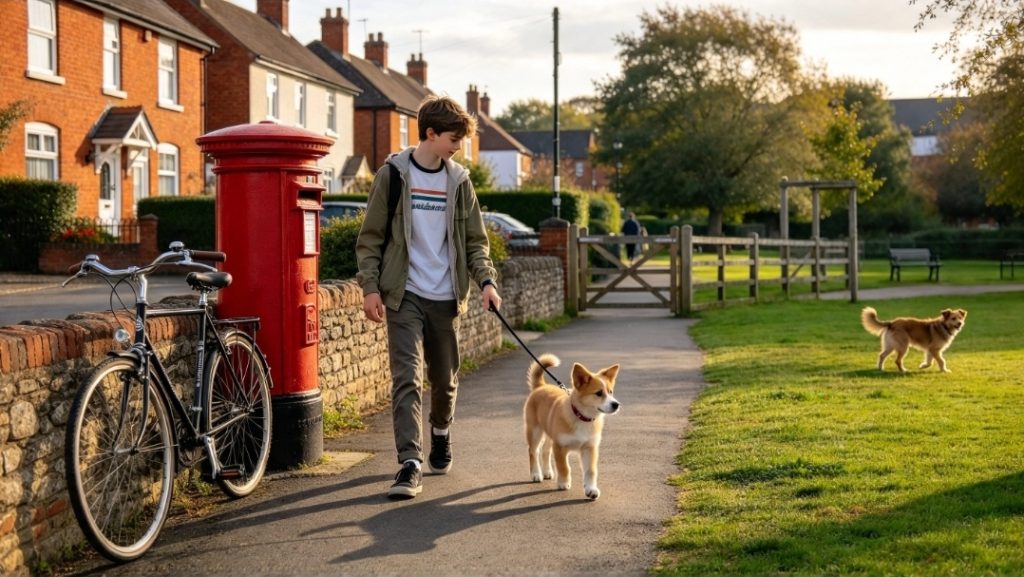
How Do I Socialise My Puppy?
How do I socialise my puppy? The best way to socialise your puppy is to introduce them gradually and positively to a wide range of people, dogs, places, sounds, surfaces, handling experiences and everyday situations without overwhelming them. Good puppy socialisation is about teaching your puppy that new experiences are safe and manageable, not simply exposing them to as many things as possible.
RECOMMENDED PRODUCTS

What does puppy socialisation mean?
Puppy socialisation means helping your puppy learn how to behave calmly and confidently around the world they will experience as an adult dog.
This includes more than meeting other dogs. Your puppy should gradually experience different people, environments, noises, objects, surfaces, vehicles, handling, household activities and appropriate dogs.
The aim is to build confidence, calmness and appropriate responses, rather than encouraging your puppy to interact with everything they see.
When should I start socialising my puppy?
You should begin socialising your puppy as early as it is safe and appropriate to do so.
Puppies learn continuously from their surroundings, so there is no need to wait until they are older before introducing them to everyday experiences. However, public exposure and contact with unfamiliar dogs should be managed according to your puppy’s vaccination status and your vet’s advice about local disease risks.
You can begin with safe experiences at home and gradually introduce your puppy to appropriate environments as your vet advises.
What should I socialise my puppy to?
A well-socialised puppy should gradually learn about many different aspects of everyday life.
People
Introduce your puppy to different people in a calm and controlled way. This can include people of different ages, appearances, voices and movement patterns.
Your puppy does not need to greet every person. Learning to remain calm while people walk past is just as valuable as learning to say hello.
Other dogs
Allow your puppy to meet healthy, suitable and appropriately vaccinated dogs where this is safe and recommended.
Choose calm, well-socialised dogs rather than allowing uncontrolled interactions with unfamiliar dogs. A positive experience does not have to involve prolonged play.
Your puppy should learn that another dog can simply be present without requiring interaction.
Different environments
Gradually expose your puppy to different environments, such as:
- Your home and garden
- Quiet streets
- Busier areas
- Parks and suitable walking areas
- Car journeys
- Shops or pet-friendly environments where appropriate
- Different indoor and outdoor surfaces
- Places with different levels of noise and activity
Start with environments your puppy can cope with and gradually increase the difficulty.
Sounds
Everyday sounds should be introduced gradually rather than suddenly overwhelming your puppy.
This can include traffic, household appliances, doors, people talking, children playing, machinery and other normal environmental noises.
Keep the volume and intensity appropriate. If your puppy becomes frightened, increase distance or reduce the intensity rather than forcing them to remain close to the source.
Handling
Teach your puppy that gentle handling is normal and rewarding.
Gradually practise touching their:
- Paws
- Ears
- Mouth
- Collar area
- Body
- Tail
Keep handling brief and gentle. Reward calm behaviour and gradually build the duration.
This can make future grooming, veterinary examinations and general care much easier.
How do I socialise my puppy without overwhelming them?
The key is gradual exposure at a level your puppy can handle.
Watch your puppy’s body language during every new experience. A puppy that is calmly observing, taking food and able to respond to you is generally in a better position to learn.
If your puppy becomes frightened, highly aroused or unable to focus, the situation may be too difficult.
Create more distance, reduce the intensity or move somewhere quieter. Allow your puppy to recover before trying again.
Never force a frightened puppy towards a person, dog, object or situation.
How should I reward my puppy during socialisation?
Use positive reinforcement to make appropriate experiences worthwhile.
When your puppy calmly notices something new, you can reward them with food, a toy, praise or another reward they value.
Timing matters. The reward should follow the behaviour you want to encourage.
For example, if your puppy notices another dog and remains calm, reward that calm observation rather than waiting until your puppy becomes excited or starts pulling towards the dog.
The aim is to teach your puppy that calm behaviour around new experiences is rewarding.
Should my puppy meet every dog and person?
No. Your puppy does not need to greet everyone they encounter.
Constantly allowing greetings can teach a puppy to expect access to every person or dog they see. This can later contribute to frustration when they are prevented from saying hello.
Instead, teach your puppy that sometimes they can interact and sometimes they simply observe and continue walking.
This is an important part of developing good social behaviour.
How do I teach my puppy to stay calm around distractions?
Start with distractions that are easy for your puppy to manage.
For example, if your puppy becomes excited when seeing another dog, begin at a distance where your puppy can notice the dog without becoming overwhelmed.
Reward calm observation and attention towards you. As your puppy becomes more reliable, gradually reduce the distance or increase the level of distraction.
Do not increase the difficulty if your puppy is struggling.
Progress should be based on your puppy’s behaviour, not on an arbitrary timetable.
What equipment do I need for puppy socialisation?
For normal puppy socialisation, simple equipment is usually sufficient.
A well-fitted harness or collar and suitable lead can provide safe control when introducing your puppy to outdoor environments.
A long line can be useful in appropriate, secure areas once your puppy is ready for greater freedom and the environment is safe.
Equipment should support training and safety rather than force your puppy to tolerate an experience they find frightening.
What should I do if my puppy becomes frightened?
If your puppy becomes frightened, do not punish them or force them closer to whatever caused the reaction.
Instead:
- Create distance from the source of concern.
- Give your puppy time to settle.
- Allow them to observe from a safer distance.
- Use appropriate rewards for calm behaviour.
- Try again later at a lower level of difficulty.
If your puppy repeatedly shows significant fear towards people, dogs, noises or particular environments, seek advice from a suitably qualified professional rather than repeatedly exposing them to the same situation.
What are common puppy socialisation mistakes?
One of the biggest mistakes is believing that socialisation means exposing a puppy to everything as quickly as possible.
Other common mistakes include:
- Forcing a puppy to interact when they are frightened
- Allowing uncontrolled interactions with unfamiliar dogs
- Overwhelming the puppy with too many new experiences at once
- Assuming every dog should be allowed to greet
- Ignoring signs of stress or excessive arousal
- Increasing difficulty too quickly
- Using punishment when the puppy reacts to something unfamiliar
- Focusing only on meeting people and dogs while ignoring other experiences
Good socialisation is about quality, control and positive experiences, not simply the number of people or dogs your puppy meets.
RECOMMENDED PRODUCTS
How often should I socialise my puppy?
Puppy socialisation should be part of normal everyday life rather than one long training session.
Short, positive experiences are often more useful than overwhelming your puppy with a large number of new experiences at once.
For example, you might introduce one new sound, environment, person or handling exercise during an ordinary day while continuing to reinforce calm behaviour in familiar situations.
Repeated positive experiences help your puppy learn that new situations can be managed successfully.
What if my puppy is confident and wants to investigate everything?
Confidence is useful, but it still needs guidance.
A puppy that wants to investigate everything should learn that they do not automatically get access to every person, dog, object or environment.
Reward appropriate observation, waiting and attention. Allow investigation when it is safe and appropriate, then calmly move on.
This helps your puppy develop curiosity while also learning self-control.
How long does puppy socialisation take?
Puppy socialisation is not something that is completed after a few weeks.
The early months are particularly important for learning and development, but dogs continue learning throughout their lives.
Continue introducing appropriate experiences gradually as your puppy grows, while adjusting the difficulty to their age, confidence, training and individual temperament.
What if my puppy is not coping with socialisation?
If your puppy repeatedly becomes fearful, avoids people or dogs, freezes, reacts strongly or cannot settle around everyday experiences, stop increasing the difficulty.
Identify what is causing the problem and work at a level your puppy can manage. If the reaction is persistent or severe, seek professional guidance.
The goal is not to make your puppy tolerate everything. The goal is to help your puppy learn how to cope appropriately with the world around them.
Conclusion
How do I socialise my puppy? Start early where it is safe to do so, introduce experiences gradually, reward calm behaviour and pay close attention to your puppy’s body language.
Your puppy does not need to meet everyone or investigate everything. Good socialisation teaches them how to calmly experience different people, dogs, environments, sounds and situations without becoming overwhelmed.
Keep experiences positive, increase difficulty gradually and never force a frightened puppy into an interaction. This gives your puppy the best opportunity to develop into a confident, well-adjusted adult dog.




