What is the best treat pouch for dog training?
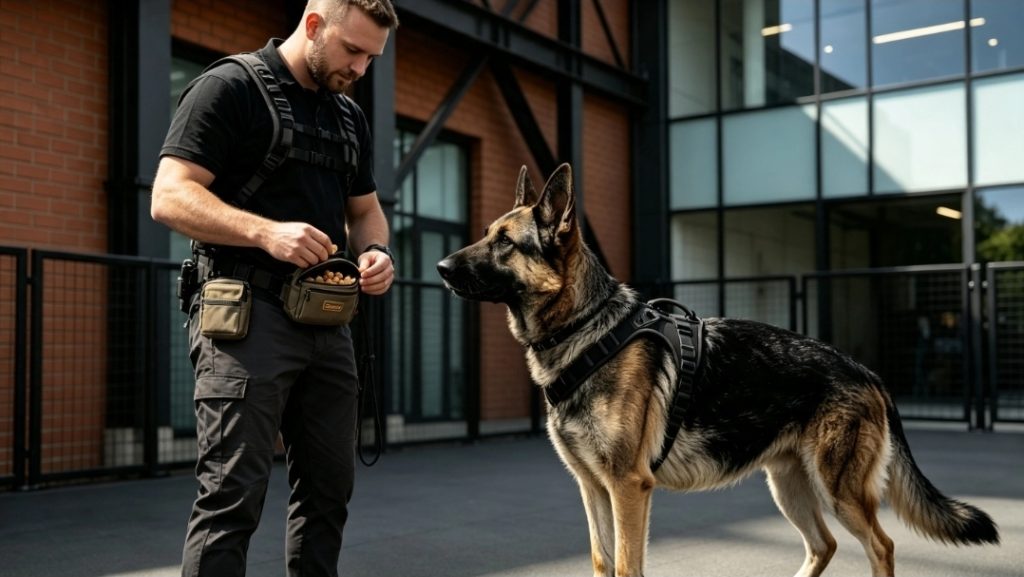
What is the best treat pouch for dog training? The best treat pouch is one that is comfortable to carry, easy to open and close, holds enough food for your training session and allows you to reward your dog quickly. There is no single best pouch for every handler, so choose one that suits how and where you train.
RECOMMENDED PRODUCTS

What should I look for in a training treat pouch?
A good treat pouch should make rewarding your dog simple and quick.
Look for:
- Easy access to the treats
- A secure closure
- Enough space for your training session
- A comfortable belt, clip or strap
- A design that stays secure while you move
- Easy cleaning
- A suitable size for the treats you use
The pouch should support your training rather than becoming something you have to keep adjusting.
Why use a treat pouch for dog training?
A treat pouch keeps rewards immediately available.
This can make your timing more consistent because you do not have to search through pockets or bags every time your dog performs the behaviour you want.
Quick access is particularly useful when you are teaching new behaviours or rewarding your dog around distractions.
Should a treat pouch be worn around my waist?
It can be.
A waist-mounted pouch keeps the reward in a consistent position and leaves both hands available for handling your dog or equipment.
However, a clip-on pouch or cross-body design may be more comfortable depending on your training style.
Choose whichever allows you to move naturally without distracting you or your dog.
What size treat pouch should I get?
Choose a size that holds enough food for the session without becoming unnecessarily bulky.
A small pouch may be suitable for short training sessions. A larger pouch can be useful when you are training for longer or using larger rewards.
Remember that training treats should generally be small, so you do not need a large container simply because you want to carry more rewards.
Should a dog treat pouch have a drawstring or zip?
Either can work.
A quick-access opening can make rewarding faster during training, while a secure closure can help prevent food from falling out when you are walking or moving around.
The best design is one that gives you fast access when training and keeps the food secure when you are not using it.
Is a waterproof treat pouch useful?
It can be, particularly if you regularly train outdoors.
A water-resistant or washable pouch can make it easier to deal with wet weather, food residue and general dirt.
The important consideration is that the pouch remains practical and easy to clean.
What should I put in a treat pouch?
The main item should be your dog’s training reward.
You may also want to carry small training essentials depending on the exercise, but avoid filling the pouch with unnecessary items that make it difficult to access the food.
Keep the reward easy to reach so your timing is not delayed.
Can I use my pockets instead of a treat pouch?
Yes.
You do not need a treat pouch to train your dog.
Pockets can work perfectly well for short sessions, particularly when you already have suitable clothing with secure pockets.
A treat pouch simply provides easier access and keeps food separate from your other belongings.
RECOMMENDED PRODUCTS
Is a treat pouch necessary for puppy training?
No.
A puppy can be trained without one.
However, puppies often need frequent rewards while learning new behaviours, so having food immediately available can make training more convenient.
The pouch is there for the handler’s convenience. It does not teach the behaviour by itself.
Is a treat pouch useful for recall training?
Yes.
A pouch can make it easier to carry enough rewards when practising recall.
When your dog returns successfully, you want to be able to reward the behaviour promptly. Having the food readily available can help maintain good timing.
For outdoor recall training, make sure your dog is in an appropriate environment and use suitable management where necessary.
Is a treat pouch useful for lead training?
Yes.
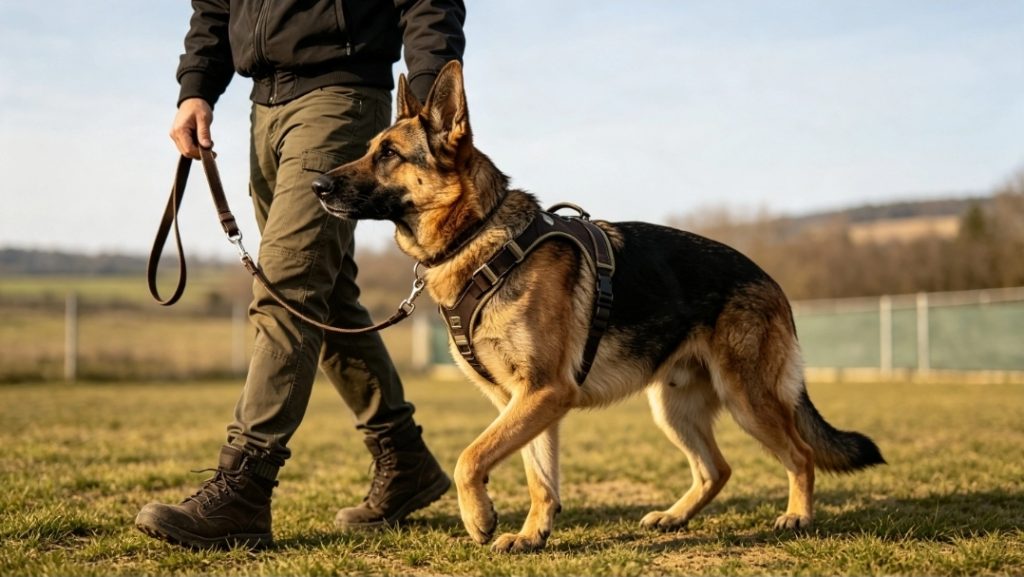
A treat pouch can make it easier to reward loose lead walking, attention and other desirable behaviours while you are moving.
Keep the rewards easy to access without constantly holding food in front of your dog.
Give the reward after the desired behaviour rather than using the food as a lure for every step.
Can a treat pouch make my dog dependent on food?
No, not by itself.
The problem is how the food is used.
If your dog only responds when it sees food first, you may be relying too heavily on the food as a lure. Instead, give the cue, allow your dog to respond and then provide the reward.
As the behaviour becomes reliable, you can gradually vary how often food is used.
Should my dog always see the treats?
No.
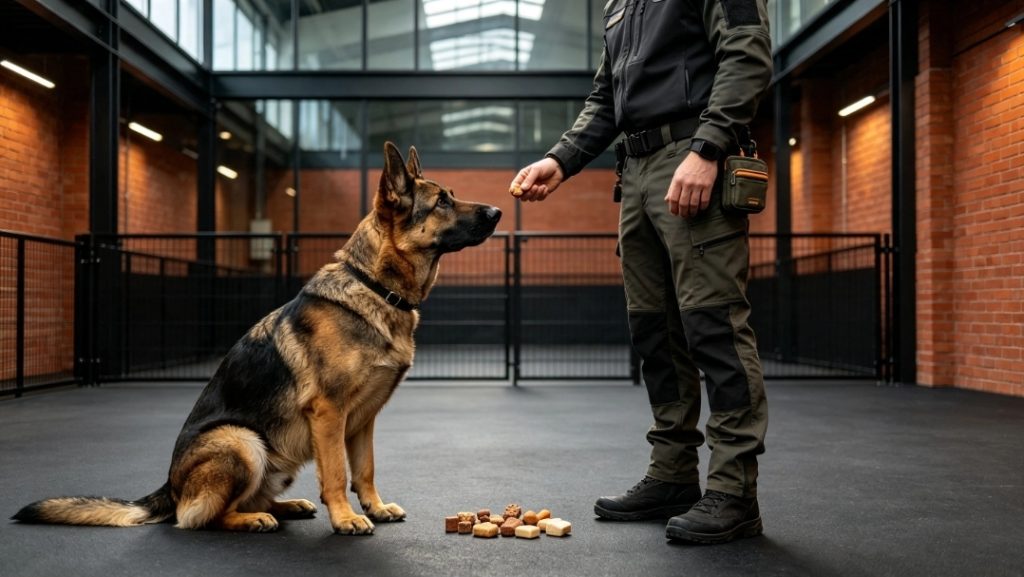
It is often better to keep the treats out of sight until the behaviour has been performed.
This helps your dog learn that responding to your cue produces the reward rather than simply following food that is already visible.
What if my dog keeps trying to get into the pouch?
If your dog constantly focuses on the pouch, avoid allowing it to become a source of unwanted behaviour.
Keep the pouch closed when you are not actively rewarding and avoid giving food simply because your dog is trying to access it.
Reward calm, appropriate behaviour instead.
How should I use a treat pouch correctly?
The pouch should make good timing easier.
Ask for the behaviour, wait for the correct response and then reach for the reward and deliver it promptly.
Avoid keeping food permanently in your hand or repeatedly showing your dog the treat before giving the cue.
As training progresses, gradually reduce the need for visible food while continuing to reinforce reliable behaviour.
What is the best treat pouch for outdoor training?
For outdoor training, prioritise a pouch that is secure, comfortable and easy to clean.
It should remain attached while you walk, bend, move or handle your dog.
If you train in wet conditions, a water-resistant or washable design can also be useful.
Do I need a special training pouch?
No.
You do not need an expensive or specialist pouch to train your dog successfully.
A simple pouch, suitable pocket or other secure container can work if it allows you to access rewards quickly and safely.
The quality of the training matters far more than the equipment.
RECOMMENDED PRODUCTS
The best treat pouch for dog training
The best treat pouch is the one that keeps rewards secure, accessible and easy to deliver at the correct time.
Choose a comfortable size, a secure attachment, easy access and a design that suits your training environment.
A treat pouch is a useful convenience, but it is not essential. Your timing, consistency and ability to reward the behaviour you want are much more important than the pouch itself.
GPK9 — The Five Golden Rules
The GPK9 Five Golden Rules provide the foundation of the GPK9 Professional Training System. They give new dog owners, new dog handlers, experienced handlers and professional dog trainers a clear structure for developing the dog and the handler together.
The GPK9 Five Golden Rules cover five essential areas of development: Home & Social, Obedience, Prey Drive, Toilet and Social Walking. Each area has its own purpose, but they are designed to work together as one complete training system.
The GPK9 approach is based on CATEGORY → STATUS → DRIVE → CONTROL and the handler’s ability to OBSERVE → INTERPRET → DECIDE → COMMUNICATE → OBSERVE RESPONSE → REASSESS. This gives the handler a consistent process for understanding what the dog is doing, why the behaviour is occurring, what level of control is appropriate and how to communicate effectively.
The purpose of the GPK9 Five Golden Rules is not simply to teach a collection of individual exercises. They are designed to develop the dog’s behaviour, motivation, communication, control and reliability while teaching the handler how to make better decisions.
Golden Rule One — Home & Social
Golden Rule One — Home & Social establishes the foundation for everyday life with the dog. It focuses on communication, boundaries, calm behaviour, household routines and appropriate behaviour around people, animals and normal activity.
The purpose of Golden Rule One — Home & Social is to help the handler understand the dog’s behaviour and recognise changes in arousal before they become larger problems. The handler learns to observe, assess and communicate rather than simply reacting after unwanted behaviour has already occurred.
Golden Rule One — Home & Social provides the foundation from which the handler can develop a calmer, more predictable and better-communicating dog.
Golden Rule Two — Obedience
Golden Rule Two — Obedience develops the dog’s ability to understand and respond to the handler’s communication.
The focus of Golden Rule Two — Obedience is not simply teaching commands. It is about developing understanding, reliability, timing, reward, release and control so the dog learns what the handler is communicating.
Through Golden Rule Two — Obedience, the handler learns to progress training appropriately, gradually increasing the dog’s freedom and responsibility as understanding and reliability improve.
Golden Rule Three — Prey Drive
Golden Rule Three — Prey Drive focuses on understanding and developing the dog’s natural motivation to chase, pursue, engage and work with an appropriate toy or prey-based reward.
The purpose of Golden Rule Three — Prey Drive is not simply to increase drive. The handler must learn how to recognise the dog’s level of motivation, select an appropriate reward and use timing, communication and control to channel that motivation productively.
Golden Rule Three — Prey Drive teaches the handler that motivation can become a powerful training tool when it is developed and controlled correctly.
Golden Rule Four — Toilet
Golden Rule Four — Toilet establishes reliable toilet habits through consistency, observation, timing, supervision and appropriate reinforcement.
The handler learns through Golden Rule Four — Toilet to recognise when the dog is likely to need the toilet, provide the correct opportunity and reinforce the desired behaviour.
The objective of Golden Rule Four — Toilet is to establish a predictable routine that helps the dog understand where and when toileting is appropriate while reducing opportunities for mistakes.
Golden Rule Five — Social Walking
Golden Rule Five — Social Walking develops the dog’s ability to walk calmly and appropriately in the real world while remaining connected to the handler.
The focus of Golden Rule Five — Social Walking is the relationship between the handler, the dog, the environment, distractions, distance and available control.
Through Golden Rule Five — Social Walking, the handler learns to observe body language, identify potential triggers, assess distance and recognise changes in drive or arousal before behaviour escalates.
The objective of Golden Rule Five — Social Walking is not simply to make the dog walk beside the handler. It is to develop a dog that can experience the outside world while remaining connected to the handler and capable of responding to clear communication.
How the Five Golden Rules Work Together
The GPK9 Five Golden Rules are designed to work together rather than being treated as five completely separate subjects.
Golden Rule One — Home & Social establishes the foundations for everyday behaviour and communication.
Golden Rule Two — Obedience develops understanding, responsiveness and control.
Golden Rule Three — Prey Drive develops motivation and teaches the handler how to channel natural drive appropriately.
Golden Rule Four — Toilet establishes essential household routine and reliability.
Golden Rule Five — Social Walking takes the communication and control developed through the other areas into the outside environment.
Together, the GPK9 Five Golden Rules help the handler develop a complete understanding of the dog rather than treating individual behaviours as isolated problems.
The overall objective of the GPK9 Five Golden Rules is to train the human, train the dog and build the partnership through clear observation, communication, appropriate control and progressive development.