What treats should I use for training?
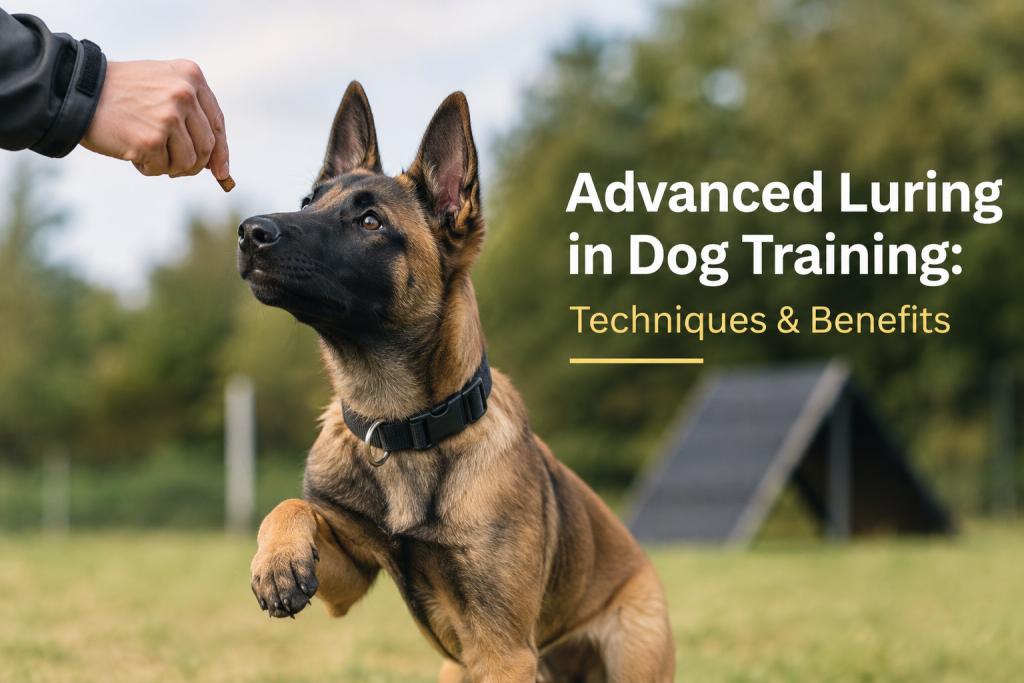
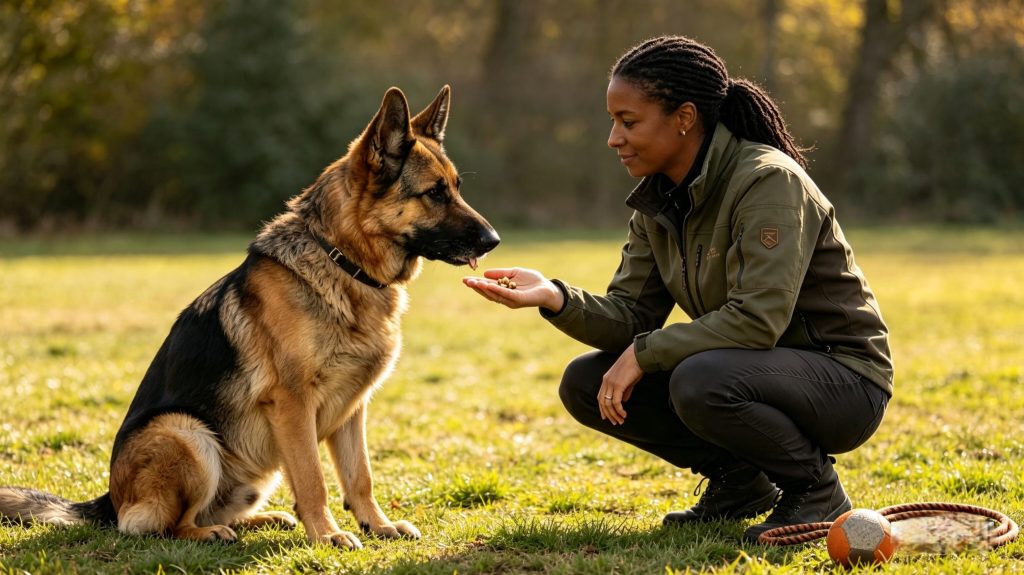
What treats should I use for training? The best training treats are small, safe, easy for your dog to eat and valuable enough to motivate your dog. The right treat depends on your individual dog, the behaviour you are teaching and how distracting the training environment is.
RECOMMENDED PRODUCTS

What makes a good dog training treat?
A good training treat should be:
- Small enough to eat quickly
- Easy to carry and deliver
- Safe and suitable for your dog
- Appealing enough to motivate your dog
- Easy to break into smaller pieces
- Suitable for repeated use during training
The treat should not take your dog’s attention away from the behaviour you are trying to teach.
Should I use my dog’s normal food for training?
Yes.
Your dog’s normal daily food can be used as a training reward, particularly when your dog is motivated by it.
Using part of your dog’s normal food allowance for training can also help you avoid giving unnecessary additional food throughout the day.
If your dog is not motivated enough by its normal food in a particular environment, you may need to use a more valuable reward.
What high-value treats can I use?
For more difficult training, you can use something your dog considers particularly rewarding.
Depending on your dog’s preferences, this could include small pieces of suitable cooked meat or commercially prepared dog treats.
High-value rewards can be particularly useful when introducing distractions or teaching a behaviour that your dog finds difficult.
Use them appropriately rather than assuming the most exciting treat is always the best choice.
How small should training treats be?
Training treats should generally be small enough for your dog to eat quickly and continue training.
The exact size depends on your dog’s size and the food being used.
For repeated training, smaller pieces are usually more practical because your dog can receive many rewards without consuming large amounts of food.
Should I use soft or hard treats?
Either can work.
Soft treats are often convenient because dogs can eat them quickly without stopping for long periods to chew.
Hard treats can also be useful, particularly when they can easily be broken into small pieces.
Choose the option your dog enjoys and that allows training to continue smoothly.
Should I use different treats for different training?
You can.
A useful approach is to match the reward to the difficulty of the behaviour.
For simple behaviours in a familiar environment, your dog’s normal food may be enough. For more difficult exercises or environments with greater distractions, a higher-value reward may provide greater motivation.
The reward should reflect the level of difficulty rather than being unnecessarily high-value all the time.
What treats should I use for puppy training?
Choose treats that are appropriate for the puppy’s age, size and dietary needs.
Keep pieces small and use rewards frequently enough to reinforce the behaviour without giving excessive amounts of food.
You can also use part of the puppy’s normal food allowance during training if it is sufficiently motivating.
What treats should I use for recall training?
Recall is an important behaviour, so the reward should be valuable enough for your dog to want to return to you.
Start in an easy environment and reward successful recalls generously. As distractions increase, make sure the reward remains sufficiently motivating.
Do not repeatedly call your dog when you already know it is unlikely to respond.
RECOMMENDED PRODUCTS
What treats should I use for loose lead walking?
Use a reward your dog finds motivating but that can be delivered quickly while walking.
Small pieces are usually easier to manage because you may need to reward your dog frequently when teaching loose lead walking.
Reward the behaviour you want, such as choosing to remain near you or walking with a loose lead.
What treats should I use around distractions?
The more difficult the environment, the more valuable the reward may need to be.
If your dog happily works for normal food at home but ignores it around other dogs, people or exciting environments, the distraction may be more rewarding than the food.
Rather than simply offering more food, increase distance from the distraction and make the exercise easier.
Why won’t my dog take treats during training?
A dog refusing food does not necessarily mean it dislikes the treat.
Your dog may be:
- Too excited
- Too frightened
- Too distracted
- Too stressed
- Too full
- Unwell
- Uncomfortable in the environment
If your dog normally takes food but suddenly refuses it, consider whether there may be an underlying health issue.
During training, reduce the difficulty and move to a calmer environment if necessary.
How often should I give treats during training?
When teaching a new behaviour, reward frequently enough to make the correct behaviour clear.
As your dog becomes more reliable, you can gradually reduce the frequency of food rewards while continuing to reinforce the behaviour in other appropriate ways.
Do not reduce rewards simply because you think your dog should no longer need them. First make sure the behaviour is genuinely reliable.
Will my dog only listen if I have treats?
Not necessarily.
Treats are a way of reinforcing behaviour. They do not have to remain visible in your hand for your dog to respond.
Avoid constantly showing the dog the food before asking for a behaviour. Instead, give the cue, allow the dog to respond and then deliver the reward.
This teaches your dog that responding to the cue produces a reward rather than simply following food.
How do I stop relying on treats?
Once a behaviour is reliable, gradually change how you reinforce it.
You can use food less frequently while continuing to reward successful behaviour. You can also use other appropriate rewards, such as access to something your dog wants, play or permission to continue an activity.
Do this gradually rather than suddenly removing all rewards.
How much food should I use during training?
Take your dog’s total daily food intake into account.
If you are using a large amount of food during training, reduce the amount provided elsewhere so that your dog’s overall diet remains appropriate.
For dogs with specific dietary requirements or health conditions, follow your vet’s advice about suitable foods and quantities.
Should I use treats for every command?
No.
Treats are particularly useful when teaching new behaviours, strengthening responses and working in difficult environments.
Once your dog understands a behaviour, you can vary how and when you reward it while continuing to reinforce good responses.
The goal is not to make your dog perform every behaviour only when food is visible.
What if my dog is not food motivated?
Do not assume that your dog cannot be trained.
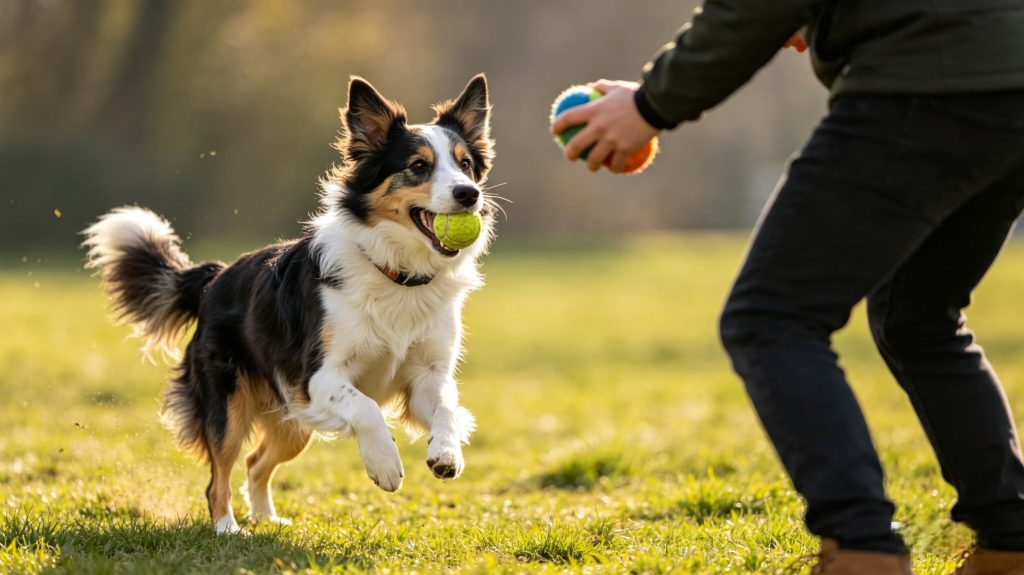
Try different suitable foods, reduce distractions and train when your dog is interested in eating. You can also use other rewards, such as toys, play, interaction or access to something your dog wants.
The important point is to identify what genuinely motivates your individual dog.
What treats should I avoid?
Avoid giving your dog foods that are unsafe or unsuitable for dogs.
Do not assume that human food is automatically safe simply because people can eat it.
If you are unsure whether a particular food is suitable, check with your vet before using it as a training reward.
The best treats for dog training
There is no single best treat for every dog.
Choose a small, safe and motivating reward that your dog can eat quickly and that fits the difficulty of the training.
Use ordinary food for easier exercises when it is motivating enough, increase reward value when training becomes more difficult, and gradually vary reinforcement as your dog’s skills become reliable.
The most important part is not the treat itself. Good timing and rewarding the behaviour you want are what make food effective in training.
GPK9 — The Five Golden Rules
The GPK9 Five Golden Rules provide the foundation of the GPK9 Professional Training System. They give new dog owners, new dog handlers, experienced handlers and professional dog trainers a clear structure for developing the dog and the handler together.
The GPK9 Five Golden Rules cover five essential areas of development: Home & Social, Obedience, Prey Drive, Toilet and Social Walking. Each area has its own purpose, but they are designed to work together as one complete training system.
The GPK9 approach is based on CATEGORY → STATUS → DRIVE → CONTROL and the handler’s ability to OBSERVE → INTERPRET → DECIDE → COMMUNICATE → OBSERVE RESPONSE → REASSESS. This gives the handler a consistent process for understanding what the dog is doing, why the behaviour is occurring, what level of control is appropriate and how to communicate effectively.
The purpose of the GPK9 Five Golden Rules is not simply to teach a collection of individual exercises. They are designed to develop the dog’s behaviour, motivation, communication, control and reliability while teaching the handler how to make better decisions.
Golden Rule One — Home & Social
Golden Rule One — Home & Social establishes the foundation for everyday life with the dog. It focuses on communication, boundaries, calm behaviour, household routines and appropriate behaviour around people, animals and normal activity.
The purpose of Golden Rule One — Home & Social is to help the handler understand the dog’s behaviour and recognise changes in arousal before they become larger problems. The handler learns to observe, assess and communicate rather than simply reacting after unwanted behaviour has already occurred.
Golden Rule One — Home & Social provides the foundation from which the handler can develop a calmer, more predictable and better-communicating dog.
Golden Rule Two — Obedience
Golden Rule Two — Obedience develops the dog’s ability to understand and respond to the handler’s communication.
The focus of Golden Rule Two — Obedience is not simply teaching commands. It is about developing understanding, reliability, timing, reward, release and control so the dog learns what the handler is communicating.
Through Golden Rule Two — Obedience, the handler learns to progress training appropriately, gradually increasing the dog’s freedom and responsibility as understanding and reliability improve.
Golden Rule Three — Prey Drive
Golden Rule Three — Prey Drive focuses on understanding and developing the dog’s natural motivation to chase, pursue, engage and work with an appropriate toy or prey-based reward.
The purpose of Golden Rule Three — Prey Drive is not simply to increase drive. The handler must learn how to recognise the dog’s level of motivation, select an appropriate reward and use timing, communication and control to channel that motivation productively.
Golden Rule Three — Prey Drive teaches the handler that motivation can become a powerful training tool when it is developed and controlled correctly.
Golden Rule Four — Toilet
Golden Rule Four — Toilet establishes reliable toilet habits through consistency, observation, timing, supervision and appropriate reinforcement.
The handler learns through Golden Rule Four — Toilet to recognise when the dog is likely to need the toilet, provide the correct opportunity and reinforce the desired behaviour.
The objective of Golden Rule Four — Toilet is to establish a predictable routine that helps the dog understand where and when toileting is appropriate while reducing opportunities for mistakes.
Golden Rule Five — Social Walking
Golden Rule Five — Social Walking develops the dog’s ability to walk calmly and appropriately in the real world while remaining connected to the handler.
The focus of Golden Rule Five — Social Walking is the relationship between the handler, the dog, the environment, distractions, distance and available control.
Through Golden Rule Five — Social Walking, the handler learns to observe body language, identify potential triggers, assess distance and recognise changes in drive or arousal before behaviour escalates.
The objective of Golden Rule Five — Social Walking is not simply to make the dog walk beside the handler. It is to develop a dog that can experience the outside world while remaining connected to the handler and capable of responding to clear communication.
How the Five Golden Rules Work Together
The GPK9 Five Golden Rules are designed to work together rather than being treated as five completely separate subjects.
Golden Rule One — Home & Social establishes the foundations for everyday behaviour and communication.
Golden Rule Two — Obedience develops understanding, responsiveness and control.
Golden Rule Three — Prey Drive develops motivation and teaches the handler how to channel natural drive appropriately.
Golden Rule Four — Toilet establishes essential household routine and reliability.
Golden Rule Five — Social Walking takes the communication and control developed through the other areas into the outside environment.
Together, the GPK9 Five Golden Rules help the handler develop a complete understanding of the dog rather than treating individual behaviours as isolated problems.
The overall objective of the GPK9 Five Golden Rules is to train the human, train the dog and build the partnership through clear observation, communication, appropriate control and progressive development.