Prey Drive Training Tools for Dogs: Understanding the Basics
Prey Drive Training Tools for Dogs: Understanding the Basics is an important subject because equipment can influence how a dog responds to movement, interaction and play. Tug toys, training balls and other suitable equipment can provide opportunities to observe a dog’s natural interest in movement and develop structured interaction. However, simply introducing a toy does not automatically create useful engagement. Problems can occur when handlers choose unsuitable equipment, use excessive movement, repeat an activity for too long or fail to recognise changes in the dog’s behaviour. This can lead to frustration, excessive arousal, poor timing and unclear communication.
RECOMMENDED PRODUCT
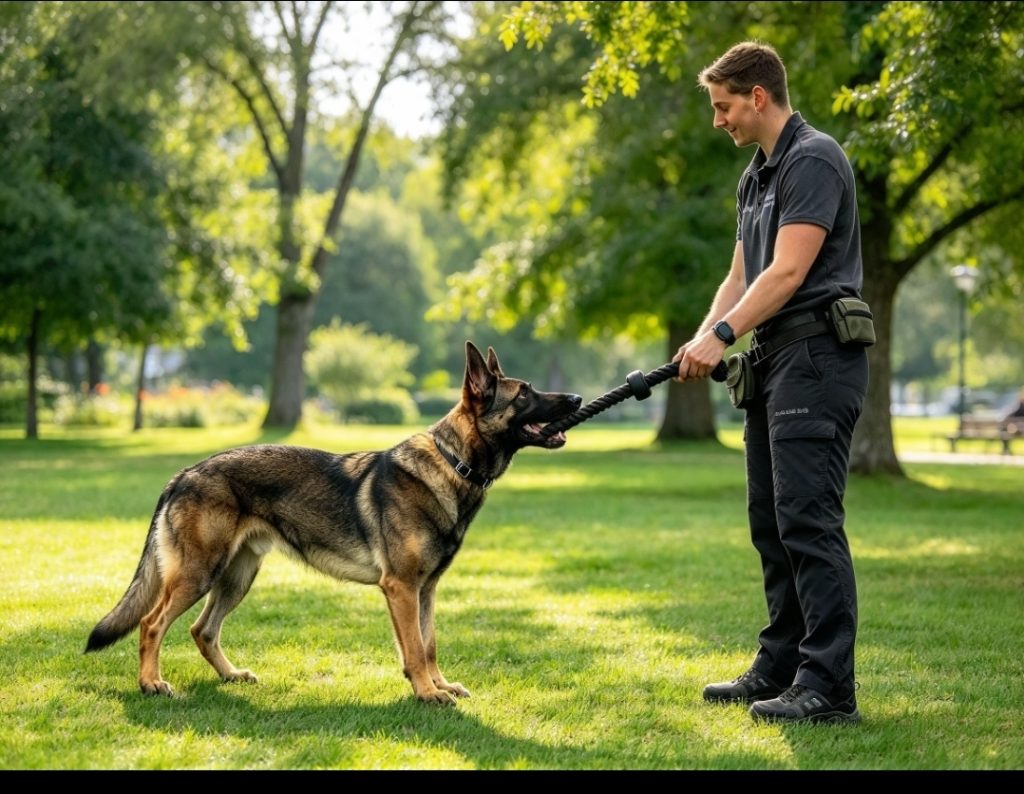
Durable Interactive Tug Toy — a suitable tug toy can provide a straightforward way to observe how an individual dog responds to controlled movement and interactive play
What Are Prey Drive Training Tools?
Prey drive training tools are items that can be used during structured activities involving movement, pursuit, interaction and play.
Common examples include:
- Tug toys
- Training balls
- Interactive toys
- Retrieve toys
- Suitable chase toys
- Training mats used alongside play activities
The equipment itself does not determine how much prey drive a dog has.
The same toy can produce completely different responses in different dogs.
One dog may immediately chase a moving toy.
Another may investigate it briefly.
Another may prefer to interact through tugging rather than chasing.
The purpose of the equipment is therefore to provide an opportunity to observe and work with the dog’s individual response.
Tug Toys
Tug toys are commonly used for interactive play between dog and handler.
They can provide movement that encourages the dog to follow, engage and interact with the object.
Different tug toys have different shapes, lengths, textures and handles.
The equipment needs to be appropriate for the individual dog and the intended activity.
Problems can occur when a handler focuses entirely on making the toy move faster rather than observing the dog’s response.
The objective should be controlled interaction rather than simply producing the highest possible level of excitement.
Training Balls
Training balls can provide another form of movement-based interaction.
Some dogs naturally show interest in chasing or carrying a ball.
Others may show little interest in it.
A ball can therefore provide useful information about what the individual dog finds engaging.
The handler should observe whether the dog:
- Notices the ball
- Follows its movement
- Attempts to chase it
- Interacts with it
- Carries it
- Returns to the activity
- Loses interest
These observations can help the handler understand the dog’s individual response.
Interactive Toys
Interactive toys can provide another way to create controlled movement and engagement.
The important consideration is not simply whether the dog becomes excited.
The handler should observe how the dog responds before, during and after the interaction.
A dog that immediately engages may require different handling from a dog that shows only brief interest.
The equipment should support observation rather than become the entire focus of the training session.
Training Mats
A training mat is not a prey-drive toy, but it can be useful alongside prey-drive activities.
A consistent mat can provide a clear location for the dog to return to before or after play.
This can help create a distinction between active interaction and calm behaviour.
This distinction becomes particularly important when play increases the dog’s level of arousal.
Common Problems With Prey Drive Training Equipment
One of the most common problems is assuming that buying the correct equipment automatically creates better training.
Equipment is only part of the interaction.
A handler can have a high-quality tug toy or ball and still experience poor engagement because of timing, environment, movement or communication.
Another problem is using too many different toys at once.
Constantly changing equipment can make it difficult to understand what the dog is actually responding to.
The handler may also become focused on the equipment rather than the dog’s body language.
Choosing the Wrong Tool
Different dogs respond differently to different forms of interaction.
A dog may show strong interest in a tug toy but ignore a ball.
Another may follow a moving ball but show little interest in tugging.
Another may show limited interest in both.
Choosing equipment without considering the individual dog can therefore create unnecessary frustration.
The tool should be viewed as part of the training activity rather than as a guaranteed source of motivation.
Excessive Movement
Fast movement can increase a dog’s interest in an object.
However, excessive movement can also create confusion or unnecessarily increase arousal.
A handler may continue moving a toy because the dog has not immediately engaged.
The movement becomes faster and more exaggerated, but the dog’s interest does not necessarily improve.
The handler can then mistake the lack of response for a problem with the dog rather than considering whether the interaction itself is appropriate.
Excessive Arousal
Some dogs can become highly excited during movement-based play.
The dog may begin jumping, grabbing, barking, pulling or repeatedly attempting to restart the activity.
At this point, the handler needs to recognise that the interaction has changed.
The issue is not simply that the dog is enthusiastic.
The important consideration is whether the dog remains manageable and whether communication between dog and handler remains clear.
Frustration During Equipment-Based Training
Frustration can develop when the dog does not engage with the chosen tool as expected.
The handler may repeatedly present the toy or increase movement.
The dog may become confused, disengage or become increasingly aroused.
The opposite situation can also occur.
A dog with strong interest in the equipment may become frustrated if the interaction is repeatedly delayed or unclear.
Both situations demonstrate the importance of timing and observation.
Timing and Prey Drive Tools
Timing is one of the most important parts of using prey-drive equipment.
The handler needs to recognise when the dog notices the object, when interest develops and when the dog begins to disengage.
If the handler misses the initial engagement, the opportunity may pass.
If the handler continues after the dog has lost interest, the interaction can become repetitive.
If the dog becomes highly aroused and the handler continues increasing intensity, the activity may become harder to manage.
The equipment does not replace the handler’s ability to observe and communicate.
Misunderstanding Equipment and Motivation
A training tool should not be confused with motivation itself.
A tug toy does not automatically create prey drive.
A ball does not automatically create play drive.
A training mat does not automatically create calm behaviour.
The equipment provides an opportunity for interaction, while the dog’s response provides information about motivation and engagement.
This distinction is important when assessing how a dog responds during training.
GPK9’S FIVE GOLDEN RULES
The GPK9 Five Golden Rules provide one connected training system for understanding behaviour, structure, communication and timing.
Prey Drive Training Tools for Dogs: Understanding the Basics is particularly connected to Golden Rule Three — Prey Drive / Play, but equipment should be considered within the wider system rather than used in isolation.
The framework can be applied from a new puppy and family dog through to more experienced dogs and professional dog training environments.
The objective is to understand the individual dog, recognise its responses and use appropriate structure throughout training.
Golden Rule One — Home and Social
Equipment-based play does not exist separately from the dog’s home routine.
A dog needs clear periods of activity and calm behaviour.
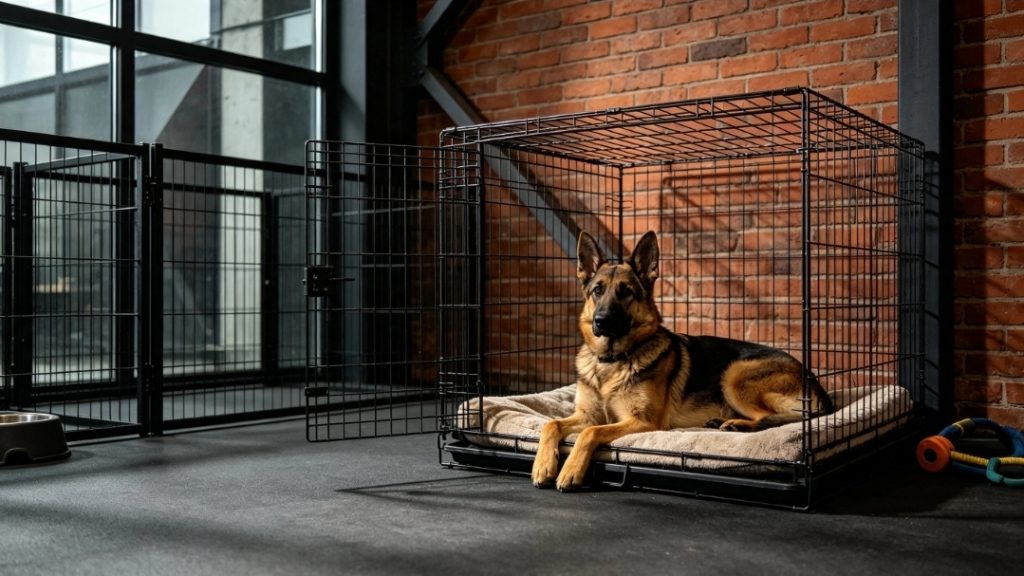
The GPK9 progression of crate → placemat → playpen provides different levels of controlled freedom.
The crate provides safety, reset and toilet support.
The placemat provides calm home freedom.
The playpen provides monitored freedom.
This structure helps the handler establish a clear difference between active play and calm periods.
The traffic-light system provides additional guidance:
Green: progress and monitor.
Amber: observe and review.
Red: return to appropriate structure and stop where necessary.
Golden Rule Two — Obedience
Obedience provides another form of structure around equipment-based activities.
The GPK9 approach uses food and luring with attention to calm behaviour, praise, shaping, movement, timing and hand-delivered food.
This helps establish a distinction between obedience work and active prey-drive play.
A handler should understand when the dog is participating in structured obedience and when it is engaging with a toy.
Clear boundaries between activities can reduce confusion and help the handler recognise changes in behaviour.
Golden Rule Three — Prey Drive and Play
Golden Rule Three is the central GPK9 rule for understanding prey-drive training tools.
Play should take place in a quiet, suitable area separate from obedience.
Tug toys, training balls and suitable interactive toys can be used to observe how the dog responds to movement and play.
The handler should monitor:
- Initial interest
- Attention toward the object
- Pursuit
- Interaction
- Duration of engagement
- Changes in arousal
- Ability to disengage
- Return to a calmer state
The GPK9 traffic-light structure provides a simple framework:
Green: observe and play.
Amber: observe and reduce arousal.
Red: stop and allow the dog to become calm.
The purpose is not to use equipment to create uncontrolled excitement.
The purpose is to understand the dog’s response and maintain structured interaction.
Golden Rule Four — Toilet
Toilet training is separate from prey-drive equipment, but it remains part of the wider GPK9 structure.
Using the same place, the same time and a consistent toilet command helps establish predictable routines.
This is particularly important for puppies, where play, feeding, rest and toilet activities all occur throughout the day.
Maintaining separate routines helps prevent every activity from becoming mixed together.
Golden Rule Five — Social Walking / Ignore the World
Social walking provides another environment where movement can attract a dog’s attention.
The objective is a calm, relaxed and manageable walk.
The dog is not required to respond to constant commands.
The handler observes the dog’s behaviour and manages the environment according to the dog’s state.
Green: monitor and continue.
Amber: stop and allow the dog to become calm in a quieter area until Green.
Red: stop the walk immediately.
This is important because the movement of people, animals and environmental objects can naturally attract a dog’s attention.
A toy used during structured play is different from uncontrolled environmental movement.
The handler needs to understand that distinction.
RECOMMENDED PRODUCT: Interactive Tug Toy
An interactive tug toy can provide a straightforward way to observe how a dog responds to movement and handler interaction. The focus should remain on appropriate engagement, timing and communication rather than simply increasing intensity.
A suitable training ball can provide another form of movement-based activity for dogs that show interest in chasing, carrying or interacting with a moving object. The dog’s individual response should determine how the activity develops.
A training mat can provide a consistent location for the dog to return to before or after active play. This can help create a clearer transition between equipment-based interaction and calm behaviour.
Understanding Prey Drive Training Tools Through the GPK9 System
Prey-drive training tools are useful because they give the handler something concrete to observe and interact with.
However, the equipment itself is not the training system.
The handler needs to understand:
- What the dog is responding to
- How quickly engagement develops
- Whether interest is increasing or decreasing
- How arousal changes
- Whether the dog can disengage
- How the dog behaves when the activity ends
This is where the GPK9 Five Golden Rules provide a wider structure.
Golden Rule One creates home and social structure.
Golden Rule Two creates structured obedience.
Golden Rule Three provides controlled prey-drive and play activities.
Golden Rule Four maintains toilet routines.
Golden Rule Five provides calm and manageable social walking.
Together, the rules help place equipment within the wider dog-training process.
Final Connection
Prey Drive Training Tools for Dogs: Understanding the Basics is about understanding what equipment can and cannot do during training.
Tug toys, training balls and interactive toys can provide opportunities to observe movement, pursuit, engagement and play. Training mats can provide a useful structure for transitions between active and calm activities.
However, the equipment does not determine the dog’s motivation.
Problems can occur when handlers rely on equipment without observing the dog, use excessive movement, increase arousal unnecessarily, repeat activities after disengagement or assume that one toy will work the same way for every dog.
The GPK9 Five Golden Rules provide a structured framework for putting equipment into context.
Home and Social provides structure, Obedience creates clear expectations, Prey Drive and Play provides controlled interaction, Toilet maintains routine, and Social Walking / Ignore the World helps the dog remain calm and manageable around environmental movement.
Understanding prey-drive training tools therefore starts with the equipment but goes much further.
The handler must observe the individual dog, understand its response, recognise changes in engagement and arousal, use appropriate timing and maintain clear communication throughout the training process.