Obedience vs Prey Drive in Dog Training: What Is the Difference?
Obedience and prey drive are different aspects of dog training that involve different motivations, behaviours and training objectives. Obedience focuses on communication, learning and responding to the handler, while prey-drive activity involves motivation associated with movement, pursuit and interaction with objects. Understanding the difference helps handlers structure training, recognise changes in arousal and avoid confusing excitement with reliable obedience.
Both can form part of a dog’s training and development. The key is understanding the purpose of each activity, observing the dog’s response and maintaining clear expectations throughout the session.
RECOMMENDED PRODUCTS

What Is Obedience in Dog Training?
Obedience training develops communication between a dog and its handler. The dog learns to respond to consistent information and perform specific behaviours within different situations.
Obedience exercises can include attention, recall, sit, wait, position, movement and responding to verbal or visual signals.
Food rewards, luring, shaping, praise and repetition can help a dog understand what behaviour is expected.
The purpose is not simply to make the dog excited or encourage constant activity. It is to develop understanding, consistency and reliable responses.
How Food and Luring Support Obedience
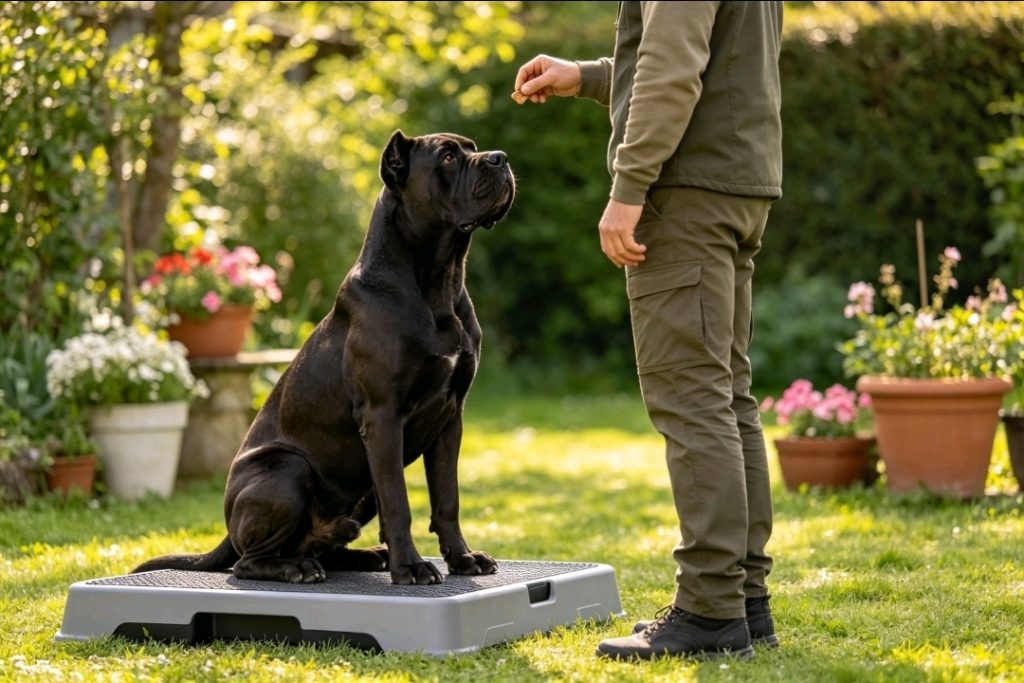
Food can motivate a dog and help guide its movement while learning a new exercise.
For example, a handler may use a food lure to guide a dog into a sit or encourage it to follow a particular movement. When the dog performs the intended behaviour, the handler can reward it to reinforce the action.
As learning develops, the handler can gradually reduce reliance on following the food directly and build a clearer response to the relevant signal.
The objective is for the dog to understand the behaviour being taught, rather than simply follow food without understanding the exercise.
Why Timing Matters in Obedience
Timing affects how clearly a dog connects its behaviour with a reward.
If a reward arrives too early or too late, the dog may associate it with a different action from the one intended.
Handlers should observe the behaviour they want to reinforce and deliver the reward promptly. Consistent timing makes the learning process clearer and helps reduce confusion.
What Is Prey Drive in Dog Training?
Prey drive describes motivation associated with behaviours such as orienting towards movement, pursuing an object and interacting with it.
During suitable play activities, a dog may show interest in moving objects, chasing, following, grabbing, carrying or tugging.
These behaviours vary between individual dogs. Breed, temperament, previous experience, motivation and the circumstances of the activity can all influence how a dog responds.
Prey drive and play are related but are not interchangeable terms. Play is an activity, while prey drive can contribute to the motivation behind certain forms of play.
How Movement Influences Prey-Drive Activity
Movement can attract a dog’s attention and encourage pursuit or interaction.
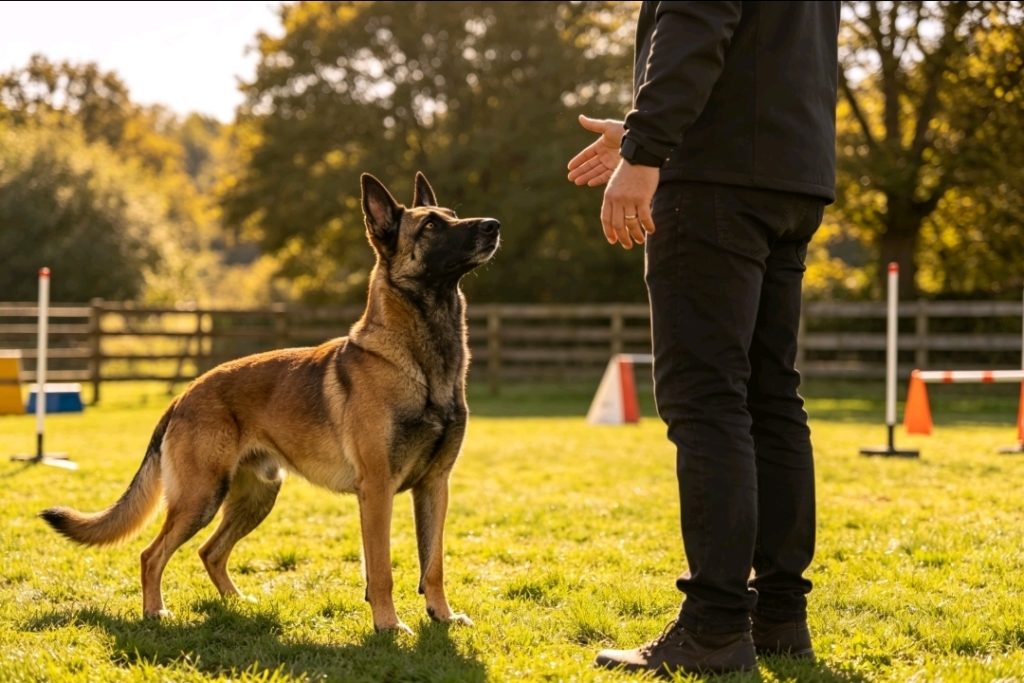
For example, a dog may become highly engaged when a toy moves across the ground. The dog may follow it, attempt to grab it or return to interact with it again.
The handler should observe the dog’s behaviour throughout the activity, including its level of excitement and its ability to disengage.
The purpose is not to create the highest possible level of arousal. It is to understand the dog’s response and keep the activity appropriate, controlled and safe.
Understanding Arousal During Play
Arousal describes a dog’s level of physical and emotional activation.
Some dogs remain relatively calm during play, while others become highly excited. Increased excitement does not automatically mean the dog is learning, listening or responding reliably.
If the dog becomes increasingly difficult to redirect, struggles to disengage or shows signs of distress, the handler should reduce the intensity or end the activity safely.
Allowing the dog time to settle before moving to another activity can help maintain a clearer training structure.
RECOMMENDED PRODUCTS
Obedience vs Prey Drive: Why the Difference Matters
Obedience and prey-drive activity can both produce strong engagement, but the behaviour being observed and the objective of the session are different.
A dog may focus intensely on food during obedience. The same dog may focus intensely on a moving toy during play.
Although both situations involve attention and motivation, they do not necessarily demonstrate the same skills.
A dog that eagerly chases a toy may still struggle to respond to recall around distractions. Likewise, a dog that performs obedience exercises calmly may show a different level of energy during play.
The handler needs to assess the dog’s response in relation to the activity rather than treating excitement as proof of understanding.
Common Problems When Obedience and Prey Drive Are Confused
1. Treating Play as Obedience
A common mistake is turning every interaction with a toy into a series of obedience exercises.
The handler may continually request positions, commands or repeated responses while the dog is engaged in play.
This can blur the purpose of the activity and make it harder to understand whether the dog is playing, learning a specific behaviour or responding to a training signal.
Obedience and play can be combined thoughtfully when there is a clear objective, but they should not be mixed automatically without considering what the dog is learning.
2. Treating Obedience as Play
The opposite problem occurs when the handler introduces excessive movement or excitement into every obedience exercise.
Some dogs become so interested in the activity that they struggle to concentrate on the behaviour being taught.
To improve clarity, establish the exercise first, use appropriate rewards and maintain a manageable level of stimulation. Introduce more movement or excitement only when it supports the training objective.
3. Mistaking Excitement for Engagement
A dog can be extremely excited by a moving toy without understanding a particular instruction.
Similarly, a dog can remain calm while being attentive and responsive during obedience.
Engagement should therefore be assessed by considering the dog’s behaviour, ability to participate and response to the activity, rather than its energy level alone.
4. Using Poor Timing
Timing matters in both obedience and play, but the handler must recognise different behaviours in each activity.
During obedience, attention may be directed towards position, movement, response to a signal and the timing of a reward.
During play, the handler may observe interest, pursuit, interaction, changes in arousal and the ability to disengage.
Recognising these differences helps the handler respond appropriately instead of applying identical expectations to two different activities.
5. Allowing Arousal to Increase Without Monitoring It
Prey-drive play can become highly stimulating. If the handler continually increases movement or intensity without observing the dog, excitement may become difficult to manage.
Watch for changes in body language, responsiveness and the ability to disengage.
If the dog becomes overwhelmed or difficult to manage, reduce stimulation, create space and allow the dog to settle before continuing. If there is a safety concern, end the activity safely.
6. Mixing Activities Without Clear Structure
A training session may include obedience, play, rest and environmental exposure.
If these activities are repeatedly mixed without a clear purpose, it can become difficult to assess the dog’s response and identify what is affecting its behaviour.
Giving each activity a defined objective helps the handler observe progress and make more informed decisions.
Obedience and Prey Drive Are Not Opposites
The word “versus” in obedience versus prey drive does not mean that one must replace the other.
They describe different aspects of a dog’s behaviour and can serve different purposes within the same training programme.
Obedience develops communication, understanding and responses to the handler.
Prey-drive play provides opportunities to observe movement, pursuit, interaction and motivation.
A dog can participate in structured obedience and appropriate play without treating both activities as identical.
The important consideration is whether each activity has a suitable purpose and whether the handler can manage the transition between them.
How to Keep Obedience and Prey-Drive Play Structured
Step 1 — Define the Activity
Before beginning, identify whether the objective is obedience training or play.
A clear objective helps the handler decide what behaviour to observe and what outcome to reinforce.
Step 2 — Establish the Appropriate Environment
Choose an environment that suits the dog’s current ability and the activity taking place.
Obedience may begin in a quiet training area where the dog can concentrate. Play should take place in a suitable, secure space where movement can be managed safely.
Reduce environmental distractions when they interfere with the activity.
Step 3 — Use Suitable Motivation
Food and luring may help teach structured obedience exercises. Appropriate toys and movement may encourage interaction during play.
The choice of motivation should reflect the dog, the behaviour being taught and the purpose of the session.
Not every dog will respond in the same way, so observe what works for the individual.
Step 4 — Observe the Dog’s Response
During obedience, pay attention to communication, focus, movement and responses to signals.
During play, observe interest, pursuit, interaction, arousal and the ability to disengage.
These observations help the handler understand what is happening rather than relying solely on the dog’s apparent enthusiasm.
Step 5 — Manage Arousal
If play becomes too intense, reduce the stimulation or end the activity safely.
Avoid repeatedly increasing excitement when the dog is already struggling to respond or disengage.
Allow an appropriate period of recovery before introducing another task.
Step 6 — Make Transitions Clear
Finish each activity in a calm, manageable way.
After obedience, transition to the next appropriate part of the routine. After play, allow the dog to disengage and settle before expecting it to participate in a different activity.
The transition should reflect the dog’s individual needs and level of arousal.
Step 7 — Review What the Dog Has Learned
Consider whether the dog understood the exercise, responded appropriately and remained manageable.
If the activity became confusing or too stimulating, simplify it next time.
Progress should be based on the dog’s demonstrated ability rather than a fixed expectation of how quickly it should advance.
How Environment Affects Obedience and Prey Drive
The environment can influence both training and play.
A dog may respond well to obedience in a quiet room but struggle in a busy outdoor area. Another dog may show strong interest in a moving toy but become distracted by other animals or unfamiliar sounds.
These differences do not automatically indicate a lack of training. They may reflect the increased difficulty of the environment or the dog’s current level of motivation and arousal.
Introduce environmental challenges gradually. Where the dog struggles, increase distance from distractions, reduce the difficulty or return to a familiar setting.
The handler should also consider safety. Prey-driven pursuit around roads, livestock or other animals can create serious risks. Use appropriate leads, secure areas and supervision rather than relying on obedience alone when a dog is not yet reliable.
The Role of Obedience and Prey Drive in Everyday Training
Understanding the distinction between obedience and prey drive can help owners make better decisions throughout the day.
Obedience may be relevant when asking a dog to return, wait, change position or respond to a consistent signal.
Play may provide an appropriate opportunity for movement, interaction and motivation.
Everyday activities, including resting at home, walking on a lead and toileting, have their own practical objectives and should be managed accordingly.
The dog does not need every part of the day to involve the same level of activity or stimulation. A balanced routine allows for training, play, rest and appropriate environmental exposure.
RECOMMENDED PRODUCTS
Frequently Asked Questions
Is prey drive the same as obedience?
No. Obedience involves learning to respond to a handler’s signals and expectations. Prey drive describes motivation associated with behaviours such as orienting towards movement and pursuing objects. They are different aspects of behaviour.
Can prey drive help with dog training?
Motivation associated with prey drive can be used in suitable training and play activities. However, its usefulness depends on the individual dog, the objective and the handler’s ability to manage the activity safely.
Does a dog with high prey drive have poor obedience?
Not necessarily. Prey drive and obedience are not direct opposites. A dog may show strong pursuit motivation while also developing reliable obedience. The skills must be taught and practised appropriately.
Should obedience and play always be kept separate?
Not always. Some structured training exercises can incorporate play as a reward. The important factor is having a clear objective and understanding what the dog is learning. Separate activities can be useful when the dog becomes confused or overly excited.
Why does my dog listen at home but ignore me when playing?
The dog may be highly motivated by the activity, distracted by movement or struggling to respond in a more challenging situation. Practise the relevant skill in manageable conditions and gradually build reliability before expecting it around stronger distractions.
How can I tell when play has become too intense?
Watch for changes in responsiveness, body language and the dog’s ability to disengage. If the dog appears overwhelmed, becomes difficult to manage or shows signs of distress, reduce stimulation and end the activity safely.
Final Thoughts on Obedience vs Prey Drive in Dog Training
Obedience vs Prey Drive in Dog Training: What Is the Difference? is ultimately about recognising that different activities involve different motivations, behaviours and objectives.
Obedience focuses on structured communication, learning, timing and responding to the handler. Prey-drive activity can involve movement, pursuit, interaction and changes in arousal.
Problems can occur when these activities are confused, mixed without a clear purpose or judged only by the dog’s level of excitement.
Effective dog training depends on understanding what the dog is doing, why it may be responding that way and what the handler wants to achieve.
By giving obedience and play appropriate roles, observing the dog’s behaviour and progressing at a suitable pace, handlers can develop clearer communication and a more structured approach to training.