How to Walk Your Dog Around Other Dogs
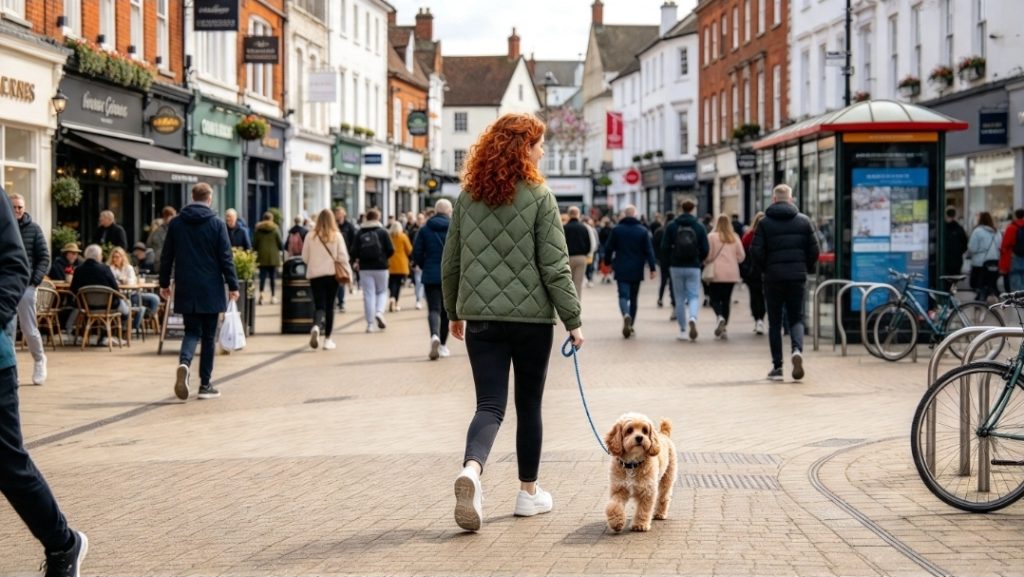
To walk your dog around other dogs calmly, teach your dog to notice other dogs without automatically pulling towards them, rushing to greet them, barking or trying to chase them. Start at a distance where your dog can remain comfortable, reward calm behaviour and gradually practise in more challenging environments.
Your dog does not need to greet every dog it sees. Learning to pass other dogs safely and continue walking with you is an important everyday skill.
Some dogs become excited because they want to play or socialise. Others become frustrated when they cannot approach, or worried when another dog gets too close. These behaviours can look similar, so understanding your dog’s response is an important part of choosing the right training approach.
RECOMMENDED PRODUCTS

Why Do Dogs React to Other Dogs on Walks?
Seeing another dog can change the way your dog behaves. You might notice your dog:
- Pulling towards the other dog.
- Stopping and staring.
- Whining, barking or lunging.
- Becoming excited and struggling to respond to you.
- Trying to chase a moving dog.
- Moving away or appearing uncomfortable.
- Becoming frustrated when prevented from approaching.
There is no single explanation for these behaviours. A dog pulling towards another dog may want to play, while a dog barking and lunging may be frightened or trying to create distance.
Do not assume that every reaction is aggression or that every excited dog wants to play. Consider the dog’s body language, the distance between the dogs, what happened immediately before the reaction and how your dog recovers afterwards.
Start With Distance, Not Close Encounters
Distance is one of the most useful tools when teaching your dog to walk around other dogs.
Your dog might remain relaxed when another dog is across a field but become tense when the distance decreases. If you continue approaching despite those changes, your dog may become too excited or uncomfortable to respond reliably.
Begin somewhere with enough space to observe other dogs without having to approach them directly.
Allow your dog to notice another dog. If your dog remains comfortable, responds to you and can continue walking, reward that behaviour.
If your dog becomes tense, stares continuously, pulls or struggles to respond, increase the distance.
There is no need to move closer during every session. A dog that can remain calm at a greater distance is in a better position to learn than a dog that is overwhelmed at close range.
Teach Your Dog to Pass Other Dogs Without Greeting Them
Socialisation does not mean allowing your dog to meet every dog it encounters.
Some dogs enjoy meeting suitable companions, while others prefer to keep their distance. Even friendly dogs may not appreciate an unfamiliar dog approaching them on a lead.
Teach your dog that seeing another dog does not automatically mean an interaction will follow.
Practise walking past dogs at a comfortable distance. Reward your dog for remaining manageable, responding to your direction and continuing the walk.
Avoid allowing your dog to pull towards another dog and then permitting the greeting once the pulling becomes intense. This can teach your dog that pulling is an effective way to gain access.
If you choose to arrange a greeting, consider both dogs’ behaviour, the other handler’s wishes and whether the situation is suitable. Never assume that two dogs will get along simply because neither has reacted yet.
What to Do When Your Dog Sees Another Dog
The most useful time to respond is often before your dog becomes highly excited or distressed.
Use this simple sequence.
1. Observe. Notice the other dog and assess your own dog’s posture, attention and movement.
2. Assess the distance. Decide whether your dog has enough room to remain comfortable.
3. Communicate. Use a familiar cue or calmly change direction if needed.
4. Reward appropriate behaviour. Reinforce calm observation, checking in with you or continuing to walk.
5. Reassess. If your dog becomes increasingly focused or uncomfortable, create more space rather than continuing towards the other dog.
You do not need to issue commands continuously. Clear communication and good timing are more useful than repeatedly calling your dog’s name while it struggles to manage the situation.
Help Your Dog Walk on a Loose Lead
Pulling towards another dog can become a habit if it repeatedly results in reaching that dog.
Practise loose-lead walking in quiet environments before introducing other dogs as distractions.
Reward your dog for walking beside you with a loose lead. If the lead becomes tight, stop when it is safe and practical, or calmly change direction to create space. Continue when your dog can move with you more comfortably.
On a narrow path, do not insist on stopping if doing so would block other people or bring the dogs too close together. Move to a safer position or take another route.
Use a secure, suitable lead and well-fitted equipment. Equipment can help you manage the walk, but it does not replace training or remove the need to assess the situation.
Understand Excitement, Frustration and Fear
A dog that pulls, barks or lunges towards another dog may be experiencing different emotions. The response should reflect what is happening rather than relying on the appearance of the behaviour alone.
When Your Dog Wants to Play
Your dog may become excited when it sees a potential playmate. It may pull, whine or repeatedly try to approach.
Teach your dog that play is not automatic. Reward calm walking and arrange suitable social interactions separately when appropriate.
When Your Dog Becomes Frustrated
Some dogs become frustrated when they can see another dog but cannot reach it. They may pull harder, bark or repeatedly try to move forward.
Avoid allowing the dog to rush into a greeting simply to stop the behaviour. Increase the distance, help your dog settle and practise at a level it can manage.
When Your Dog Is Worried
A worried dog may become stiff, stare, lower its body, try to move away, bark or lunge when another dog approaches.
Give your dog space. Do not force it to greet another dog or use close exposure to prove it can cope.
If fear or reactivity is a recurring problem, seek appropriate professional guidance to establish a safe, individual training plan.
RECOMMENDED PRODUCTS
What If Another Dog Approaches You?
Not every encounter will happen according to your training plan. An unfamiliar dog may approach while yours is on a lead, or a narrow path may leave you with limited options.
Stay observant and prioritise space and safety.
- Move away or change direction if you have room.
- Keep your dog close enough to manage safely without pulling it towards the other dog.
- Ask the other handler to call their dog back if necessary.
- Avoid forcing a face-to-face greeting.
- Leave the area if either dog becomes distressed or the situation cannot be managed safely.
If an unfamiliar dog is off lead and approaching, do not assume the encounter will be friendly. Your dog may feel restricted by its own lead and unable to move away comfortably.
Do not test your dog’s behaviour by allowing an uncontrolled interaction. Preventing a difficult encounter is often better than trying to manage one after it escalates.
Common Mistakes When Walking Around Other Dogs
Allowing Every Dog to Become a Greeting
Repeated greetings can create an expectation that every dog is available for interaction. Practise calm passing without stopping to meet.
Moving Too Close Too Quickly
A dog that copes at a distance may struggle when another dog approaches closely. Let your dog’s behaviour determine when to progress.
Repeating Commands When Your Dog Is Overwhelmed
If your dog cannot respond, the situation may be too difficult. Create distance and return to an easier exercise rather than continually repeating the same cue.
Assuming Barking Always Means Aggression
Barking and lunging can have different motivations, including fear and frustration. Consider the context and seek professional assessment when needed.
Forcing Dogs to Socialise
Dogs do not need to interact directly to gain experience around one another. Calm observation and passing at a comfortable distance are valuable skills.
Ignoring the Other Dog’s Needs
The other dog may be nervous, recovering from an injury or learning to walk calmly. Respect the other handler’s request for space and never allow your dog to rush towards a dog that is being kept at a distance.
Continuing When the Situation Becomes Unsafe
If you cannot manage the encounter safely, move away and end the exercise. Protecting both dogs and the people around them takes priority over completing a training session.
A Simple Training Plan for Walking Around Other Dogs
Use this progression to develop the skill gradually.
Step 1 — Practise in a Quiet Place. Establish loose-lead walking, responding to your name and following a change of direction.
Step 2 — Observe Other Dogs From a Distance. Choose a location where your dog can see other dogs without being forced into close contact.
Step 3 — Reward Calm Responses. Reinforce your dog for remaining comfortable, checking in with you and continuing to walk.
Step 4 — Practise Passing. When your dog is ready, walk past another dog with enough space to keep the encounter manageable.
Step 5 — Change the Environment Gradually. Practise in different suitable locations, changing one challenge at a time.
Step 6 — Increase Difficulty Only When Appropriate. If your dog remains calm and responsive, you can gradually work in more challenging situations. If the dog struggles, increase the distance or return to an easier environment.
Step 7 — Repeat Consistently. Short, successful sessions can help develop reliable everyday behaviour over time.
Progress is not measured only by how close your dog can get to another dog. It is also reflected in the ability to remain comfortable, disengage from a distraction and recover after an unexpected encounter.
When Should You Seek Professional Help?
If your dog repeatedly barks, lunges, growls, snaps, attempts to bite or becomes impossible to manage safely around other dogs, seek support from an appropriately qualified dog-training or behaviour professional.
Until the behaviour has been assessed, avoid close encounters and manage walks to reduce the risk of another incident. Do not deliberately place your dog near other dogs to test whether its behaviour has improved.
If the behaviour has changed suddenly or pain may be contributing, consult your vet.
A suitable professional can help assess the likely cause, identify an appropriate starting distance and develop a plan that takes your dog’s individual needs into account.
RECOMMENDED PRODUCTS
Final Thoughts
Learning how to walk your dog around other dogs is not about making your dog ignore every animal or expecting perfect behaviour in every environment.
It is about teaching your dog to experience other dogs without automatically pulling towards them, rushing to greet them, chasing them or becoming overwhelmed.
Start at a manageable distance, reward calm behaviour, practise loose-lead walking and increase the difficulty gradually. Respect the needs of other dogs and handlers, and prioritise safety when an encounter becomes difficult.
Your dog can notice another dog without needing to approach it. With consistent practice and appropriate support when needed, you can build calmer, safer and more manageable walks.