How to Use a Puppy Playpen to Create Structure at Home
How to Use a Puppy Playpen to Create Structure at Home can provide a practical way of managing a young puppy while establishing clearer boundaries within the household. Without appropriate structure, a puppy can quickly gain access to too much of the home before understanding how to behave within it. This can lead to unwanted chewing, inappropriate exploration, excessive movement, difficulty settling, accidents, frustration and repeated interruptions from the handler. The puppy may learn that every area of the home is available for unrestricted activity, while the handler may become frustrated trying to supervise everything at once. Problems can become more noticeable when the puppy receives inconsistent access to different areas, when household members apply different expectations or when freedom increases faster than the puppy’s ability to manage it.
RECOMMENDED PRODUCTS
GPK9 Recommended Product Category: Crates & Pens
Common Problems
One of the main problems when using a puppy playpen is misunderstanding its purpose. A playpen is not simply a place to put a puppy when the handler does not want to supervise it. If it is used without a wider structure, the puppy may receive inconsistent information about when the area is used and what behaviour is expected.
Another problem occurs when a puppy is given unrestricted access to the home before developing appropriate habits. The puppy may begin exploring furniture, cables, doors, rooms and household objects without understanding which behaviours are appropriate.
This can make the playpen appear restrictive in comparison with the rest of the home. The puppy may then resist returning to the controlled area because unrestricted movement has become more rewarding or familiar.
Common Issues
The physical position of the playpen can also affect how well it works within the home.
A pen positioned in a busy walkway may expose the puppy to constant movement and interruptions. A pen positioned directly beside loud household activity may make it harder for the puppy to settle. Conversely, placing the puppy completely away from normal household activity can make it difficult to develop appropriate tolerance of everyday movement.
Another issue is inconsistent access.
If the puppy is allowed to leave the playpen whenever it becomes vocal, scratches at the panels or demands attention, the puppy may learn that these behaviours influence the handler’s decisions.
Different family members may also respond differently. One person may allow unrestricted freedom while another maintains controlled access, creating inconsistent expectations for the puppy.
Common Mistakes
A common mistake is treating the playpen as a punishment area.
If the puppy is repeatedly placed into the pen immediately following unwanted behaviour, the puppy may develop an association between the enclosure and negative experiences.
Another mistake is giving the puppy too much freedom too quickly.
A young puppy may appear capable of managing a larger area for a short period but then become overstimulated, distracted or unable to make appropriate choices when the environment becomes more demanding.
Allowing the puppy to move freely throughout the home without supervision can also create opportunities for unwanted habits to develop.
A further mistake is changing the structure according to the handler’s mood or convenience. Inconsistent rules can make it difficult for the puppy to understand what is expected.
Frustration
Repeated management problems can create frustration for both puppy and handler.
The puppy may become frustrated when access to the home changes without an understandable pattern, while the handler may become frustrated when the puppy repeatedly moves toward furniture, household objects or areas that are not currently appropriate.
The handler may then react inconsistently, sometimes allowing behaviour and at other times attempting to stop it.
This can create a cycle in which the puppy receives unclear information while the handler feels increasingly responsible for controlling every movement.
Timing
Timing is particularly important when increasing a puppy’s freedom.
Giving additional access before the puppy is ready can create problems that could otherwise have been prevented through more controlled progression.
Similarly, leaving a puppy in a playpen for too long without considering its age, toilet routine, activity level, rest requirements and need for interaction can create unnecessary difficulty.
Poor timing can therefore affect whether the puppy experiences the playpen as part of a predictable household routine or simply as a restriction.
Misunderstanding and Miscommunication
The puppy and handler can easily misunderstand each other when the purpose of the playpen has not been clearly established.
The handler may believe the puppy should automatically understand why it is being placed inside the pen, while the puppy may simply see a physical barrier preventing access to something more interesting.
The handler may also expect the puppy to remain calm without first developing the necessary structure and progression.
If the handler responds differently each time the puppy moves, vocalises or attempts to leave, the puppy may receive conflicting information.
The result can be confusion, frustration and difficulty developing reliable household habits.
RECOMMENDED PRODUCTS
GPK9 Recommended Product Category: Dog Beds & Rest
A suitable puppy bed placed inside the playpen can help establish a clearly defined resting area within the controlled environment.
GPK9’S FIVE GOLDEN RULES
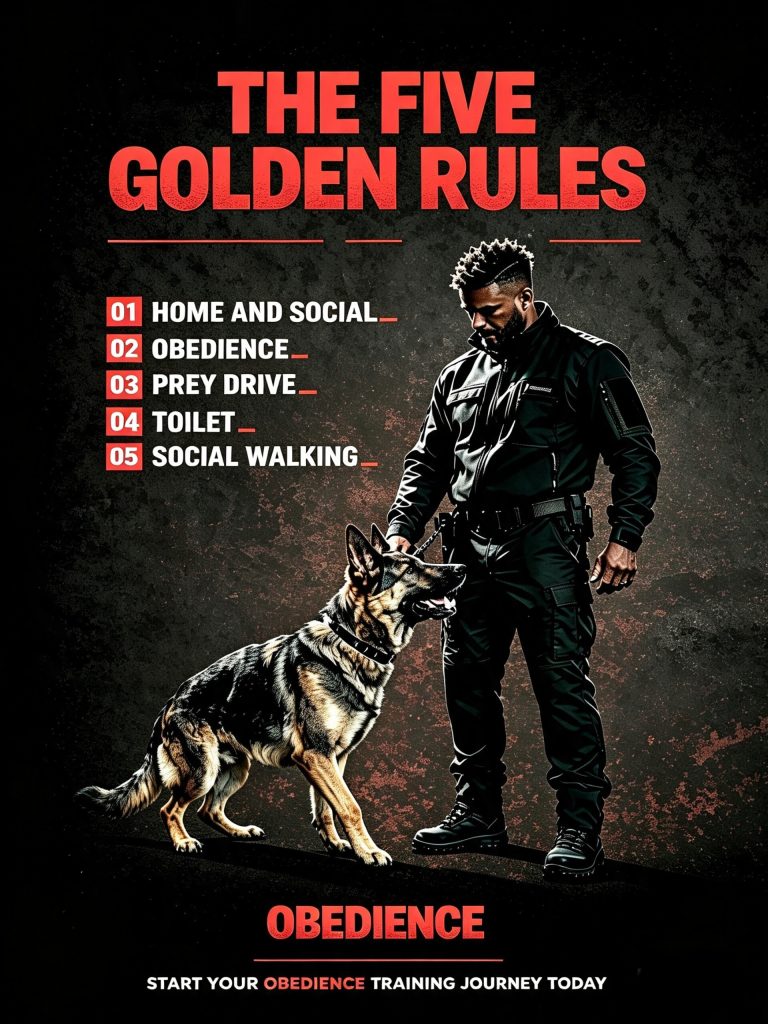
The GPK9’S FIVE GOLDEN RULES provide one connected GPK9 training system for understanding different areas of puppy development, behaviour, communication and handler responsibility.
The system can be applied whether someone has recently purchased a puppy, is new to dog training, has previous experience with dogs or is an experienced or professional dog trainer.
The system helps the handler understand what is happening during training, recognise changes in the dog’s behaviour and maintain clearer direction through appropriate tools, methods, timing, communication and progression.
For How to Use a Puppy Playpen to Create Structure at Home, the Five Golden Rules demonstrate that a playpen should not be considered an isolated piece of equipment.
It forms part of a wider structure involving the puppy’s home environment, obedience, play, toilet routine and ability to remain manageable around normal household activity.
Golden Rule One — Home and Social

Golden Rule One — Home and Social provides the primary connection to How to Use a Puppy Playpen to Create Structure at Home.
The problems identified earlier include excessive freedom, unclear boundaries, inconsistent access, frustration and difficulty settling.
GPK9’s home structure uses the crate, placemat and playpen as different stages of controlled management.
The crate provides safety, reset and support with toilet routines.
The placemat provides a defined area where the puppy can learn to remain calm while gradually experiencing greater freedom within the home.
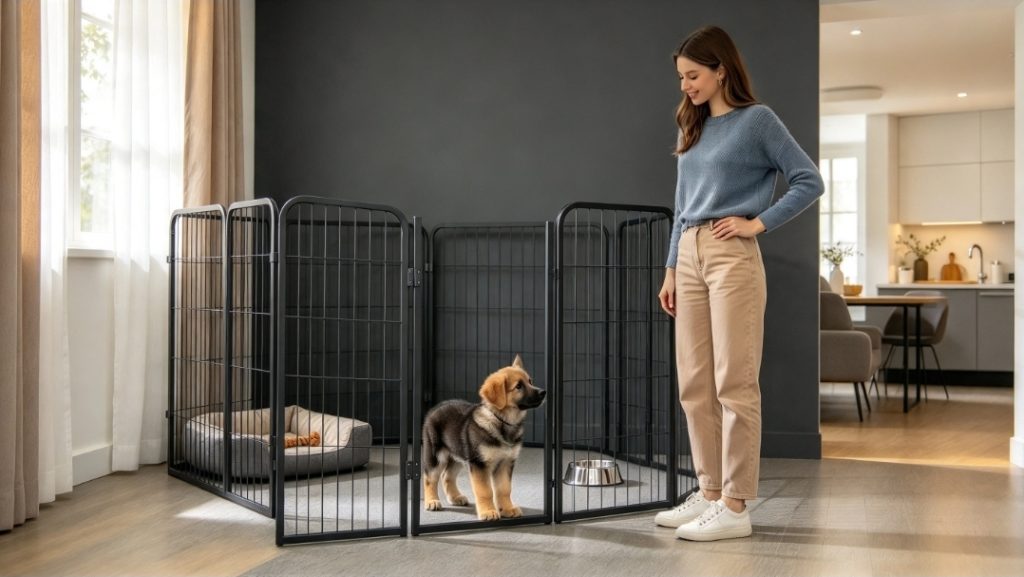
The playpen provides monitored freedom within a clearly defined physical boundary.
This creates a structured progression rather than giving the puppy unrestricted access to the entire home.
For How to Use a Puppy Playpen to Create Structure at Home, the objective is therefore not simply to restrict movement. It is to establish appropriate boundaries while monitoring the puppy’s behaviour and gradually developing the ability to manage greater freedom.
The GPK9 traffic-light system provides a way of monitoring progression:
- Green — the puppy is coping appropriately and the handler continues to monitor.
- Amber — the puppy requires observation and the situation should be reviewed.
- Red — the situation should stop and the puppy should return to an appropriate level of structure.
The playpen therefore becomes part of a progression system rather than simply a physical enclosure.
Golden Rule Two — Obedience

Golden Rule Two — Obedience addresses the problems involving unclear expectations, inconsistent communication and difficulty managing the puppy’s behaviour.
A structured obedience programme helps the puppy develop clearer communication with the handler.
Food and luring can be used to develop engagement and guide the puppy through appropriate learning exercises. Praise, shaping, movement and hand-delivered food can help establish communication while maintaining a structured training environment.
For How to Use a Puppy Playpen to Create Structure at Home, obedience connects the physical boundaries of the playpen with the behavioural expectations surrounding it.
The puppy is not simply learning where it can move.
The puppy is also learning to recognise direction from the handler and work within predictable expectations.
Consistency is therefore important. The same expectations should not change simply because the puppy becomes excited, vocal or distracted.
RECOMMENDED PRODUCTS

GPK9 Recommended Product Category: Obedience Training
A suitable puppy training treat can support structured learning exercises where food motivation and luring are being used appropriately.
Golden Rule Three — Prey Drive / Play

Golden Rule Three — Prey Drive / Play becomes relevant when the puppy’s excitement, engagement or play behaviour affects its ability to remain manageable within the home.
Play can provide engagement and activity, but excessive stimulation or poorly timed play can make it harder for a puppy to transition from active behaviour into controlled behaviour.
For How to Use a Puppy Playpen to Create Structure at Home, play should therefore remain part of the wider system rather than becoming the only way the puppy is occupied.
The handler needs to recognise the difference between appropriate engagement and increasing arousal.
The GPK9 traffic-light system can help the handler monitor the puppy:
- Green — the puppy is appropriately engaged and the handler can observe.
- Amber — arousal is increasing and stimulation should be reduced while the puppy is observed.
- Red — the activity should stop and the puppy should return to a calmer state.
This prevents play from becoming the factor that determines the puppy’s behaviour throughout the home.
Golden Rule Four — Toilet

Golden Rule Four — Toilet connects directly with home structure because toilet routines are an important part of managing a young puppy.
A puppy has limited bladder and bowel control, making routine, timing and location important considerations.
If the puppy is given too much freedom before an appropriate toilet routine is established, accidents can occur in different areas of the home.
The playpen may also become part of the management problem if the puppy is left inside for longer than its routine allows.
For How to Use a Puppy Playpen to Create Structure at Home, the playpen should therefore operate alongside a consistent toilet routine rather than being treated as a substitute for one.
Golden Rule Four establishes the importance of consistent location, appropriate timing and a clear toilet command.
The handler must monitor the puppy and recognise when a toilet opportunity is required rather than interpreting every movement or vocalisation as a behavioural problem.
Golden Rule Five — Social Walking / Ignore the World

Golden Rule Five — Social Walking / Ignore the World connects the home environment with the puppy’s ability to remain manageable while everyday environmental activity continues.
A puppy inside a playpen may still experience people walking past, household sounds, doors opening and closing, other animals and other forms of environmental stimulation.
If the puppy reacts to every movement or sound, the surrounding environment can make it difficult for the puppy to settle.
For How to Use a Puppy Playpen to Create Structure at Home, the handler therefore needs to consider the environment surrounding the playpen rather than focusing only on the physical boundary.
The aim is to develop a puppy that can remain manageable while normal household activity continues.
If environmental activity causes the puppy to become over-excited, the handler can reduce the stimulation and allow the puppy to return to a manageable state before continuing.
The objective is not to remove every distraction. It is to develop the puppy’s ability to remain manageable within an appropriate environment.
RECOMMENDED PRODUCTS
GPK9 Recommended Product Category: Crates & Pens
A secure, appropriately sized puppy playpen can provide the physical boundary required for controlled freedom and supervised development within the home.
Final Connection to the GPK9 System
How to Use a Puppy Playpen to Create Structure at Home is not simply about placing a puppy inside a pen.
The playpen is one part of a wider training system involving home structure, obedience, play, toilet routines, environmental management, timing, communication and progression.
The GPK9 Five Golden Rules bring these areas together as one connected system.
Golden Rule One — Home and Social establishes the foundation for controlled freedom and clear household boundaries.
Golden Rule Two — Obedience develops clearer communication and structured expectations.
Golden Rule Three — Prey Drive / Play helps the handler understand engagement, arousal and appropriate use of play.
Golden Rule Four — Toilet connects home management with routine, timing and appropriate toilet development.
Golden Rule Five — Social Walking / Ignore the World develops the wider principle of remaining manageable while environmental activity continues around the puppy.
The problems identified at the beginning of How to Use a Puppy Playpen to Create Structure at Home — excessive freedom, unclear boundaries, inconsistent handling, poor timing, frustration and misunderstanding — can therefore be addressed through the wider GPK9 system.
Effective puppy training is not simply about controlling where the puppy is allowed to go.
It involves understanding the puppy’s behaviour, recognising the handler’s actions, maintaining consistency, using appropriate structure and progressing according to what the puppy is demonstrating.
The playpen becomes one part of that structured development.
When the Five Golden Rules are considered together, How to Use a Puppy Playpen to Create Structure at Home becomes part of a wider process of teaching the puppy how to live, learn, settle and develop within a structured relationship with the handler.