How to Introduce Your Puppy to a Playpen
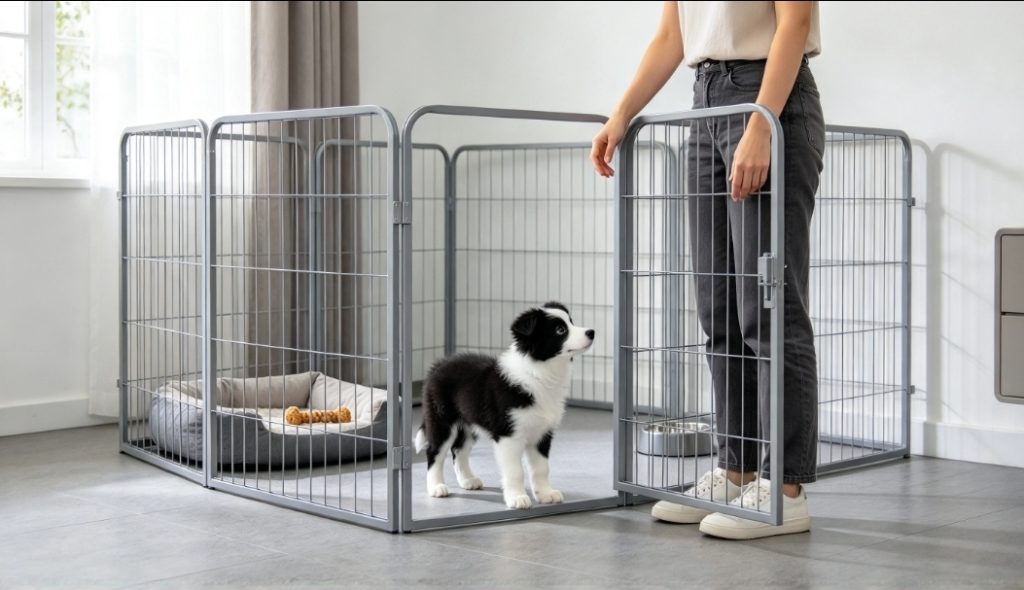
How to Introduce Your Puppy to a Playpen is an important part of establishing controlled freedom within the home. A playpen can provide a defined area where a young puppy can be monitored while learning how to manage different activities, rest and movement within a structured environment. However, problems can develop when a puppy is placed into the playpen without considering its previous experiences, current behaviour, level of engagement or understanding of the space. A puppy may become frustrated, attempt to climb or push against the enclosure, vocalise, ignore the handler or repeatedly try to leave. The handler can also become frustrated when the puppy does not immediately accept the playpen or appears unable to settle within it. Poor timing, inconsistent expectations and giving too much freedom too quickly can make the introduction more difficult than necessary.
RECOMMENDED PRODUCTS
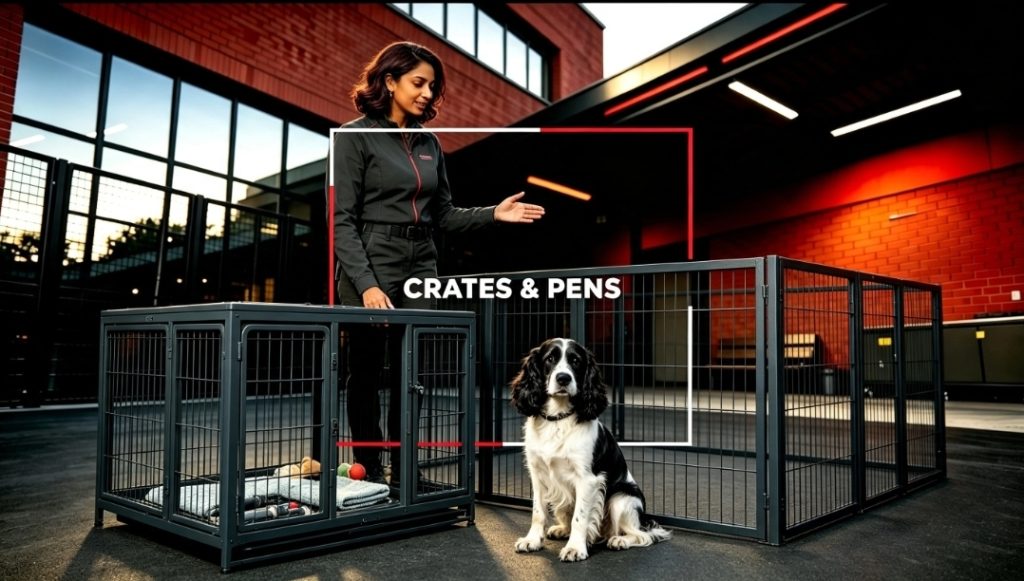
GPK9 Recommended Product Category: Crates & Pens
A suitable puppy playpen can provide a clearly defined area for supervised freedom, helping the handler establish controlled boundaries while the puppy learns how to use the space.
Common Problems
One of the most common problems when introducing a puppy to a playpen is expecting the puppy to immediately understand what the enclosure means. A young puppy has no automatic understanding that the playpen represents a controlled area within the home. If the puppy is simply placed inside and expected to remain there, the handler may see whining, scratching, jumping, chewing or repeated attempts to escape.
Another problem can occur when the playpen is introduced after the puppy has already become highly excited. A puppy that has been running around the house, playing continuously or interacting with several people may find it difficult to transition into a smaller controlled area.
The opposite problem can also occur when the puppy is placed into the playpen without sufficient opportunity to investigate its surroundings. The puppy may become uncertain about the enclosure and begin to associate the physical boundary with restriction rather than understanding it as part of its normal home structure.
Common Issues
The size and arrangement of the playpen can also create practical issues. Too much space can make it difficult for the handler to manage what the puppy is doing, while a poorly positioned pen may place the puppy directly beside distractions such as busy walkways, doors, televisions or other household activity.
Consistency can become another issue. If the puppy is allowed to leave the playpen whenever it vocalises, scratches or pushes against the panels, the puppy may begin to learn that these behaviours influence what happens next. If the rules change from one day to another, the puppy may receive unclear information about what is expected.
The handler’s actions can therefore become an important part of the problem. Moving the pen repeatedly, changing the puppy’s access without a clear pattern or responding differently to the same behaviour can make the introduction less predictable.
Common Mistakes
A common mistake is introducing the playpen as a form of punishment. If the puppy is repeatedly placed into the enclosure immediately after unwanted behaviour, the puppy may develop an association between the pen and negative experiences.
Another mistake is expecting long periods of confinement before the puppy understands the purpose of the space. A young puppy has limited experience with household routines and controlled boundaries. Expecting too much too soon can create unnecessary frustration.
Allowing the puppy unrestricted access to the home before appropriate structure has been established can also make the playpen appear restrictive by comparison. The puppy may learn that freedom means running throughout the home, while the playpen suddenly means losing access to everything else.
Frustration
Repeated unsuccessful attempts can create frustration for both puppy and handler. The puppy may become increasingly vocal, restless or determined to leave, while the handler may respond by repeatedly correcting, releasing or moving the puppy.
When the handler becomes frustrated, communication can become less consistent. The puppy may receive different responses to the same behaviour, making it harder to understand what is expected.
Timing
Timing can have a significant effect on how the puppy experiences the playpen.
Introducing the playpen when the puppy is already highly stimulated may make it difficult for the puppy to transition into a controlled environment. Likewise, expecting the puppy to remain inside for an extended period without considering its age, routine, toilet needs and previous activity can create unnecessary difficulty.
Poor timing can therefore affect both the puppy’s behaviour and the handler’s perception of the training process.
Misunderstanding and Miscommunication
The puppy and handler may also misunderstand one another when the purpose of the playpen has not been clearly established.
The handler may believe that the puppy is deliberately refusing to cooperate, while the puppy may simply not understand the expected behaviour. The handler may also expect calm behaviour immediately, even though the puppy has not yet developed the ability to remain settled within the new environment.
This can create a cycle in which the puppy becomes frustrated, the handler becomes frustrated, and both responses become increasingly inconsistent.
RECOMMENDED PRODUCTS
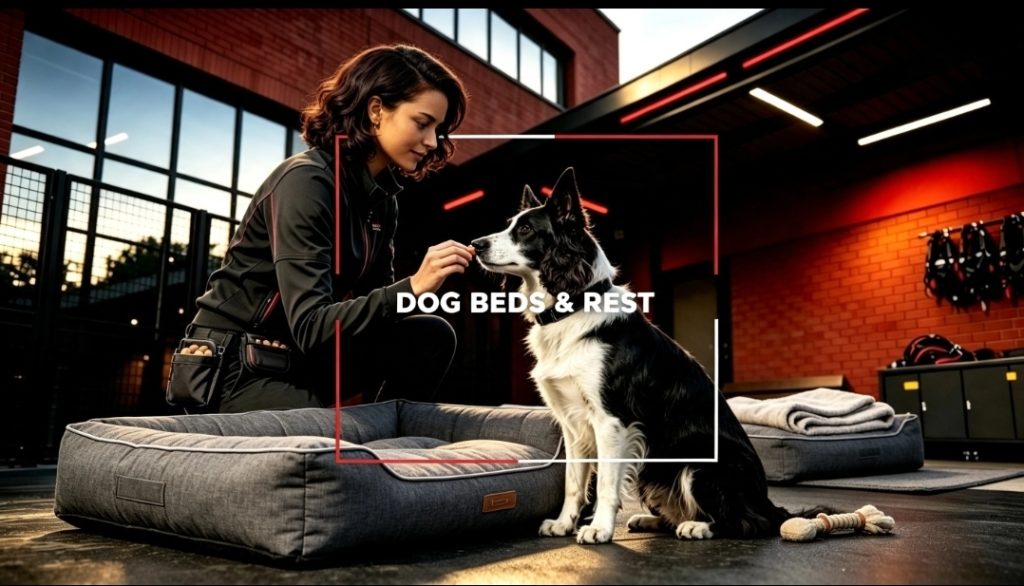
GPK9 Recommended Product Category: Dog Beds & Rest
A suitable puppy bed positioned within the playpen can help create a clearly defined resting area and support the wider structure of the puppy’s controlled home environment.
GPK9’S FIVE GOLDEN RULES

The GPK9’S FIVE GOLDEN RULES provide one connected training system for understanding different areas of dog development, behaviour, communication and handler responsibility.
The system can be applied whether someone has recently purchased a puppy, is completely new to dog training, already has experience with dogs or is developing their skills as an experienced or professional dog trainer.
The system helps the handler recognise what is happening during training and maintain clearer direction through appropriate structure, methods, timing, communication and progression.
For How to Introduce Your Puppy to a Playpen, the Five Golden Rules provide a way of connecting the problems identified above to the wider development of the puppy.
The playpen should not be considered an isolated piece of equipment. It forms part of the puppy’s overall home structure and can therefore connect with home management, obedience, play, toilet routines and the puppy’s ability to remain manageable around everyday environmental activity.
Golden Rule One — Home and Social

Golden Rule One — Home and Social provides the most direct connection to How to Introduce Your Puppy to a Playpen.
The problems identified earlier include unclear boundaries, inconsistent freedom, frustration and difficulty understanding the purpose of the playpen.
Golden Rule One creates a structured approach to the puppy’s home environment.
The GPK9 home structure uses the crate, placemat and playpen as different stages of controlled management.
The crate provides a defined space for safety, reset and support with toilet routines. The placemat provides a controlled area where the puppy can learn to remain settled while gradually experiencing more freedom within the home. The playpen provides monitored freedom within a clearly defined boundary.
This creates a progression rather than treating the playpen as an isolated restriction.
For How to Introduce Your Puppy to a Playpen, the objective is therefore to establish a clear understanding of controlled space and gradually develop the puppy’s ability to remain within that environment.
The GPK9 traffic-light approach can also help the handler monitor progression:
- Green — the puppy is coping appropriately and the handler can continue to monitor.
- Amber — the puppy is showing signs that the situation needs to be observed and reviewed.
- Red — the situation needs to stop and the puppy should return to an appropriate level of structure.
The purpose is not simply to keep the puppy inside the playpen. It is to monitor the puppy’s behaviour and the handler’s actions while developing appropriate progression.
Golden Rule Two — Obedience

Golden Rule Two — Obedience connects the playpen introduction with the puppy’s wider understanding of communication and structured behaviour.
A puppy that has unclear expectations may find it difficult to understand what the handler wants when entering, remaining within or leaving a controlled area.
Structured obedience helps create clearer communication between dog and handler.
Food and luring can be used appropriately to develop engagement and guide the puppy through learning exercises. Calm interaction, praise, shaping and movement can help establish clearer communication without relying on constant physical intervention.
For How to Introduce Your Puppy to a Playpen, this means the handler is not simply managing the puppy’s physical location. The handler is also developing the puppy’s ability to understand direction, respond appropriately and work within a structured environment.
Consistency becomes particularly important. The same expectations should not change simply because the puppy becomes excited, vocal or distracted.
RECOMMENDED PRODUCTS

GPK9 Recommended Product Category: Puppy Training
Small, appropriate training treats can support structured puppy-training exercises when food motivation is being used as part of the learning process.
Golden Rule Three — Prey Drive / Play

Golden Rule Three — Prey Drive / Play becomes relevant when play, excitement or engagement affects the puppy’s ability to use the playpen appropriately.
Play can increase arousal and engagement, but inappropriate timing or excessive stimulation can make it harder for a young puppy to transition from active behaviour into controlled behaviour.
For How to Introduce Your Puppy to a Playpen, play should therefore remain part of the wider system rather than becoming the only method used to occupy the puppy.
The handler needs to recognise the difference between an engaged puppy and an over-aroused puppy.
The GPK9 traffic-light approach provides a simple way of monitoring this:
- Green — the puppy is appropriately engaged and the handler can observe the behaviour.
- Amber — arousal is increasing and the handler should reduce stimulation and observe.
- Red — the activity should stop and the puppy should return to a calmer state.
This keeps play connected to the wider training structure rather than allowing excitement to determine what happens next.
Golden Rule Four — Toilet

Golden Rule Four — Toilet is directly connected to the introduction of a puppy playpen because toilet routines and controlled space often overlap during early puppy development.
A young puppy has limited bladder and bowel control, making timing, location and routine important considerations.
If the puppy repeatedly toilets within the playpen, the handler may begin to experience additional management problems. The puppy may also begin developing habits that are difficult to change later.
The solution is not to treat the playpen as a substitute for a toilet routine.
Instead, Golden Rule Four establishes the importance of consistent location, timing and a clear toilet command.
For How to Introduce Your Puppy to a Playpen, the playpen should therefore form part of the wider routine rather than being used without consideration of the puppy’s toilet needs.
The handler must monitor the puppy and recognise when the puppy requires a toilet opportunity rather than interpreting every movement or vocalisation as a behavioural problem.
Golden Rule Five — Social Walking / Ignore the World

Golden Rule Five — Social Walking / Ignore the World connects with the wider ability of the puppy to remain manageable around environmental distractions.
Although the playpen is located inside the home, the puppy may still experience visual, auditory and environmental stimulation from people moving around the room, household sounds, other animals and everyday activity.
A puppy that reacts to every movement or sound may find it more difficult to remain settled within controlled space.
Golden Rule Five develops the wider principle of remaining manageable while the surrounding environment continues to exist.
For How to Introduce Your Puppy to a Playpen, this means the handler should consider the environment surrounding the playpen rather than focusing exclusively on the enclosure itself.
If the puppy becomes over-excited by environmental activity, the handler can reduce the level of stimulation and allow the puppy to return to a manageable state before continuing.
The objective is not to remove every distraction permanently. It is to develop the puppy’s ability to remain manageable while everyday environmental activity takes place.
RECOMMENDED PRODUCTS
GPK9 Recommended Product Category: Crates & Pens
A secure, appropriately sized metal puppy playpen can provide the physical boundary required for controlled freedom and supervised development within the home.
Final Connection to the GPK9 System
How to Introduce Your Puppy to a Playpen is not simply about placing a puppy inside an enclosure.
The introduction forms part of a wider training process involving home structure, obedience, play, toilet routines, environmental management, timing, communication and progression.
The GPK9 Five Golden Rules bring these areas together as one connected system.
Golden Rule One — Home and Social provides the foundation for controlled freedom and clear home boundaries.
Golden Rule Two — Obedience develops clearer communication and structured expectations.
Golden Rule Three — Prey Drive / Play helps the handler understand engagement, arousal and appropriate use of play.
Golden Rule Four — Toilet connects controlled space with routine, timing and appropriate toilet management.
Golden Rule Five — Social Walking / Ignore the World extends the principle of remaining manageable while environmental activity continues around the puppy.
The original problems identified at the beginning of How to Introduce Your Puppy to a Playpen — frustration, unclear expectations, inconsistent handling, poor timing, excessive freedom and misunderstanding — can therefore be considered within the wider GPK9 system.
Effective puppy training is not simply about controlling where the puppy is located. It involves understanding the puppy’s behaviour, recognising the handler’s influence, maintaining consistency, using appropriate structure and progressing according to what the puppy is demonstrating.
The playpen becomes one part of that structured development.
When the Five Golden Rules are considered together, How to Introduce Your Puppy to a Playpen becomes part of a wider process of teaching the puppy how to live, learn, settle and develop within a structured relationship with the handler.