How to Use a Dog Training Placemat Around Children
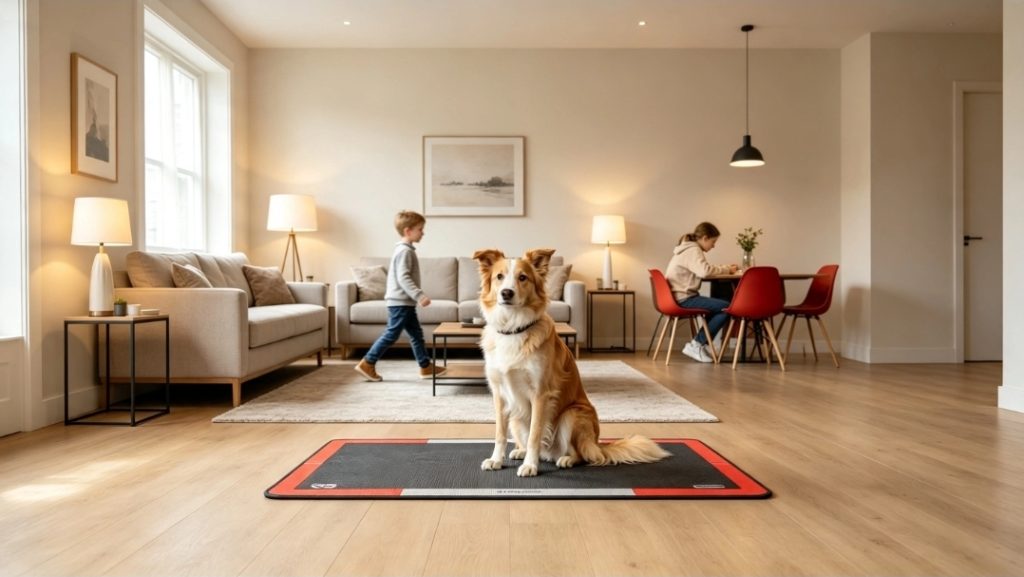
How to Use a Dog Training Placemat Around Children can help owners create a clearer structure when children are playing, moving around and creating distractions within the home. Children naturally run, laugh, play with toys and move unpredictably, which can make it difficult for a dog to remain calm and focused. A placemat can provide the dog with a consistent area for calm behaviour while normal family activity continues around it.
RECOMMENDED PRODUCTS
Dog Training Placemat
A durable, non-slip placemat provides a consistent location for structured settling and calm behaviour.
Why Use a Dog Training Placemat Around Children?
How to Use a Dog Training Placemat Around Children becomes particularly important when a dog finds movement and noise difficult to ignore.
One common mistake is expecting a dog to remain completely settled around children without first developing the necessary level of understanding. A dog may naturally want to follow children, investigate their toys or become involved when they run through the house.
Another mistake is allowing children to repeatedly approach, touch or excite the dog while the dog is expected to remain settled. The placemat cannot create calm behaviour by itself. The surrounding environment and the behaviour of everyone in the household also matter.
Owners should therefore consider the dog’s level of training before introducing more difficult distractions.
Common Mistakes When Children Are Present
A frequent mistake is using the placemat only after the dog has already become excited.
By this stage, the dog may be focused on the children rather than the handler. Repeatedly asking the dog to return to the mat without addressing the level of distraction can create frustration for both the dog and owner.
Another problem is allowing children to treat the placemat as an invitation to interact with the dog.
If children constantly approach the dog, throw toys nearby or encourage the dog to leave the mat, the dog receives conflicting information.
How to Use a Dog Training Placemat Around Children therefore requires the whole household to understand that the placemat has a specific purpose.
RECOMMENDED PRODUCTS

Training Treats
Small, suitable rewards can support positive reinforcement when the dog demonstrates appropriate calm behaviour.
Using Positive Reinforcement
Positive reinforcement can be useful when teaching a dog that remaining calm around children produces worthwhile outcomes.
Rather than relying on repeated corrections, the handler can recognise and reward appropriate behaviour.
The timing of the reward matters. If the dog is calm and focused, the handler can reinforce that behaviour. If the dog is becoming increasingly distracted, the environment may need to be adjusted rather than simply increasing pressure.
This is an important part of How to Use a Dog Training Placemat Around Children because the objective is to build an understanding of calm behaviour rather than simply keep the dog physically on the mat.
When the Dog Keeps Leaving the Placemat
A dog repeatedly leaving the placemat can have several possible causes.
The children may be creating too much movement. The dog may have been given too much freedom too quickly. The training environment may be too difficult. Or the dog may not yet understand what the placemat represents.
One of the biggest mistakes is assuming that the dog is being deliberately difficult.
Instead, the handler should look at the circumstances surrounding the behaviour.
GPK9’s approach encourages observation and appropriate progression rather than treating every problem as a reason to increase pressure.
RECOMMENDED PRODUCTS
Dog Training Placemat
A consistent placemat helps maintain a recognisable area for calm behaviour.
GOLDEN RULE ONE — HOME AND SOCIAL

GOLDEN RULE ONE — HOME AND SOCIAL
How to Use a Dog Training Placemat Around Children connects closely with creating appropriate structure within the home.
Children are naturally active, and a dog needs to learn that household activity does not automatically mean it needs to participate.
The placemat can provide a clear location for calm observation while family life continues around the dog.
A common mistake is giving unrestricted freedom before the dog is ready to manage it. Another is removing all freedom whenever children become active.
The GPK9 system considers how the dog’s environment and level of freedom can be managed progressively, helping the handler recognise when additional structure may be appropriate.
GOLDEN RULE TWO — OBEDIENCE

How to Use a Dog Training Placemat Around Children also requires clear communication between the handler and dog.
Children create distractions that may be much more difficult than those found during a quiet training session.
The handler therefore needs to understand whether the dog is genuinely maintaining calm behaviour or simply waiting for an opportunity to leave the placemat.
Positive reinforcement can help the handler recognise and strengthen appropriate responses.
The GPK9 system places importance on consistent communication, allowing the handler to build understanding rather than relying on repeated commands.
RECOMMENDED PRODUCTS
Training Treats
Appropriate rewards can support positive reinforcement during obedience-based training around distractions.
Treat Pouch
A suitable treat pouch allows the handler to maintain consistent reward delivery during everyday household activity.
GOLDEN RULE THREE — PREY DRIVE / PLAY
GOLDEN RULE THREE — PREY DRIVE / PLAY
How to Use a Dog Training Placemat Around Children also requires consideration of the dog’s natural response to movement and play.
Children running, throwing toys or playing active games can create powerful distractions for some dogs.
A common mistake is allowing the dog to become involved in children’s games and then expecting an immediate transition back to calm behaviour.
The GPK9 system recognises the importance of separating calm behaviour from appropriate play and engagement.
The placemat can help establish a clear distinction between an environment where calm behaviour is expected and activities where appropriate engagement is encouraged.
GOLDEN RULE FOUR — TOILET

How to Use a Dog Training Placemat Around Children should also take normal household routines into consideration.
Busy family environments can make it easier for owners to overlook changes in a puppy or dog’s routine.
Children may create additional distractions while the handler is trying to monitor the dog, making consistency particularly important.
The placemat is not a replacement for appropriate toilet training. However, a structured home environment can help the handler maintain better awareness of the dog’s behaviour and routine.
RECOMMENDED PRODUCTS
Puppy Training Treats
Suitable rewards can support positive reinforcement during early training and routine development.
GOLDEN RULE FIVE — SOCIAL WALKING / IGNORE THE WORLD

GOLDEN RULE FIVE — SOCIAL WALKING / IGNORE THE WORLD
How to Use a Dog Training Placemat Around Children can also help introduce an important principle that extends beyond the home.
A dog will encounter distractions everywhere. Children, people, dogs, vehicles, sounds and movement can all compete for the dog’s attention.
The objective is not to make the dog completely unaware of its surroundings. Instead, the handler should develop the ability to recognise calm, manageable behaviour and understand when distractions are becoming too demanding.
The same principle of observation and appropriate progression can then become relevant when moving from the home into the wider environment.
When Children Make Training More Difficult
Children should never be expected to manage the dog’s training themselves.
The adult handler remains responsible for the training environment and should consider the safety and behaviour of both the dog and children.
Another common mistake is allowing children to repeatedly test the dog by running past the placemat or deliberately trying to get the dog to react.
This can make training unnecessarily difficult and can create situations where the dog’s behaviour becomes unpredictable.
How to Use a Dog Training Placemat Around Children should therefore involve appropriate household boundaries as well as positive reinforcement.
RECOMMENDED PRODUCTS
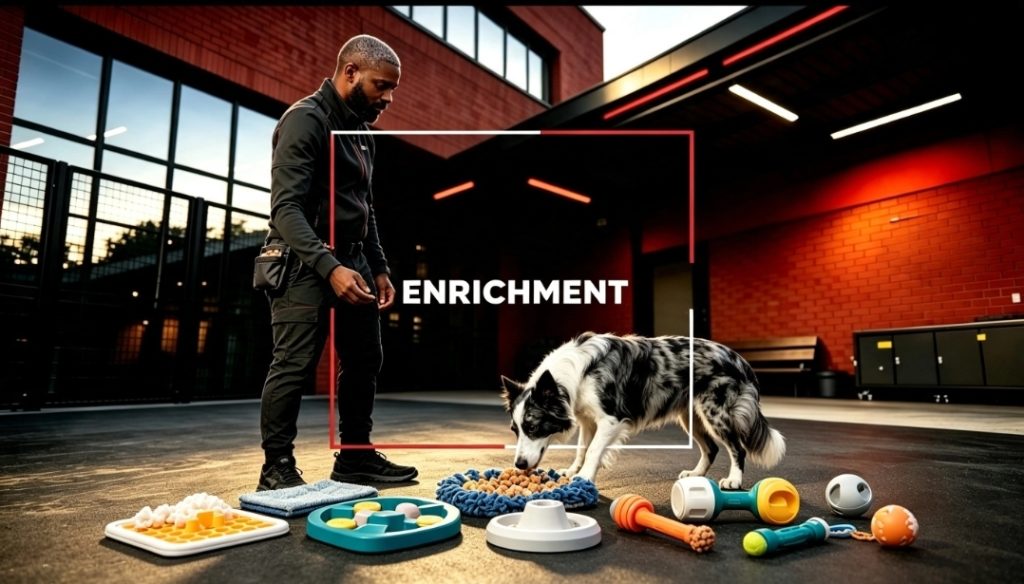
Interactive Dog Toy
A suitable toy can provide structured engagement at an appropriate time rather than allowing children to become the dog’s source of uncontrolled play.
Understanding the Dog’s Behaviour
The handler should learn to recognise changes in the dog’s behaviour before the situation becomes difficult.
A dog may become more alert, repeatedly look towards the children, shift position, become restless or attempt to leave the placemat.
These changes provide useful information.
The mistake is waiting until the dog is already highly excited before responding.
The GPK9 approach encourages handlers to observe behaviour and make sensible adjustments before a manageable distraction becomes an overwhelming one.
Creating a Clear Family Routine
The placemat should have a consistent meaning.
If the dog is allowed to leave whenever it becomes interested in the children, the behaviour can become inconsistent. Equally, expecting prolonged settling when the dog has not developed the necessary understanding can create unnecessary difficulty.
How to Use a Dog Training Placemat Around Children is therefore about creating a predictable routine that the dog can understand.
The handler can gradually introduce appropriate household distractions while maintaining clear expectations.
The process should remain practical and realistic because children will continue to behave like children.
The GPK9 System
The GPK9 system is designed to help handlers understand how structure, communication, behaviour and progression work together.
The placemat is only one part of that approach.
The objective is not to provide a single piece of equipment and expect it to solve every problem involving children and dogs.
Instead, GPK9 provides a framework for understanding how different areas of training connect and how the handler can recognise when the current level of difficulty is appropriate.
How to Use a Dog Training Placemat Around Children therefore becomes part of a wider approach to teaching the human how to create clearer expectations for the dog.
Building Calm Behaviour Around Everyday Distractions
A successful household training routine does not require children to stop playing or the home to remain silent.
The goal is to help the dog develop appropriate behaviour while normal family life continues.
With suitable structure, positive reinforcement and careful progression, the placemat can become a useful reference point during busy periods.
The handler can then focus on observing the dog, recognising appropriate behaviour and understanding when the environment is becoming too demanding.
RECOMMENDED PRODUCTS
Training Treats
Positive reinforcement rewards can support the development of appropriate responses around distractions.
RECOMMENDED COURSE
GPK9 Professional Online Dog Training Course — Five Golden Rules
The GPK9 Professional Online Dog Training Course introduces the structured principles behind the Five Golden Rules and helps handlers develop a clearer understanding of home structure, obedience, play, routine and social behaviour.
The course provides an educational framework for understanding how different elements of training work together rather than treating individual problems in isolation.
For owners dealing with everyday distractions such as children, visitors and household activity, the GPK9 system provides a structured foundation for developing clearer communication and progression.
Train the Human. Train the Dog. Build the Partnership.