Common Dog Placemat Training Mistakes and How to Fix Them
Common Dog Placemat Training Mistakes and How to Fix Them starts with understanding that a placemat is not simply a place for a dog to lie down. It can provide a consistent reference point for calm behaviour, but problems often occur when owners introduce it without considering the dog’s understanding, environment or level of distraction. Using simple structure, appropriate timing and positive reinforcement can help make placemat training clearer and more consistent.
RECOMMENDED PRODUCTS
Dog Training Placemat
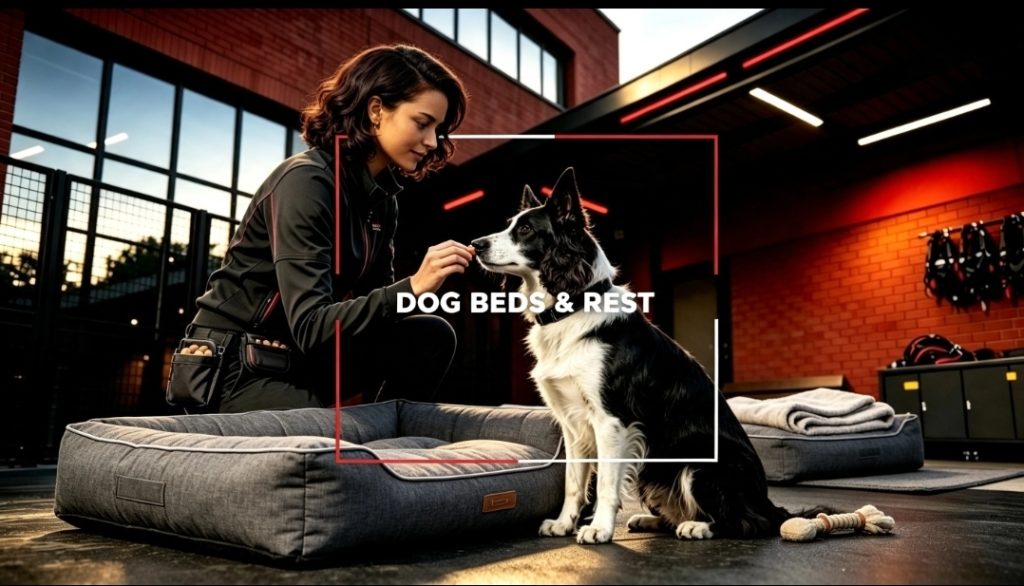
A durable, non-slip placemat provides a consistent location for training and calm behaviour.
Why Do Dog Placemat Training Mistakes Happen?
Common Dog Placemat Training Mistakes and How to Fix Them begins with recognising why training can become difficult.
Many owners expect a dog to understand the purpose of a placemat immediately. Others introduce the placemat only when they need the dog to settle, such as when visitors arrive or the household becomes busy.
This can create confusion because the dog has not necessarily developed a clear association with the placemat.
A more structured approach allows the handler to consider the dog’s current level of understanding before increasing distractions or expectations.
RECOMMENDED PRODUCTS

Training Treats
Suitable food rewards can support positive reinforcement during placemat training.
Mistake 1 — Expecting Too Much Too Soon
One of the most common dog placemat training mistakes is expecting a dog to remain settled for too long before it understands what is expected.
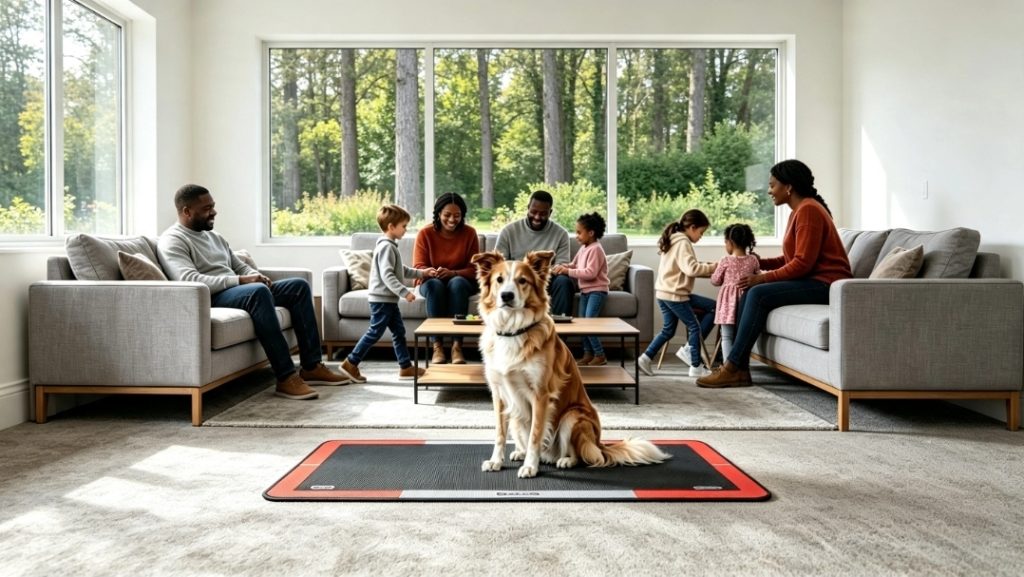
An owner may place the dog on the mat and immediately introduce children, visitors, household activity or other distractions.
When the dog gets up, the owner may assume the training has failed.
Instead, the difficulty may simply be too high for the dog’s current stage.
Common Dog Placemat Training Mistakes and How to Fix Them involves recognising the difference between a dog that understands the exercise and a dog that has been presented with too much difficulty too quickly.
Positive reinforcement and appropriate food rewards can be used to support the desired behaviour without overcomplicating the exercise.
Mistake 2 — Using the Placemat Only When There Is a Problem
Another common mistake is bringing out the placemat only when the dog is already excited.
For example, an owner may wait until children start running around, visitors arrive or the dog becomes difficult to manage before introducing the placemat.
This can make the placemat feel like a response to unwanted behaviour rather than a familiar part of the dog’s routine.
Common Dog Placemat Training Mistakes and How to Fix Them means considering the placemat as part of everyday structure rather than something that only appears when the household becomes difficult.
RECOMMENDED PRODUCTS

Treat Pouch
A practical treat pouch keeps suitable rewards accessible during everyday training.
Mistake 3 — Too Many Distractions
Another problem occurs when owners introduce too many distractions at the same time.
Children running around, toys moving, people walking through the room, television, visitors and household noise can quickly make the environment difficult for a dog that is still learning.
If the dog repeatedly leaves the placemat, becomes restless or focuses entirely on the surrounding activity, the handler should consider whether the environment is appropriate for the current stage of training.
How to Fix Them can be straightforward: reduce unnecessary difficulty, maintain consistency and use positive reinforcement appropriately.
The objective is to build understanding rather than simply expect the dog to cope with every distraction immediately.
Mistake 4 — Allowing Everyone to Interfere
A placemat can become difficult to understand when different members of the household use it differently.
One person may expect the dog to remain settled while another person encourages interaction. Children may approach the dog, touch it or play nearby without understanding that the dog is currently learning calm behaviour.
This creates conflicting expectations.
Common Dog Placemat Training Mistakes and How to Fix Them therefore includes making the purpose of the placemat clear to everyone involved.
The dog should have an appropriate opportunity to remain calm without unnecessary interference.
RECOMMENDED PRODUCTS
Training Treats
Food rewards can provide simple positive reinforcement for suitable behaviour.
Mistake 5 — Moving the Placemat Constantly
Another common mistake is continually changing where the placemat is positioned.
While a placemat may eventually be useful in different areas, constantly changing its location while the dog is still learning can make the exercise less predictable.
A consistent environment can make it easier for the handler to observe behaviour and recognise whether the dog understands the expectation.
Common Dog Placemat Training Mistakes and How to Fix Them means looking at consistency before introducing unnecessary changes.
GOLDEN RULE ONE — HOME AND SOCIAL

GOLDEN RULE ONE — HOME AND SOCIAL
Common Dog Placemat Training Mistakes and How to Fix Them connects directly with creating appropriate structure within the home.
The placemat can provide a recognised area for calm behaviour while normal household activity continues.
A common mistake is giving a dog unrestricted access to the home without considering whether it is ready to manage that level of freedom.
Another is expecting the placemat to replace every other form of home structure.
The important consideration is how the dog’s environment, freedom and behaviour work together.
GOLDEN RULE TWO — OBEDIENCE

Common Dog Placemat Training Mistakes and How to Fix Them also involves clear communication between the handler and dog.
If the dog does not understand what is expected, repeatedly asking for the same response may not solve the underlying problem.
Obedience provides the communication framework needed for the dog to understand what the handler is asking.
Positive reinforcement and food can be used simply to encourage appropriate responses without making the training unnecessarily complicated.
RECOMMENDED PRODUCTS
Treat Pouch
A treat pouch provides convenient access to rewards during structured training.
GOLDEN RULE THREE — PREY DRIVE / PLAY

GOLDEN RULE THREE — PREY DRIVE / PLAY
Common Dog Placemat Training Mistakes and How to Fix Them also requires an understanding of the difference between calm behaviour and active play.
Movement, toys and excitement can make it difficult for a dog to remain focused on a placemat.
A common mistake is allowing highly exciting activity to continue immediately around the dog while expecting calm behaviour at the same time.
Clear differences between calm periods and appropriate play can help the dog understand what is expected.
The placemat should therefore remain associated with the appropriate training state rather than becoming part of uncontrolled excitement.
GOLDEN RULE FOUR — TOILET

Common Dog Placemat Training Mistakes and How to Fix Them should also be considered alongside normal household routines.
Owners can sometimes give a young dog too much freedom while simultaneously expecting reliable behaviour.
A consistent home structure can make it easier to monitor what the dog is doing and recognise when additional management may be appropriate.
The placemat itself is not a toilet-training solution, but it can form part of an organised home environment.
RECOMMENDED PRODUCTS
Puppy Training Treats
Suitable food rewards can be used as part of positive reinforcement during early training.
GOLDEN RULE FIVE — SOCIAL WALKING / IGNORE THE WORLD
GOLDEN RULE FIVE — SOCIAL WALKING / IGNORE THE WORLD
Common Dog Placemat Training Mistakes and How to Fix Them also connects with the wider challenge of helping a dog remain calm around distractions.
The home is only one environment where dogs encounter movement, sounds, people and activity.
The ability to observe distractions without automatically reacting can become important when progressing into outdoor environments.
The same principle of recognising calm, manageable behaviour can therefore be relevant beyond placemat training.
Mistake 6 — Assuming the Dog Is Being Stubborn
When a dog repeatedly leaves a placemat, owners can sometimes interpret the behaviour as stubbornness.
However, there may be other reasons.
The environment may be too distracting. The dog may not understand the expectation. The session may be too difficult or the dog may simply need the situation adjusted.
Common Dog Placemat Training Mistakes and How to Fix Them requires the handler to look at what is happening around the dog rather than automatically assuming the dog is refusing to cooperate.
Mistake 7 — Forgetting About Progression
Another common problem is expecting the same behaviour in every environment.
A dog may remain settled in a quiet room but struggle when children are playing or visitors arrive.
This does not necessarily mean the earlier training was unsuccessful.
It may simply mean that the level of distraction has increased.
How to Fix Them means recognising that progression should be appropriate to the dog’s current understanding rather than assuming one environment automatically prepares the dog for every situation.
RECOMMENDED PRODUCTS
Interactive Dog Toy
A suitable toy can provide an appropriate outlet for structured play away from calm placemat work.
Building Better Placemat Habits
Good placemat training is not about forcing a dog to remain in one place regardless of what is happening.
It is about developing an understanding of calm behaviour, appropriate structure and controlled progression.
Common Dog Placemat Training Mistakes and How to Fix Them is therefore less about finding a single correction for every problem and more about recognising what the dog is currently able to manage.
With consistency, appropriate expectations and simple positive reinforcement, the placemat can become a useful part of a wider training routine.
Understanding the Bigger Picture
A placemat is only one training tool.
The equipment itself does not teach the dog what to do. The handler’s consistency, timing, environment and understanding all contribute to the outcome.
This is why Common Dog Placemat Training Mistakes and How to Fix Them should be viewed as part of a wider approach to dog training rather than an isolated exercise.
Understanding common mistakes allows owners to make more informed decisions about how they structure training and when they introduce greater distractions.
RECOMMENDED PRODUCTS
Training Treats
Suitable rewards can support positive reinforcement during training.
RECOMMENDED COURSE
GPK9 Professional Online Dog Training Course — Five Golden Rules
The GPK9 Professional Online Dog Training Course introduces the structured principles behind the Five Golden Rules and provides an educational framework for understanding home structure, obedience, play, routine and social behaviour.
The course is designed to help handlers understand how different elements of training connect rather than treating every problem as a separate exercise.
For owners working through common placemat training mistakes, the Five Golden Rules provide a structured foundation for developing clearer communication, consistency and progression.
Train the Human. Train the Dog. Build the Partnership.